 Birch Bay Roofing
 Why Storms Hit Custer Roofs Harder Than You'd Think
Custer sits just inland from Birch Bay, but the same weather systems that roll off the Strait of Georgia reach it with almost as much force. Whatcom County gets a steady run of Pacific frontal systems through the fall and winter, and out here the wind doesn't have much to slow it down before it hits a roofline. Open farmland and fewer windbreaks mean gusts can build speed across a field and hit a house broadside, which is a very different load than a roof in a dense, tree-sheltered neighborhood has to handle.
Add in the driving rain that comes with these storms, a salt-carrying breeze off the water on windier days, and a moss season that runs long because of our mild, damp climate, and you've got three separate stresses working on the same roof at once. None of them are dramatic on their own. Together, over a few storm seasons, they're what turns a small issue into a leak.
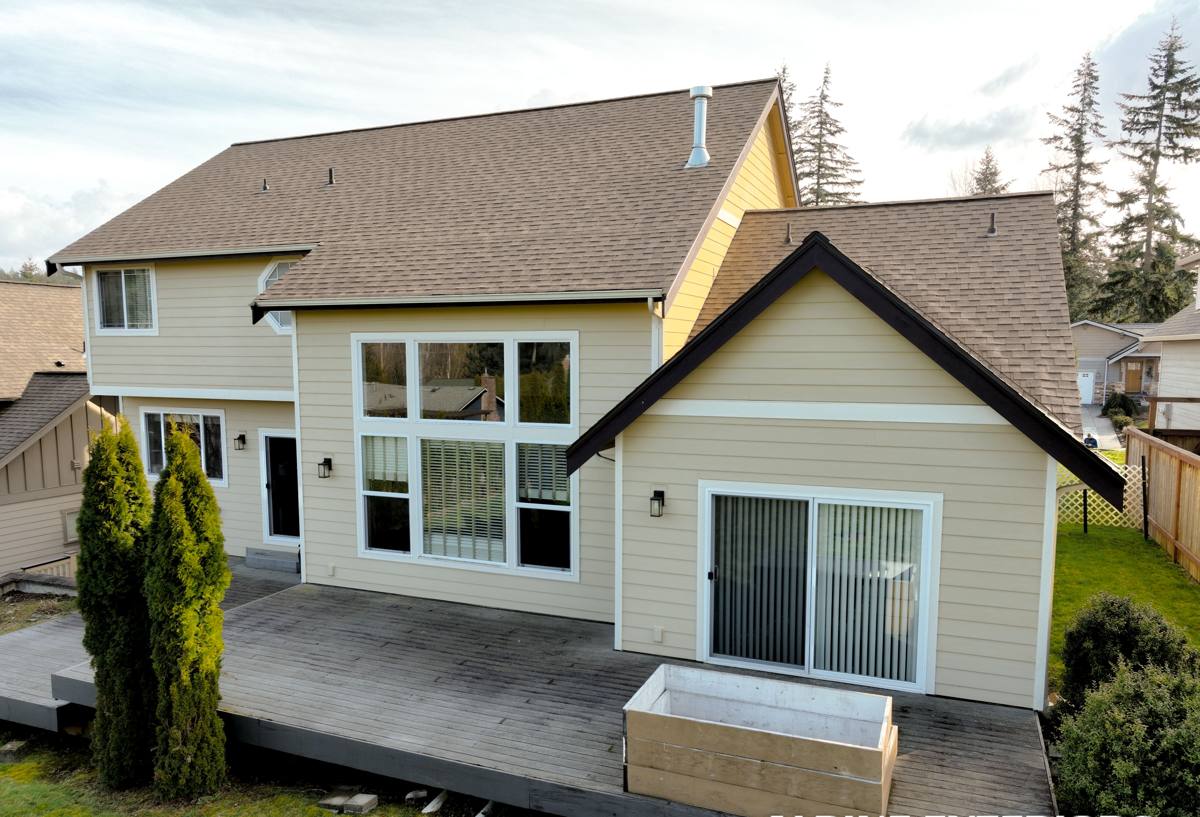
Common Types of Storm Damage We See on Custer Roofs
Every storm call is a little different, but the damage we find around Custer tends to fall into a short list of repeat offenders:
- Wind-lifted or torn shingle tabs — especially along ridgelines and roof edges where uplift is strongest
- Displaced or cracked ridge caps from sustained wind loading
- Flashing pulled loose at chimneys, skylights, and wall-to-roof transitions
- Wind-driven rain intrusion at valleys, eaves, and roof penetrations, where water gets pushed sideways instead of just running downhill
- Debris impact from wind-thrown branches, common on the more rural, tree-lined lots around Custer
- Accelerated granule loss from repeated cycles of wind and rain, which thins a shingle's protective layer over time
- Moss regrowth after a storm loosens shingles, giving it a foothold it wouldn't otherwise have
The tricky part is that most of these don't announce themselves. A shingle that's been lifted and re-seated by wind can look fine from the ground and still be letting water underneath it.
Signs Your Roof Has Storm Damage
After a windstorm or heavy rain event, it's worth doing a quick walk-around and attic check. Look for:
- Missing, curling, or cracked shingles
- Exposed nail heads where a shingle has shifted
- A buildup of granules in gutters or at the base of downspouts
- Soft spots, staining, or discoloration on interior ceilings
- Daylight visible through the attic sheathing
- Bent, dented, or detached flashing around chimneys and vents
- Gutters pulled away from the fascia or clogged with debris
- New or thickening moss growth in valleys and shaded slopes
If you see any of these, the roof doesn't necessarily need to be replaced — but it does need a proper look before the next storm rolls through.
What a Correct Storm Damage Repair Actually Involves
A Full Inspection, Not Just the Obvious Spot
Storm damage rarely stays where it started. Wind that lifts one section of shingles has usually stressed the fasteners and underlayment around it too. A repair that only patches the visible damage and skips the surrounding area tends to come back as a callback within a season or two. We check the whole roof plane, not just the spot you called about.
Matching Materials and Technique to What's Already There
A patch that doesn't match the existing shingle's profile, exposure, or fastening pattern can create its own weak point — a slightly proud edge that catches wind, or a seam that doesn't shed water the way the surrounding roof does. Good storm repair work blends into the existing roof structurally, not just visually.
Addressing the Cause, Not Just the Symptom
If a leak shows up at a valley or penetration, we want to know why that spot failed — worn underlayment, a flashing detail that was never quite right, or ventilation issues that keep that section of roof wetter than it should be. Replacing shingles without fixing the underlying cause just buys time.
Permits and Code Compliance
Most storm repairs are small enough not to trigger a permit, but larger sections of roof replacement can fall under Whatcom County building code requirements. We'll tell you upfront if your job crosses that line so there are no surprises later, particularly if you're also filing an insurance claim that may require documentation of code-compliant work.
How We Handle a Storm Damage Call in Custer
1. Response and Temporary Protection
If there's active water intrusion, the first priority is stopping it — tarping exposed areas and securing anything loose before it does more damage or becomes a safety hazard.
2. Documentation
We photograph the damage before touching anything. If you're planning to file an insurance claim, this record matters, and it's easier to gather while the damage is fresh rather than after a temporary fix has covered it up.
3. A Clear Repair Plan
We walk you through what we found, what's actually damaged versus what's just aging, and what your realistic options are. No pressure toward a bigger job than the roof needs.
4. The Repair
Work is done to match your existing roofing material and manufacturer specifications where possible, with attention to flashing, underlayment, and ventilation — not just the shingles on top.
5. Cleanup and Follow-Up
Debris and old material get hauled off, and we'll flag anything else we noticed during the repair that's worth keeping an eye on, even if it didn't need attention this time.
Repair or Replace? Weighing the Real Factors
Not every storm-damaged roof needs to come off. Here's how we think through it:
| Factor | Leans Toward Repair | Leans Toward Replacement |
|---|---|---|
| Roof age | Under 12-15 years, or well within expected lifespan for the material | Near or past the material's expected service life |
| Extent of damage | Localized to one section or slope | Spread across multiple slopes or the whole roof |
| Prior repair history | First or second repair on this roof | Recurring leaks or repairs in the same areas |
| Decking condition | Sheathing is sound underneath | Soft, rotted, or delaminated decking found on inspection |
| Insurance coverage | Damage limited enough that repair is the covered scope | Adjuster approves full or partial replacement |
We'll give you our honest read on which side of that table your roof falls on — including telling you when repair is genuinely the right call, not just the cheaper one.
Working With Your Insurance Company on a Storm Claim
If a storm caused the damage, it may be worth filing a claim before you assume the cost is entirely out of pocket. A few things help that process go smoother:
- Photograph the damage as soon as it's safe to do so, before any temporary repairs
- Get a written inspection report that separates storm damage from pre-existing wear
- Be present, or have your contractor present, when the adjuster inspects the roof
- Ask for an itemized scope of repair, not just a lump-sum estimate
We provide documentation and can walk an adjuster through what we found, but the claim itself is between you and your insurer — we won't oversell a scope of work to inflate a claim, and we'd rather give you an accurate assessment than a convenient one.
Why Hiring a Crew That Already Works Custer Matters
A roofer who works this specific stretch of Whatcom County knows what a Custer roof is actually up against — the wind exposure of open farmland versus a more sheltered lot, how far salt air travels inland on a windy day, and how early moss starts showing up on north-facing slopes here compared to drier parts of the state. That local pattern recognition shows up in small decisions: which flashing details tend to fail first in this wind exposure, which valleys need extra attention, how much ventilation a roof actually needs to dry out between our wetter stretches.
It also matters after a regional storm, when every roofing company in the county is getting calls at once. A crew that's already familiar with the area can prioritize and respond faster, rather than starting from scratch on an unfamiliar roof and property.
Get a Free, No-Pressure Estimate
If your roof took a hit in a recent storm — or you're just not sure whether that curled shingle or damp attic spot is something to worry about — we're happy to take a look. Use the form below to request a free estimate, and we'll give you a straight answer about what your roof needs and what it doesn't.