 Birch Bay Roofing
 Windows Built for Custer's Coastal Conditions
Custer sits close enough to Birch Bay and the Strait of Georgia that homes here take a different kind of beating than houses further inland in Whatcom County. Salt-laden air corrodes hardware and finishes faster than dry-climate manufacturers ever plan for. Driving rain off the water finds its way sideways into gaps that would stay dry in a calmer climate. And the long gray, damp stretch of fall through spring keeps north- and west-facing walls perpetually shaded and moist — ideal conditions for moss, mildew, and slow wood rot to take hold around window openings that aren't detailed correctly.
Energy-efficient windows are marketed everywhere, but "efficient" means something specific here. A window that performs well in a dry inland climate can still underperform in Custer if it isn't rated and installed for wind-driven moisture and constant humidity. This page focuses on what that actually requires — the glass, the frame, the flashing, and the installation details — for homes in and around Custer.
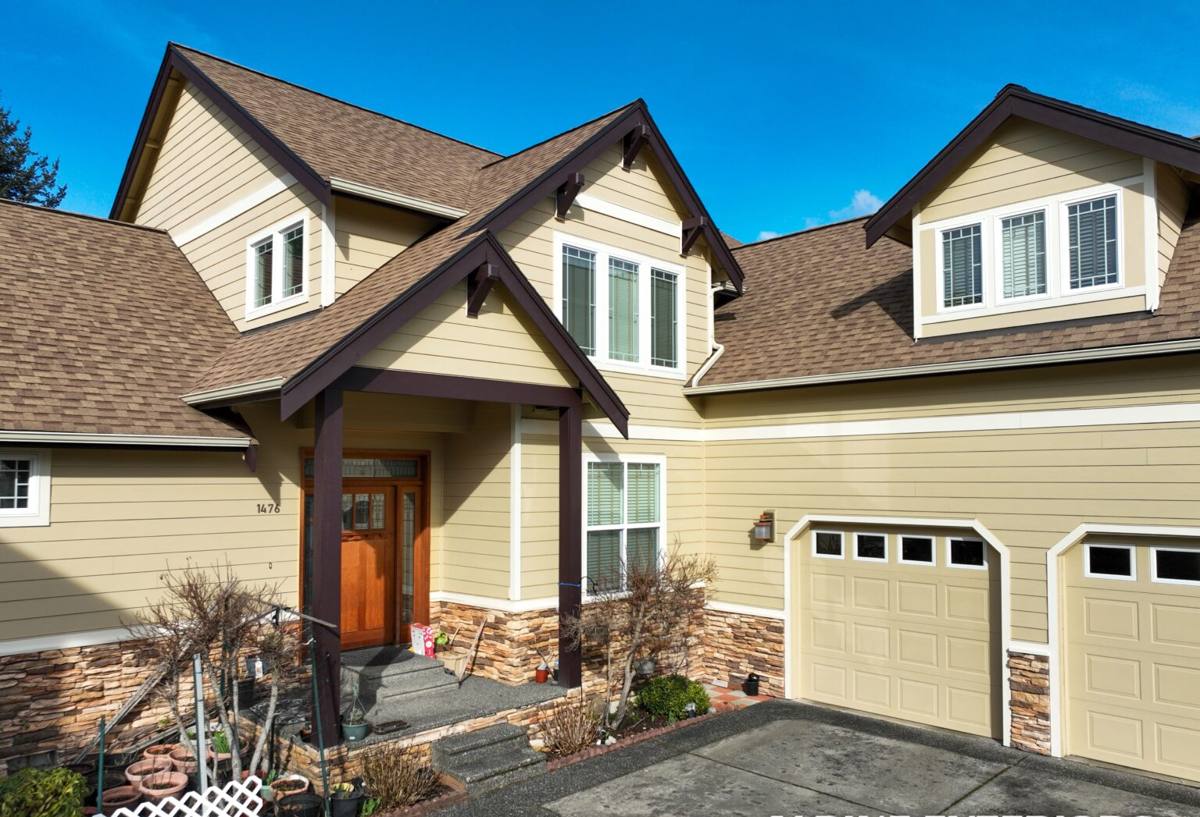
What "Energy-Efficient" Really Means in This Climate
Efficiency ratings on a window label tell you part of the story, but not all of it. For Custer homes, three numbers matter most:
- U-factor: measures how well the window resists heat loss. Lower is better for our marine, heating-dominated climate — this is the number that keeps winter heating bills down.
- Solar Heat Gain Coefficient (SHGC): measures how much solar heat passes through the glass. In the Pacific Northwest we generally want a moderate-to-low SHGC on south and west exposures to avoid overheating rooms during the increasingly common summer heat stretches, while still allowing some passive warmth in winter.
- Air infiltration rate: how much air leaks through the assembly under wind pressure. This one gets overlooked, but it's arguably the most important number for a home exposed to steady onshore wind — a window with a poor air-infiltration rating will leak conditioned air and let moist outside air in, no matter how good its glass is.
A window that's efficient on paper but installed with poor sealing and flashing will still underperform. We treat the installation as part of the efficiency spec, not an afterthought to it.
Condensation Resistance Matters More Here
Whatcom County's humidity swings — cold, wet winters against warmer, moisture-laden summers — put real stress on window assemblies. Low condensation-resistance windows fog between the panes or sweat on interior glass, which over time feeds the same moss and mildew growth that already thrives on north-facing siding in this area. A properly specified window with the right gas fill and spacer system resists this far better than a bargain unit.
Frame Materials: Trade-Offs for a Salt-Air Environment
We get asked often why we favor certain frame materials in Custer and Birch Bay over others. It comes down to how each material behaves under salt exposure, driving rain, and years of freeze-thaw cycling — not brand preference.
| Frame Material | How It Handles Salt Air & Moisture | Maintenance Burden | Typical Lifespan Here |
|---|---|---|---|
| Vinyl (quality fusion-welded) | Does not corrode or rot; seams need to be properly welded, not just caulked, to resist wind-driven rain | Low — occasional cleaning | Long-lasting when installed with correct flashing |
| Fiberglass | Excellent dimensional stability, resists warping from repeated wet-dry cycles | Low | Long-lasting, holds paint/finish well if refinished later |
| Wood-clad | Attractive, but any breach in the cladding exposes wood core to moisture — a real risk given our rain patterns | Higher — cladding seams and sills need regular inspection | Shorter unless maintained closely |
| Bare aluminum | Conducts cold and can corrode with prolonged salt exposure; poor thermal performance | Moderate to high | We generally don't recommend it for this exposure |
None of these are "bad" products across the board — the point is matching the material to the exposure. On a home a few miles inland the calculus can shift; on a Custer property with regular onshore wind and salt spray, we lean toward vinyl or fiberglass for most installations because they hold up with less ongoing maintenance from the homeowner.
Glass Packages: Double-Pane vs. Triple-Pane
Most Custer homes do fine with a well-specified double-pane, low-E, argon-filled unit. Triple-pane glass adds real value in specific situations — a room with heavy west or water-facing exposure to wind noise, a home with especially high heating costs, or an owner planning to stay long-term and wants the lowest possible utility bills. Triple-pane costs more up front and adds weight, which matters for larger openings and older framing.
What We Look At Before Recommending Either
- Which direction the wall faces relative to prevailing wind and rain
- How much shade the wall gets (shaded, damp walls need different moisture handling than sun-exposed ones)
- The condition of the existing rough opening and sill
- Your actual comfort complaints — drafts, cold spots, condensation, or noise
- Budget versus how many years you plan to own the home
We won't upsell triple-pane glass onto a wall where it won't earn its cost back in comfort or efficiency. We'd rather spend the budget on correct flashing and a quality low-E double-pane unit than a premium glass package installed poorly.
Installation Details That Actually Determine Performance
In a climate that sends rain sideways, the glass and frame only matter if the installation keeps water out of the wall. This is where most window failures we see in this area actually start — not with the window product itself.
- Sloped sill pans: a sill pan that directs any water that gets past the window back outside, rather than into the wall cavity, is non-negotiable on a Custer install.
- Proper flashing sequencing: flashing tape and building paper have to be layered shingle-style — each layer overlapping the one below — so water sheds outward at every point, not just at the top.
- Correct sealant, not just more sealant: caulk is a backup, not the primary defense. We see a lot of older installs that relied on caulk alone, which fails within a few years under constant wet-dry cycling and driving rain.
- Backer rod and joint sizing: gaps that are too wide or too narrow for the sealant used will crack and open within a season or two.
- Insulation behind the frame: gaps packed with the wrong material (or left empty) create both a thermal weak point and a place for condensation to collect inside the wall.
Our Process for Custer Window Replacements
- On-site assessment: we check existing sills, framing condition, and moisture history around each opening before recommending anything — a home with hidden rot needs that addressed first, not covered up with a new window.
- Product recommendation: based on wall exposure, existing damage, and your priorities (efficiency, noise, budget, appearance).
- Written estimate: clear pricing per opening, with the flashing and sealing approach spelled out, not just a window brand and size.
- Removal and prep: old units come out carefully so we can inspect the rough opening and framing underneath — this is often where problems get caught early.
- Installation: sill pan, flashing, insulation, and sealing done in the correct order, every time, regardless of which crew member is on the job.
- Final check and cleanup: operation, sealing, and site cleanup confirmed before we consider the job done.
Signs Your Current Windows Are Working Against You
A lot of Custer homeowners live with window problems for years before addressing them, assuming it's just how older homes are. Some of these are efficiency issues; some are early warning signs of moisture damage building behind the wall.
- Visible condensation or fogging between panes (a sign the seal has failed)
- Drafts you can feel near the frame on a windy day
- Soft or discolored trim or sill wood, especially on north- or west-facing walls
- Moss or dark staining creeping onto the siding directly around a window opening
- Windows that are difficult to open, close, or latch — often a sign of frame warping or settling
- Noticeably higher heating bills compared to similarly sized rooms elsewhere in the house
- Rattling or whistling during storms coming off the water
Any one of these on its own isn't an emergency, but several together usually mean it's worth having someone look at the openings before the next wet season.
Why Local Experience in Custer and Birch Bay Matters
A crew that mostly works dry, inland jobs will often install a window correctly by general standards and still have it fail here within a few years — because general standards don't account for sustained onshore wind, salt exposure, and the sheer number of wet days Whatcom County gets in a typical year. Working regularly in Custer and around Birch Bay means we've seen firsthand which details hold up under this specific exposure and which ones don't, and we adjust flashing, sealant choice, and product recommendations accordingly rather than applying a one-size-fits-all approach.
If your windows are drafty, fogged, hard to operate, or you're just planning ahead for a home in this area, we're happy to take a look and put together a straightforward, no-pressure estimate — no obligation, just an honest read on what your windows actually need. Use the form below to get started.