 Birch Bay Roofing
 Roofing Built for Custer's Coastal Climate
Custer sits close enough to the water that homes here take on a mix of weather most inland roofing crews rarely deal with day in and day out: salty marine air rolling off Birch Bay and the Strait, long stretches of driving rain in fall and winter, and a moss season that can run most of the year in shaded, north-facing sections of roof. None of that is dramatic on its own, but stacked together year after year, it wears a roof down faster than the manufacturer's lifespan chart suggests. A roof replacement done right for a Custer home accounts for all three factors from the start, not as an afterthought.
This page focuses on one thing: full roof replacement for homes in and around Custer. If your roof is past the point where patching makes sense, here's what that job actually involves, what it should cost you to think about, and why local experience changes the outcome.
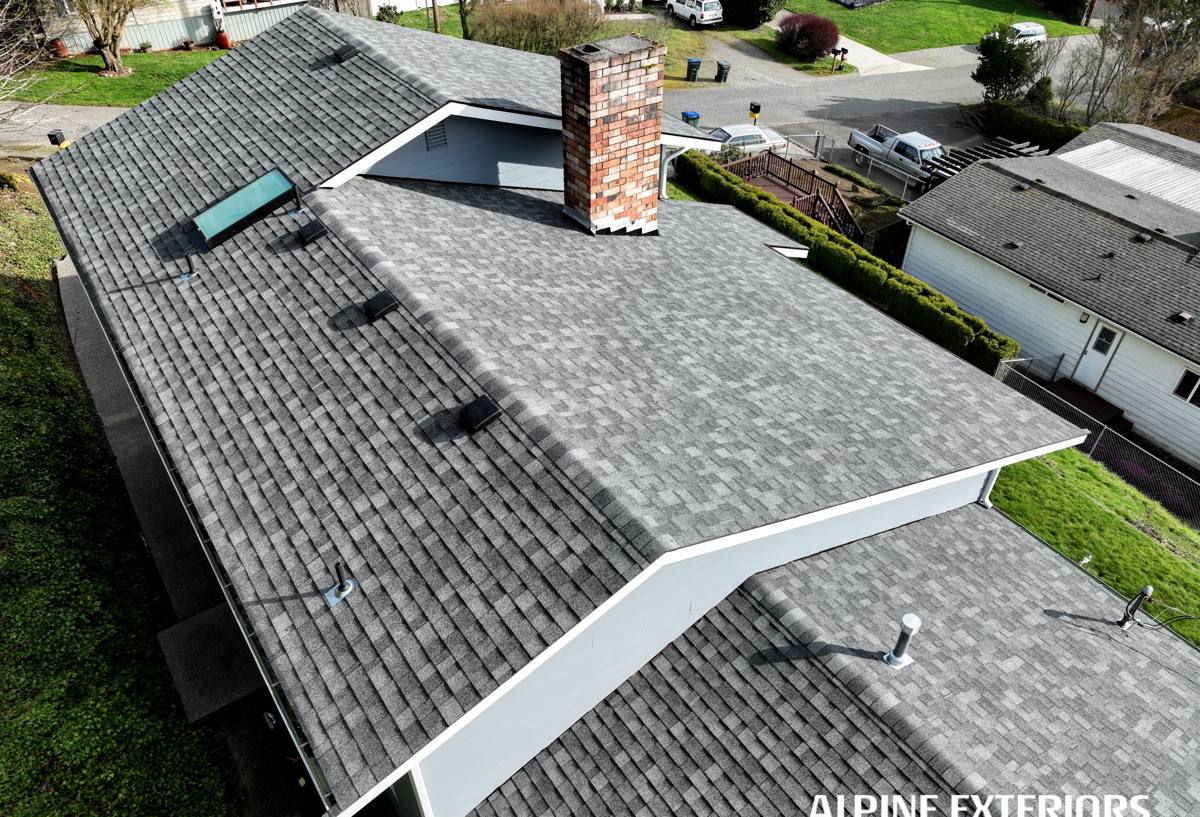
What Whatcom County Weather Does to a Roof Over Time
Moss and Organic Growth
Shaded roof sections, especially those facing north or sitting under mature trees, stay damp far longer than roofs in drier parts of the state. That moisture is exactly what moss needs to take hold. Once moss establishes itself on a shingle roof, it lifts shingle edges as it grows, holds water against the roof deck, and accelerates granule loss on asphalt shingles. On wood or older composite roofing it can work its way into seams and joints. Moss isn't just cosmetic — left alone for a few seasons, it shortens the useful life of an otherwise sound roof.
Driving Rain and Wind-Driven Moisture
Storms coming off the water don't always fall straight down. Wind-driven rain pushes water sideways and upward under shingle edges, around flashing, and into any gap that wouldn't be a problem in calmer weather. This is why flashing detail and underlayment choice matter more here than in a lot of the country — a roof that would perform fine in a low-wind climate can leak in Custer if those details are cut corners on.
Salt Air and Corrosion
Proximity to the bay means airborne salt settles on roofing metal — flashing, fasteners, vents, and any exposed hardware. Over years, that accelerates corrosion on lower-grade metal components faster than it would a few miles inland. It doesn't mean metal can't be used well here; it means fastener and flashing material selection needs to account for it rather than defaulting to whatever's cheapest.
Signs a Custer Home Needs Replacement, Not Repair
Repair makes sense when the damage is isolated and the roof still has structural life left. Replacement becomes the honest recommendation when the underlying materials are failing broadly. Signs worth taking seriously include:
- Granule loss heavy enough that you can see bare asphalt on multiple shingles, not just one or two spots
- Shingles that are curling, cupping, or cracking across large sections rather than isolated tabs
- Moss or moss staining covering more than a small patch, especially on north-facing slopes
- Soft spots or sagging when walked on, which can indicate deck damage underneath
- Daylight visible through the roof deck from the attic, or water stains on attic sheathing
- A roof that's already 20+ years old and has taken multiple storm seasons of wind-driven rain
- Recurring leaks in different spots each time, rather than one consistent failure point
If you're only seeing one or two of these, a repair may still be the right call. If several apply at once, replacement is usually the more cost-effective path — repeated repairs on a failing roof add up and rarely fix the underlying moisture problem.
Choosing the Right Roofing System for This Area
There's no single "best" roofing material for every home — it depends on your roof's pitch, how much shade it gets, your budget, and how long you plan to stay in the home. Here's how the common options stack up for a Custer property specifically.
| Material | Typical Lifespan | Moss Resistance | Notes for This Climate |
|---|---|---|---|
| Standard asphalt shingle | 15-20 years | Low without treatment | Budget-friendly; needs proactive moss management in shaded areas |
| Architectural (laminate) shingle | 25-30 years | Moderate | Thicker profile handles wind-driven rain better; most common choice here |
| Impact/algae-resistant shingle | 25-30 years | Higher (treated granules) | Copper or zinc-infused granules slow moss regrowth on shaded slopes |
| Standing seam metal | 40-50+ years | High | Sheds moisture fast; fastener and coating quality matter more near the bay |
For most Custer homes, an architectural or algae-resistant shingle strikes the right balance of cost, appearance, and performance against moss. Metal is worth considering on steeper roofs, homes with heavy tree shade, or for owners planning to stay long-term and wanting to minimize future maintenance — the higher upfront cost is offset by decades of lower moss and repair concerns.
What a Correct Roof Replacement Actually Involves
Full Tear-Off and Deck Inspection
We don't recommend installing new roofing over old layers. A full tear-off lets us see the actual condition of the roof deck underneath — soft, rotted, or delaminated sheathing has to be replaced before anything new goes down, or the new roof is sitting on a compromised base regardless of how good the shingles are.
Underlayment and Moisture Barrier
Given how much wind-driven rain this area sees, underlayment isn't a place to cut costs. Synthetic underlayment across the full roof, with self-adhered ice-and-water membrane at eaves, valleys, and around penetrations, gives the roof a real second line of defense if wind pushes water past the shingle layer.
Ventilation
Proper intake and exhaust ventilation keeps the attic space dry and temperature-regulated, which matters for shingle lifespan and helps prevent the kind of trapped moisture that feeds moss and rot from underneath. A roof can be installed perfectly and still underperform if the attic isn't breathing correctly.
Flashing and Penetrations
Chimneys, vents, skylights, and roof-to-wall transitions are where most leaks actually start — not in the open field of shingles. Corrosion-resistant flashing material, correctly stepped and sealed, is non-negotiable this close to the bay.
Our Process, Start to Finish
- On-site inspection and estimate — we walk the roof (weather permitting) or inspect closely from ladder and attic access, and give you a written, itemized estimate with no pressure to sign on the spot.
- Material selection — we walk through the options above based on your roof's specific exposure, shade, and pitch, and help you land on what actually fits your home and budget.
- Scheduling around weather — we plan tear-off days around forecasted dry windows where possible and use protective tarping if conditions turn mid-project.
- Tear-off, deck repair, and installation — full removal of old roofing, deck inspection and repair as needed, then underlayment, flashing, and final roofing material installation.
- Cleanup and magnetic sweep — full job-site cleanup including a nail sweep of the yard and driveway before we consider the job done.
- Final walkthrough — we go over the finished roof with you before we leave.
What Affects the Cost of a Custer Roof Replacement
Every roof is different, so we don't publish flat pricing — but the main cost drivers are consistent from job to job:
| Factor | Why It Matters |
|---|---|
| Roof size and pitch | Steeper roofs take longer and require more safety setup, increasing labor cost |
| Number of existing layers | Tear-off of multiple old layers adds disposal and labor time |
| Deck condition | Rotted or soft sheathing found during tear-off needs replacement before installation |
| Material choice | Standard shingle vs. algae-resistant vs. metal carries a wide cost range |
| Access and site conditions | Tree cover, driveway access, and setback distance affect equipment and labor time |
| Ventilation and flashing upgrades | Bringing older ventilation or flashing up to current standards adds scope but reduces future problems |
An accurate number only comes from seeing the actual roof — we won't quote a price over the phone without an inspection, because too much of the final cost depends on what we find once tear-off starts.
Why a Crew That Already Works in Custer Matters
A roofing crew that works this stretch of Whatcom County regularly already knows which slopes in this area hold moss longest, how much wind-driven rain a given roof pitch typically takes on, and which flashing and fastener grades hold up against the salt air rather than corroding early. That's not something you get from a crew that mostly works drier, inland jobs and treats every coastal roof as an exception. It also means we're a known, reachable local business if a warranty question or storm-related concern comes up down the line — not a crew that finished the job and moved on to the next region.
Get a Free, No-Pressure Estimate
If your roof is showing its age or you're just weighing repair against replacement, we're happy to take a look and give you an honest read on where things stand. Fill out the form below to schedule a free estimate for your Custer home — no pressure, no obligation, just a clear picture of your options.