 Birch Bay Roofing
 Custer's Climate and What It Does to Siding
Custer sits inland from the Birch Bay shoreline, but it isn't far enough from Georgia Strait and the bay to escape the salt-laden air that drifts through Whatcom County on the prevailing westerly winds. That salt settles on exterior surfaces year-round, and combined with the region's long, wet winters, it creates conditions that are genuinely hard on siding materials. Add in the driving rain that comes sideways during winter storms, and the moss and algae growth that thrives in the shade of Custer's tree cover and long overcast stretches, and you have a climate that will find every weakness in a siding product or an installation shortcut within a few years.
This isn't a marketing exaggeration. It's the reason we get called out to homes with siding that's only ten or twelve years old and already showing swelling, delamination, or moss staining that won't wash off. The siding you choose for a Custer home, and how it's installed, matters more here than it would in a drier inland climate.
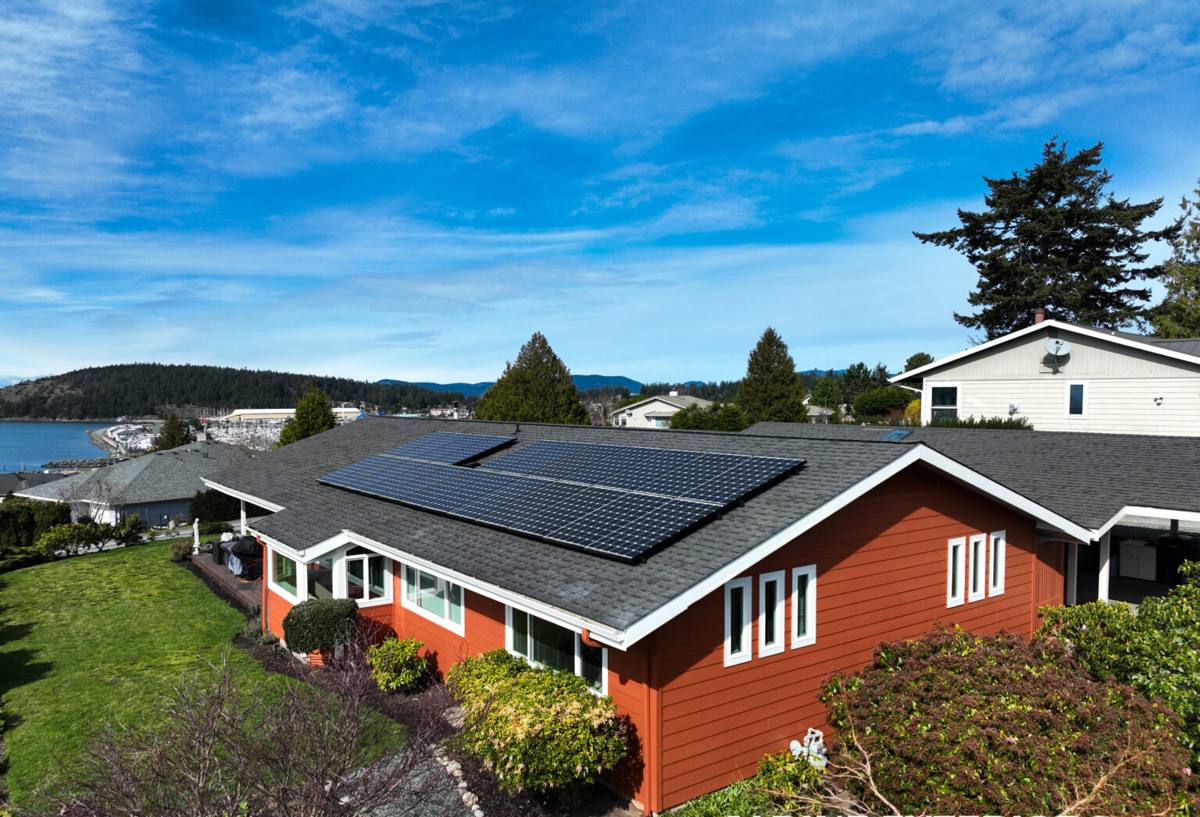
Why James Hardie Fits Custer Homes
We install James Hardie fiber cement exclusively, and Custer is a good example of why. Hardie's HZ5 product line is engineered specifically for climates like ours — moisture cycling, freeze-thaw swings, and sustained damp conditions. Fiber cement is not organic material, so it doesn't feed mold or provide the same foothold for moss and algae that wood-based products do. It won't swell when it absorbs water and it won't rot from the inside out the way engineered wood products can when a seam fails.
The factory-applied ColorPlus finish is also worth understanding for a home in this area. It's baked on in a controlled environment rather than field-painted, which means better adhesion and a finish that resists the fading and chalking that salt air accelerates on site-painted surfaces. That matters in Custer specifically — homes closer to the water tend to show finish wear faster than the same product would inland, and a factory finish holds up noticeably better against that exposure than a job-site paint job.
What a Correct Hardie Installation Involves
James Hardie siding performs the way it's supposed to only when it's installed to the manufacturer's specifications. In a wet climate like Whatcom County's, the installation details matter as much as the product itself. A correct job includes:
- Proper weather-resistive barrier and rainscreen or drainage gap behind the siding, so any moisture that gets past the cladding has somewhere to go
- Correct flashing at every window, door, and roof-to-wall intersection — the majority of moisture failures we see start at a flashing detail, not the siding field
- Manufacturer-specified fastener type, spacing, and penetration depth, since under- or over-driven nails void warranty coverage and can crack the board over time
- Minimum clearance gaps at grade, decks, roof lines, and other trim so the siding never sits in standing water or trapped moisture
- Correctly caulked and sealed joints using compatible sealants, with butt joints treated so they don't become entry points for wind-driven rain
Skipping any one of these doesn't usually cause a visible problem right away. It shows up two, five, or ten years later as a soft spot, a stain, or a section that's absorbing water — often right when it's least convenient to fix. This is where installation quality separates a siding job that lasts thirty-plus years from one that needs rework inside a decade.
Trim and Detailing for a Coastal-Influenced Property
Custer homes benefit from extra attention at trim boards, corner details, and anywhere two materials meet. Salt-laden moisture works into gaps that would be a non-issue in a drier climate, so we pay close attention to sealing and back-priming cut edges, and we use trim and fastener hardware rated for the corrosion exposure this area sees.
Comparing Siding Options for Whatcom County Homes
We only install James Hardie, but homeowners deserve to understand why, especially if you're comparing quotes that include other materials. Here's how the common options stack up for a climate like Custer's:
| Material | Moisture Behavior | Moss/Algae Resistance | Finish Durability | Typical Lifespan Here |
|---|---|---|---|---|
| James Hardie fiber cement | Does not swell or rot; engineered for wet climates | Non-organic, resists growth better than wood-based products | Factory-baked ColorPlus finish holds up well against salt air | 30+ years with correct install |
| Vinyl | Doesn't rot, but can warp, crack, or fade; seams can allow water intrusion | Can grow moss/algae film, especially in shaded, damp spots | Color is through-body but fades and chalks over time; not repaintable easily | 15-25 years, often less in coastal exposure |
| LP SmartSide (engineered wood) | Vulnerable at cut edges and seams if sealing fails; can swell | Organic wood-strand core is more susceptible if moisture gets in | Field or factory finish; edge sealing is critical and installation-sensitive | Variable, heavily dependent on install quality and maintenance |
| Cedar | Absorbs moisture, prone to rot without diligent upkeep | Requires regular treatment to resist moss and mildew | Needs re-staining/painting on a recurring cycle | 20-30 years with consistent, ongoing maintenance |
Every product on that list has legitimate uses somewhere. But for a Custer property dealing with salt air, sideways rain, and shaded, moss-friendly conditions much of the year, fiber cement's non-organic, moisture-stable makeup is the standard we're willing to put our name behind.
Our Process, From Estimate to Final Walkthrough
We start with an on-site inspection of your existing siding, sheathing, and any problem areas — soft spots, past water intrusion, or trim that's already failing. From there we walk you through Hardie's plank, panel, and shingle options along with the ColorPlus palette so you can see what fits your home before we talk numbers.
Once a project is scheduled, our crew removes the old siding, inspects and repairs sheathing as needed, installs the weather barrier and drainage plane, and follows Hardie's fastening and flashing specifications board by board. We don't skip the drainage gap or flashing details to save time, even though they add labor — in this climate, those are the details that decide whether the job holds up. We finish with a walkthrough so you know exactly what was done and what to expect going forward.
Maintenance in a Moss-Prone, Salt-Air Environment
Correctly installed Hardie siding is low-maintenance, not no-maintenance. A little seasonal attention goes a long way in this climate:
- Rinse siding annually with a garden hose to clear salt residue and organic buildup — avoid high-pressure washing, which can force water behind boards or joints
- Keep gutters clear so overflow doesn't run down the siding face and feed moss growth
- Trim back vegetation and tree limbs that keep sections of the house shaded and damp
- Inspect caulked joints and trim yearly, especially after winter storms, and have any cracked sealant redone before it becomes an entry point
- Address any moss or algae staining early with a gentle cleaning approach rather than letting it establish
Why a Crew That Already Works Custer Matters
Whatcom County's coastal-influenced neighborhoods don't all behave the same way. A crew that regularly works Custer and the surrounding Birch Bay area already understands where wind-driven rain hits hardest on a typical lot orientation, how much salt exposure to plan for at a given distance from the water, and how the area's moss season affects timing and detailing decisions. That local pattern recognition shows up in the small calls — an extra flashing detail here, a different fastener spacing there — that a crew unfamiliar with this specific climate might not think to make.
It also matters for warranty support and follow-up. A contractor who's still working in your area next year, and the year after, is a contractor who stands behind the work they did on your home rather than one you have to track down.
Signs Your Custer Home Needs New Siding
Not every siding problem is obvious from the ground. A few signs worth having a professional look at:
- Persistent moss or algae staining that returns quickly after cleaning
- Soft or spongy spots when you press on the siding, especially near the bottom courses or trim
- Visible warping, swelling, or separation at seams and butt joints
- Paint that's peeling or bubbling from the inside out, which often points to trapped moisture rather than a surface issue
- Rising energy bills that can't be explained by anything else, which can indicate the siding and underlying assembly are no longer providing an effective moisture and air barrier
If your Custer home is showing any of these signs, or if you're planning ahead for a siding replacement, we're happy to take a look and walk you through what James Hardie siding, installed correctly for this climate, would involve. Reach out for a free, no-pressure estimate using the form below.