 Birch Bay Roofing
 New Roof Installation Built for Custer's Climate
Custer sits inland just enough from Birch Bay Bay to feel a little different than the immediate waterfront, but it still gets the same weather system: salt-laden air moving off the Strait of Georgia, long stretches of driving rain through fall and winter, and shaded, damp lots that stay wet longer than homes further inland in Whatcom County. A new roof out here isn't a cosmetic upgrade — it's a system that has to hold up against moisture exposure most manufacturers' warranty language never quite accounts for. We install new roofs for Custer homeowners with that reality in mind, not a generic install lifted from a drier climate.
This page covers what a correct new roof installation looks like specifically for this area: the material and ventilation choices that matter here, how our process works from tear-off to final inspection, and why a crew that already works this part of the county catches problems a visiting or out-of-area contractor tends to miss.
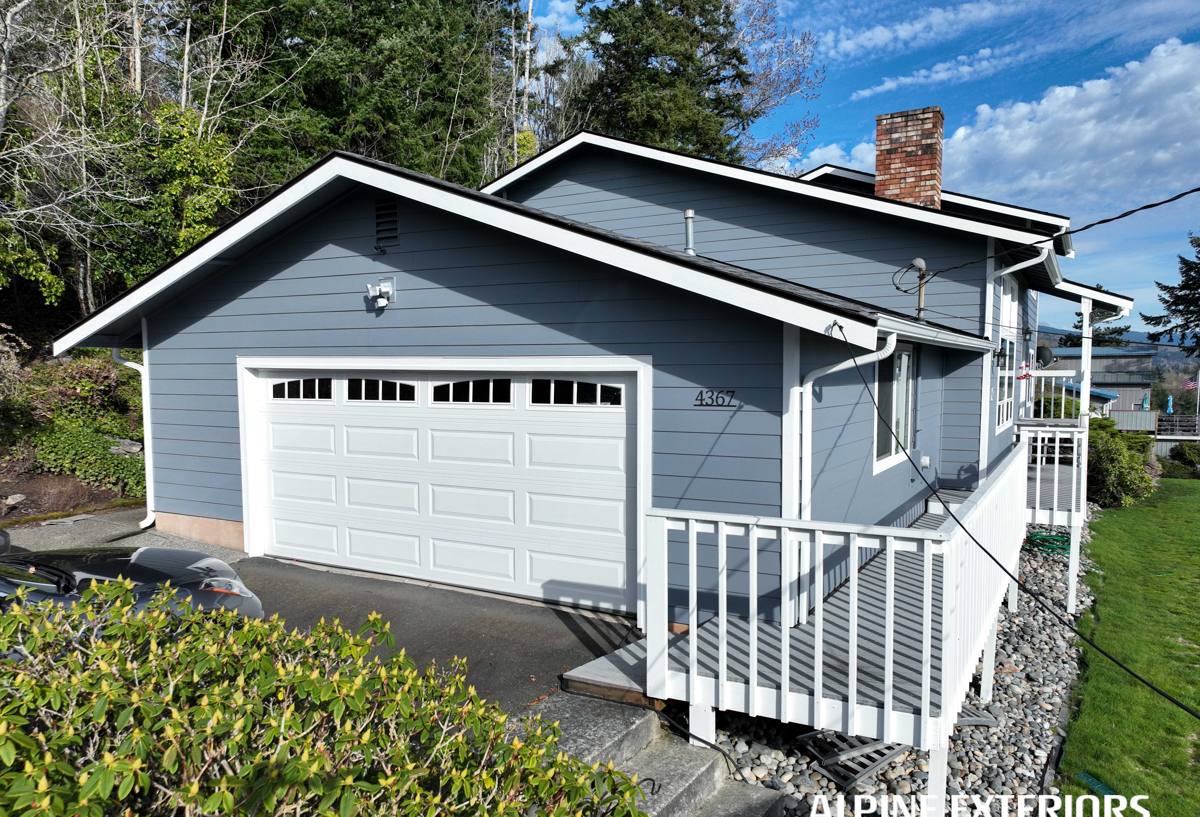
What Custer Homes Are Actually Up Against
Salt Air and Metal Fasteners
Even a few miles inland from the water, airborne salt still reaches roofing hardware — nails, flashing, valve boots, and exposed fastener heads. Cheap or mismatched metal corrodes faster here than it would in a dry inland county, and once a fastener starts rusting, it's a slow leak waiting to happen. Fastener and flashing selection isn't a detail we skip to save a few dollars on a bid.
Driving Rain and Wind-Driven Water
Whatcom County storms don't always drop rain straight down. Wind off the strait pushes water sideways and up under laps, ridge caps, and poorly sealed penetrations. A roof that would pass fine in a calmer climate can leak here simply because the underlayment and flashing detail weren't built for wind-driven water.
Moss Season
Between the moisture and the tree cover on many Custer lots, moss season runs long — often most of the year on north-facing or shaded slopes. Moss holds water against the roofing surface, works into laps and granule surfaces, and can lift shingle edges over time. A new roof installed without moss-resistant strategy in mind will need moss treatment and cleaning far sooner than it should.
Choosing the Right Roofing System
There's no single "best" roofing material for every home — it depends on the roof's pitch, sun/shade exposure, budget, and how long you plan to stay in the house. Here's how the common options stack up for a Custer property specifically.
| Material | Moss/moisture behavior here | Typical lifespan | Best fit |
|---|---|---|---|
| Architectural asphalt shingle | Good with proper ventilation and algae-resistant granules; needs periodic moss removal on shaded slopes | 25–30 years | Most Custer homes; best value |
| Standing seam metal | Sheds moss and water fast, minimal debris hold, coastal-rated fasteners recommended | 40–50+ years | Shaded lots, steep pitches, long-term owners |
| Composite/synthetic shake | Sheds water well, resists moss better than wood shake, low maintenance | 30–50 years | Homeowners who want a shake look without wood upkeep |
| Cedar shake | Attractive but holds moisture in shaded, salt-air conditions; needs regular treatment | 20–30 years with upkeep | Owners committed to ongoing maintenance |
We're honest about the trade-off with wood shake in this specific climate: it can look great, but the maintenance burden in a shaded, damp, salt-air environment is real, and we'd rather tell you that up front than sell you a product that fights the site conditions. For most Custer homes, a well-ventilated architectural shingle or a standing seam metal roof gives the best balance of upfront cost, moisture performance, and long-term maintenance.
What a Correct Installation Actually Involves
A new roof is only as good as what's underneath the visible surface. This is where corners get cut on lower-bid jobs, and it's exactly where Custer's climate punishes shortcuts fastest.
- Full tear-off and deck inspection — we don't roof over existing layers; every deck board gets checked for soft spots, rot, or delamination from years of moisture intrusion.
- Ice-and-water shield at vulnerable points — valleys, eaves, and roof-to-wall transitions get a self-adhering waterproof membrane, not just standard felt, because these are where wind-driven rain finds its way in.
- Synthetic underlayment across the field — more tear-resistant and moisture-stable than old-style felt through a wet Whatcom County winter.
- Corrosion-resistant flashing and fasteners — matched to the salt-air exposure level of the specific lot, not a one-size-fits-all part pulled off the truck.
- Balanced intake and exhaust ventilation — undersized or blocked ventilation is one of the biggest drivers of premature moss growth and deck rot we see on this stretch of the county.
- Proper valley, penetration, and ridge detailing — the places most leaks actually start, and the places most worth getting right the first time.
Our Installation Process
Homeowners want to know what's actually going to happen on their property, not just a sales pitch. Here's the sequence we follow on a Custer new-roof project.
- On-site evaluation. We walk the roof, check the attic for existing moisture or ventilation problems, and look at exposure — how much sun, shade, and tree cover the roof actually gets, which drives moss and material recommendations.
- Written estimate and material selection. You get a clear breakdown of material options, ventilation plan, and cost — no vague allowances that turn into surprise change orders mid-job.
- Tear-off and deck repair. Old roofing comes off down to the deck, damaged sheathing is replaced, and the deck is inspected before anything new goes down.
- Waterproofing and underlayment. Ice-and-water membrane at valleys and eaves, synthetic underlayment across the rest of the field.
- Flashing, ventilation, and roofing installation. New flashing at every penetration, intake/exhaust ventilation balanced to the attic space, then the roofing material itself installed to manufacturer spec.
- Final walkthrough and cleanup. We inspect the finished roof with you, answer questions, and make sure the property — gutters, landscaping, driveway — is cleared of debris and stray fasteners before we leave.
Ventilation and Moisture Control Matter More Here Than People Expect
A lot of roof problems that look like "the shingles failed" are actually ventilation problems. When an attic can't breathe properly, warm moist air builds up underneath the deck, condenses, and slowly rots the sheathing from the inside — separate from anything happening on the outer roofing surface. In a climate with as much sustained moisture as Whatcom County sees, that's not a minor issue; it's one of the main reasons roofs in this area fail early. Every new roof we install includes a ventilation assessment as a standard part of the job, not an upsell.
Moss resistance works the same way. Zinc or copper control strips at the ridge, good sun/shade planning where the design allows it, and a shingle rated for algae/moss resistance all reduce how often you'll need to get up there and clean the roof by hand. None of it makes a roof moss-proof — nothing in this climate is — but it stretches the interval between cleanings significantly.
What Drives Cost on a Custer Roof
Every roof is priced based on the specifics of the job, but these are the factors that most commonly move the number up or down on projects in this area.
| Factor | Why it matters here |
|---|---|
| Roof pitch and access | Steeper roofs and limited driveway/yard access add labor and safety-equipment time |
| Deck condition | Moisture-damaged sheathing found at tear-off requires repair before new roofing goes down |
| Material choice | Metal and composite systems cost more upfront but need less moss/maintenance work over time |
| Ventilation upgrades | Adding proper intake/exhaust venting on an older home is a smaller cost than the water damage it prevents |
| Tree cover and shading | Heavily shaded lots may need extra moss-control detailing at installation |
We'd rather walk you through these factors on-site and give you real numbers for your roof than quote a broad range that doesn't mean much either way.
Why Hiring a Crew That Already Works Custer Matters
A roofing crew that mainly works drier or less coastal parts of Washington doesn't always think about salt-air fastener corrosion or moss-season ventilation as a default part of the job — because it isn't a default part of the job where they usually work. We're on this stretch of Whatcom County regularly, which means we've seen how roofs here actually age, not just how they're supposed to perform on paper. That shapes real decisions: which flashing metal we spec, how we detail valleys against wind-driven rain, and how much ventilation we build in before moss and moisture become a problem instead of after.
It also means warranty and follow-up service isn't a phone call to a company two counties away. If a question comes up after the job — moss returning faster than expected in an unusually wet season, a gutter tie-in that needs a look — we're a local call, not a long wait for a crew to be routed back through the area.
After Installation: Keeping a New Roof Performing
A correctly installed roof still benefits from a little regular attention in this climate. A short list of what actually matters:
- Keep gutters and downspouts clear, especially during fall leaf drop and winter storms — overflowing gutters push water back up under roof edges.
- Have moss growth addressed before it thickens, not after; light moss brushes off, heavy moss has to be more aggressively removed and can lift shingle edges.
- Trim back tree limbs that keep sections of the roof shaded and damp longer than the rest.
- Check attic ventilation isn't blocked by insulation, stored items, or pest nests, since blocked vents undo the moisture protection built into the install.
- Have the roof looked at after any major windstorm — a quick check catches a lifted shingle or damaged flashing before it becomes a leak.
Let's Look at Your Roof
If your Custer home needs a new roof, we're happy to come take a look, walk you through what we see, and put together a straightforward estimate — no pressure, no vague pricing. Use the form below to get a free estimate scheduled.