 Birch Bay Roofing
 Building Decks in Custer for the Whatcom County Climate
Custer sits close enough to the water that salt-laden air, wind-driven rain, and long stretches of gray, damp weather are just part of owning a home here. A deck in this part of Whatcom County isn't just a place to put a grill and a couple of chairs — it's an outdoor structure that has to survive months of standing moisture, freeze-thaw cycles in the shoulder seasons, and moss that will colonize any surface that stays wet and shaded too long. A deck built the way it might be built in a drier climate simply won't hold up the same way out here, and we've seen plenty of decks fail early because they were built to a generic spec instead of a coastal one.
When we talk about "custom decks" for Custer, we mean decks designed from the ground up around this specific set of conditions: the substructure, the fastener hardware, the decking material, and the drainage details all get chosen with salt air and near-constant moisture in mind, not just aesthetics.
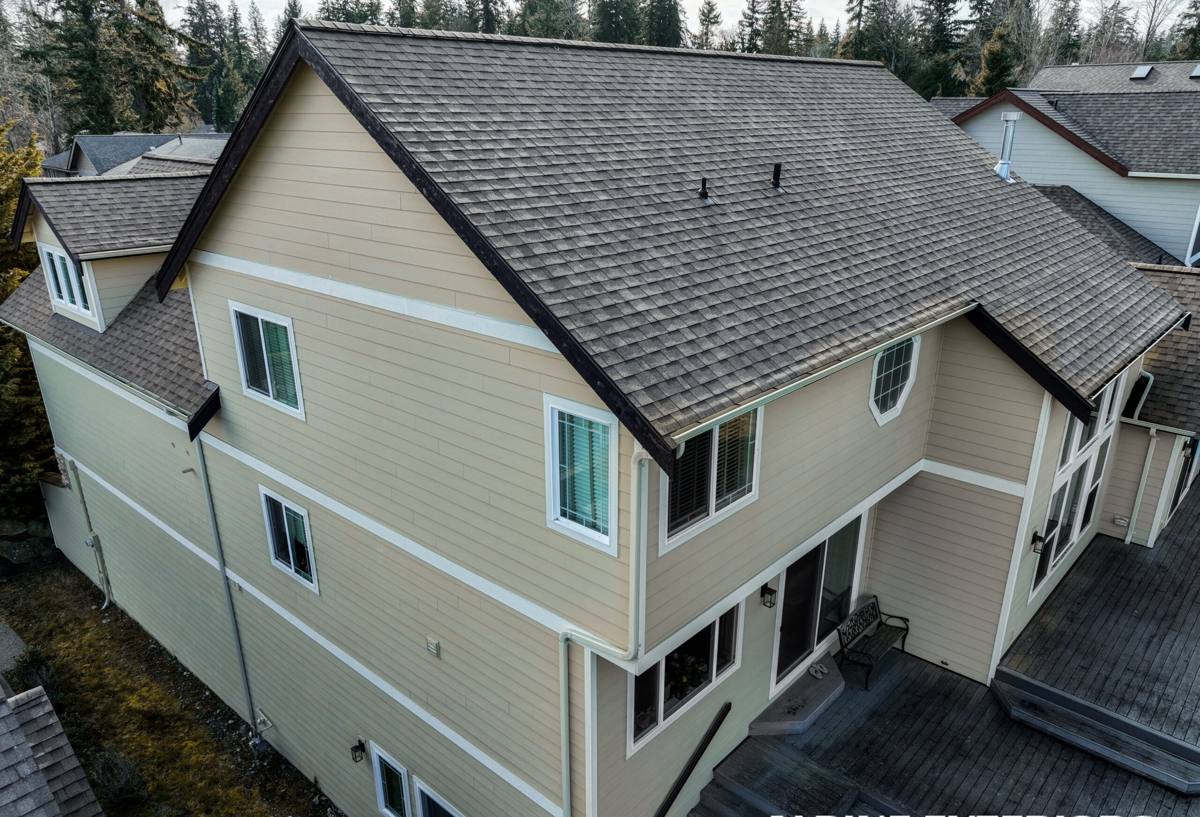
What Local Conditions Actually Do to a Deck
It helps to understand the specific failure points before talking about how to avoid them. In Custer and the surrounding Birch Bay area, the deck problems we get called out for tend to fall into a few repeating categories:
- Fastener corrosion. Standard or undersized coated screws and nails break down faster near the coast, leading to streaking, loose boards, and eventually structural movement.
- Moss and algae growth. Shaded decks, or decks with poor airflow underneath, hold moisture long after a rain and become a moss farm — which is both a slip hazard and a wood-rot accelerant.
- Ledger board and rim joist rot. Where the deck attaches to the house is the single most common point of hidden water intrusion and structural failure if flashing wasn't done correctly.
- Undersized or poorly spaced footings. Wet, expansive soils common in this region can shift over time, and footings that weren't sized or set correctly will show it as squeaking, sagging, or uneven boards within a few years.
None of these are exotic problems — they're the predictable result of building a deck without accounting for driving rain and a long moss season. The fix isn't complicated either, but it does require doing several things correctly at once rather than cutting a corner on any one of them.
What a Correctly Built Deck Involves
Framing and Structure
We frame with lumber and hardware rated for wet-use, exterior applications — not interior-grade material pressed into outdoor service. Joist spacing, beam sizing, and footing depth are set to actual load and soil conditions on your property, not a one-size-fits-all rule of thumb.
Ledger Attachment and Flashing
Where the deck meets the house is where we spend the most care. Proper flashing — installed so water is directed away from the house framing rather than behind the ledger board — is non-negotiable. This single detail is responsible for more rot damage than almost anything else we see on deck inspections.
Fasteners and Hardware
In a salt-air environment, fastener choice matters more than most homeowners realize. We use corrosion-resistant, coated or stainless hardware rated for the decking material being installed, and we match screws, joist hangers, and structural connectors to avoid galvanic corrosion between dissimilar metals.
Drainage and Airflow
Standing water is the enemy. We grade decking for proper runoff, keep board gaps consistent for drainage, and make sure there's enough clearance and airflow underneath the deck so the substructure can actually dry out between rain events instead of staying damp for weeks at a time.
Choosing the Right Decking Material for This Climate
There's no single "best" decking material — there's a best material for your budget, your maintenance appetite, and how much sun or shade your deck gets. Here's how the common options actually perform in a wet, salt-air coastal climate like Custer's:
| Material | Moisture Performance | Maintenance | Typical Lifespan Here |
|---|---|---|---|
| Pressure-treated lumber | Good if sealed regularly; prone to checking and moss without upkeep | Annual cleaning, re-sealing every 1-2 years | 10-15 years |
| Cedar | Naturally rot- and insect-resistant, but still needs finish maintenance in this climate | Cleaning and finish renewal every 1-3 years | 15-20 years |
| Composite decking | Excellent — doesn't absorb water or rot, resists mold better than wood | Periodic washing to prevent surface algae/moss film | 25-30+ years |
| PVC/capped polymer | Excellent — fully sealed surface, best moisture resistance available | Low — occasional washing | 25-30+ years |
We install all of these depending on what fits your project, and we'll walk you through the honest trade-offs — composite and PVC cost more up front but largely eliminate the sealing and moss-scrubbing routine that wood decks need out here. Wood costs less initially but asks for more of your time every year to keep it performing well.
A Note on Wood Species and Finishes
If you go with wood, the finish matters as much as the species. A film-forming stain or paint traps moisture underneath if it fails or chips, which can accelerate rot rather than prevent it. We generally recommend penetrating, breathable finishes for cedar and treated lumber in this climate, applied on a consistent schedule rather than "whenever it starts looking gray."
Moss, Algae, and the Realities of Upkeep
Even a well-built deck will grow moss in Whatcom County if it sits in shade and never fully dries out — that's just the reality of this climate. The goal of good design and material choice isn't to eliminate maintenance entirely, it's to reduce how much is needed and make what remains manageable:
- Keep gutters and downspouts clear so roof runoff isn't dumping directly onto or under the deck
- Sweep debris (leaves, needles) off the deck surface regularly — organic matter holds moisture against the boards
- Rinse or lightly scrub composite and PVC decking once or twice a year to prevent surface algae film from building up
- Re-seal wood decking on the schedule appropriate to its finish, not "when it looks bad"
- Check the area under the deck periodically for standing water or blocked drainage
Our Process, Start to Finish
We keep the process straightforward and transparent:
- On-site assessment. We look at your existing deck (if there is one), the ledger attachment point, drainage, sun/shade exposure, and soil conditions before recommending anything.
- Design and material discussion. We go over decking material, railing style, and layout options against your budget and how much upkeep you want to take on long-term.
- Written estimate. A clear scope of work and price — no vague allowances that turn into surprise add-ons later.
- Permitting. We handle the permit process where required so the structure is inspected and code-compliant, which also matters for insurance and resale.
- Construction. Framing, flashing, and structural work first — this is the part that determines how the deck performs in 10 years, even though it's the part that gets covered up.
- Final walkthrough. We go over the finished deck with you, including care and maintenance specific to whatever material was installed.
Permits and Code Considerations in Whatcom County
Deck projects above a certain size or height typically require a permit, and structural elements like ledger attachment, footing depth, and guardrail height are all subject to code review. Skipping permitting on a deck that requires one isn't just a legal risk — it can also complicate insurance claims and create real problems when you go to sell the house and a buyer's inspector flags unpermitted structural work. We handle this as a standard part of the job rather than something you have to manage yourself.
What to Ask Before Hiring a Deck Contractor
Whether you hire us or someone else, these are worth asking any contractor bidding a deck project in this climate:
- What fastener and hardware grade will be used, and is it rated for coastal/wet-use exposure?
- How will the ledger board be flashed against the house?
- Will the project be permitted, and who handles that process?
- What's the footing depth and spacing based on, and does it account for local soil conditions?
- What does the written estimate include — and what's specifically excluded?
- What maintenance will this decking material actually require in a few years, honestly?
A contractor who can answer these clearly and specifically, without hedging, is one who's actually thought through how the deck needs to perform here — not just how it needs to look on installation day.
Why It Matters to Hire a Crew That Already Works This Area
A deck built by a crew unfamiliar with Whatcom County's coastal conditions can look identical to a properly built one on the day it's finished. The difference shows up two, five, and ten years later — in fastener staining, moss growth in places it shouldn't be, or soft spots near the ledger board that started as a small flashing gap. We build decks in Custer and around Birch Bay regularly, which means the framing details, fastener selection, and drainage planning that matter here aren't an afterthought — they're just how we build every deck in this area, by default.
If you're planning a new deck or need to replace one that's showing its age, we're happy to take a look and give you a straightforward, no-pressure estimate — just fill out the form below and we'll get in touch.