 Birch Bay Roofing
 Custer's Roofing Reality
Custer sits a few miles inland from the Birch Bay shoreline, but it doesn't escape the weather that comes off the Salish Sea. Marine air still rolls through, fog still sits low in the low-lying fields and yards, and the rain that soaks Whatcom County from October through April doesn't stop just because a property is set back from the water. Add in the shade from mature fir and cedar stands that many Custer lots still have, and you get the same three problems that drive roofing decisions all over this corner of the county: moisture that lingers, salt-laden air that speeds up corrosion, and moss that never really goes dormant.
For homeowners weighing a roof replacement, that combination changes what "the right roof" actually means. A material that performs fine in a drier inland climate can struggle here. Metal roofing, installed correctly, is one of the few systems that holds up to all three stressors at once — which is why we install more of it in Custer and the surrounding Birch Bay area every year.
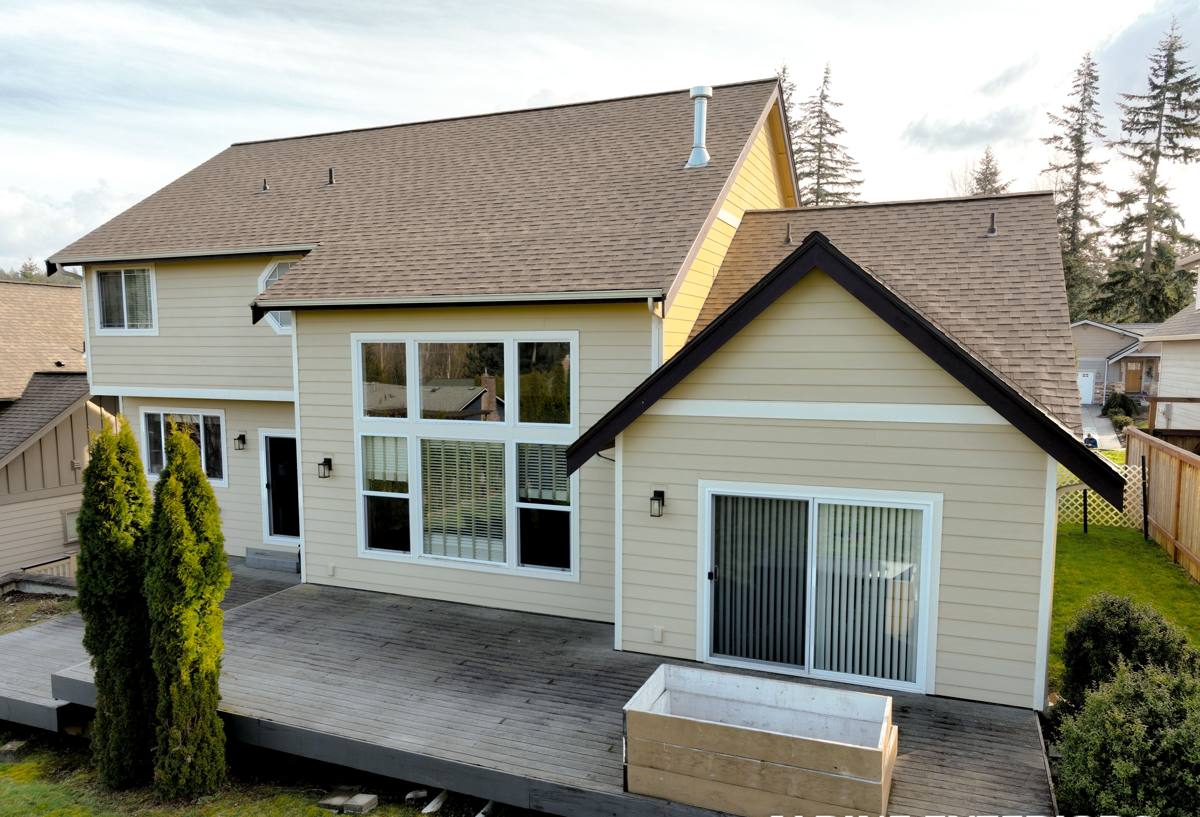
What Salt Air and Moss Season Actually Do to a Roof
It's worth understanding the mechanics before you decide on a material, because the failures we see in this area follow a pattern.
Salt-Laden Air
Airborne salt from the bay doesn't need to be blowing hard to do damage — a steady, low-level exposure over years is enough. It accelerates corrosion on unprotected metal fasteners, flashing, and any exposed steel components. Roofs that weren't detailed with corrosion-resistant hardware from the start tend to show rust streaks at nail heads and flashing edges well before the rest of the roof looks worn.
Driving Rain
Whatcom County storms often come in sideways, not straight down. That matters because it pushes water sideways under laps, ridge caps, and around penetrations that would stay dry in a calmer climate. Roofing systems here need real wind-driven-rain protection at every transition point — valleys, chimneys, skylights, and wall-to-roof junctions — not just adequate coverage on the open field of the roof.
Moss and Sustained Moisture
Shaded lots and consistently damp conditions give moss a long growing season in this area. On roofing materials with any texture or granule surface, moss and lichen get a foothold in the laps and valleys, hold moisture against the roof deck, and shorten the material's working life. Moss doesn't just sit on top — its root structure lifts and separates roofing layers over time.
Why Metal Roofing Fits This Climate
Metal roofing addresses each of those three problems directly, which is the honest reason we recommend it so often for Custer and Birch Bay properties, not because it's trendy.
- Smooth, hard surface: moss and lichen have almost nothing to grip compared to a granular or textured roofing surface, so growth is dramatically slower and easier to keep off entirely with routine care.
- Continuous water shedding: long panel runs with far fewer horizontal laps than shingles mean fewer opportunities for wind-driven rain to work its way underneath.
- Corrosion-resistant coatings: modern steel and aluminum roofing systems use factory-applied coatings (commonly Galvalume-coated steel or marine-grade aluminum with PVDF-type paint finishes) engineered specifically for coastal and marine-air exposure.
- Long service life: a properly installed metal roof in this climate is measured in decades, not years, which matters when you're weighing the higher upfront cost against a shingle roof you might redo twice in the same span.
None of that means metal roofing is the only reasonable choice, or that every roof needs it. It means that for homes dealing with heavy shade, persistent moss pressure, or direct salt-air exposure, metal roofing solves problems that other materials only manage.
Metal Roofing Options Compared
Not all metal roofing is the same, and the right panel type depends on the home's roof pitch, budget, and how visible the roof is from the street.
| Panel Type | Best For | Trade-Offs |
|---|---|---|
| Standing seam (concealed fastener) | Homes wanting the longest service life and cleanest look | Higher material and labor cost; requires an experienced installer to get seams and clips right |
| Exposed-fastener panel | Budget-conscious projects, outbuildings, secondary roofs | Fasteners penetrate the panel face, which means gasket seals need periodic inspection and eventual replacement |
| Stone-coated steel | Homeowners who want a shingle or shake look with metal's durability | More surface texture than smooth panel, so it needs the same moss vigilance as other textured roofing |
| Aluminum panel systems | Properties with the most direct, sustained salt-air exposure | Softer material than steel, so hail and impact resistance is a consideration |
For most Custer homes we walk, standing seam steel with a quality coating strikes the right balance of cost, appearance, and long-term corrosion resistance. Where a home sits closer to open water and gets more direct salt exposure, aluminum is worth the conversation.
What a Correct Metal Roof Installation Actually Involves
Metal roofing rewards a careful installer and punishes a rushed one. The material itself can last 40-plus years, but that's only true if the details underneath it are done right the first time — because a metal roof is not something you casually pull apart to fix a mistake later.
Deck and Underlayment
We check the roof deck for soft spots or moisture damage before anything goes down, and we install a synthetic or high-temp underlayment rated for the panel type. In valleys and around penetrations, we add self-adhering membrane specifically to counter the wind-driven rain this area sees.
Fasteners and Clips
Given the salt-air exposure around Birch Bay, we use fasteners and clip hardware matched to the panel material — mismatched metals against each other cause galvanic corrosion, which shows up as premature rust at every fastener point. This is one of the most common shortcuts we find when we inspect older or improperly installed metal roofs.
Flashing and Transitions
Ridge caps, valleys, and wall-to-roof transitions get custom-formed flashing, not generic trim pieces stretched to fit. This is where driving rain finds its way in on a poorly detailed roof, and it's the area that takes the most hands-on skill to get right.
Ventilation
Metal roofs need a properly vented assembly underneath to manage condensation, especially given how much moisture sits in this area's air for large parts of the year. We confirm intake and exhaust ventilation is balanced before panels go on, not after.
Our Process, Start to Finish
- On-site assessment: we walk the roof, check the deck condition, note shade and moss exposure, and measure for panel layout.
- Written estimate: a clear scope covering panel type, underlayment, flashing details, and ventilation work — no vague line items.
- Material order and scheduling: metal panels are often fabricated to the roof's exact measurements, so we confirm details before ordering.
- Tear-off and deck prep: old roofing removed, deck inspected and repaired as needed before anything new goes down.
- Installation: underlayment, flashing, panels, and trim installed in sequence with attention to every transition point.
- Final walkthrough: we go over the finished roof with the homeowner and answer questions about care and warranty coverage.
What Metal Roofing Costs and What Drives the Price
Metal roofing costs more upfront than asphalt shingles, and being upfront about why is more useful than a single number. Actual pricing depends on panel type, roof complexity, and current material costs, but the factors below are what move the estimate up or down on any given Custer home.
| Cost Factor | Why It Matters |
|---|---|
| Panel type | Standing seam runs higher than exposed-fastener panel due to material and labor |
| Roof complexity | Multiple valleys, dormers, and penetrations add flashing labor and material |
| Roof pitch and access | Steep or hard-to-access roofs increase labor time and safety equipment needs |
| Deck condition | Rot or soft decking found during tear-off adds repair cost before panels go on |
| Coating and gauge | Heavier-gauge metal and premium coatings cost more but extend service life in salt air |
We'd rather walk a homeowner through these variables on their actual roof than quote a number that doesn't hold up once we're up there measuring.
Keeping a Metal Roof Performing in This Climate
Metal roofing needs less maintenance than most materials, but "less" isn't "none" — especially with the moss pressure and salt air this area sees.
- Clear debris and needle buildup from valleys and around penetrations at least once a year
- Rinse off salt residue and organic buildup rather than letting it sit against the panel surface
- Check fastener heads and gasket seals on exposed-fastener systems every few years
- Trim back overhanging branches to reduce shade, debris, and moss pressure on the roof
- Have flashing and transition points inspected after any major windstorm
- Address scratches or coating damage promptly — bare metal exposed to salt air corrodes faster than coated metal
Why a Crew That Already Works Custer Matters
Roofing companies that work all over Western Washington aren't wrong about metal roofing in general — but the specifics of installing it well in Custer and around Birch Bay come from doing it here repeatedly. That means knowing which fastener and flashing combinations hold up against this area's salt exposure, understanding how much moss pressure a given lot's shade and drainage will create, and having already worked through the wind-driven rain details that generic installation guides don't cover. It also means being reachable locally if a question comes up after the job is done, instead of a call center routing you to whoever's available next.
If you're weighing a metal roof for a Custer property, we're glad to walk it with you, look at the specific shade and exposure conditions on your lot, and give you a straightforward estimate — no pressure, no sales script. The form below gets you started whenever you're ready.