 Birch Bay Roofing
 Storm Damage in Nooksack Isn't Like Storm Damage Everywhere Else
Homes in the Nooksack area near Birch Bay deal with a specific combination of punishment that a lot of roofing crews from outside Whatcom County simply aren't tuned into. Salt-tinged air off the water works into fasteners and flashing over time. Winter storms bring driving rain that comes in sideways, not straight down, which means water finds its way into places a roof built for a drier climate would never need to defend. And the long, wet moss season here does quiet damage year-round that most homeowners don't notice until a storm exploits it.
That's the real story behind most "storm damage" calls we get in this area: the storm doesn't create the weakness, it finds one that's already there and blows it wide open. A roof that's been slowly losing granules to moss, or that has a flashing seam that's been seeping just a little for two seasons, is the roof that fails dramatically the next time wind gusts hit 50+ mph off the Strait. Understanding that connection is the difference between a repair that lasts and one that just patches the symptom.
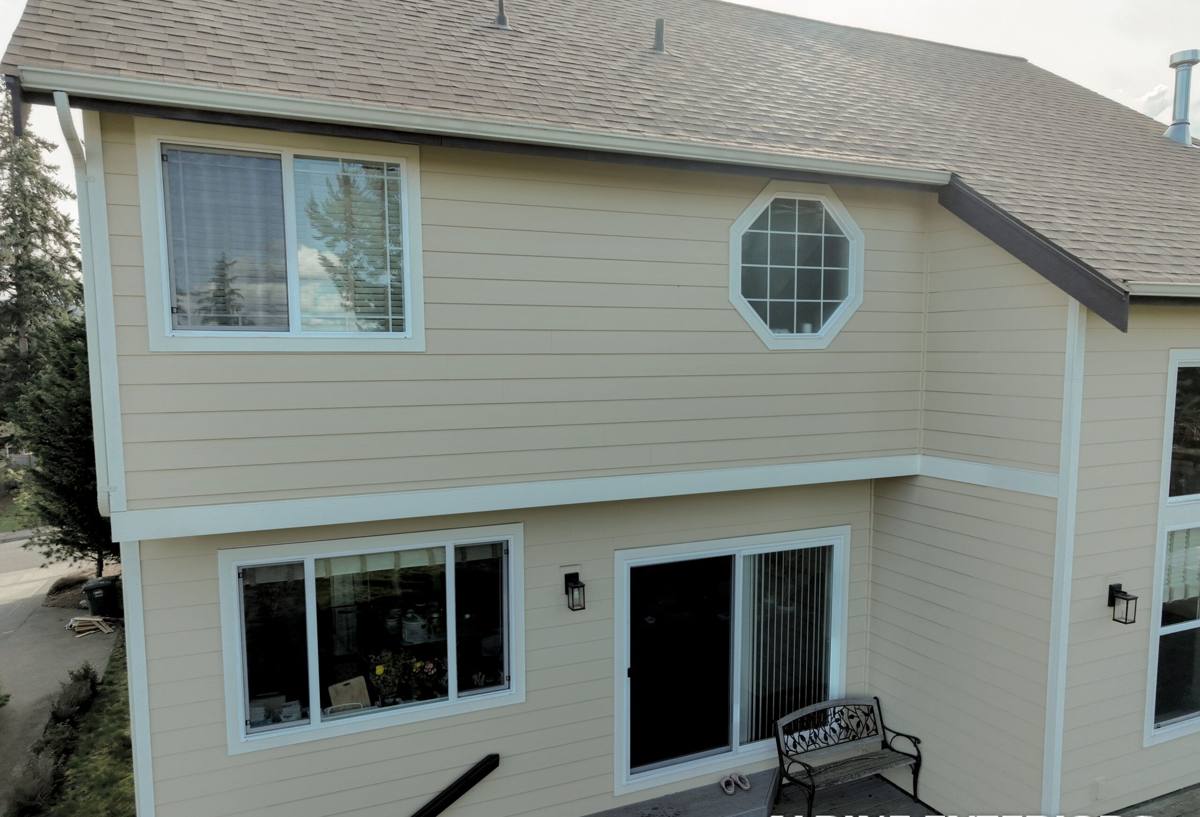
What Actually Counts as Storm Damage Here
Storm damage isn't only a tree branch through the decking. In Whatcom County, most of what we repair after a storm falls into a few categories:
- Wind-lifted or creased shingles, especially along ridge lines and roof edges where uplift pressure is highest
- Wind-driven rain intrusion at flashing points — chimneys, skylights, wall-to-roof transitions — where a seal that was marginal finally gives way
- Displaced or cracked flashing and step flashing from repeated freeze-thaw and wind flex
- Debris impact damage from branches or airborne material during high-wind events
- Accelerated moss and organic growth that gets pushed into gaps and seams by heavy rain, holding moisture against the roof deck
- Gutter and downspout damage that redirects water where it shouldn't go, soaking fascia and eaves
Notice that moss shows up on that list. In a lot of climates it wouldn't. Here, it's one of the more common contributing factors we find once we get up on a roof after a storm — not the headline damage, but the reason a headline problem happened.
Signs a Nooksack-Area Homeowner Should Not Ignore
Most storm damage is visible from the ground or attic if you know where to look. After any significant wind or rain event, it's worth doing a quick check:
- Shingles that look curled, lifted, or missing along the roof edges or ridge
- Granules collecting in gutters or at the base of downspouts after a storm
- New or worsening water stains on ceilings, especially near chimneys, skylights, or exterior walls
- Daylight visible through the roof deck from inside the attic
- Soft or spongy spots when the roof is walked (a sign for a professional to check, not a DIY test)
- Moss or dark streaking that's thickened noticeably compared to last season
- Sagging or uneven gutter lines after heavy wind
None of these by themselves mean you need a full roof replacement. But each one is a reason to get a real inspection before the next storm rolls through, not after.
What a Correct Storm Damage Repair Actually Involves
It starts with the deck, not the shingles
A repair that only replaces damaged shingles without checking the roof deck underneath is a repair that's guaranteed to fail again. Wind-driven rain and standing moisture can soften plywood or OSB decking long before it's visible from the surface. Any legitimate storm repair includes pulling back the damaged area far enough to inspect the deck, not just swapping out what's obviously broken.
Flashing gets the same scrutiny as the field
Most leaks that get blamed on "the shingles" actually originate at flashing — chimneys, vent pipes, skylights, valleys, and wall intersections. A storm repair that ignores flashing condition is treating the symptom. We check and, where needed, replace flashing as part of the repair rather than working around it.
Underlayment matters more here than in drier regions
Given how much driving rain this area sees, the underlayment beneath the shingles is doing real work, not just serving as a backup. Where a repair opens up a section of roof, we use underlayment appropriate to the exposure — particularly at eaves, valleys, and low-slope transitions where wind-driven water is most likely to get pushed uphill under the shingle line.
Matching materials, not just covering the hole
Shingle color and profile drift over a few years of sun and weather exposure. We match as closely as the existing product allows and are upfront when an exact match isn't possible, rather than letting a homeowner be surprised by a visible patch after the work is done.
Our Process for a Storm Damage Call in Nooksack
- Inspection. We get on the roof (not just a ground-level look) and check the deck, flashing, and surrounding shingle courses, not just the obviously damaged area.
- Documentation. We note and photograph the damage in a way that's useful if you're filing an insurance claim, including cause-related details that adjusters look for.
- Honest scope. We tell you plainly whether this is a targeted repair, a larger section replacement, or something closer to a full roof job — and why.
- The repair itself. Deck, flashing, underlayment, and shingle work done in that order, with attention to how the repaired section ties into the surrounding roof so it isn't a weak seam waiting for the next storm.
- Follow-through. We check the work holds after the next real weather event, not just on a dry afternoon.
Repair or Replace? What Actually Drives That Decision
Not every storm-damaged roof needs full replacement, and not every roof that "just needs a patch" should get one. Here's how we weigh it:
| Factor | Leans toward repair | Leans toward replacement |
|---|---|---|
| Roof age | Under 12-15 years, otherwise sound | Near or past expected service life |
| Extent of damage | Isolated to one section or slope | Spread across multiple slopes or the ridge |
| Deck condition | Solid, dry decking under damaged area | Soft or water-compromised decking found |
| Moss/organic history | Minor, surface-level growth | Long-term moss holding moisture under multiple courses |
| Prior repair history | First significant issue | Repeated patches on the same sections |
We'll walk you through where your roof lands on this before recommending either path — a repair should never be sold to you as a stopgap for a roof that actually needs replacing, and a replacement shouldn't be pushed on a roof that a proper repair will genuinely fix.
Materials That Make Sense for This Climate
Our standard for repairs and tie-ins in the Nooksack and Birch Bay area is driven by the conditions, not by what's cheapest to stock. We lean toward algae- and moss-resistant shingle products where the existing roof allows it, because standard shingles in this climate simply grow moss faster and that shortens the life of the repair. For flashing, we favor materials and installation methods that hold up to salt-air exposure rather than ones that look fine for a season and then start corroding at the seams. These aren't upsells — they're the difference between a repair that needs revisiting in three years and one that doesn't.
Insurance Claims and Storm Damage
Many storm repairs in this area are at least partially covered by homeowner's insurance, particularly when wind or falling debris caused clear, datable damage. We're not a public adjuster and won't pretend to be, but we document damage in a way that supports your claim — cause, extent, and photos taken before any repair work begins. If you're unsure whether a claim is worth filing, we'll give you a straight answer on whether the damage looks storm-caused or more consistent with gradual wear, since insurers treat those very differently.
Why a Crew That Already Works This Area Matters
Storm damage repair isn't the place to gamble on an out-of-town crew chasing storm work through Whatcom County. A contractor who already works in Nooksack and the greater Birch Bay area knows what these roofs are actually up against — the salt air, the wind exposure off the water, the moss pressure that never fully lets up even in summer. That knowledge shows up in small decisions during a repair: which flashing detail to reinforce, which underlayment to use at a valley, which sections of an aging roof are worth strengthening while we're already up there. It also means we're reachable after the job is done if something needs a second look, not a phone number that stops answering once the storm season ends.
If a recent storm has left your Nooksack-area roof with missing shingles, a new leak, or damage you're not sure how to read, we're glad to take a look. We offer a free, no-pressure estimate — get in touch using the form below and we'll get out to assess the roof honestly, whether that means a small repair or something more.