 Birch Bay Roofing
 Why Decks in Blaine Wear Out Faster Than Homeowners Expect
Blaine sits right up against the water in northern Whatcom County, and that location comes with a specific kind of weather punishment. Salt-laden air off the Strait of Georgia and Semiahmoo Bay works its way into fasteners, hardware, and end grain. Driving rain off the water doesn't just fall straight down — it gets pushed sideways into ledger boards, stair stringers, and any seam that isn't properly flashed. And then there's the moss season, which in this part of Washington isn't really a season at all — it's most of the year. Shade, moisture, and mild temperatures are exactly what moss and algae want, and a deck surface that stays damp for weeks at a time is an open invitation.
None of that means a deck in Blaine can't last. It means the deck has to be built and maintained with those specific conditions in mind, not built the way you'd build one in a dry inland climate and hoped it holds up. A lot of the decks we get called out to replace weren't failing because the homeowner did anything wrong — they were failing because the original build didn't account for what this stretch of coastline actually does to lumber and metal over ten or fifteen years.
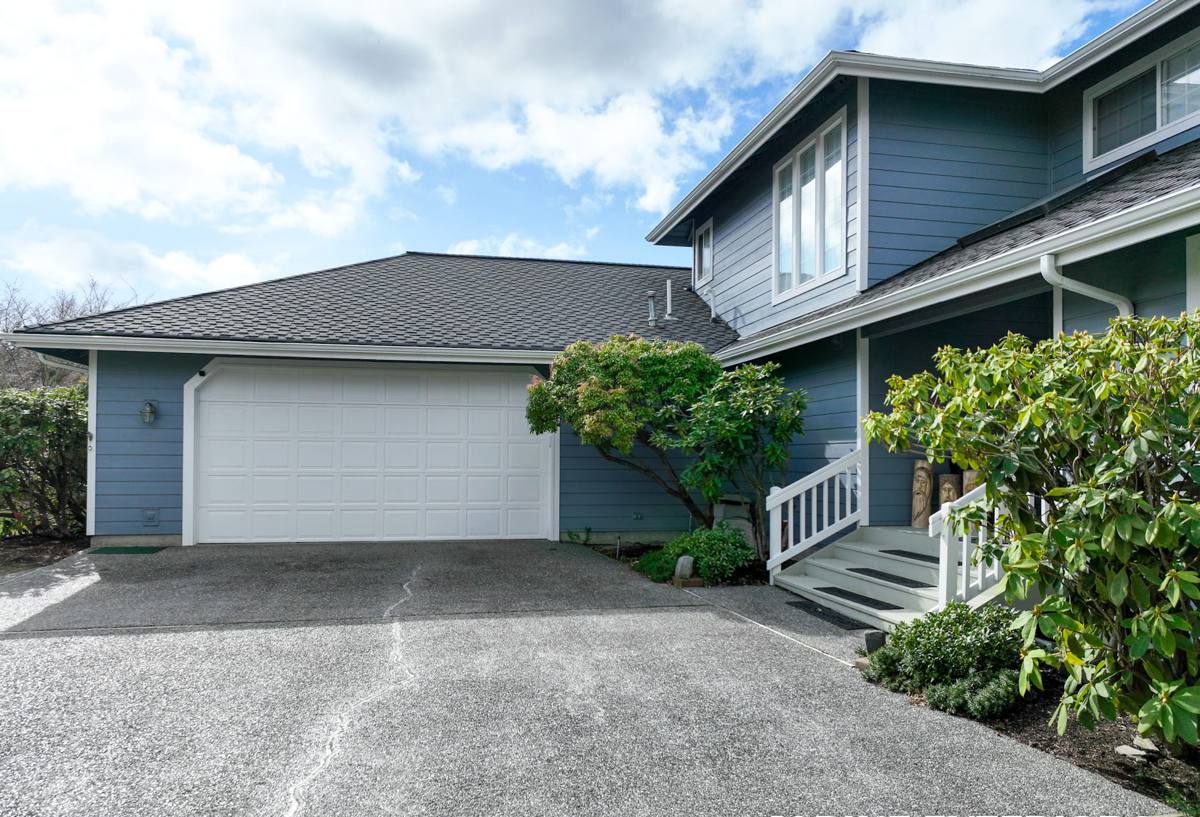
Signs a Blaine Deck Needs Replacement, Not Just Repair
Not every tired-looking deck needs to come out. But there's a point where patching stops making sense and full replacement becomes the honest recommendation. Here's what tips that decision:
- Soft, spongy decking boards, especially near the house or at board ends — usually means moisture has been sitting in the wood fibers
- Rust streaking or crumbling around fasteners and joist hangers — a sign the hardware itself is failing, not just cosmetic
- Ledger board separation or gapping from the house rim joist — a structural issue, not a surface one
- Persistent black or green staining that comes back within weeks of cleaning — the moss and algae have gotten into the wood, not just sitting on top of it
- Wobble or give in the railing posts or stair stringers — often means the framing underneath has started to rot
- A deck older than 15-20 years built with older-generation pressure-treated lumber and standard (non-coated) fasteners
If what you're seeing is limited to a few boards or a railing section, repair is often the right call and we'll say so. Replacement makes sense when the framing, ledger connection, or fastener system has been compromised — patching those issues just delays a bigger problem.
What Rot and Corrosion Actually Look Like Here
In a drier climate, deck failure tends to show up as UV graying and surface checking. In Blaine, it shows up differently — corrosion at the fastener heads first, then softness in the wood around those fasteners, then finally visible sagging. By the time a board is visibly sagging, the framing underneath it has usually been wet for a long time. That's why we look at fastener condition and ledger flashing first when we evaluate a deck, not just the surface boards.
What a Correct Deck Replacement Actually Involves
A deck replacement isn't just pulling up old boards and screwing down new ones. Done properly, it touches everything from the ground up.
Substructure and Framing
Posts, beams, and joists all get inspected and, where the layout allows it, upgraded to current spacing and sizing standards. Older decks in this area were often built to lighter framing specs than current code calls for. We won't reuse compromised framing just because it's cheaper — if a beam or post has taken on water damage, it comes out.
Ledger Board and Flashing
This is the single most important — and most commonly botched — part of any deck attached to a house. The ledger board is where the deck ties into your home's structure, and it's also the number one point where water gets into places it shouldn't. Proper flashing (metal flashing plus a self-adhering waterproof membrane behind it) keeps rain from running down behind the ledger and into your home's rim joist and framing. We treat this step as non-negotiable, even on smaller jobs.
Fasteners and Hardware
Standard zinc-coated screws and joist hangers corrode faster in salt air than most homeowners realize. For coastal replacements we spec hot-dip galvanized or stainless steel connectors and coated deck screws rated for ground contact and treated lumber. It costs a bit more up front. It's also the difference between hardware that's still solid in fifteen years and hardware that's rusting through in five.
Decking Surface
Whether you go with wood, composite, or PVC decking, the surface material only performs as well as what it's fastened to. We match board spacing, gapping, and fastening method to the specific product's manufacturer requirements — composite and PVC in particular have specific gapping and ventilation needs that, if ignored, void the warranty and trap moisture underneath.
Comparing Decking Materials for Salt Air and Moss
There's no single "best" decking material for every homeowner — it depends on budget, maintenance appetite, and how much of the deck sits in shade. Here's how the common options actually perform in Blaine's conditions:
| Material | Moisture & Salt Air Behavior | Moss/Algae Resistance | Maintenance |
|---|---|---|---|
| Pressure-treated wood | Good if properly sealed; end grain and fastener points are the weak spots | Low — needs regular cleaning and re-sealing to resist growth | Annual cleaning, re-sealing every 2-3 years |
| Cedar | Naturally decay-resistant but softer; still needs sealing near ground/water contact | Moderate — natural oils help, but shaded areas still need cleaning | Sealing every 1-2 years for appearance and protection |
| Composite decking | Excellent — doesn't absorb moisture into the board core the way wood does | Moderate to good depending on brand; surface texture affects how easily algae grips | Periodic washing, no sealing or staining required |
| PVC/capped polymer decking | Excellent — fully moisture-sealed board, best option directly over water-exposed framing | Good — smooth cap resists staining and growth better than uncapped composite | Occasional washing only |
We install all of the above. Our professional standard is that whatever material a homeowner chooses, the framing, flashing, and fastening underneath it has to be right — a premium composite board over poorly flashed framing will fail just as fast as cheap lumber, because the water damage happens underneath, out of sight.
What Affects the Cost of a Deck Replacement
Every deck is different, so we don't quote a number without seeing the site, but a few factors consistently move the price more than homeowners expect:
| Factor | Why It Matters |
|---|---|
| Framing condition | If posts, beams, or joists need replacement (common on older Blaine decks), that's added structural work beyond surface decking |
| Height and stair complexity | Multi-level decks and long stair runs add framing, railing, and code-compliance work |
| Material choice | Pressure-treated wood is the lowest upfront cost; composite and PVC cost more per board but need far less upkeep over time |
| Ledger and flashing scope | If the existing ledger connection needs to be opened up and re-flashed, that's additional labor most homeowners don't budget for |
| Railing style | Code-compliant railing height and baluster spacing, plus material choice, can swing cost noticeably |
We'll walk you through where your specific project lands and why, so there are no surprises once work starts.
Our Process, From Estimate to Final Walkthrough
The process is the same whether it's a small ground-level deck or a larger multi-level build:
- On-site evaluation. We look at the framing, ledger connection, and hardware condition, not just the surface — this is where we tell you honestly whether you need a replacement or just repairs.
- Written estimate. Scope, materials, and cost broken down clearly, with any structural findings noted up front rather than discovered mid-job.
- Permitting. We handle the permit application and inspection scheduling required for the jurisdiction your property falls under.
- Tear-off and disposal. Old decking, framing, and hardware removed and hauled off.
- Framing and ledger work. Posts, beams, joists, and the critical ledger flashing installed or replaced to current standards.
- Decking, railing, and stairs. Installed to the manufacturer's spec for whatever material you chose.
- Final walkthrough. We go over the finished deck with you, including basic care guidance specific to your material and site conditions, before we consider the job done.
Permits and Code Considerations in Whatcom County
Most deck replacements that involve structural changes — new framing, a different footprint, or railing height changes — require a permit, and depending on your specific property, that means working with either county or local building authorities. Guardrail height, baluster spacing, stair rise and run, and footing depth all have code requirements that get checked at inspection. Skipping the permit process might save time up front, but it creates real problems later — at resale, with insurance claims, or if the work has to be opened back up and redone to pass inspection retroactively. We handle this as a standard part of the job rather than an optional add-on.
Maintenance That Actually Extends a Blaine Deck's Life
A well-built deck still needs upkeep in this climate — the build quality determines how forgiving that maintenance schedule is, not whether maintenance is needed at all. A simple checklist that covers most of what matters:
- Sweep debris and standing leaves off the surface regularly, especially in shaded areas where moisture lingers longest
- Wash the surface at least once a year to interrupt moss and algae growth before it takes hold
- Check and clear gaps between boards so water and debris can drain rather than pool
- Inspect fastener heads and hardware annually for early rust staining
- Re-seal wood decking on the manufacturer or industry-recommended cycle — don't wait until it looks obviously dry or gray
- Keep gutters and downspouts near the deck clear so runoff isn't dumping extra water onto or under the deck
This short list does more to extend a deck's life in Blaine than any single product or coating. The decks that last are the ones where water is kept moving off the surface and out from underneath, consistently, year after year.
Why a Crew That Already Works Blaine Matters
Deck-building fundamentals are the same everywhere, but what fails first, and how fast, is local knowledge. A crew that works this stretch of Whatcom County regularly knows which fastener grades hold up against the salt air coming off the water, which sites need extra attention to shade and moss exposure, and what the permitting process actually looks like for properties in and around Blaine and Birch Bay. That's the kind of thing you only learn by building and replacing decks here repeatedly — not from a general specification sheet. We're based in Birch Bay and already do this work in the surrounding communities, which means fewer surprises during the estimate and a build that's specified for the conditions your deck will actually face, not generic conditions from somewhere else.
Get a Straightforward Estimate
If your deck in Blaine is showing soft boards, rusting hardware, or ledger separation, it's worth having someone look at the framing before deciding between repair and full replacement. We offer free, no-pressure estimates — use the form below to get one scheduled.