 Birch Bay Roofing
 Asphalt Shingle Roofing Built for Birch Bay Village
Birch Bay Village sits close enough to the water that every roof in the neighborhood is dealing with the same three things year-round: salt-laden air off the bay, long stretches of driving rain, and a moss season that seems to start earlier and last longer each year. None of that is unique to one street or one lot — it's the baseline condition for asphalt shingle roofs anywhere in this part of Whatcom County. A roof that would hold up fine forty miles inland can wear out faster here if it wasn't built with this specific exposure in mind.
This page is about one job in one place: asphalt shingle roofing for homes in and around Birch Bay Village. Not a general overview of shingle roofing everywhere — what actually matters for a roof that has to survive this microclimate, what a correct installation looks like, and how we run the job from first call to final walkthrough.
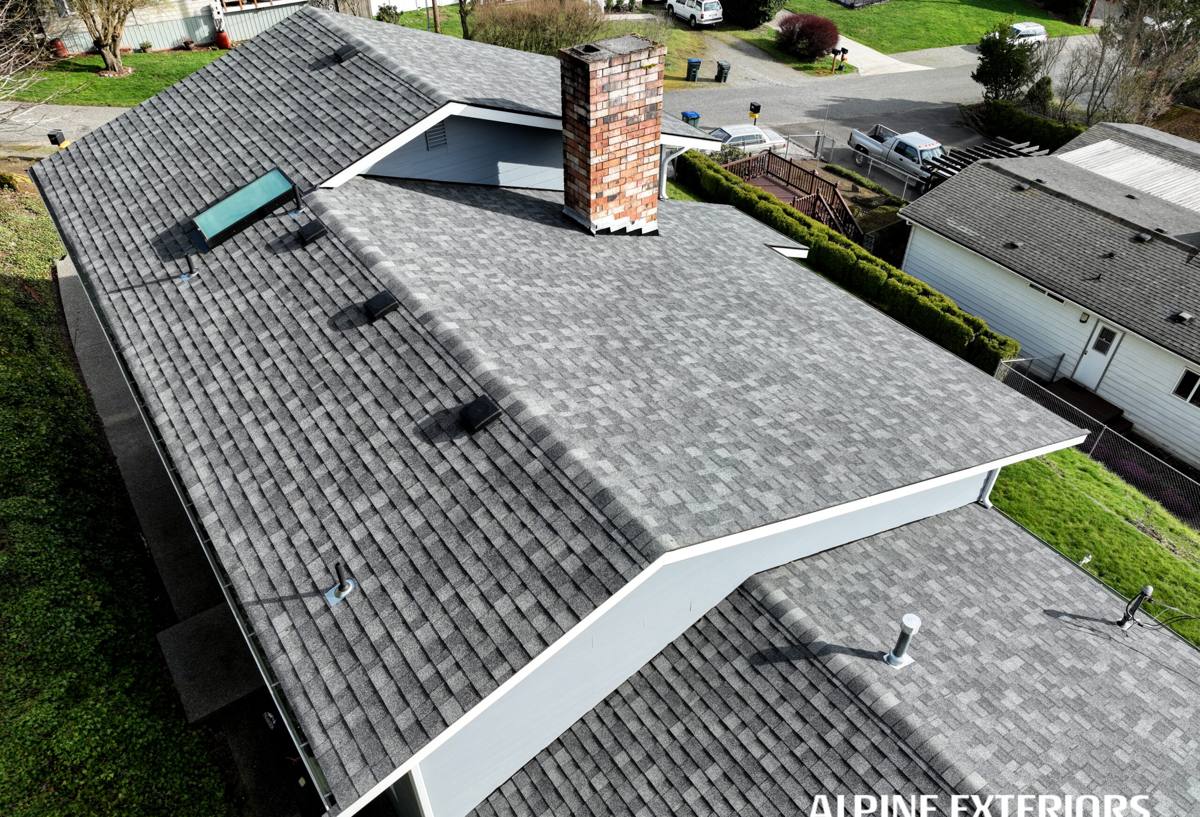
What Salt Air, Rain, and Moss Actually Do to a Shingle Roof
Each of these three factors wears on a roof differently, and understanding the mechanism is what separates a roof that lasts from one that doesn't.
Salt Air
Airborne salt from the bay settles on every exposed surface, including roofing. On its own, asphalt shingle isn't as vulnerable to salt corrosion as metal flashing, fasteners, and vents are. Over years, salt exposure accelerates corrosion on exposed metal components — drip edge, step flashing, pipe boots, nail heads — long before the shingle material itself is the weak point. That's why the metal components on a Birch Bay Village roof matter as much as the shingle brand on the bag.
Driving Rain
Wind-driven rain off the water doesn't just fall straight down — it gets pushed sideways and upward under shingle edges, at valleys, and around any penetration in the roof plane. A shingle roof designed for a dry climate can rely on gravity and basic lap coverage. A roof built for wind-driven rain needs sealed laps, correctly lapped underlayment, and extra protection at every transition point, because water here is actively looking for a way in sideways, not just dripping down.
Moss
Whatcom County's moss season runs long because the combination of shade, moisture, and mild temperatures rarely lets a roof fully dry out between rain events. Moss isn't just cosmetic — as it establishes on a shingle roof it holds moisture against the granule surface, lifts shingle tabs as it grows under the edges, and breaks down the asphalt mat over time. Roofs with poor sun exposure or heavy tree cover in Birch Bay Village are especially prone to it.
Choosing the Right Shingle for This Exposure
Not every asphalt shingle product is built the same way, and for a coastal, high-moisture area like this, a few product attributes matter more than they would somewhere drier.
| Shingle Attribute | Why It Matters Here |
|---|---|
| Algae-resistant granules (copper or zinc-infused) | Slows the growth of the dark streaking and moss-friendly buildup common in shaded, humid conditions near the water |
| Wind rating | Driving rain off the bay usually comes with wind — a shingle with a higher wind rating and proper fastening resists lifting at the edges |
| Sealant strip quality | The self-sealing strip is what keeps shingles bonded against wind-driven rain; a weak or improperly activated seal is a common cause of leaks that show up years later |
| Mat thickness / architectural profile | Thicker, laminated shingles shed water better at laps and resist granule loss longer under sustained wet conditions |
We don't push one brand as a blanket answer for every roof — the right shingle depends on the home's exposure, roof pitch, and budget. What we do insist on is algae-resistant granules on any roof in this area with shade or north-facing slopes, because installing a standard shingle in those conditions just moves the moss problem a few years down the road instead of solving it.
What a Correct Installation Includes in Birch Bay Village
The shingle itself is maybe half the story. The components underneath and around it are what actually keep a roof watertight through wind-driven rain and a wet, mossy winter.
Underlayment
We install synthetic underlayment as the primary water-resistive layer under the shingle field. It holds up better than old-style felt under repeated wet-dry cycles and gives the roof a second line of defense if wind ever drives rain up under a shingle edge.
Ice and Water Shield at Vulnerable Points
Along eaves, in valleys, and around every penetration — plumbing vents, chimneys, skylights — we install self-adhering waterproof membrane, not just underlayment. These are the spots where wind-driven rain and ponding are most likely to find a weakness, and they're the spots where a roof that looks fine from the ground is often already failing underneath.
Metal Flashing and Fasteners
Given the salt exposure here, we use corrosion-resistant flashing and fasteners rather than the bare minimum. It costs a little more up front and pays for itself by not becoming the first thing to fail on an otherwise sound roof.
Ventilation
A shingle roof with poor attic ventilation traps moisture underneath the deck, which shortens shingle life from below at the same time moss and rain are working on it from above. We check and correct intake and exhaust balance as part of every re-roof — it's not an upsell, it's part of doing the job right.
Nailing Pattern and Sealing
Correct nail placement and count directly affects wind resistance and how well the sealant strip bonds. Rushed or high-nailed installations are a common cause of shingles lifting in exactly the kind of wind-driven rain this area gets.
Our Process
- Roof assessment. We inspect the existing roof, decking, flashing, and ventilation, and check for moss growth patterns and any shaded areas that are driving faster wear.
- Written estimate. A clear scope of work and price — what's being replaced, what materials, and why, in plain language.
- Material selection. We walk through shingle options suited to the specific exposure of that roof, not a one-size answer.
- Tear-off and deck inspection. Old roofing comes off down to the deck so we can check for rot or soft spots before anything new goes down — covering up a bad deck is how roofs fail early.
- Installation. Underlayment, ice and water shield, flashing, shingles, and ventilation components installed to manufacturer specification and local code.
- Cleanup and walkthrough. Full site cleanup, magnetic sweep for stray fasteners, and a walkthrough so you understand what was done and what to expect going forward.
Maintenance Checklist for Birch Bay Village Homeowners
A correctly installed roof still needs occasional attention in this climate. Here's what actually moves the needle:
- Have moss treated or removed before it establishes under shingle tabs, not after it's visibly thick
- Keep gutters clear so wind-driven rain has somewhere to go instead of backing up under the roof edge
- Trim back overhanging branches to reduce shade and speed up drying time after rain
- Check exposed metal flashing and vent boots periodically for early corrosion or sealant wear
- After any major windstorm off the bay, do a visual check for lifted or missing shingles
- Confirm attic ventilation isn't blocked by insulation or debris
What Drives Cost on This Type of Job
| Factor | How It Affects the Job |
|---|---|
| Roof size and pitch | More surface area and steeper pitches take longer and require more safety setup |
| Number of layers to remove | Tearing off multiple existing layers adds labor and disposal cost versus a single layer |
| Deck condition | Rotten or soft decking found during tear-off needs replacement before shingles go down |
| Shingle tier chosen | Algae-resistant, higher wind-rated, and heavier laminated shingles cost more than basic 3-tab |
| Ventilation and flashing upgrades | Correcting inadequate ventilation or replacing degraded flashing adds scope but protects the new roof's lifespan |
| Access and site conditions | Trees, tight lot lines, or difficult roof access affect setup time and equipment needs |
Broad ranges exist for asphalt shingle re-roofs, but the honest answer is that it depends heavily on the factors above — we don't give a real number until we've actually looked at the roof.
Why a Crew That Already Works Birch Bay Village Matters
A roofing crew that works this area regularly already knows which streets sit in more shade, which lots catch the worst of the wind off the water, and which roof styles in the neighborhood tend to develop moss first. That's not a marketing point — it changes real decisions on the job, like where to add extra ice and water shield, which slopes need algae-resistant shingle, and how much ventilation correction a given roof actually needs. A crew unfamiliar with Whatcom County's coastal conditions is more likely to install a roof that would be perfectly fine somewhere drier and inland, and watch it underperform here.
We also know the practical side: permitting expectations, typical roof ages and styles in this part of the county, and what tends to go wrong first on the homes built in this area. That local pattern recognition is part of what you're paying for when you hire a crew that already works Birch Bay Village, not just a crew that's willing to drive here for one job.
Get a Straight Answer on Your Roof
If you're weighing a repair against a full replacement, or just want an honest read on how much moss season and salt exposure have taken out of your current roof, we're happy to take a look. Reach out for a free, no-pressure estimate using the form below — we'll tell you what we actually see, not just what sells a job.