 Birch Bay Roofing
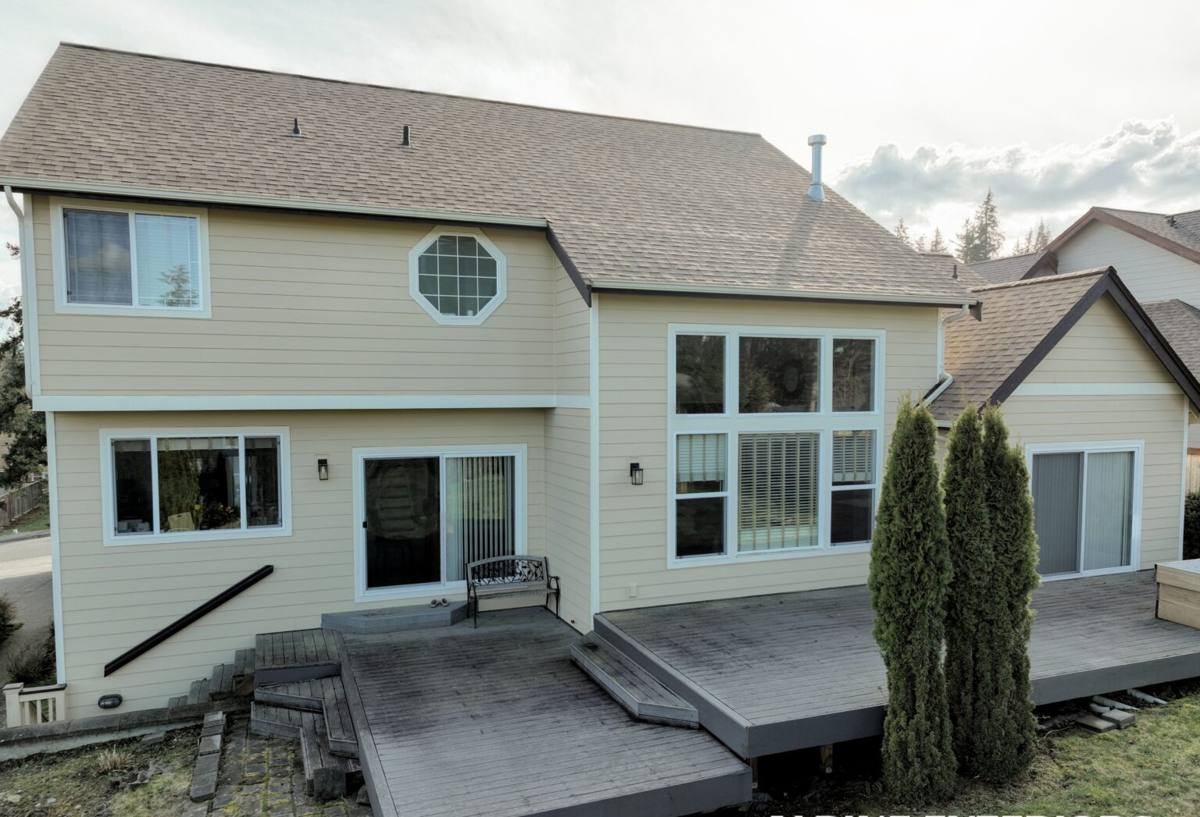
 Deck Repair for Nooksack Homes
Nooksack sits inland from the water at Birch Bay, but the same weather system governs both places. Whatcom County's marine layer pushes moisture and salt-carrying air across the whole area, and a deck built or repaired without that in mind will show problems years before it should. We work decks throughout this stretch of the county, and the repairs we do in Nooksack follow the same pattern we see everywhere nearby: moisture gets into a joint, a fastener, or a board edge that wasn't sealed correctly the first time, and from there it spreads.
This page covers deck repair specifically — not new deck construction, and not a general contractor's overview of decks everywhere. It's written for a homeowner in or near Nooksack trying to figure out whether their deck needs a patch job, a partial rebuild, or something more serious, and what a contractor who actually understands this climate should be doing differently.
Why Whatcom County Weather Is Hard on Decks
Three things do most of the damage to decks in this part of Washington, and they compound each other over a season instead of acting alone.
Driving rain and standing moisture
Rain here doesn't just fall straight down — wind off the bay pushes it sideways into ledger boards, stair stringers, and the undersides of rail posts. Any spot where water can collect instead of shed will eventually rot, no matter how good the lumber was on installation day.
Salt in the air
Proximity to Birch Bay means salt-laden air moves inland on a regular basis, especially with onshore wind. Salt accelerates corrosion in exposed fasteners, hinges, and metal connectors — the kind of hardware holding your deck's structure together, not just the visible screws in the decking boards.
A long moss season
Moss and algae aren't just cosmetic here. Whatcom County's wet season runs long, and shaded or low-airflow deck sections stay damp for weeks at a time. Moss holds moisture against wood and finishes, and it also makes deck surfaces genuinely slick — a safety issue on stairs and ramps, not just a maintenance one.
Signs a Nooksack-Area Deck Needs Repair
Most deck failures don't happen suddenly. They start small and get ignored because the deck still "feels fine" underfoot. Here's what we tell homeowners to check before it turns into a structural repair instead of a maintenance one:
- Soft or spongy spots when you walk across the decking, especially near the house or stair landings
- Gaps opening up between boards, or boards that have visibly cupped or crowned
- Rust streaks running down from screws, bolts, or joist hangers
- Any wobble in the railing when you lean on it — this is a safety issue, not cosmetic
- Persistent moss or dark staining in the same spots every year, even after cleaning
- Gaps or separation where the deck ledger board meets the house
- Stair stringers that feel less solid than the rest of the deck
- A musty smell coming from underneath the deck, which usually means trapped moisture
If you're seeing two or more of these, it's worth having someone look underneath the deck, not just at the surface. Surface boards can look fine while the framing underneath is already compromised.
What a Correct Deck Repair Actually Involves
A lot of "deck repair" in this region amounts to swapping a few obviously rotten boards and calling it done. That approach usually fails within a season or two because it doesn't address why that spot failed in the first place. A repair that's actually going to hold up needs to work through the deck in order:
1. Find the source, not just the symptom
Rot at a board edge is often a symptom of a flashing or drainage problem, not the actual failure point. We check where water is entering and where it's failing to leave before we touch a single board.
2. Inspect the structure underneath
Joists, beams, posts, and the ledger connection to the house all get checked for soft wood, rust, and movement. This is the part of the deck most homeowners never see, and it's where a serious problem actually lives.
3. Address fasteners and hardware, not just wood
Given the salt exposure in this area, corroded joist hangers, bolts, and screws get replaced with corrosion-resistant hardware rated for exterior and coastal-adjacent use — not just whatever matches on the shelf.
4. Match or upgrade the decking correctly
Replacement boards need to be sealed on all six sides — top, bottom, and both cut ends — before installation, not just on the visible surface afterward. End-cuts left unsealed are one of the most common reasons repaired sections fail again within a year or two.
5. Rebuild drainage and airflow, not just structure
If moss or standing moisture caused the original damage, we address the underlying cause — gaps for airflow, corrected slope, cleared debris — so the same section doesn't fail again in the same spot next season.
Repair or Replace: What Actually Drives the Decision
Homeowners often assume any deck showing damage needs to be torn out entirely, or the opposite — that anything can be patched. Neither is usually true. The honest answer depends on a few specific factors:
| Factor | Favors Repair | Favors Full Rebuild |
|---|---|---|
| Structural framing (joists, beams, posts) | Solid, no soft wood or rust found | Rot or corrosion found in multiple structural members |
| Extent of damage | Isolated to a few boards or one section | Spread across most of the deck surface |
| Ledger board connection | Sound, properly flashed | Rotted, improperly flashed, or missing flashing |
| Age of the deck | Under 10-15 years, built to code | Older deck nearing the end of its lumber's service life |
| Railing and stair safety | Solid, just cosmetic wear | Loose, wobbly, or failing load tests |
We'll always tell you honestly which side of this table your deck falls on. A repair that's going to need to be redone in two years isn't a good use of your money, and we'd rather say that upfront than sell a patch job that won't hold.
Decking Materials: What We Work With and Why
Repairs sometimes mean matching existing material, and sometimes it's a chance to upgrade a problem section to something more suited to this climate. Here's how the common options actually compare for a wet, moss-prone environment like Nooksack and Birch Bay:
| Material | Moisture Behavior | Maintenance | Trade-offs |
|---|---|---|---|
| Pressure-treated lumber | Resists rot when sealed and maintained | Needs re-sealing every 1-2 years in this climate | Lowest upfront cost; most vulnerable to neglect |
| Cedar | Naturally moisture-resistant, ages well | Periodic staining/sealing to hold color and protection | Higher cost; softer wood, more prone to surface wear |
| Composite decking | Doesn't rot; can still trap moisture if installed without airflow | Low — occasional cleaning | Higher upfront cost; installation quality matters more, not less |
We don't push one material as universally "best" — each has real trade-offs, and the right call depends on your budget, how long you plan to stay in the home, and how much maintenance you want to keep up with. What matters more than the material choice is installation quality: gaps sized correctly for drainage and expansion, fasteners rated for the exposure, and framing that was inspected before new boards went down over it.
Our Process for a Nooksack Deck Repair
We keep this straightforward because homeowners deserve to know what's actually happening to their deck and why.
- Full inspection — surface, structure, hardware, and drainage, not just the boards you can see
- Honest assessment — we tell you what's actually wrong, what's optional, and what's a safety issue
- Written scope and estimate — clear on materials, hardware, and what's being replaced versus repaired
- The repair itself — structure first, then hardware, then decking, then drainage and finish work
- Walkthrough — we show you what was done and what to watch for going forward
We don't upsell a full rebuild when a repair will genuinely hold, and we don't recommend a patch job when the framing underneath tells us otherwise.
Why a Crew That Already Works This Area Matters
Deck problems in Whatcom County follow patterns tied directly to this specific climate — how far salt air travels inland, how long moss season actually runs, which orientations get the least sun and stay damp longest. A crew that repairs decks in Nooksack and around Birch Bay regularly has already seen how these specific conditions play out on real homes, season after season. That's different from general repair experience from a drier or more sheltered region, where the same materials and techniques simply don't get tested against this level of moisture and salt exposure.
It also means faster, more accurate diagnosis. We're not guessing at what the local climate does to a deck over five or ten years — we're seeing it directly, on decks like yours, on a regular basis.
Keeping a Repaired Deck From Failing Again
A good repair buys you years, but a little upkeep protects that investment. In this climate, that means:
- Clearing leaves and debris from between boards before they trap moisture
- Treating moss and algae as soon as it appears, not after it's established
- Checking railings and stairs for looseness at the start of each wet season
- Re-sealing wood decking on the schedule appropriate to the material, not "when it looks bad"
- Keeping gutters and downspouts clear so runoff isn't draining directly onto the deck
If you're not sure what your deck needs, or you just want an honest read on whether it's a repair or a bigger job, we're glad to come take a look. We offer free, no-pressure estimates for deck repair work in Nooksack and the surrounding Birch Bay area — use the form below to get started.