 Birch Bay Roofing
 Custom Decks Built for Nooksack's Weather, Not Against It
A deck in Nooksack has to earn its keep differently than a deck in a dry inland climate. Whatcom County weather doesn't give lumber, fasteners, or finishes much of a break — long stretches of driving rain, a moss season that can run half the year in shaded yards, and the salt-tinged air that rolls in off the Salish Sea and settles over this whole corner of the state. None of that is a reason to skip a deck project. It's just the reason a Nooksack deck needs to be built differently than a catalog plan from a warmer, drier region.
We build custom decks for homeowners in and around Nooksack with that climate in mind from the first sketch, not as an afterthought once the boards are down. That means specific choices about framing, fasteners, drainage, and material — decisions that don't show up in a glossy brochure but show up in how the deck looks and performs five, ten, and twenty years out.
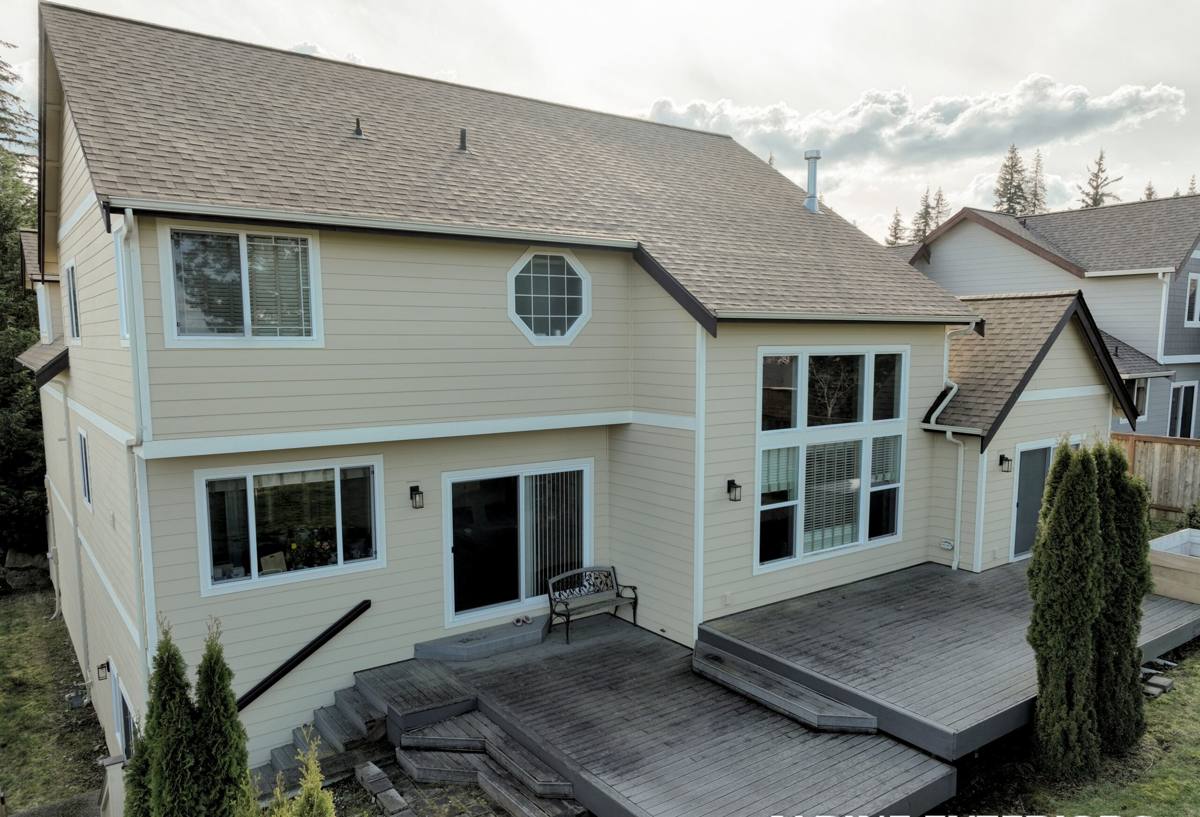
What Nooksack Homes Actually Need From a Deck
Most of the decks we're asked to replace or repair in this area didn't fail because the owner did anything wrong. They failed because they were built for a different climate, or built fast without attention to the details that matter here. The three culprits show up again and again:
- Trapped moisture — ledger boards and joists that never fully dry out between rain events, leading to rot from the inside out.
- Moss and algae buildup — shaded decks and north-facing yards grow a slick green film that isn't just unattractive, it holds moisture against the wood and makes stairs and walking surfaces genuinely dangerous.
- Corroding hardware — the salt-influenced air along this stretch of Whatcom County speeds up corrosion on fasteners, brackets, and connectors that weren't rated for it.
A deck that's designed around these three issues from the start will simply cost less to own over its lifetime — fewer emergency repairs, less power-washing, and no unpleasant surprises when you finally pull up a board to check the framing underneath.
Sun, Shade, and Drainage on Your Specific Lot
Nooksack properties vary a lot in how much direct sun a deck actually gets, and that changes the maintenance schedule and material choice more than most homeowners expect. A deck tucked under mature trees or on the north side of a house will hold moisture and grow moss faster than one that gets afternoon sun. We walk the actual site — not a generic lot — and factor in tree cover, slope, and how water moves across your yard before we recommend a structure, a decking material, or a finish.
Material Options for a Nooksack Climate
There's no single "best" decking material — there's a best material for your budget, your maintenance appetite, and how much shade and rain exposure your specific deck will see. Here's how the common options actually compare once you factor in this region's weather:
| Material | Upfront Cost | Moisture & Moss Resistance | Ongoing Maintenance |
|---|---|---|---|
| Pressure-treated fir/pine | Lowest | Fair — needs sealing to perform well | Annual cleaning and re-sealing recommended |
| Cedar | Mid | Good — naturally rot- and insect-resistant | Periodic oiling or staining to hold color and resist moss |
| Composite decking | Higher | Very good — won't rot, but can still grow surface moss/algae in shade | Occasional wash-down; no sealing or staining |
| PVC/capped composite | Highest | Excellent — fully sealed surface | Lowest — mostly rinsing off pollen, moss film, or debris |
Composite and PVC boards have gotten a lot of attention for good reason in a climate like ours — they don't absorb water the way wood does, which matters when a deck sits wet for days at a stretch. But they're not maintenance-free in a moss-prone yard; a shaded composite deck still needs periodic cleaning, it just doesn't need sealing or staining. Cedar remains a solid, honest choice for homeowners who want a natural look and are willing to keep up with oiling every couple of years. We'll walk through the real trade-offs for your yard rather than pushing whatever has the best margin.
What's Under the Boards Matters More Than What's On Top
Anyone can screw decking boards to a frame. What separates a deck that lasts from one that doesn't is almost entirely in the structure underneath — the part that never gets photographed and rarely gets asked about.
Framing and Ledger Attachment
The ledger board — where the deck attaches to your house — is the single most common failure point in Pacific Northwest decks, because it's the spot where wall moisture and deck moisture meet. We flash it properly, use appropriately rated fasteners, and make sure there's a gap or flashing detail that lets water shed away from the house rather than pooling against the siding.
Joist Protection
Joists that sit in standing water or trap moisture against untreated cuts are where rot starts, usually invisibly, under a deck that still looks fine from above. We use joist tape or an equivalent moisture barrier on top of the joists and treat any field cuts before they're covered, so the frame isn't relying on the original factory treatment alone to survive years of Whatcom County rain.
Footings and Post Bases
Post bases that sit directly on or near grade stay wet longer and corrode faster in salt-influenced air. We set posts on proper footings with bases that keep the wood or post material lifted clear of standing water and direct soil contact.
Railings, Fasteners, and the Hardware You'll Never Notice — Until It Fails
Hardware is the most commonly under-specified part of a deck build. Standard hot-dip galvanized fasteners can hold up fine inland, but closer to the coast — including the Birch Bay and Nooksack area — the combination of moisture and salt air accelerates corrosion on hardware that isn't rated for it. We use stainless or coated fasteners and connectors matched to the decking material, and we make sure treated lumber and fastener types are chemically compatible, since mismatched treated wood and hardware is a fast track to premature corrosion.
Railings deserve the same attention. A railing system that looks solid on install day but uses undersized posts or the wrong bracket can develop play within a year or two, especially with the wind exposure common in open, coastal-influenced yards around here. Code minimums exist for a reason, but we typically build past the minimum on post spacing and attachment for anything with real exposure to wind or heavy use.
How Our Custom Deck Process Works
- Site visit and design conversation. We look at your actual lot — sun exposure, drainage, tree cover, how the deck connects to your home — and talk through how you'll use the space.
- Material and layout selection. We walk through the honest trade-offs between wood and composite options for your specific site, budget, and maintenance preference — no upselling toward whatever's most profitable for us.
- Permitting. We handle the permit process with Whatcom County so you're not stuck figuring out setbacks, span tables, or inspection scheduling on your own.
- Demo and site prep (if replacing an existing deck), including a check of the ledger and any framing that can be reused versus what needs to come out.
- Framing build-out with moisture protection at the ledger, joists, and post bases from the start — not added later as a patch.
- Decking, railing, and stair installation using fasteners and hardware matched to the material and this climate.
- Final walkthrough where we go over care and maintenance specific to the material you chose, so you know what to expect in year one versus year five.
Owning a Deck in Nooksack: What Upkeep Actually Looks Like
Every deck needs some ongoing attention here — the question is how much, and that mostly comes down to material and shade exposure. A realistic annual maintenance checklist looks like this:
- Clear leaves, needles, and debris from between boards and off railings before they trap moisture through the wet season.
- Wash down moss and algae film on shaded sections before it builds up enough to become a slip hazard.
- Check and clear gaps around the ledger board and any flashing so water isn't channeling back toward the house.
- Inspect fasteners and connectors for early corrosion, especially on railings and stair stringers that see the most flex.
- For wood decks: re-seal or re-stain on the schedule appropriate to your product, typically every one to three years depending on sun exposure.
- For composite or PVC decks: a seasonal rinse is usually enough, but don't skip it just because the material doesn't rot — moss film still builds up.
None of this is complicated, but skipping it for a few seasons in a row is exactly how a good deck turns into an expensive repair. A design that already accounts for drainage and moisture at the framing stage makes this list far more forgiving than a deck that was built without those details.
Permits and Whatcom County Code
Most custom deck projects in Whatcom County require a building permit, particularly for any deck attached to the home or elevated above a certain height, and there are specific requirements around railing height, guard spacing, and structural spans that inspectors check for. We build to code as a floor, not a ceiling, and we manage the permit and inspection process as part of the job so you're not left navigating county requirements on your own.
Why Hiring a Crew That Already Works Nooksack Matters
A deck built to a generic national spec sheet can look identical to one built for this specific climate — right up until year three or four, when the difference shows up in soft spots near the ledger, rusted-out fasteners, or a slick, moss-covered surface that never seems to fully dry. We're based in Birch Bay and build decks throughout the surrounding Whatcom County communities, including Nooksack, so the moisture handling, hardware choices, and material recommendations in this page aren't generic advice — they're what we actually specify on jobs in this area, because we're the ones who get called back if a shortcut doesn't hold up.
If you're planning a new deck or replacing one that's showing its age, we're happy to take a look and talk through what makes sense for your specific yard and budget. Reach out for a free, no-pressure estimate using the form below.