 Birch Bay Roofing
 Why Nooksack-Area Roofs Wear Differently Than Roofs Inland
Homes in the Nooksack area, tucked in the Birch Bay corridor of Whatcom County, sit in a climate zone that's tougher on a roof than most homeowners realize until they're replacing one. You've got three forces working against your shingles or panels at the same time: salt-laden air moving in off the water, long stretches of driving, wind-pushed rain, and a moss season that can run most of the year in shaded, north-facing sections of a roof. None of these alone would be a big deal. Together, over 15-20 years, they shorten the useful life of a roof that wasn't built or installed with this specific combination in mind.
When we install a new roof for a Nooksack-area home, we're not just following a generic manufacturer spec sheet. We're accounting for how salt air accelerates corrosion on fasteners and metal flashing, how wind-driven rain finds its way under improperly lapped underlayment, and how moss roots into granule loss and lifts shingle edges if the roof wasn't detailed to shed water and dry out quickly. That's the difference between a roof that looks fine on install day and one that actually holds up here.
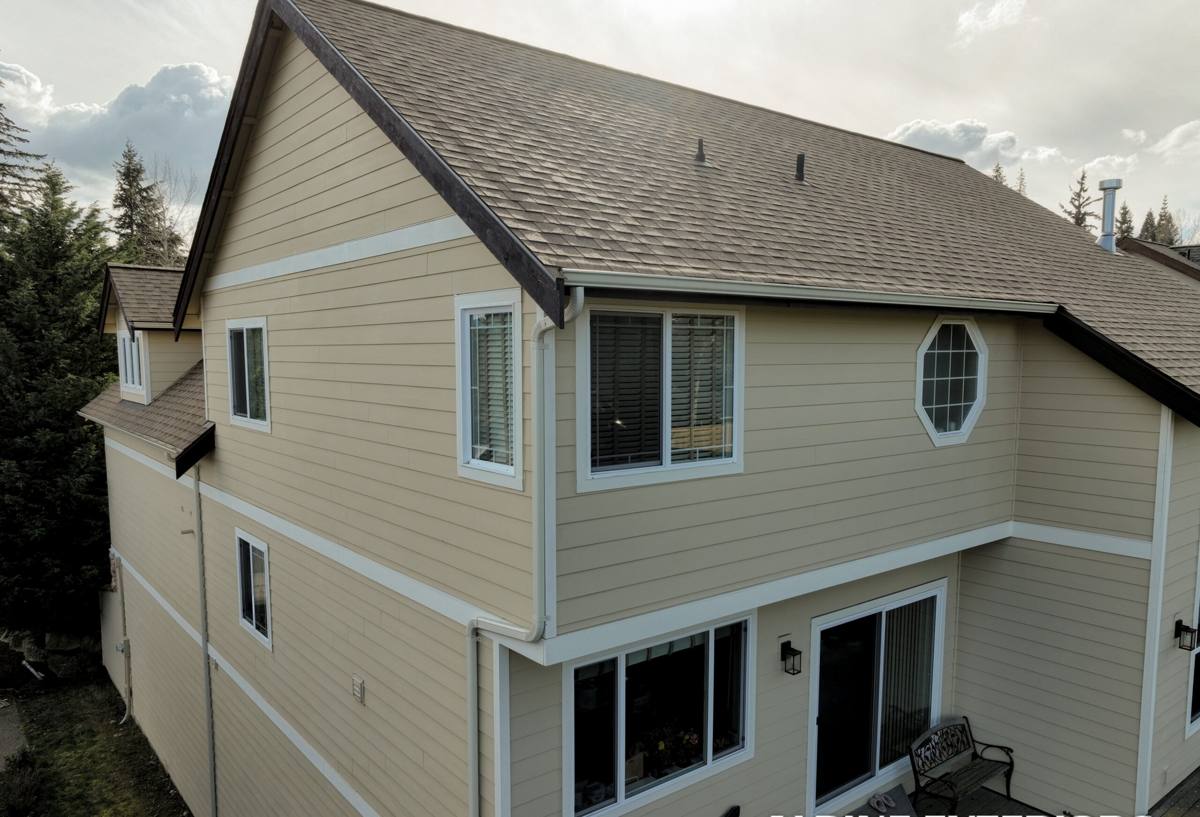
What Local Conditions Demand From a New Roof
Salt Air and Corrosion
Coastal-adjacent air carries fine salt particulate that settles on exposed metal — nails, flashing, vent stacks, gutter hangers — and speeds up rust and corrosion compared to the same materials installed further inland. Standard electro-galvanized fasteners can start showing surface rust within a few years in this environment. We spec corrosion-resistant fastener and flashing packages for Nooksack-area installs specifically because of this, not as an upsell but because replacing rusted-through flashing in year eight is a bad trade for the homeowner.
Driving Rain and Wind-Driven Water
This area gets rain that doesn't just fall straight down — it comes in sideways during winter storms, and that changes how water behaves on a roof. Wind-driven rain can push moisture up and under shingle edges, through under-lapped seams, and into valleys that weren't detailed with enough underlayment overlap. A roof built for a drier or calmer climate, installed to the letter of a minimum-code spec, can still leak here because minimum code doesn't account for horizontal rain load.
Moss and Prolonged Moisture
Moss doesn't cause damage by itself so much as it holds moisture against the roof surface and lifts shingle tabs as it grows, creating entry points for water. North-facing slopes, roofs under tree cover, and low-slope sections that don't get much sun are the areas we watch closest. The fix isn't just "install shingles rated for algae resistance," though that helps — it's designing ventilation and drainage so the roof actually dries out between rain events instead of staying damp for weeks at a stretch.
What a Correctly Installed Roof Includes Here
A new roof installation done right for this climate is a system, not just a layer of shingles. Every component below plays a role in how the roof performs over the next 20-30 years, not just how it looks on install day.
- Tear-off and deck inspection — full removal of the old roofing so we can inspect the sheathing underneath for rot, soft spots, or moisture damage before anything new goes down
- Deck repair as needed — any compromised sheathing gets replaced, not covered over, because a new roof over a rotten deck fails early no matter how good the shingles are
- Ice-and-water shield at vulnerable points — eaves, valleys, and roof penetrations get self-adhering waterproof membrane, which matters more here than in drier climates given how often water sits against these areas
- Synthetic underlayment across the field — a full secondary water barrier under the shingles, properly lapped to shed wind-driven rain rather than just gravity-fed rain
- Corrosion-resistant flashing and fasteners — at chimneys, walls, valleys, and vent penetrations, sized and installed to hold up against salt-air exposure
- Balanced attic ventilation — intake at the eaves and exhaust at the ridge, sized to the attic volume, so moisture doesn't get trapped under the deck and accelerate rot or moss growth from underneath
- Algae-resistant shingles or an appropriate metal system — matched to the home's roof pitch, sun exposure, and how much moss pressure that particular roof sees
Choosing the Right Roofing Material for a Nooksack Home
There isn't one universally "best" roofing material for this area — it depends on the home's roof pitch, budget, how much shade the roof sits under, and how long the homeowner plans to stay in the house. Here's how the common options actually compare for a roof in this climate.
| Material | Typical Lifespan Here | How It Handles Local Conditions |
|---|---|---|
| Architectural asphalt shingles | 20-30 years | Good value; algae-resistant granules help with moss pressure; needs proper ventilation to hit full lifespan |
| Standing seam metal | 40-50+ years | Excellent at shedding driving rain and resisting moss; needs marine-grade or coated fasteners near the coast to avoid corrosion at panel seams |
| Synthetic/composite shingles | 30-50 years | Strong moisture and impact resistance; higher upfront cost but low maintenance in wet, mossy conditions |
| Cedar shake | 20-30 years with upkeep | Traditional look, but requires more active maintenance to manage moisture retention and moss in this climate — we're upfront that it's a higher-maintenance choice here, not a failure of the product itself |
We'll walk through these trade-offs honestly during your estimate. If a homeowner wants cedar's look, we'll explain what upkeep that actually takes in a wet, shaded lot rather than talk them out of it — it's their roof and their call, made with real information.
Our Installation Process, Start to Finish
1. On-Site Evaluation
We walk the roof and attic, note pitch, sun exposure, existing ventilation, and any signs of past moisture problems — moss buildup, discolored sheathing, soft spots. This tells us what the roof actually needs, not just what the square footage is.
2. Written Estimate
You get a clear scope: material options, what's included in tear-off and disposal, flashing and ventilation work, and a firm price range — no surprise change orders for things we could have caught during the walk-through.
3. Tear-Off and Deck Inspection
Old roofing comes off, the deck gets inspected board by board, and any repairs are called out and priced before we cover anything up.
4. Waterproofing and Underlayment
Ice-and-water shield goes down at eaves, valleys, and penetrations first, then synthetic underlayment across the rest of the field, lapped to handle wind-driven rain.
5. Flashing, Ventilation, and Roofing Material
Flashing and vents go in with corrosion-resistant hardware, ventilation is balanced intake-to-exhaust, and then the roofing material itself is installed to manufacturer spec plus our own local additions for wind and moisture exposure.
6. Final Walkthrough and Cleanup
We walk the finished roof with you, check gutters and downspouts are clear and properly tied in, do a magnetic sweep for stray fasteners in the yard, and go over warranty paperwork.
Signs a Nooksack-Area Roof Needs Full Replacement, Not a Repair
Not every roof problem means a full tear-off. But there's a point where repeated patching stops making financial sense, and pushing past that point usually costs more in the end. Watch for:
- Granule loss heavy enough that shingles look bald or patchy in sun-exposed areas
- Persistent moss growth that comes back within months of cleaning, especially on north-facing slopes
- Curling, cracking, or lifted shingle edges, particularly at eaves and valleys
- Rust staining or visible corrosion at flashing, vent stacks, or nail heads
- Soft or spongy spots in the roof deck when walked, or sagging visible from the ground
- Multiple leak repairs in the last two to three years in different spots on the same roof
- Roof age past 20-25 years for asphalt shingles, even without obvious visible damage
If you're only seeing one or two of these and the roof is under 15 years old, a repair or targeted maintenance visit is often the more sensible move — we'll tell you that during an inspection rather than push a replacement the roof doesn't need yet.
Ventilation and Moisture Management: The Part Homeowners Often Skip
A lot of roof problems in this climate aren't caused by the roofing material at all — they're caused by trapped moisture underneath it. An attic without balanced intake and exhaust ventilation traps warm, moist air against the underside of the roof deck. Over a wet Whatcom County winter, that moisture cycles through condensation and drying, which slowly breaks down sheathing and creates the exact damp conditions moss thrives on from below as well as above. When we install a new roof, we size and balance ventilation as part of the job, not as an optional add-on, because skipping it undercuts everything else we just installed.
Why Local Installation Experience Matters
Roofing crews who mostly work drier, calmer climates tend to install to a generic standard — because that standard has worked fine where they usually build. Bring that same approach to a Birch Bay or Nooksack roof and you can end up with underlayment lapped for gravity rain instead of wind-driven rain, standard fasteners that start showing rust in a few years instead of holding up for decades, or ventilation that's sized for a drier attic environment. None of these show up as problems on install day. They show up as leaks, premature granule loss, or moss damage three to eight years later.
Working roofs in this specific area, season after season, means we've seen which details actually matter here versus which are optional elsewhere. That shapes every material choice and installation detail on your project, from fastener spec to how deep the underlayment laps run in your valleys.
Get a Free, No-Pressure Estimate
If your Nooksack-area roof is showing its age, or you just want a straight answer on whether repair or replacement makes more sense right now, we're glad to take a look. The estimate is free, there's no pressure to commit on the spot, and you'll get a clear written scope of what your roof actually needs. Fill out the form below to get started.