 Birch Bay Roofing
 Why Cherry Point Windows Take More Punishment Than Most
Cherry Point sits close enough to the water that homes here deal with a specific combination of stresses most inland Whatcom County properties never see: salt-laden air moving off the Strait, wind-driven rain that hits window walls at an angle rather than falling straight down, and a long wet season that keeps north- and west-facing exteriors damp for months at a stretch. Add the moss and algae growth that thrives in that dampness, and you've got an environment that's genuinely harder on windows than a typical suburban lot thirty minutes inland.
None of that means Cherry Point homes need exotic materials or gimmicks. It means the basics — flashing, sealant choice, frame material, and installation sequence — have to be done right, every time, because there's less margin for error here than there is in a drier climate.
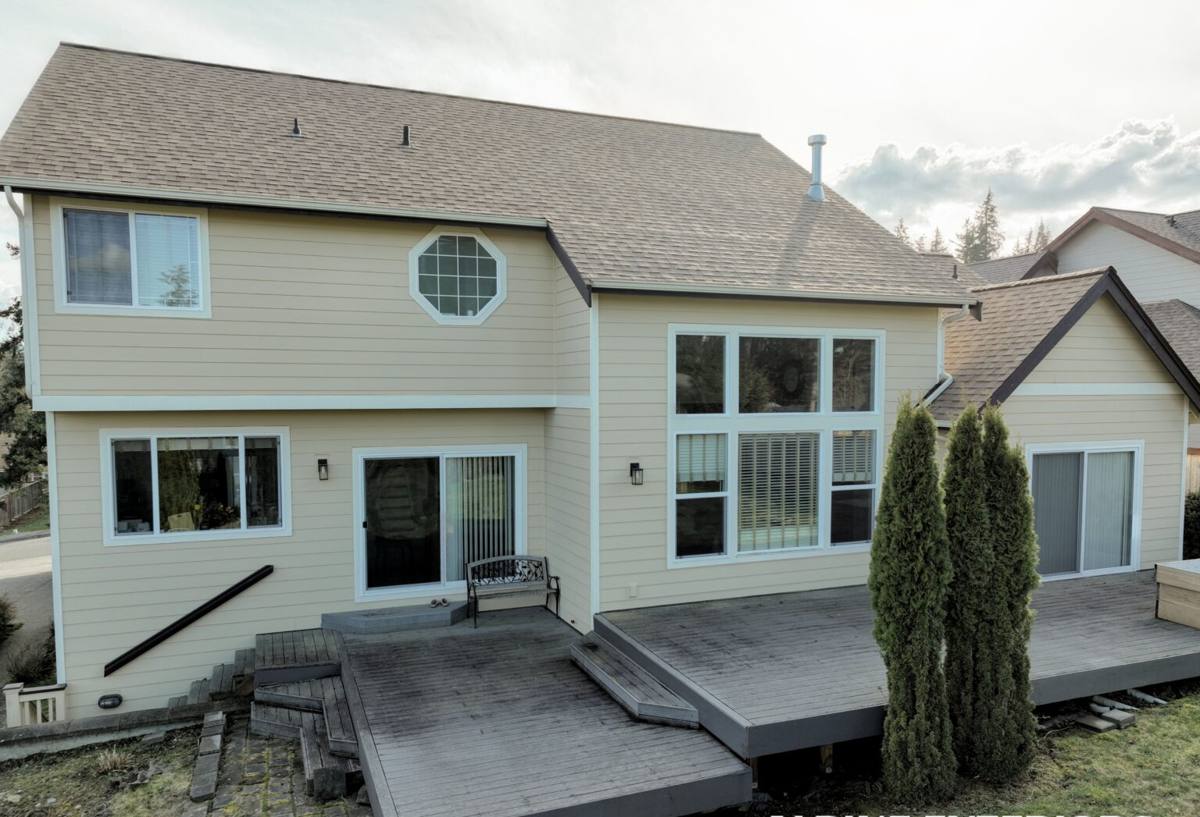
What Salt Air and Driving Rain Actually Do to a Window
It helps to know what you're fighting before you decide how to fight it.
- Salt air accelerates corrosion on exposed metal hardware — hinges, cranks, locks, and lesser-grade aluminum components — and can dull or pit finishes over time.
- Wind-driven rain doesn't just land on the glass; it gets pushed sideways and upward into any gap in flashing, trim, or sealant. A window that would stay dry in a calm rain can leak in a Cherry Point windstorm if the water management details aren't right.
- Persistent moisture and moss feed on shaded, damp surfaces — sills, exterior trim, and the bottom corners of frames are the usual targets. Left alone, that moisture works its way into wood substrate and rots it from the inside before it's visible from outside.
A correct installation addresses all three, not just the one that's easiest to see (usually the glass and frame — not the flashing behind them, which is where most failures actually start).
What a Correct Custom Window Job Involves Here
It Starts Before the Window Ever Arrives
Custom windows means the unit is built to the exact rough opening on your house rather than forcing your house to fit a stock size. That's the easy part. The part that actually determines whether the window survives a Cherry Point winter is what happens at the opening itself: the old window comes out, the sheathing and framing underneath get inspected for hidden rot or prior water intrusion, and any damage gets addressed before anything new goes in. Installing a beautiful window over a compromised opening just delays the next failure — it doesn't prevent it.
Flashing and Water Management
This is the single biggest difference between a window that lasts and one that leaks within a few seasons in this climate. Proper flashing — sill pan, side flashing, and head flashing installed in the right order (shingle-style, so water is always directed outward and down) — is what actually keeps wind-driven rain out, far more than the sealant bead most homeowners assume is doing that job. Sealant is a backup, not the primary defense.
Sealing and Insulating the Gap
The gap between the new window frame and the rough opening needs to be sealed and insulated correctly — not overpacked with expanding foam (which can bow the frame and cause operational problems) and not left with gaps that let air and moisture track in behind the trim.
Exterior Trim and Finish
Whatever trims out the window on the exterior needs to shed water away from the frame, not channel it toward the joints. In a high-moss environment, trim detail and material choice also affect how quickly algae and moss take hold on the surface.
Choosing the Right Window Material for This Climate
There's no single "best" window material for every house — the right call depends on your home's exposure, your maintenance appetite, and budget. Here's how the common options stack up specifically against salt air, driving rain, and moss exposure:
| Frame Material | Salt Air / Corrosion | Moisture Resistance | Maintenance | Typical Lifespan |
|---|---|---|---|---|
| Vinyl | Very good — won't corrode | Good; no rot risk in the frame itself | Low — occasional cleaning | 20-30+ years |
| Fiberglass | Excellent | Excellent — very stable in wet/dry cycling | Low | 30-40+ years |
| Wood (unclad) | Poor without diligent upkeep | Requires ongoing sealing/painting | High | Varies widely with maintenance |
| Wood-clad (vinyl or aluminum exterior) | Good on the clad side | Good if cladding and flashing are correct | Moderate | 20-30+ years |
| Aluminum | Fair — better alloys resist corrosion, lesser ones pit over time | Prone to condensation without thermal breaks | Moderate | 20-25 years |
For most Cherry Point homes exposed to direct sea air, we steer clients toward vinyl or fiberglass frames with corrosion-resistant (often stainless or coated) hardware. Wood and unclad wood windows can still look great, but they demand a real maintenance commitment in this environment — that's a conversation worth having honestly before you commit, not after the first repaint.
Our Process for a Cherry Point Window Project
- On-site assessment. We look at existing window condition, framing, and — critically — how each elevation of your home is exposed to wind and rain, since a west-facing wall near open water often needs different detailing than a sheltered side.
- Product and material selection. We walk through frame material, glass package, and hardware options against your budget and how much upkeep you actually want to do.
- Custom measurement and ordering. Each opening is measured individually; nothing is assumed to match "standard" sizing.
- Removal and opening inspection. Old units come out, and we check the sheathing, framing, and any existing flashing for hidden moisture damage before proceeding.
- Installation with proper flashing sequence. New window set, shimmed level and square, flashed shingle-style, insulated, and sealed.
- Exterior trim and finish work. Trim installed to shed water correctly and match your home's existing look.
- Final walkthrough. We check operation, sealing, and appearance with you before calling the job done.
Signs Your Current Windows Are Already Losing the Battle
Given the environment, it's worth checking your windows for these warning signs before small problems become expensive ones:
- Soft or discolored wood at the sill or bottom corners of the frame
- Visible moss or algae buildup on trim, sills, or between glass panes
- Condensation forming between panes of a double- or triple-glazed unit (a sign the seal has failed)
- Difficulty opening, closing, or locking — hardware that's stiff, corroded, or rattling
- Drafts or a cold spot near the window frame during windy weather
- Peeling paint or bubbling on interior sills or wall surfaces near the window
- Visible daylight or gaps around the frame from outside
Any one of these on its own might just need a repair. Several together, or on multiple windows, usually points to a bigger moisture or installation issue worth a proper look.
Mistakes We See — and Build Our Process to Avoid
A lot of window problems in this area trace back to a handful of avoidable mistakes: sealant used as the only defense against water instead of proper flashing, expanding foam overpacked into the gap and distorting the frame, trim installed in a way that funnels water toward joints instead of away from them, and hardware chosen without accounting for salt exposure. None of these are exotic failures — they're ordinary shortcuts that show up faster in a climate like Cherry Point's than they would somewhere drier and calmer.
Maintenance That Actually Matters Here
Even a correctly installed window benefits from a bit of seasonal attention in this environment:
- Rinse salt residue and grime off frames and glass periodically, especially after storms
- Clear moss and debris from sills and tracks before it holds moisture against the frame
- Check weep holes (the small drainage openings at the bottom of the frame) to make sure they're clear, not painted or caulked shut
- Lubricate hardware as needed to keep locks and cranks from seizing
- Inspect exterior caulk lines annually and touch up before gaps widen
Why It Matters That We Already Work in Cherry Point
A crew that's worked windows throughout Birch Bay and the Cherry Point area already knows how exposure varies block to block — which elevations tend to take the worst of the wind-driven rain, how quickly moss establishes on north-facing trim here versus inland, and what framing conditions tend to show up in homes of a given age and construction type in this specific stretch of Whatcom County coastline. That local pattern recognition means fewer surprises once we open up a wall, and a specification that's matched to your actual exposure instead of a generic regional guess.
If you're weighing a window project in Cherry Point, we're happy to take a look and talk through what your home actually needs — no pressure, no obligation. Reach out for a free estimate using the form below, and we'll walk the property with you and give you an honest read on materials, scope, and cost.