 Birch Bay Roofing
 Cherry Point's Roofing Challenge Is Different From Inland Whatcom County
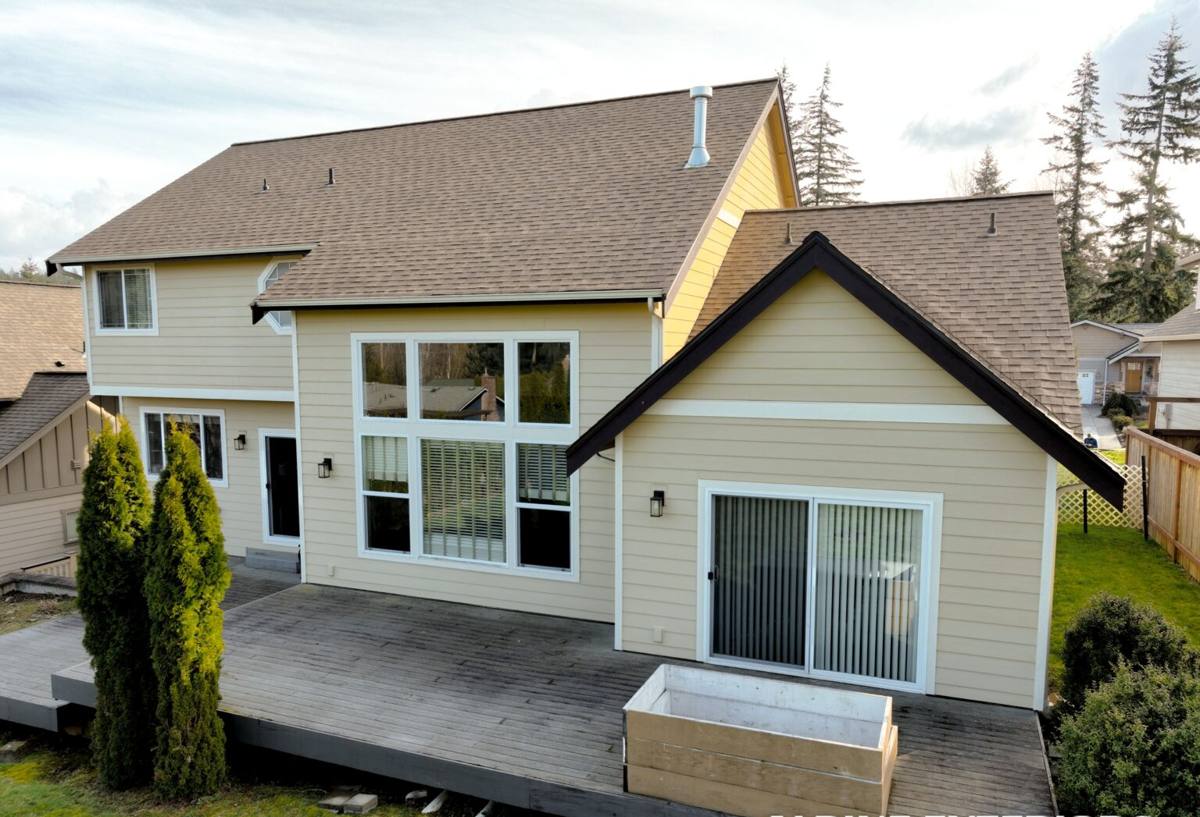
Cherry Point sits right where the marine environment of Birch Bay meets open exposure to wind and weather coming off the Strait of Georgia. Homes here deal with a combination that inland Whatcom County properties simply don't face in the same way: salt-laden air, wind-driven rain that gets pushed sideways into roof details rather than just falling straight down, and a moss season that can run most of the year in the shaded, damp conditions typical of this stretch of coastline. Any one of these factors is manageable on its own. Together, they shorten the useful life of a roof that wasn't specifically detailed for them.
When we install a new roof in this area, we're not just following a generic spec sheet. We're accounting for corrosion on exposed metal, moisture that finds its way under shingles through wind-driven rain rather than gravity, and organic growth that thrives in the shade and humidity common to Birch Bay's tree-lined lots. A new roof installation is the one point in a home's life where all of this can be built in correctly from the start, instead of patched around later.
What Salt Air Actually Does to a Roof
Salt air doesn't just affect homes directly on the water. Airborne salt carries inland on wind, and Cherry Point properties are close enough to catch it regularly. The practical effect is accelerated corrosion on anything metal: nails, flashing, drip edge, vents, and fasteners. A roof that uses the wrong-grade metal or under-spec fasteners can show rust streaking and early flashing failure years before a comparable roof further inland would.
This is why material selection and fastener specification matter more here than they would on a typical suburban re-roof. We spec corrosion-resistant flashing and fasteners as standard on Cherry Point installations, not as an upsell — it's simply what holds up in this environment.
What Driving Rain Changes About the Installation
Most of Western Washington gets steady rain. Cherry Point gets rain that comes in at an angle, pushed by wind off the water. That distinction matters because a roof designed only to shed water straight down can still leak under wind-driven conditions if the underlayment, flashing laps, and edge details aren't built for it.
In practice, this means we pay close attention to a handful of details that are easy to under-build:
- Underlayment coverage and lap direction, so wind-driven rain can't work its way under a seam
- Extended ice-and-water shield at eaves, valleys, and any roof-to-wall transition
- Properly lapped step flashing at walls and chimneys, not just caulked flashing
- Drip edge sized and installed to control water at the edge instead of letting it wick back under the shingle
- Sealed and back-primed penetrations for vents, pipes, and skylights
None of these are exotic upgrades. They're standard trade practice done correctly — but they're also the details most often shortcut on a rushed installation, and the ones that show up as leaks two or three winters later.
Moss Season and Roof Design
Birch Bay's tree cover and coastal humidity create long moss seasons, and Cherry Point's shadier lots are no exception. Moss isn't just a cosmetic issue. It holds moisture against the roof surface, works its way under shingle tabs as it grows, and can lift edges enough to let wind-driven rain in underneath. Left unaddressed, sustained moss growth shortens the effective life of even a well-installed roof.
A new roof installation is the right time to build in moss resistance rather than fight it later. That includes proper ventilation (a warmer, poorly ventilated roof deck holds more moisture and grows more moss), zinc or copper strips at the ridge on shingle roofs where appropriate, and choosing a roofing product with moss resistance built into the manufacturing where the homeowner wants that option. None of this eliminates the need for periodic moss removal, but it meaningfully reduces how aggressive that maintenance needs to be.
Choosing a Roofing Material for This Location
There's no single "best" roofing material for Cherry Point — the right choice depends on budget, how long the homeowner plans to stay in the house, and how much ongoing maintenance they want to take on. Here's how the common options actually compare for a coastal Whatcom County property, in plain terms:
| Material | Typical Lifespan Here | Coastal/Moss Considerations | Relative Cost |
|---|---|---|---|
| Asphalt composition shingle | 20-30 years | Widely used and reliable; choose algae-resistant granules and ensure ventilation to limit moss | Lower |
| Standing seam metal | 40-50+ years | Sheds water and moss well due to smooth surface; needs marine-grade fasteners and coatings to resist salt corrosion | Higher |
| Synthetic/composite shingle | 30-50 years | Resists moisture absorption and organic growth better than wood; good fit for shaded, damp lots | Mid to higher |
| Cedar shake | 20-30 years with upkeep | Attractive but absorbs moisture and is more susceptible to moss and rot in this climate without diligent maintenance | Mid to higher |
We install materials that hold up honestly in this environment, and we'll walk through the real trade-offs for each option — maintenance burden, moisture behavior, and how the warranty is structured — rather than pushing whatever has the best margin. For most Cherry Point homes, a quality architectural asphalt shingle with proper ventilation and moss-resistant granules hits the right balance of cost and durability. Homeowners planning to stay long-term or wanting the lowest-maintenance option often lean toward metal or a synthetic composite instead.
Why We Don't Push Cedar Shake as a Default
Cedar shake can look great and plenty of homes wear it well, but it's a wood product in a climate that's wet for much of the year. It absorbs moisture, and without consistent cleaning and treatment it's more prone to moss colonization and slow rot than the alternatives above. If a homeowner wants the look and is committed to the upkeep, we'll install it correctly — but we'll be upfront that it's a higher-maintenance choice for this specific location, not a knock on the material itself.
What a Correct Installation Actually Involves
A new roof is only as good as what's underneath the visible surface. On every Cherry Point installation, our process covers the same core steps regardless of material chosen:
- Full tear-off of the old roofing down to the deck — layering a new roof over an old one traps moisture and hides deck problems
- Deck inspection and repair, replacing any soft, delaminated, or water-damaged sheathing before anything new goes down
- Ice-and-water shield at eaves, valleys, and roof-to-wall transitions, sized generously given the wind-driven rain this area sees
- Synthetic underlayment across the full deck for a secondary water barrier under the primary roofing material
- Corrosion-resistant flashing and fasteners at all penetrations, walls, and edges
- Balanced intake and exhaust ventilation to keep the deck dry and reduce moss-friendly conditions
- Final material installation per manufacturer spec, with attention to exposure and fastening patterns suited to coastal wind
- Cleanup and a final walkthrough so the homeowner understands what was done and what to watch for going forward
Skipping or rushing any of these steps is exactly how a roof that looks fine from the ground ends up leaking within a few years. It's also why two roofing quotes with the same material line item can represent very different actual jobs.
Signs a Cherry Point Home May Need a New Roof Rather Than a Repair
Not every roofing problem calls for full replacement. But there are signs that point toward a new roof being the more sensible long-term investment rather than continuing to patch:
- Granule loss showing up heavily in gutters, especially on a roof already past 15-20 years old
- Persistent moss regrowth shortly after cleaning, suggesting the deck is staying damp longer than it should
- Curling, cupping, or cracked shingles across multiple areas of the roof, not just one isolated spot
- Soft spots or visible sagging when walking the roof or viewed from the attic
- Rust staining or deteriorating flashing at chimneys, vents, and wall transitions
- Daylight visible through the roof deck from inside the attic
- Repeated leak repairs in different spots each winter rather than one recurring issue
If a roof is showing two or more of these, a repair is often a short-term fix on a system that's failing more broadly. We'll always tell a homeowner honestly if a repair makes more sense than replacement — full replacement is not the answer to every roofing problem.
Why Hiring a Crew That Already Works Cherry Point Matters
Roofing crews unfamiliar with this specific stretch of coastline sometimes install to a generic spec that works fine in drier or more sheltered parts of Whatcom County but underperforms here. A crew that already works Cherry Point regularly knows which details need to be built up rather than built to minimum code, understands how the local moss season behaves through the year, and has already seen how salt air and wind-driven rain affect installations over time in this specific area. That local track record shows up in fewer callbacks and a roof that's actually suited to where it sits, not just to a manufacturer's standard installation guide written for the average American climate.
After Installation: Keeping a New Roof Performing
A correctly installed roof still benefits from basic upkeep in this climate. Periodic moss removal, keeping gutters clear so water isn't backing up under the eave line, and an occasional visual check of flashing and vents after major windstorms will help a new roof hit its full expected lifespan rather than showing premature wear. We're happy to walk homeowners through a simple maintenance schedule specific to their material and roof design after installation.
Get a Straightforward Estimate
If you're weighing a new roof for a Cherry Point property, we're glad to take a look, walk you through what your specific roof needs given its age, exposure, and material, and give you an honest, no-pressure estimate. There's a form below to get that conversation started.