 Birch Bay Roofing
 Siding Repair Built for Cherry Point's Shoreline Climate
Cherry Point sits along the Salish Sea shoreline in Whatcom County, close enough to Birch Bay that homes here face the same weather pattern year-round: salt-laden air blowing off the water, long stretches of driving rain in the fall and winter, and a moss season that can run from October clear through April. That combination is hard on exterior siding, and it's harder on siding that wasn't built for it. When we get a call for siding repair in this area, we're not just patching a hole — we're evaluating how the material has held up against years of salt exposure and sustained moisture, and whether the repair will actually hold up going forward.
This page covers what siding repair looks like specifically for Cherry Point homes: the damage patterns we see most, what a correct repair actually involves, and why the difference between a patch job and a real repair matters more here than in drier, inland parts of the county.
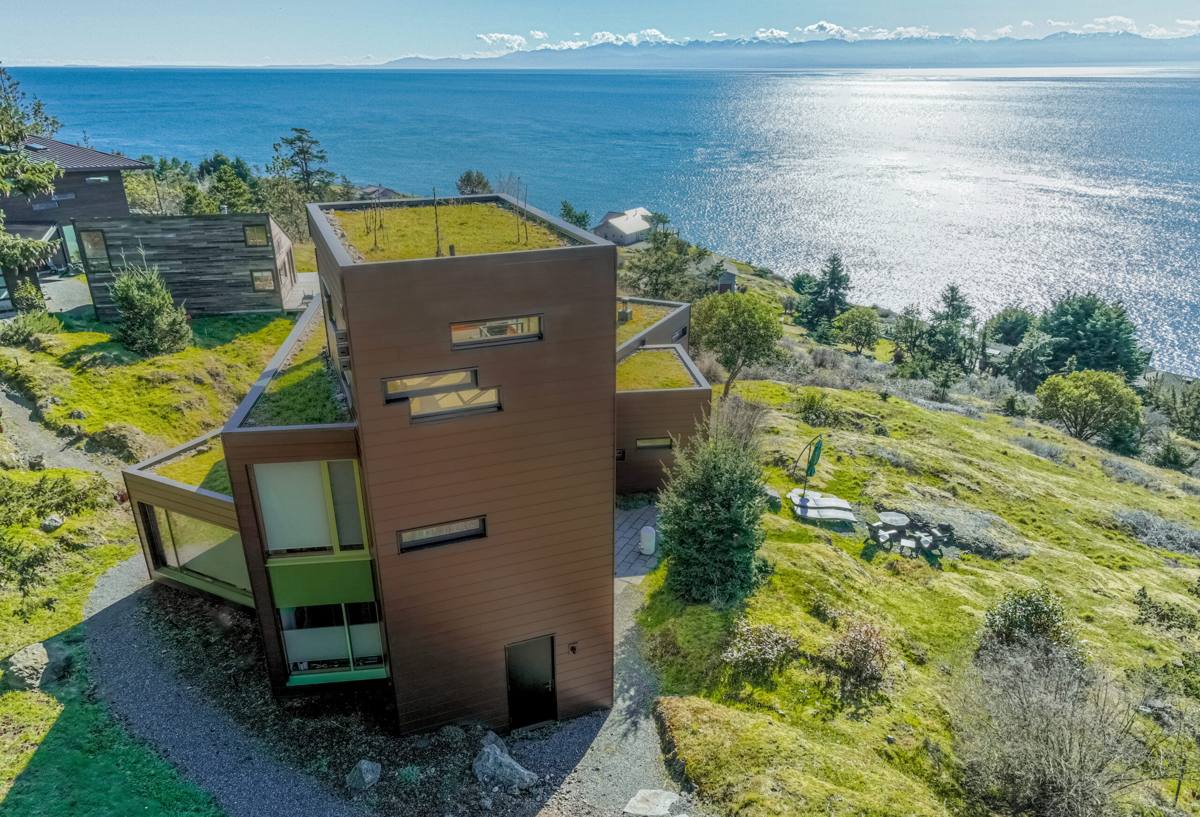
Why Cherry Point Siding Takes More Punishment
Salt Air and Corrosion
Airborne salt from the Salish Sea settles on exterior surfaces and accelerates the breakdown of fasteners, trim, and any siding material that isn't rated for coastal exposure. On vinyl and lower-grade composite products, salt film combined with UV exposure can dull and embrittle the surface over time. On wood-based products, salt-laden moisture speeds up rot at seams and end cuts. Fiber cement siding handles this far better because it's an inorganic material — it doesn't corrode, and its factory-applied finish is engineered to resist coastal weathering.
Driving Rain and Wind-Driven Moisture
Storms coming off the water don't just fall straight down — wind pushes rain sideways into wall assemblies, working it into laps, seams, and any gap in caulking or flashing. Over a few seasons, this wind-driven rain finds every weak point in a siding installation. It's one of the main reasons we see moisture damage concentrated at corners, window trim, and butt joints rather than spread evenly across a wall.
Moss and Sustained Dampness
Whatcom County's moss season is long, and Cherry Point's exposure to marine moisture makes it worse. Moss and algae don't just sit on the surface — they hold moisture against the siding for extended periods, which is exactly the condition that causes rot in wood-based and engineered wood siding, and accelerates paint and coating failure on lower-grade products. Shaded sides of a house, areas under trees, and spots with reduced airflow are where we find the heaviest buildup and the most underlying damage.
Common Siding Repair Issues We Find in Cherry Point
- Soft or delaminating boards — most common on wood composite and engineered wood siding where moisture has worked past the surface coating.
- Cracked or buckled panels — often from moisture-driven expansion and contraction cycles, or from age-related brittleness in vinyl.
- Failed caulking and open seams — a small gap that lets wind-driven rain behind the siding, usually found at trim, corners, and penetrations.
- Rot at butt joints and bottom edges — the lowest points on a wall hold moisture longest and are usually the first place rot shows up.
- Moss and algae staining that's hiding deeper damage — surface growth often masks softened material underneath, which is why we don't just pressure-wash and call it done.
- Fastener corrosion and staining — rust streaks below nail heads usually mean the fasteners aren't holding up to the salt air.
What a Correct Siding Repair Actually Involves
A quality repair isn't just about matching color and covering the damaged spot. It starts with figuring out why the damage happened, because if the underlying cause isn't addressed, the same failure shows up again in a year or two.
Our process
- Assess the damage and the cause. We look past the visible symptom — a crack, a soft spot, a stain — to check what's happening underneath: is water getting behind the siding, is the substrate compromised, is drainage or flashing the real problem?
- Check the water management details. Flashing, house wrap, and drainage planes matter as much as the siding itself. If those are failing, replacing boards without fixing the water path just delays the next repair.
- Remove and inspect surrounding material. Rot and moisture damage rarely stop at the exact board that shows visible symptoms — we check adjacent sections and the sheathing behind them before closing anything back up.
- Repair or replace to match. Where boards are salvageable, we repair them properly. Where they're compromised, we replace with matching material — and on Hardie siding, that means matching the correct HZ5 product line, profile, and ColorPlus finish so the repair is durable and visually consistent.
- Reseal and re-flash correctly. Proper caulking at the right joints (not everywhere — over-caulking traps moisture as often as it keeps it out) and correct flashing details at trim and penetrations.
- Final check for airflow and drainage. We make sure the repaired section can dry out the way it's supposed to, which matters as much in a marine climate as keeping water out in the first place.
Repair vs. Replace: How We Make the Call
Not every damaged section needs full replacement, but in a climate like Cherry Point's, we're conservative about calling something "fine" when the underlying material is compromised. Here's generally how we think through it:
| Situation | Usual approach |
|---|---|
| Isolated caulk failure or minor surface crack, substrate solid | Targeted repair — reseal, patch, or replace single board |
| Soft or delaminating boards in one section, rest of wall intact | Section replacement, checking adjacent boards for hidden moisture |
| Rot traced back to failed flashing or water management | Fix water management first, then repair siding — otherwise it recurs |
| Widespread moss-driven damage across multiple walls | Broader repair plan, sometimes phased, sometimes a case for reevaluating the whole exterior |
| Original siding is a product prone to recurring moisture issues (LP, primed wood, aging vinyl) | We'll be honest that repeated repairs may not be the long-term fix — worth discussing replacement with Hardie |
Why Product Choice Matters When You're Already Repairing
If you're repairing siding in a shoreline climate like this, it's worth understanding why the original material is failing in the first place. Wood-based composite siding, primed spruce, and cedar are all more vulnerable to the moisture-and-moss cycle common here — they rely on coatings and caulking to keep water out, and once that barrier is compromised, rot can spread underneath before it's visible on the surface. Vinyl holds up structurally but can fade, warp, or become brittle faster under sustained salt exposure and UV.
This is why we install James Hardie fiber cement exclusively. It's a non-combustible, cement-based material that doesn't rot, doesn't feed moss the way wood fiber does, and holds its ColorPlus factory finish far longer under coastal conditions than field-applied paint on other substrates. Hardie's HZ5 product line is specifically engineered for climates with high moisture exposure. When we repair a section of Hardie siding, we're matching into a system that was built to perform here — not patching a product that was already working against the local climate from day one.
Signs You Likely Need a Siding Repair Inspection
- Soft spots when you press on the siding, especially near the bottom of walls
- Visible cracking, buckling, or separation at seams and corners
- Peeling or bubbling paint/finish, particularly on shaded or north-facing walls
- Heavy moss or algae buildup that hasn't been cleaned in more than a season
- Rust staining below fastener heads
- Musty smell or visible staining on interior walls near exterior corners — a sign moisture may already be past the siding
- Gaps or missing caulking at trim, window, and door edges
Why Hire a Crew That Already Works This Area
Cherry Point and the surrounding Birch Bay shoreline have a distinct set of conditions — salt exposure, wind-driven rain direction, and moss growth patterns that differ from what you'd see further inland in Whatcom County. A crew that repairs siding here regularly knows where damage tends to hide, which details fail first in this specific exposure, and how to size a repair correctly instead of either underdoing it (patch fails again in a year) or overdoing it (replacing more than necessary). We also know the realistic timelines for scheduling around this area's wetter months, since repair work goes better when it isn't rushed between rain systems.
If you're seeing damage on your siding, or you just want an honest read on whether a section needs a repair or something more, we're happy to take a look. Reach out for a free, no-pressure estimate using the form below — we'll assess what's actually going on and walk you through the options straight.