 Birch Bay Roofing
 Roofing Built for Cherry Point's Edge of the Water
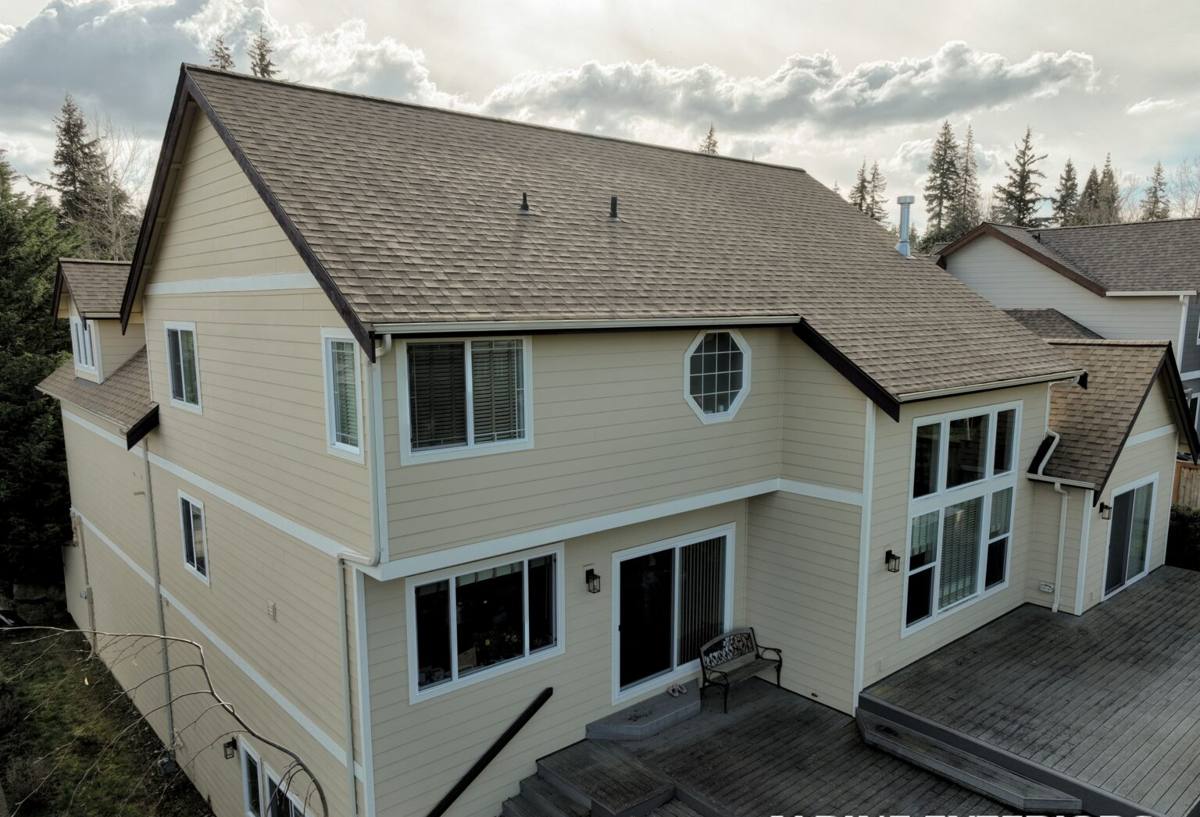
Cherry Point sits right where Whatcom County meets the Salish Sea, and that location shapes everything about how a roof ages here. Homes on this stretch of shoreline and the wooded bluffs above it deal with a combination most inland roofers rarely see day in and day out: salt-laden wind coming straight off the water, driving rain that doesn't just fall but gets pushed sideways under roofing materials, and enough shade and moisture to keep moss actively growing for most of the year. An asphalt shingle roof installed the same way you'd install one in a dry inland subdivision will not hold up the same way out here. It needs to be specified and installed with this specific climate in mind from day one.
What Salt Air, Wind, and Moss Actually Do to a Roof
Salt Air and Coastal Wind
Airborne salt is corrosive to metal. Over years, it accelerates rust on exposed fasteners, cheap flashing, and any hardware that isn't rated for marine or near-marine exposure. Once a nail head or a flashing seam starts to corrode, it stops sealing the way it should, and that's how small leaks start — not from a dramatic storm, but from slow, quiet metal fatigue. Wind off open water also tends to hit roofs at a steeper, more sustained angle than wind further inland, which puts more stress on shingle tabs, ridge caps, and anywhere the roofing material isn't fully sealed down.
Driving Rain
Whatcom County gets a lot of rain, but the rain that matters most for roofing isn't the straight-down kind — it's rain pushed by wind. Driving rain can work its way sideways and upward under shingle edges, around chimneys, and through valleys that weren't flashed with enough overlap. A roof that would shed water fine in a calm downpour can still leak in a wind-driven storm if the underlayment, flashing, and shingle laps weren't built with that sideways pressure in mind.
A Long Moss Season
Between tree cover, marine humidity, and mild temperatures that rarely dry a roof out completely, moss and algae have a long growing window here. Moss isn't just cosmetic. It holds moisture against the shingle surface, works its way under tabs and around fasteners as it grows, and can lift shingles enough to let water underneath. A roof that isn't ventilated and detailed to shed moisture quickly will grow moss faster and hold onto that moisture longer than a roof built to dry out fast.
What a Roof on Cherry Point Actually Needs
Given all that, a correctly built asphalt shingle roof for this area isn't just "any shingle roof." It's a set of deliberate choices that account for salt exposure, wind-driven rain, and moss pressure together, not separately:
- Corrosion-resistant fasteners and flashing rated for coastal or marine-adjacent exposure, not standard-grade hardware
- A shingle with a wind rating that matches or exceeds what this stretch of coastline actually sees, not just the local building minimum
- Algae-resistant shingle granules to slow discoloration and biological growth on north-facing and shaded slopes
- Ice-and-water shield or equivalent self-adhering membrane at eaves, valleys, and around every penetration, not just where code requires it
- Balanced intake and exhaust ventilation so the attic and roof deck can actually dry out between rain events
- Flashing details sized for wind-driven rain, with extra overlap at valleys, chimneys, and wall-to-roof transitions
Choosing the Right Asphalt Shingle for This Coastline
Not every asphalt shingle product is a good fit for a shoreline property. The table below compares the general tiers of asphalt shingles we work with and how they hold up specifically against salt air, wind, and moss — the three things that matter most on a Cherry Point roof.
| Shingle Type | Wind Performance | Algae/Moss Resistance | Typical Lifespan Here | Best Fit |
|---|---|---|---|---|
| 3-tab shingles | Lower wind rating, more tab lift risk | Standard granules only, unless upgraded | Shorter, given wind and salt exposure | Budget projects on sheltered, low-exposure roof planes |
| Architectural / laminate shingles | Higher wind rating, thicker, better tab adhesion | Algae-resistant granules typically available | Solid, dependable lifespan with proper install | The standard, sensible choice for most Cherry Point homes |
| Premium / designer shingles | Highest wind ratings in the asphalt category | Enhanced algae resistance, heavier granule coverage | Longest of the asphalt options, best resistance to wear | Fully exposed, high-wind, or high-visibility roofs |
For most homes in this area, architectural shingles with a strong wind rating and algae-resistant granules hit the right balance of cost and durability. Fully exposed roof planes facing open water are where a premium shingle earns its extra cost.
What a Correct Installation Actually Involves
Tear-Off and Deck Inspection
We remove old roofing down to the deck rather than layering over it, because a layered roof hides deck damage and voids most manufacturer warranties. On coastal homes especially, we check the deck closely for soft spots or rot around chimneys, skylights, and valleys, since that's where slow leaks tend to do the most hidden damage over time.
Underlayment and Water Barrier
Self-adhering ice-and-water membrane goes down at eaves, valleys, and around every penetration, with synthetic underlayment across the rest of the deck. This is the layer that protects the home if wind ever drives rain past the shingles themselves — it's not optional detailing, it's the backup plan built into the roof.
Flashing
Flashing is where most roof leaks actually originate, not the shingle field. We use corrosion-resistant metal at chimneys, walls, valleys, and pipe penetrations, with enough overlap and sealant to handle wind-driven rain, not just straight-down water.
Nailing and Fastening
Every shingle gets fastened per the manufacturer's high-wind nailing pattern, using corrosion-resistant nails driven correctly — not overdriven, not underdriven, and in the nailing zone the shingle is engineered for. This single detail is one of the biggest factors in whether a roof holds up in wind or starts losing shingles early.
Ventilation
We check and correct intake and exhaust balance as part of every reroof. Proper ventilation shortens how long the roof stays damp after rain, which directly slows moss regrowth and protects the deck and shingles from the inside out.
Our Process, Start to Finish
The process is straightforward and we keep it that way on purpose:
- Free on-site inspection and estimate, including a look at the current deck, flashing, and ventilation, not just a shingle count
- A written estimate that spells out materials, scope, and price with no vague allowances
- Material selection based on the roof's exposure, slope, and your budget — we'll tell you honestly if a lower tier will hold up fine or if a given slope needs the upgrade
- Tear-off, deck inspection and any needed repairs, underlayment, flashing, and shingle installation
- Site cleanup, including magnetic sweep for nails, and a final walkthrough before we consider the job done
Maintenance That Actually Matters on This Coastline
A well-installed roof still needs some upkeep out here, mostly because of moss and organic debris rather than the shingles wearing out on their own. A simple annual routine goes a long way:
- Clear gutters and valleys of needles, leaves, and moss buildup at least once a year, more often under heavy tree cover
- Have moss treated or gently removed before it thickens — soft-washing rather than aggressive scraping protects the granule surface
- Trim back branches that shade the roof or drop debris onto it, since shade is the main driver of moss growth
- Check attic ventilation isn't blocked by insulation, pests, or debris
- Have flashing around chimneys, skylights, and valleys visually checked every year or two, since that's where corrosion and small leaks show up first
Signs a Cherry Point Roof May Need Attention
Because leaks here often start as slow, wind-driven intrusion rather than an obvious burst, it pays to know what to watch for before it becomes an interior problem:
| What You Notice | What It Often Means |
|---|---|
| Thick moss on north-facing or shaded slopes | Trapped moisture; shingles may already be lifting underneath |
| Granules collecting in gutters or downspouts | Shingle surface wearing down faster than expected |
| Rust streaks near flashing or fasteners | Corrosion from salt air compromising the seal |
| Damp spots on ceilings after wind-driven storms specifically | Possible flashing or underlayment failure, not a shingle-field leak |
| Curling or lifted shingle tabs | Wind or age fatigue; often shows up first on exposed slopes |
Why Local Experience with Cherry Point Roofs Matters
A roof out here isn't a generic install. Knowing which slopes take the worst of the wind off the water, how fast moss actually comes back under the tree cover typical of this area, and how quickly standard-grade fasteners corrode in salt air isn't something you learn from a spec sheet — it's something you learn from doing this work on this coastline, on homes like the ones nearby. That's the difference between a roof that looks right on installation day and one that's actually built to hold up through another wet Whatcom County winter and the moss season that follows it.
If you're planning a reroof or want an honest look at what shape your current asphalt shingle roof is in, we're happy to come take a look. The estimate is free, there's no pressure to sign anything on the spot, and you'll get a straight answer about what your roof actually needs — just fill out the form below to get started.