 Birch Bay Roofing
 Fiber Cement Siding for Blaine's Waterfront Climate
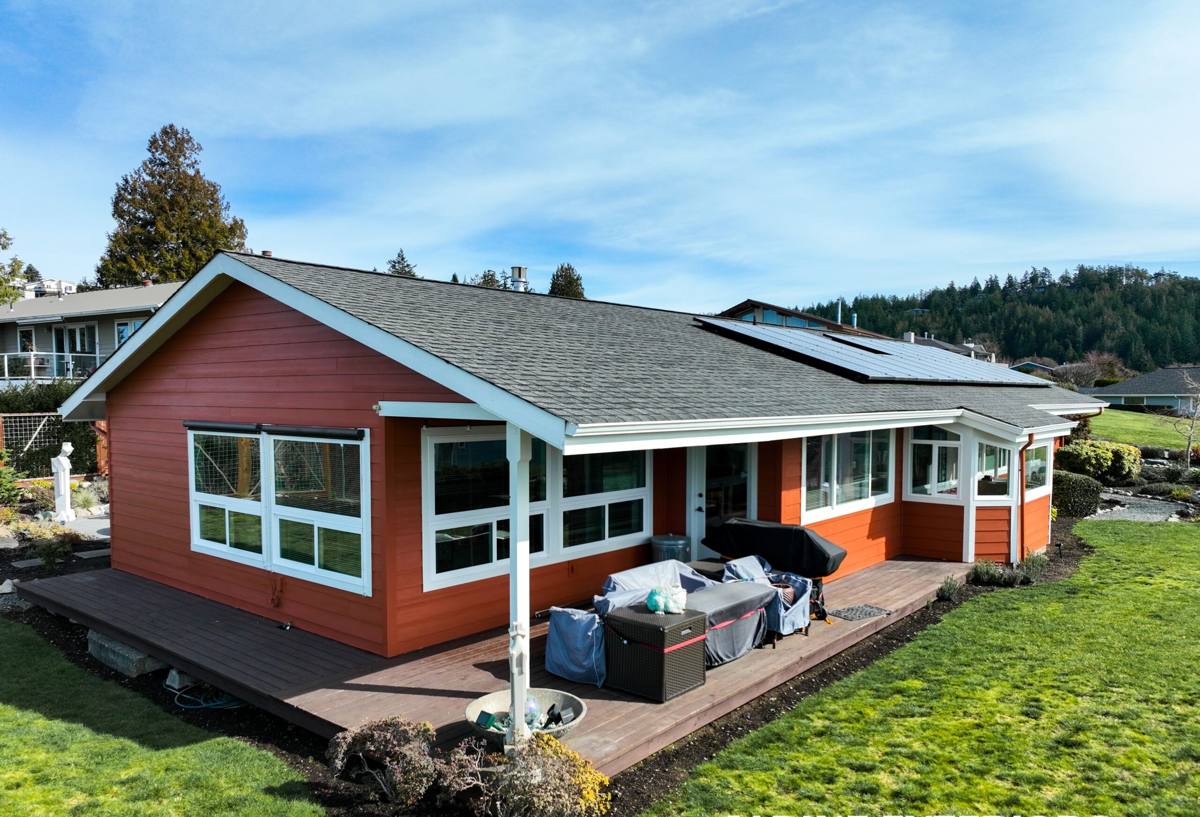
Blaine sits right on Semiahmoo Bay, a few minutes north of Birch Bay, and that stretch of Whatcom County shoreline throws a specific mix of punishment at exterior siding: salt-laden air blowing in off the water, long stretches of driving rain, and a moss season that can run from October through May. Homes here don't fail the same way homes inland do. Siding that looks fine further from the water can be delaminating, staining, or growing a green film in Blaine within a few seasons if it wasn't built and installed for this specific environment.
This page is about one job, done right, in one area: fiber cement siding installation for Blaine homes. We only install James Hardie fiber cement, and we explain why below — but the bigger point is that a coastal install here is a different job than the same product installed on a dry inland lot, and the details matter more than most homeowners realize until something goes wrong.
What Salt Air, Rain, and Moss Actually Do to Siding
Salt air is corrosive to fasteners, trim flashing, and any exposed metal component in a siding system. It also accelerates the breakdown of lower-grade paint finishes, which is why houses near the water tend to fade and chalk faster than the same product a few miles inland. Combine that with near-constant moisture and you get a second problem: organic growth. Moss, algae, and lichen need sustained damp surfaces and shade to establish, and Blaine's tree cover, marine humidity, and long wet season provide exactly that.
The materials most vulnerable to this combination are the ones that either absorb moisture directly (untreated wood, some engineered wood products) or rely entirely on a surface coating to keep water out (vinyl's color layer, site-applied paint on wood trim). Once that coating degrades or the substrate takes on water, the clock starts on rot, cupping, or panel failure. Fiber cement doesn't solve every one of these problems automatically — installation quality and product choice still matter enormously — but the base material itself is not organic and does not swell or rot the way wood-based products can.
Signs a Blaine Home's Current Siding Is Losing the Fight
- Dark green or black staining concentrated on north- and west-facing walls, especially under eaves or near landscaping
- Soft spots, bubbling, or a spongy feel when pressed near the bottom courses or around window trim
- Paint that's chalking heavily or peeling in sheets rather than wearing evenly
- Visible gaps at seams, corners, or trim where caulking has shrunk or pulled away
- Panels that have warped, cupped, or separated slightly from the wall plane
Why We Install Only James Hardie Fiber Cement
We get asked regularly why we don't offer vinyl, LP SmartSide, cedar, or other fiber cement brands as alternatives. The honest answer is that after years of tear-offs and repair calls in this exact climate, we standardized on one product system and stopped installing the others — not because every alternative is a bad product in every setting, but because each one carries a real-world trade-off that shows up faster in a marine environment like Blaine's than it would somewhere drier.
Vinyl is inexpensive and low-maintenance in mild conditions, but it's a thin material that expands and contracts with temperature swings, can crack in a cold snap, and its color is a surface layer that fades over time rather than a body color that ages evenly. LP SmartSide and other engineered wood products perform well when installation is flawless and maintenance stays current, but they're wood-based, and wood-based products are the ones most sensitive to the sustained moisture exposure Blaine sees for a good chunk of the year. Cedar is a beautiful traditional material, but it requires the most ongoing homeowner maintenance of any option — regular refinishing, careful attention to end-grain sealing, and vigilance about moss and moisture — to hold up well on a coastal lot.
James Hardie fiber cement is cement, sand, and cellulose fiber — it isn't organic material that rots, it isn't a thin plastic profile that can crack in a cold snap, and its ColorPlus factory finish is baked on rather than field-applied, which matters when the goal is even, long-term color retention under direct salt-air exposure. It's also non-combustible, which is a genuine safety consideration independent of climate. We're not going to tell a homeowner that vinyl or cedar are bad products — they have real strengths — but for what a Blaine exterior actually goes through, fiber cement is the standard we're willing to put our name behind.
| Factor | James Hardie Fiber Cement | Vinyl | LP SmartSide | Cedar |
|---|---|---|---|---|
| Behavior in sustained salt air | Cement-based, does not corrode or rot | Can become brittle over time; color fades | Wood-based; performance depends on coating integrity | Requires frequent refinishing to resist moisture intrusion |
| Moss/algae resistance | Non-organic surface, factory-cured finish | Surface can host growth once soiled | Organic substrate more susceptible if coating fails | Prone to moss/algae without regular treatment |
| Typical homeowner maintenance | Periodic washing; repaint on a long cycle | Low, but limited repair options once damaged | Ongoing coating inspection and touch-up | Refinishing every few years |
| Fire resistance | Non-combustible | Combustible | Combustible | Combustible |
| Warranty structure | Long-term, transferable manufacturer warranty | Varies by manufacturer, often prorated | Manufacturer warranty, coating-dependent | No manufacturer warranty (natural material) |
The Hardie Product Lines That Make Sense in Blaine
James Hardie engineers its siding for specific climate zones, and the Pacific Northwest coastal band falls into the cold/wet HZ5 category rather than the hot/humid HZ10 category used in parts of the Southeast. That distinction affects the product's formulation, and it's part of why we source and install the version engineered for this region rather than a generic mix.
Most Blaine homes end up with a combination of HardiePlank lap siding for the main wall areas and HardieTrim or HardiePanel for accents, gable ends, or a board-and-batten look where it fits the home's style. ColorPlus finishes come pre-baked in a range of colors designed to hold up to UV and weather exposure without the homeowner needing to repaint on the schedule a site-painted product would require. For homes closer to the water where wind-driven rain is more of a factor, we pay particular attention to lap profile and fastening pattern, since that affects how well the whole assembly sheds water at the overlaps.
What a Correct Fiber Cement Installation Actually Involves
Fiber cement is a forgiving material in terms of durability, but it is not forgiving of installation shortcuts — and in a wet, salty climate, a mediocre install shows its problems faster than it would somewhere drier. A correct job is as much about what's behind the siding as the siding itself.
What We Check and Do on Every Blaine Job
- Full removal of failing siding and inspection of the sheathing underneath for hidden rot or moisture damage before anything new goes up
- Installation or repair of a weather-resistant barrier with correct lapping so water sheds down and out, not behind the barrier
- Proper flashing at every window, door, and roofline intersection — this is the single most common failure point we find on older installs
- Correct fastener type, spacing, and depth per Hardie's published installation specifications, not "close enough"
- Manufacturer-specified clearances from grade, decks, and roof lines so siding isn't sitting in standing moisture
- Properly caulked and sized corners and seams to accommodate the coastal expansion and contraction range
- Field-cut edges primed or sealed per spec so a cut edge isn't left exposed to moisture
Skipping any one of these doesn't necessarily show up on day one. It shows up two or three winters later, as a stain, a soft spot, or a seam that's opened up — right when the driving rain and moss season are back for another round.
Our Process, Start to Finish
- Walkthrough and assessment. We look at the whole exterior, not just the areas the homeowner flagged, since moisture problems often extend past where they're visible.
- Written estimate. Scope, product selection, and price are laid out before any work starts — no verbal-only agreements.
- Tear-off and substrate inspection. Old siding comes off and we inspect the sheathing and framing underneath before covering anything back up.
- Repair and moisture barrier. Any damaged sheathing gets addressed, and the weather-resistant barrier is installed or repaired to proper lapping standards.
- Flashing and trim. Windows, doors, and roof intersections are flashed correctly before siding installation begins.
- Hardie installation. Siding, trim, and panels go up per manufacturer specification for fastening, clearance, and sealing.
- Final walkthrough. We go over the finished job with the homeowner before calling it complete.
Why Hiring a Crew That Already Works Blaine Matters
Installation specs are the same on paper everywhere, but judgment calls on a real job aren't. A crew that regularly works this stretch of Whatcom County already has a feel for which walls on a Blaine lot take the worst wind-driven rain, how proximity to the water affects exposure, and where moss tends to establish first based on tree cover and sun exposure. That's the kind of thing you learn by doing repeat jobs in the same few square miles, not by reading a spec sheet once.
There's also a practical permitting and inspection side to working in one area consistently — knowing what the local jurisdiction expects for an exterior siding replacement, and not treating every job as a first-time guess. None of this replaces following the manufacturer's installation spec to the letter, but it's the difference between a generic install and one that accounts for the specific way this coastline behaves.
Maintenance and What to Expect Afterward
A correctly installed Hardie fiber cement exterior in Blaine still benefits from periodic attention — it's low-maintenance, not zero-maintenance. We recommend an occasional gentle wash to keep salt residue and organic growth from building up, a yearly look at caulked seams and trim joints, and prompt attention if a joint ever opens up or a fastener works loose. None of that is heavy lifting, but staying ahead of small issues is what keeps a coastal exterior looking good for the long haul instead of needing early rework.
Get a Straight Answer on Your Blaine Home's Siding
If your current siding is showing staining, soft spots, or the early signs of moss and moisture damage, it's worth having a local crew take a look before it gets worse. We'll give you a straightforward, no-pressure assessment and a written estimate for James Hardie fiber cement siding built for exactly the conditions your home is up against. Use the form below to request your free estimate.