 Birch Bay Roofing
 Roof Repair Built for Terrell Creek's Conditions
Terrell Creek sits close enough to Birch Bay's shoreline that homes here take on a specific combination of punishment: salt-laden air moving in off the water, wind-driven rain that gets pushed sideways into laps and flashings, and a moss season that runs longer than most homeowners expect for a Pacific Northwest property. A roof repair here isn't the same job as a roof repair twenty miles inland in Whatcom County. The materials, the fastener choices, and the sequence of the work all have to account for what this specific stretch of coastline does to a roof over time.
We work on homes throughout Terrell Creek and the surrounding Birch Bay area regularly, which means we're not guessing at how a roof in this neighborhood typically fails — we've already seen the patterns. That local familiarity is worth something when you're trying to figure out whether a leak is a quick fix or the first sign of something bigger.
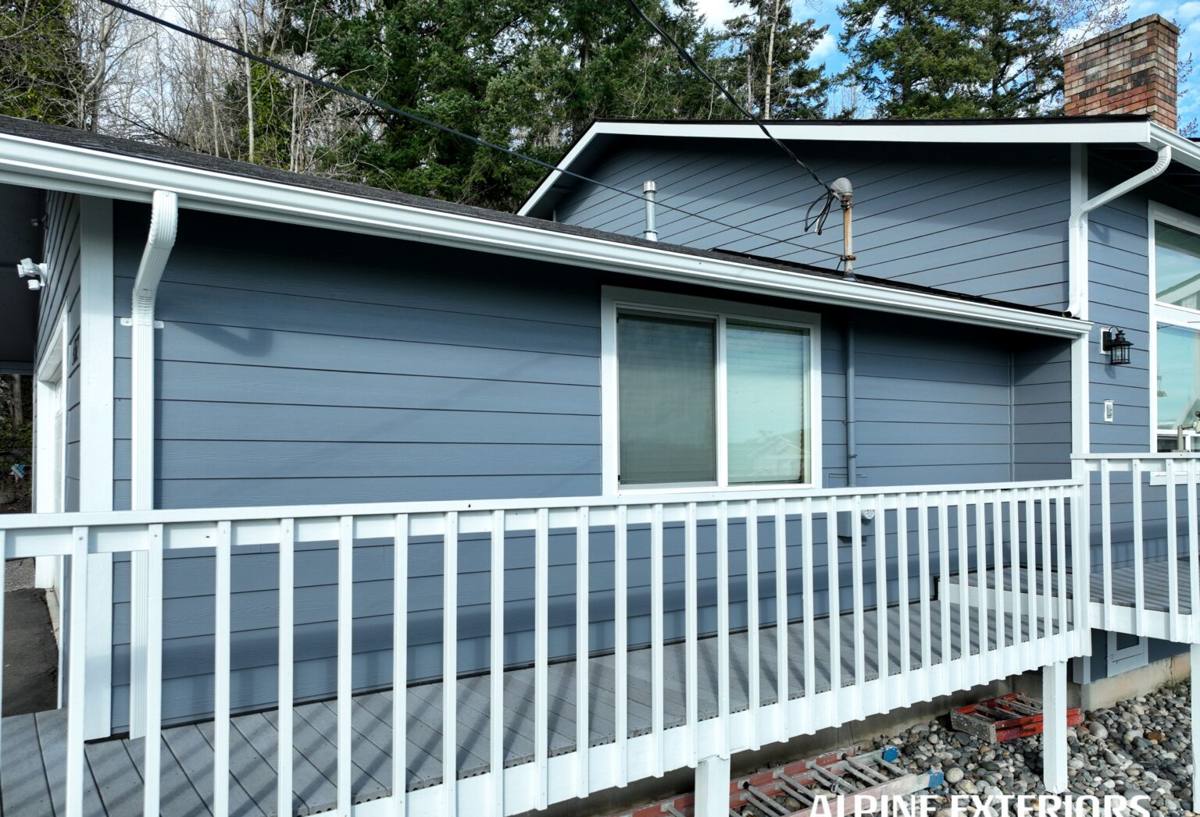
Why Roofs Near Terrell Creek Wear Differently
Salt Air and Metal Components
Salt in the air accelerates corrosion on any exposed metal — flashing, nail heads, gutter hardware, vent caps, and the fasteners holding shingles or panels down. On a roof further from the water, those components might last the full service life of the roofing material. Near Birch Bay, metal parts often need attention or replacement well before the shingles or panels around them are actually worn out. A repair that only addresses the visible leak and ignores corroding flashing underneath tends to fail again within a year or two.
Driving Rain and Wind-Loaded Water
Whatcom County gets plenty of straight-down rain, but the wind coming off Birch Bay pushes water sideways and upward into places a roof was never designed to shed water from directly — up under shingle tabs, into valley laps, and behind poorly sealed flashing. This is why leaks in this area often show up at penetrations (vents, chimneys, skylights) and valleys rather than in the open field of the roof. A repair strategy that doesn't account for wind-driven water usually just relocates the leak instead of solving it.
A Long Moss Season
Shade, moisture, and mild temperatures give moss a long window to establish itself on north-facing slopes and anywhere debris collects. Moss holds water against the roofing surface, lifts shingle edges as it grows, and works its way under laps and around fasteners. Left alone, it turns small granule loss or a minor lift into an active leak. Any repair on a moss-affected roof needs to deal with the moss itself, not just patch around it.
Common Repair Issues We See in Terrell Creek
- Corroded or lifted flashing around chimneys, skylights, and roof-to-wall transitions
- Nail pops and fastener backing-out from repeated wet-dry cycling
- Moss-related shingle lift and granule loss on shaded, north-facing slopes
- Valley leaks from debris buildup and wind-driven water intrusion
- Gutter and downspout failures that push water back up under the roof edge
- Soft or discolored decking visible from the attic, indicating a slow, long-term leak
- Cracked or displaced ridge caps from wind exposure near the water
What a Correct Roof Repair Actually Involves
A roof repair that holds up in this climate is more than swapping out a shingle or squeezing a bead of sealant into a gap. Done correctly, it involves finding the actual source of water entry — which is often several feet away from where the leak shows up inside the house — and addressing the layers underneath the visible surface: underlayment condition, flashing integrity, and decking soundness.
Diagnosis Before Repair
We start every repair call by tracing the leak path, not just patching where water is visibly coming through. That means checking the attic when accessible, inspecting valleys and penetrations, and looking at the broader condition of the roof section involved. A leak at a ceiling stain is frequently coming from a flashing failure or a wind-lifted shingle several feet upslope.
Matching Materials and Methods
Repairs need to integrate with what's already on the roof — matching shingle profile and color where possible, using flashing metals and sealants suited to a marine-influenced environment, and fastening in a way that accounts for wind exposure. A mismatched or improperly integrated repair can actually create a new leak point where old and new materials meet.
Addressing the Cause, Not Just the Symptom
If moss caused the failure, the repair should include moss removal and a plan to slow regrowth. If corrosion caused the failure, the replacement flashing should be a material that holds up better in salt air. Patching over the underlying cause is the most common reason repairs fail early.
Our Roof Repair Process
- Initial assessment — We inspect the affected area and the roof section around it, not just the exact leak point, to catch related issues before they become their own repair calls.
- Attic and interior check — Where accessible, we look for water staining, damp decking, or insulation damage to understand how long the leak has been active.
- Written scope and honest recommendation — We tell you plainly whether this is a straightforward repair, a larger repair, or a case where repair isn't the responsible long-term answer.
- The repair itself — Removal of failed material, correction of the underlying cause, and reinstallation using materials and fastening appropriate for Birch Bay's exposure.
- Cleanup and check — Site cleaned, debris and old material hauled off, and a final look to confirm the repair area sheds water correctly.
Repair vs. Replace: How We Help You Decide
Not every damaged roof needs full replacement, and not every leak is fixable with a simple patch. The right call depends on the roof's age, how widespread the damage is, and what's happening underneath the surface layer.
| Factor | Repair Usually Makes Sense | Replacement Worth Considering |
|---|---|---|
| Roof age | Roof is under roughly 15–18 years old | Roof is near or past its expected service life |
| Extent of damage | Isolated to one section, flashing, or penetration | Multiple leak points or widespread granule loss |
| Decking condition | Decking is sound and dry | Decking is soft, stained, or has multiple repair patches already |
| Moss/algae history | Light to moderate, treatable | Heavy, recurring moss with shingle lift across large areas |
| Frequency of past repairs | First or second repair on this roof | Repeat repairs to the same area over recent years |
We'll walk you through where your roof falls on this table honestly. If a repair is the right move, that's what we'll recommend — a smaller job done well is better for you and for us than an unnecessary sell.
Cost Factors on a Terrell Creek Repair
Costs vary based on the size of the repair area, roof pitch and accessibility, how much of the underlying decking or underlayment needs to be replaced, and whether flashing or gutter work is bundled in. Straightforward, isolated repairs are typically a modest cost; repairs involving decking replacement, extensive flashing work, or multiple leak points cost more. We give a written estimate before any work starts, so there are no surprises.
Materials and Methods for Coastal Whatcom County Conditions
For repairs in this area, we lean toward corrosion-resistant flashing and fastener choices over standard-grade materials that are more prone to breaking down in salt air. We also pay close attention to sealant selection — some products handle the constant wet-dry, temperature-swing cycle of a coastal repair much better than others, and using the wrong one is a common reason a "fixed" leak comes back within a season or two. Where moss has been part of the problem, we address it as part of the repair rather than leaving it for a separate visit, since regrowth on an untreated area can undo the repair itself.
Why a Crew That Already Works Terrell Creek Matters
A roofing crew that only occasionally works this stretch of Whatcom County has to relearn, on your dime, what we already know: which slopes hold moss longest, how the wind off Birch Bay tends to drive water into valleys and penetrations, and which flashing and fastener choices actually hold up here versus which ones look fine on day one and fail in year three. That familiarity shortens diagnosis time, reduces the chance of a callback, and means the repair is built for the conditions your roof will actually face, not generic conditions.
Being local also means we're available if something doesn't perform the way it should after the repair. We're not driving in from out of the area for a one-time job — we're a crew you can reach again if you have a question or a follow-up concern.
Questions to Ask Before Hiring for a Repair
- Will you inspect the full roof section or just the exact spot where the leak shows up?
- What's causing the failure, and how does the repair address that cause specifically?
- What materials will you use, and are they suited for a coastal, salt-air environment?
- Is the estimate written, itemized, and provided before work begins?
- Do you carry insurance, and can you provide proof of it?
- What happens if the same leak reappears after the repair?
Protecting the Repair Going Forward
A well-done repair still benefits from basic upkeep, especially in a moss-prone, salt-air location like Terrell Creek. Keeping gutters and valleys clear of debris, having moss treated before it re-establishes on shaded slopes, and getting an occasional visual check after major windstorms all help the repair — and the rest of the roof — last as long as it should. If you notice a new stain, a lifted shingle edge, or granules collecting in the gutter after a storm, it's worth a look before it becomes a bigger repair.
If you're dealing with a leak, a damaged section, or just want an honest read on the condition of your roof, we're happy to come take a look. Reach out for a free, no-pressure estimate using the form below.