 Birch Bay Roofing
 Siding Replacement in Terrell Creek: A Different Kind of Exposure
Terrell Creek sits inland from the open shoreline of Birch Bay, where the land slopes down into the creek corridor that feeds the bay. That gives most homes here a slightly different exposure than a bay-front lot: more tree cover, more shade, and ground that holds moisture longer after a storm, layered on top of the same salt-tinged air and driving rain that shapes exterior work across this stretch of Whatcom County. It's a combination that's easy to underestimate — a shaded, damp lot can be just as hard on siding as an open waterfront one, just in a different way.
When siding starts failing in this kind of environment, patch repairs only buy so much time. We handle full siding replacements for Terrell Creek homes and install James Hardie fiber cement exclusively, because it's the one system we've found holds up consistently against this specific mix of shade, moisture, and salt air.
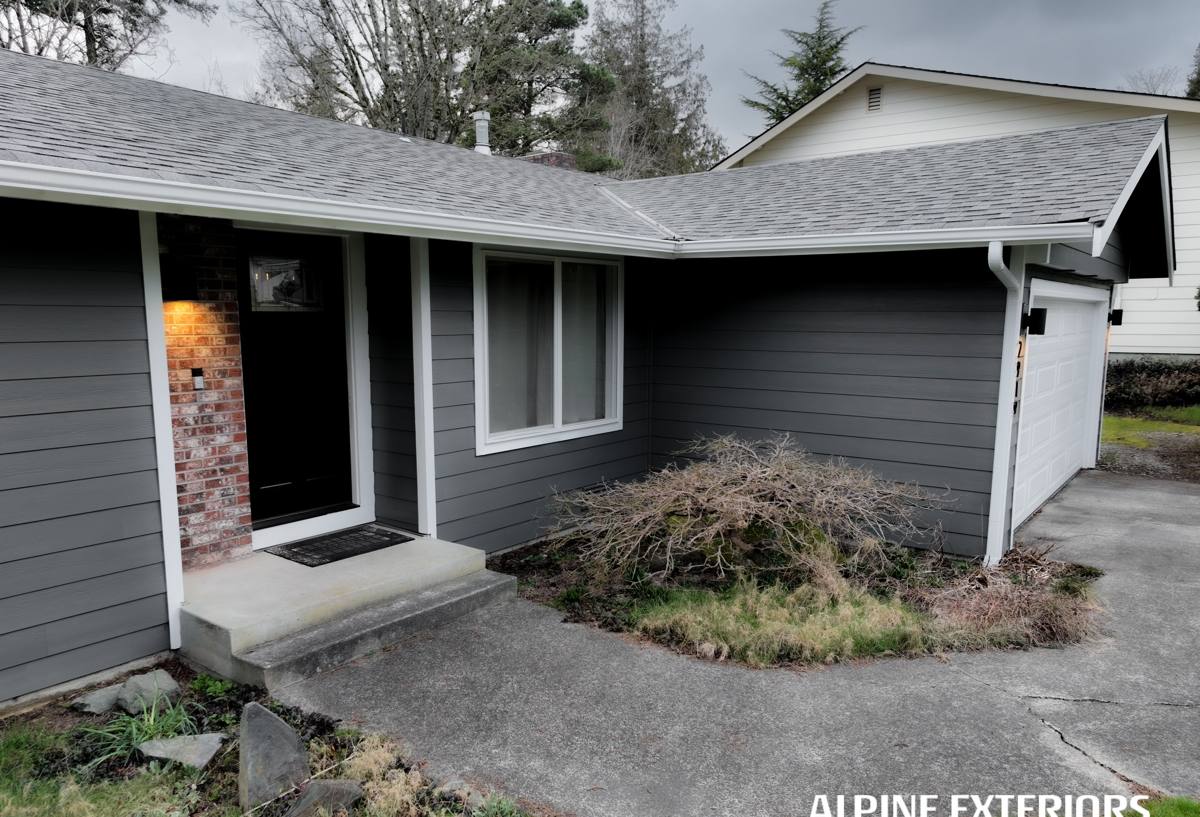
Why Siding Fails Faster Around Terrell Creek
Shade and Standing Moisture
Wooded, creek-adjacent lots dry out slower than open ones. Morning dew and rain that would burn off quickly on a sun-exposed wall can sit against shaded siding for hours, and over a full wet season that adds up to more cumulative moisture exposure than the annual rainfall total suggests. Any siding material that's even mildly porous, or that traps moisture behind it, tends to show that exposure first on the shaded and north-facing walls.
Salt Air Off the Bay
Even set back from the water, Terrell Creek homes still get salt-laden air moving in from Birch Bay, especially during windier weather. Salt accelerates corrosion in fasteners, flashing, and trim, and it can break down lower-grade paint and finishes faster than a dry inland climate would.
A Long Moss Season
Combine shade with moisture and you get moss — not just on roofs, but on siding, trim, and anywhere organic growth can get a foothold. On a lot of Terrell Creek properties, moss and mildew are close to a year-round concern rather than a winter-only issue, which is a big part of why siding material choice matters as much as the installation itself.
Signs It's Time for Replacement, Not Just Repair
Not every siding problem calls for a full tear-off. But there's a point where patching stops making financial sense and replacement becomes the more honest recommendation. Some signs worth taking seriously:
- Soft or spongy spots when you press on the siding, especially near the bottom courses or around windows
- Paint or finish that keeps failing within a year or two of repainting, even after proper prep work
- Visible warping, cupping, or separated seams across more than a small, isolated section of wall
- Persistent moss or mildew staining that returns within weeks of cleaning
- Siding that's original to a home built more than 20-25 years ago, especially if it's wood-based or an older composite product
- Interior signs like peeling paint, musty smells, or staining on walls that share an exterior with damaged siding
If you're only seeing one or two of these in a limited area, targeted repair may still be the right call. Once damage shows up in multiple places, or the sheathing underneath is compromised, replacement is usually the more cost-effective long-term choice — repeated repairs on failing siding rarely add up to less than doing the job once, correctly.
Why We Install James Hardie and Nothing Else
We used to install a wider range of siding products. We stopped, and the reason came from what we kept finding on tear-offs and service calls in this kind of climate — not from a supplier relationship.
- Non-combustible core: fiber cement doesn't feed a fire the way wood-based siding can.
- Factory-applied ColorPlus finish: baked on under controlled conditions, so it holds color and resists chalking and moisture far longer than field-applied paint.
- Climate-engineered HZ formulation: Hardie's HZ5 product line is built for regions with sustained moisture exposure and freeze-thaw cycling, which fits Whatcom County's wet, shaded microclimates like Terrell Creek well.
- Dimensional stability: fiber cement doesn't swell, warp, or cup the way engineered wood or wood-based products can after repeated wet-dry cycles.
- Strong transferable warranty: backed by Hardie, provided installation follows their published spec.
We won't install LP SmartSide, vinyl siding, Cemplank, Allura, primed spruce, or cedar. Each has situations where it's a reasonable, honest choice for a homeowner, and plenty of people are happy with them in the right conditions. But on shaded, damp, creek-adjacent lots like the ones common around Terrell Creek, we've seen those products need more upkeep, fail sooner, or carry more moisture risk than we're willing to install and stand behind. We'd rather offer one system we trust fully than several we'd have to caveat.
What a Correct Siding Replacement Involves
Tear-Off and Inspection
Removing old siding is also when problems hiding underneath — rot, compromised sheathing, failed old flashing — get found and dealt with. Skipping a real inspection at this stage just seals existing damage back into the wall.
Moisture Management Behind the Siding
A weather-resistive barrier, and rain-screen or drainage detailing where called for, gives any bulk water that gets past the siding a way out instead of a place to sit. This step matters more on shaded, slow-drying lots than it does on a sunny, open one.
Flashing at Every Transition
Windows, doors, roof-to-wall intersections, and any penetration through the siding need flashing detailed for wind-driven rain, not just a straight vertical drip line. This is where a lot of failures start on homes in this region, regardless of which siding material was used originally.
Fastening and Clearance to Hardie Spec
Correct fastener type and spacing, proper clearance from grade, decks, and roof lines, and factory-mitered or properly caulked joints are all part of what makes fiber cement perform the way it's designed to. A Hardie product installed loosely will still develop problems in this climate — the material is only as good as the installation behind it.
What Siding Replacement Typically Costs to Plan For
Every home is different, and we don't quote a number without seeing the property, but these are the main factors that move a Terrell Creek siding replacement up or down in scope and price:
| Factor | Why It Matters |
|---|---|
| Home size and wall area | More square footage means more material and labor, the most direct cost driver |
| Siding profile | Lap siding, shingle-style panels, and board-and-batten carry different material and labor requirements |
| Condition of existing sheathing | Rot or moisture damage found during tear-off may need repair before new siding goes on |
| Trim and architectural detail | Homes with more corners, dormers, and trim work take more time to flash and finish correctly |
| Site access | Tree cover, tight setbacks, and sloped lots common near the creek can slow staging and scaffolding |
| Color and finish selection | Factory ColorPlus finishes and certain profiles carry different material costs |
We put together a written, itemized estimate after walking the property so you can see exactly what's driving the number, rather than a flat per-square-foot figure that doesn't reflect your home's actual condition.
Our Process for Terrell Creek Projects
We start with an on-site walkthrough, looking specifically at how the current siding has handled moisture, shade, and salt exposure over time. From there we put together a clear written scope before any work begins, so there's no ambiguity about what's included. During tear-off, we document anything we find underneath — rot, compromised flashing, damaged sheathing — before covering it back up with new material. Installation follows Hardie's published spec on fastening, clearance, and joint detailing, and we handle drainage and flashing details as standard practice, not as an upsell. We finish with a walkthrough so you can see the completed work and ask questions before we consider the job done.
Why Local Experience in This Area Matters
A contractor who mostly works drier, sunnier parts of the county can miss what a shaded, creek-adjacent Terrell Creek lot actually needs — more attention to drainage, more conservative clearance details, and a real understanding of how long moisture sits against a wall here compared to elsewhere. We work this specific stretch of Whatcom County regularly enough to know which details matter most on this kind of lot, and we'd rather build that experience into every estimate than treat each project as a generic siding job.
If your Terrell Creek home's siding is showing its age, or you're just weighing options, we're happy to take a look and give you an honest read on what it actually needs. Reach out below for a free, no-pressure estimate.