 Birch Bay Roofing
 Windows Built for the Terrell Creek Microclimate
Homes around Terrell Creek sit close enough to the water that the weather never really lets up. Salt-laden air moves in off the Strait, driving rain comes in sideways during winter storms, and the long stretch of gray, wet months between fall and spring keeps every exterior surface damp for weeks at a time. Windows take the brunt of that exposure more than almost any other part of the house. They're the thinnest layer in the wall, they have the most moving hardware, and they're the first thing to show a problem when a home starts losing heat or letting moisture in.
An energy-efficient window isn't just about a lower heating bill, though that matters in Whatcom County's damp, mild-but-persistent winters. It's about a window that's engineered and installed to handle sustained moisture, salt exposure, and wind-driven rain without failing early. A window that's efficient on paper but installed poorly, or built with hardware that corrodes in salt air, won't perform the way it's supposed to for a Terrell Creek home.
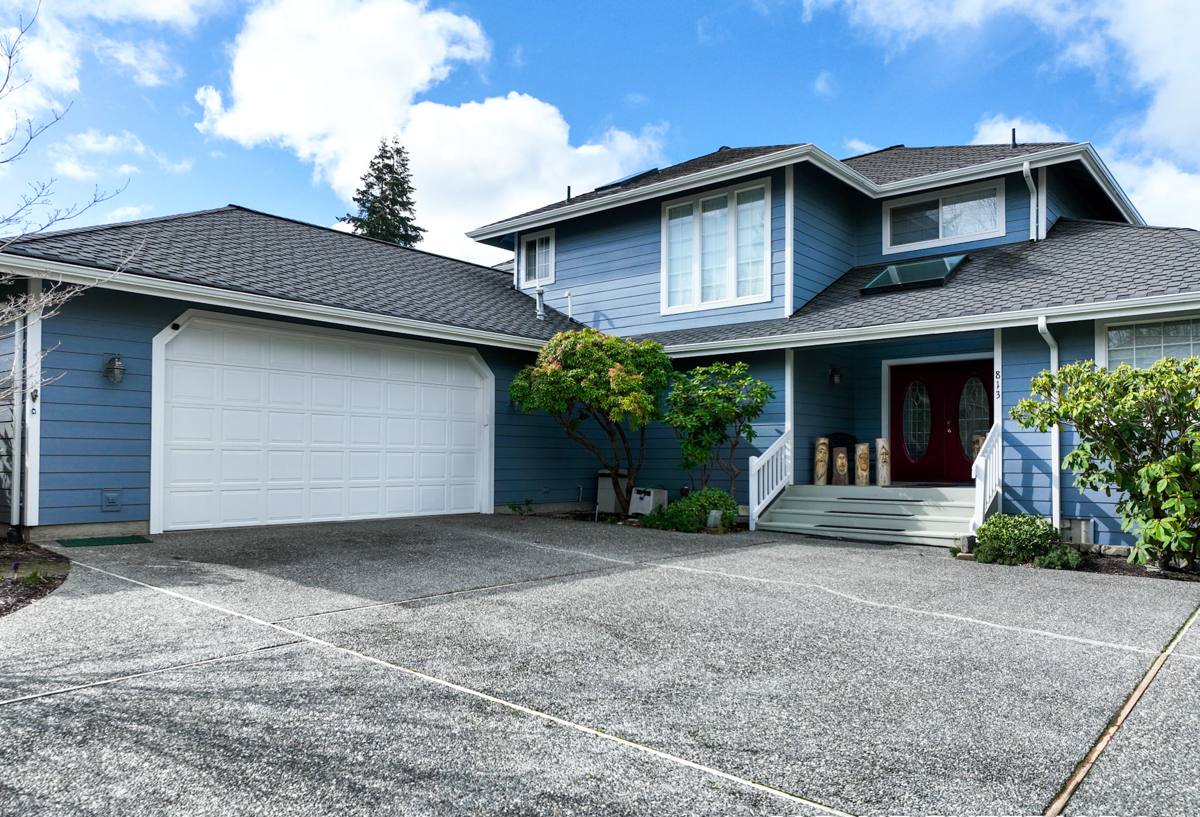
What "Energy-Efficient" Actually Means for This Climate
Manufacturers rate windows using numbers that mean something specific, and it's worth knowing what they cover before you shop.
U-Factor and Solar Heat Gain
U-factor measures how much heat escapes through the window — lower is better for our climate, where the priority is keeping heat in during long, mild-but-chilly winters. Solar Heat Gain Coefficient (SHGC) measures how much solar warmth passes through the glass. In Birch Bay, where we don't get the intense summer sun that drives cooling costs in other parts of the state, a moderate SHGC paired with a strong (low) U-factor is usually the right balance.
Glazing and Gas Fills
Double-pane glass with a low-E coating and argon gas fill is the standard baseline for this region. Triple-pane adds another layer of insulation and can help with sound and comfort near colder spots in a home, but the gain has to be weighed against added weight and cost — we'll walk through whether it's worth it for your specific windows, not just sell it as an upgrade by default.
Warm-Edge Spacers
The spacer that separates the two (or three) panes of glass affects both efficiency and moisture performance. In a climate with this much sustained humidity, a warm-edge spacer resists condensation at the edge of the glass better than older aluminum spacer designs, which conduct cold straight to the edge of the pane.
Signs Your Current Windows Are Costing You Money
Most homeowners don't think about window replacement until something becomes obvious. Around Terrell Creek, the moisture and salt exposure tend to accelerate a few specific problems:
- Fogging or a permanent haze between the panes — a sign the seal has failed and the gas fill is gone
- Visible corrosion or chalky buildup on hardware, hinges, or locks
- Sashes that stick, swell, or won't latch fully, especially after a wet stretch
- Cold drafts you can feel near the frame even with the window closed
- Soft or discolored wood on the interior or exterior trim near the window
- A noticeable jump in heating costs compared to similar-sized homes
Any one of these on its own might not mean full replacement, but a home with several of these signs is usually past the point where caulk and weatherstripping will fix the problem.
What a Correct Installation Involves Here
In a drier climate, a sloppy window install might go unnoticed for years. Near the water in Whatcom County, it won't. Wind-driven rain finds gaps fast, and once moisture gets behind a window frame it has few ways to dry out during a long moss season. The install details matter as much as the window itself.
Flashing and the Sill Pan
A correctly flashed opening directs any water that does get past the exterior finish back out, not into the wall cavity. That starts with a sloped sill pan and continues with flashing tape integrated properly with the house wrap — lapped in the right order, not just taped over.
Sealant, Not Just Caulk
The gap between the window frame and the rough opening needs backer rod and a proper exterior-grade sealant rated for the movement and moisture this climate produces — a bead of caulk over a gap isn't the same thing and won't hold up to years of driving rain.
Fastening and Shimming
Windows need to be shimmed square and fastened per the manufacturer's schedule. A window that's slightly out of square will bind, won't seal against its own weatherstripping correctly, and will develop leaks at the corners faster than a properly set unit.
Choosing the Right Frame Material for Coastal Exposure
Frame material has a bigger effect on long-term performance near the water than most homeowners expect. Here's how the common options compare for a Terrell Creek home specifically:
| Frame Material | Salt Air Resistance | Maintenance | Typical Lifespan |
|---|---|---|---|
| Vinyl | Good — won't rust or corrode | Low; occasional cleaning | 20-30+ years |
| Fiberglass | Very good — stable, low expansion | Low | 30-40+ years |
| Aluminum-clad wood | Good on the exterior; interior wood needs protection | Moderate | 20-30+ years with upkeep |
| Bare wood | Poor without diligent upkeep in this moisture level | High — regular repainting/sealing | Varies widely |
We don't recommend bare wood frames for homes in this exposure unless a homeowner specifically wants the look and is committed to the upkeep. It's not that wood is a bad product — it's that this much sustained moisture and salt makes maintenance a real, ongoing job, and we'd rather be upfront about that trade-off than sell a product that needs more attention than most people want to give it.
Our Process, Start to Finish
1. On-Site Assessment
We look at each window opening individually — not just the glass, but the trim, sill condition, and any signs of past moisture intrusion. Every opening on a coastal property tells a slightly different story depending on its exposure to wind and rain.
2. Product Selection
We go over frame material, glazing package, and hardware options based on your budget and how exposed a particular wall is. A window facing the prevailing weather may warrant a different spec than one on a sheltered side of the house.
3. Installation Day
Old windows come out, openings get inspected and repaired if there's hidden damage, and new windows go in with proper flashing, sealing, and fastening. We don't cover up rot or deteriorated framing we find along the way — we'll show you what's there and talk through the fix before closing anything up.
4. Walkthrough and Cleanup
Every window gets operated and checked before we consider the job done, and the site gets cleaned up — old units, packaging, and debris hauled off.
What Affects the Cost
Every home is different, but these are the main factors that move the price up or down on a window project in this area:
| Factor | Why It Matters |
|---|---|
| Number of windows | More units means more labor and material, but per-window pricing often improves with volume |
| Frame material | Vinyl is typically the most budget-friendly; fiberglass and clad-wood cost more upfront |
| Glass package | Triple-pane, upgraded coatings, or tempered/safety glass add cost |
| Opening condition | Hidden rot or water damage found during removal adds repair time |
| Access and height | Second-story or hard-to-reach windows take more time and equipment |
| Trim and finish work | Matching existing interior or exterior trim adds labor |
We'll break down these factors specifically for your home during the estimate rather than quoting a flat number sight-unseen — there's too much variation from house to house near Terrell Creek for a generic price to mean much.
Living With a Long Moss Season
Efficient windows still need some basic upkeep in this climate, especially with moss and algae growth as persistent as it is here for much of the year. A little seasonal attention keeps both the window and the surrounding trim in good shape:
- Rinse frames and sills periodically to clear off salt residue and organic buildup
- Keep gutters and downspouts clear so runoff isn't sheeting directly across window heads
- Check exterior caulk lines once a year for cracking or separation
- Operate hardware occasionally in the off-season so hinges and locks don't seize
- Trim back vegetation that keeps a window shaded and damp longer than it should be
- Wipe down interior sills after heavy storms if condensation collects
Why It Matters to Hire a Crew That Already Works This Area
A window installer who mostly works drier inland areas can still do competent work, but they may not default to the flashing details, sealant products, and hardware choices that actually hold up against sustained salt air and driving rain. A crew that regularly works Birch Bay and the surrounding Whatcom County coastline treats those details as standard procedure, not an afterthought — because we see what happens when they're skipped, on other people's callbacks, not just in theory.
That local familiarity also means a more realistic estimate. We're not guessing at how a west-facing window on an exposed lot near the water will hold up compared to a sheltered one — we've seen the difference play out on homes like yours.
If your windows are drafty, fogged, or just past their working life, we're happy to take a look and put together a straightforward, no-pressure estimate. Fill out the form below and we'll get in touch to schedule a time that works for you.