 Birch Bay Roofing
 Windows Built for Life on Lummi Island
Lummi Island sits out in the salt air and open water of Whatcom County, and that setting is hard on a house in ways that inland neighborhoods never deal with. Windows take the worst of it — salt-laden air corrodes hardware, driving rain finds every gap in a weak seal, and the long moss season keeps trim and sills damp for months at a time. A window that would last twenty-five years in a sheltered inland lot can start failing in half that time out here if it wasn't installed with the local conditions in mind.
We install replacement and new-construction windows for homes around Birch Bay and out to Lummi Island, and the approach we use for island homes is different from a standard inland install. This page covers what that difference actually looks like — the materials, the flashing details, the process, and the honest trade-offs — so you know what to ask for whether you hire us or someone else.
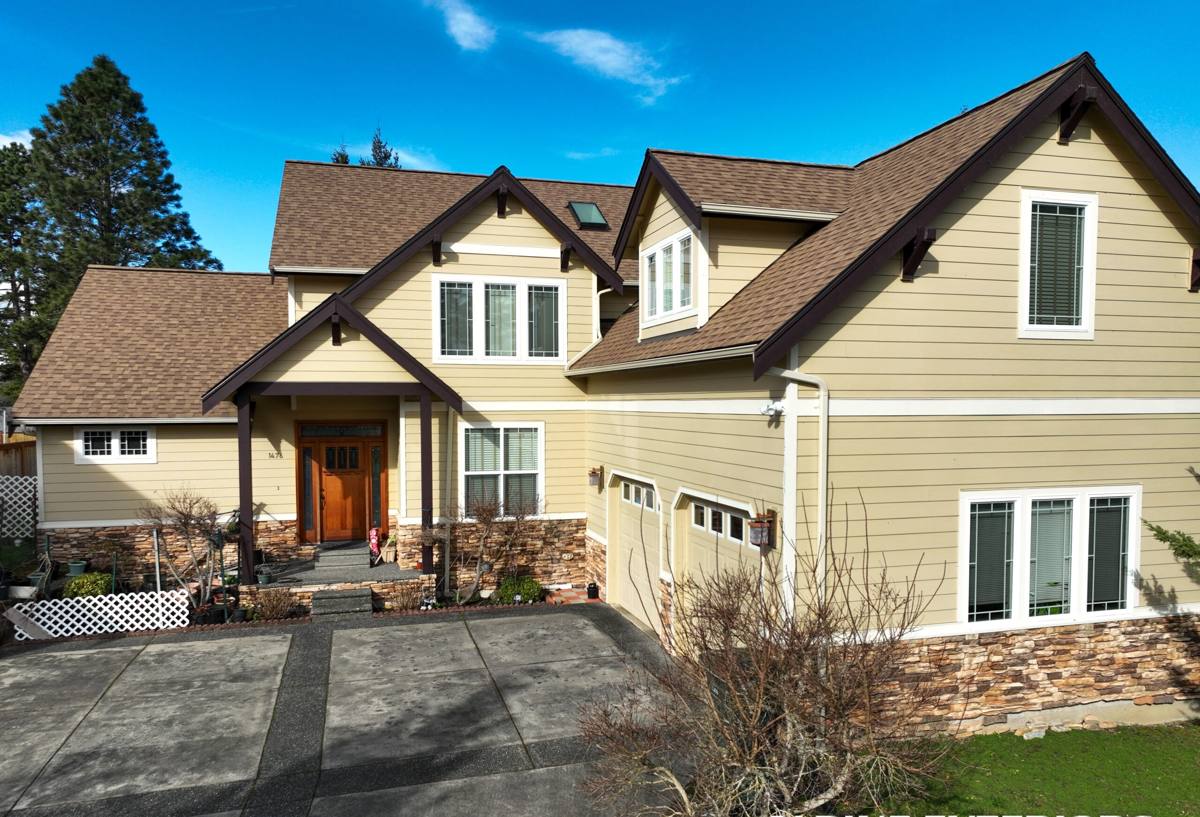
What the Marine Climate Does to Windows
Three things drive almost every window failure we see out on the island, and they compound each other.
Salt Air and Corrosion
Airborne salt settles on everything, including window hardware. Cheap or unprotected fasteners, hinges, and cranks pit and corrode faster than they would even a few miles inland. Once hardware starts to seize or corrode, seals get stressed and the whole unit works less efficiently.
Driving, Wind-Driven Rain
Water blown sideways into a wall doesn't behave like normal rainfall. It gets pushed up under trim, into nail holes, and behind poorly lapped flashing. A window opening that's flashed correctly sheds that water outward and down; one that isn't will feed water directly into the wall framing, often for years before anyone notices a stain.
Moss, Mildew, and Prolonged Dampness
Whatcom County's long wet season means exterior wood trim, sills, and even some vinyl cladding stay damp far longer than in drier climates. That extended dampness is exactly what moss and mildew need to take hold, and it's also what breaks down caulk, wood substrate, and low-quality sealants faster than their rated lifespan.
None of these are exotic problems — they're the normal cost of living somewhere beautiful and coastal. The point isn't to avoid them, it's to install windows and flashing details that are built to shed water and resist corrosion from day one, so the house isn't fighting the climate for the next twenty years.
Signs a Window Needs Attention
Homeowners on the island often notice one of these before they realize it's a window problem rather than a "the house is just old" problem:
- Visible condensation or fogging between the panes of a double-pane unit — the seal has failed
- Drafts you can feel near the frame even with the window fully latched
- Paint or trim bubbling, peeling, or feeling soft near the window opening
- Hardware — cranks, locks, hinges — that's stiff, corroded, or won't fully latch
- Visible gaps or daylight around the frame when viewed from inside
- Wood sills that feel soft or spongy when pressed
- Persistent moss or dark streaking on trim below or beside the window
- Rooms near certain windows that feel noticeably colder or noisier in a storm
Any one of these on its own might be minor. Two or three on the same window usually means water has already gotten past the seal and is working on the framing underneath — worth having looked at before it becomes a bigger repair.
What a Correct Installation Actually Involves
Swapping in a new window is the easy part. What determines whether it holds up on Lummi Island is everything around the window itself.
Flashing and Weather Barrier Integration
The window opening needs to be flashed so water is directed out and down, lapped correctly with the house wrap or weather-resistant barrier above, below, and at the sides — sill pan flashing at the bottom is especially important on a site that takes driving rain. This is the detail that fails most often on a rushed install, and it's the one that causes the slow, hidden rot that's expensive to fix later.
Proper Sealant, Not Just More Sealant
Caulk is not a substitute for correct flashing — it's a secondary defense, not the primary one. We use sealants rated for exterior marine exposure at the joints where they're actually needed, rather than relying on a heavy bead of caulk to cover for a flashing shortcut.
Shimming, Squaring, and Insulating
A window that's not shimmed level and square will operate poorly and stress its own seals over time. The gap between the rough opening and the window frame needs to be insulated correctly — not overpacked with expanding foam, which can bow the frame, and not left open, which creates a thermal and air leak.
Interior and Exterior Trim
Trim isn't just cosmetic — it's part of the water-management system. Exterior trim needs to be back-primed and installed with drainage in mind so it isn't holding water against the wall.
Frame Material: What Holds Up in a Marine Climate
Frame material is one of the biggest decisions on a window replacement, and it matters more here than in a sheltered inland location. Here's how the common options actually perform against salt air, driving rain, and a long wet season:
| Material | Salt Air / Moisture Performance | Maintenance | Typical Cost Tier |
|---|---|---|---|
| Vinyl (quality-grade) | Good — won't corrode or rot, seams are the main watch point | Low | Lower to mid |
| Fiberglass | Very good — dimensionally stable, resists moisture and doesn't corrode | Low | Mid to higher |
| Wood-clad (aluminum or vinyl exterior, wood interior) | Good on the exterior face; interior wood needs the seal to stay intact | Moderate | Higher |
| Aluminum (uncoated or poorly finished) | Poor — prone to pitting and corrosion in salt air without a marine-grade finish | Higher | Varies |
| Solid wood, unclad | Weakest against this climate — needs frequent refinishing to hold up | High | Higher |
Our default recommendation for island homes is vinyl or fiberglass, because both shrug off salt exposure without ongoing maintenance. Wood-clad units can look great and perform well too, as long as the cladding and seals are intact — the trade-off is that any breach in that exterior seal exposes the wood core underneath, so it's a product that rewards a careful install and honest long-term maintenance. We're not against wood-clad or aluminum windows; we just want you choosing the frame with the maintenance commitment in mind, not finding out about it after a few winters.
Glass and Hardware Considerations
Beyond the frame, two other choices matter for a coastal property:
- Glass package: Double-pane with a low-E coating is the standard baseline; some homeowners upgrade to a higher-performance glass package for rooms facing open water and prevailing wind.
- Hardware finish: Ask specifically about corrosion-resistant hardware finishes rather than assuming standard hardware will hold up — this is one of the cheapest upgrades to get right at install time and one of the most annoying to deal with later if it's not.
Our Process for Lummi Island Jobs
Working on the island adds a logistics layer that an inland job doesn't have, and we plan around it rather than letting it turn into delays or rushed work.
- On-site assessment: We look at each window opening, the condition of the surrounding wall and trim, and check for any existing water damage before quoting the work.
- Material selection: We go over frame material, glass package, and hardware options against your budget and how exposed the specific wall or elevation is to wind and rain.
- Scheduling around ferry access: Materials and crew time get planned around ferry schedules so the job isn't stretched out over multiple partial trips — we bring what we need to do the work in as few crossings as possible.
- Removal and opening inspection: Old windows come out and we inspect the rough opening and sill for hidden rot or water damage before anything new goes in. This is often where a "just replace the window" job turns into a conversation about a small repair first — better to find it now than to seal a problem behind a new window.
- Flashing, install, and insulation: New window set, shimmed and squared, sill pan and flashing integrated with the weather barrier, gaps insulated correctly.
- Trim and sealant: Exterior trim reinstalled or replaced, back-primed where wood is used, sealed at the joints that actually need it.
- Final walkthrough: We check operation, latching, and weatherproofing with you before we call the job done.
Why an Island-Experienced Crew Matters
A window installer who mostly works sheltered inland neighborhoods isn't necessarily going to get the flashing and material choices wrong — but they also haven't had to think hard about them, because most of their jobs don't punish a shortcut the way a Lummi Island wall does. A crew that regularly works Birch Bay and the island has already seen what fails out here and what holds up, and that shows up in small decisions: which sealant actually stays flexible through a wet Whatcom County winter, how much sill pan flashing is enough, which frame materials are worth the upcharge on an exposed elevation.
It also matters for scheduling. Ferry access means a job that isn't planned well can turn into multiple half-finished trips. A crew used to island logistics plans material delivery and crew time so the work gets done efficiently, without an opening left exposed longer than it needs to be.
Before You Hire: A Quick Checklist
Whether you call us or get a few quotes, these are worth confirming up front:
- Ask specifically how they flash the sill and integrate it with your home's weather barrier — a vague answer is a red flag
- Confirm the frame material recommendation accounts for salt air exposure, not just price
- Ask what happens if they find rot or water damage once the old window is out
- Get the hardware finish specified, not just assumed as "standard"
- Ask how they plan the job around ferry access so it's not stretched across multiple trips
- Get a written scope that covers trim, flashing, and sealant — not just "replace window"
What Correct Installation Costs You Over Time
The cost difference between a rushed window swap and a properly flashed, well-specified install usually isn't dramatic upfront — it's the difference in what happens over the next decade. A poorly flashed window on an exposed wall can let water into the framing for years before it's visible from inside, and by the time it shows up as a stain or soft trim, the fix is no longer "reseal a window" — it's wall repair. Spending the time on flashing, sill pans, and the right frame material at install time is the cheaper path in almost every case we've seen.
If you're dealing with drafty, foggy, or aging windows on Lummi Island or anywhere around Birch Bay, we're happy to take a look and give you a straightforward, no-pressure estimate — what needs replacing, what's still fine, and what it'll actually take to do the job right for this climate. Use the form below to get started.