 Birch Bay Roofing
 Roof Repair Built for Lummi Island's Marine Climate
Lummi Island sits right in the weather that makes Whatcom County roofs work harder than most. Homes out here take on salt-laden air off the water, wind-driven rain that finds every weak seam, and a moss season that runs longer than almost anywhere else in the state. A roof repair on the island isn't the same job as a repair in a dry inland climate — the materials, the timing, and the order of operations all have to account for constant moisture exposure. We repair roofs on Lummi Island regularly, and this page covers what that actually involves, what correct work looks like, and why the details matter more here than they do elsewhere.
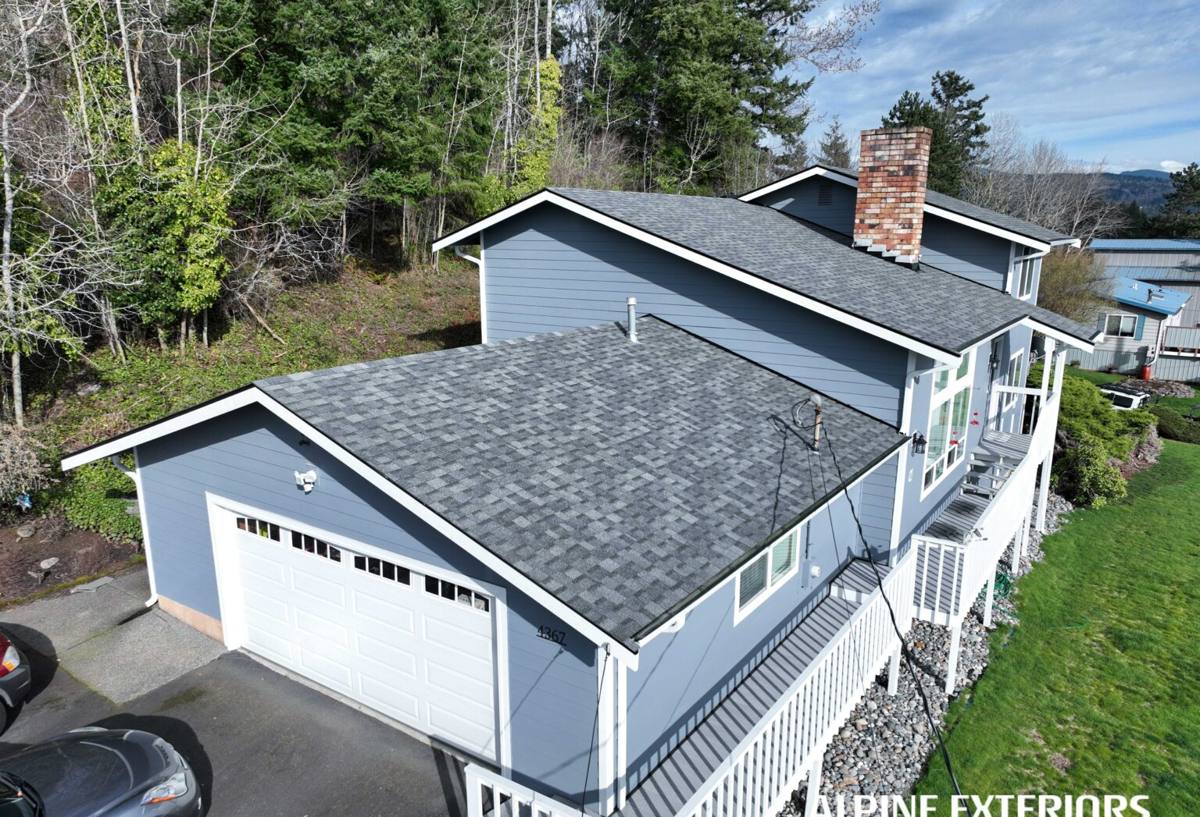
What Salt Air and Driving Rain Do to Island Roofs
Salt air accelerates corrosion on anything metal — flashing, fasteners, gutter hardware, vent caps. A fastener that would last decades in a dry climate can start weeping rust streaks in a fraction of that time when it's exposed to salt-carrying wind off the water. That corrosion doesn't stay cosmetic. Once a fastener head or a flashing seam starts to degrade, it opens a path for water, and water intrusion is the root cause behind the vast majority of repair calls we get.
Driving rain adds a second problem: wind-driven water doesn't fall straight down, it gets pushed sideways and upward under laps, around penetrations, and into any gap that would stay dry in calmer weather. That means repair work here has to assume water will be tested from angles a standard installation manual doesn't always plan for. Flashing details, lap direction, and sealant choice all matter more on an island exposed to open water than they would on a sheltered inland lot.
Why This Matters for a Repair Specifically
A repair that only patches the visible symptom — a stain on the ceiling, a curled shingle — without addressing how salt air and wind-driven rain caused it in the first place tends to fail again within a season or two. Correct repair work traces the water back to its actual entry point, which is sometimes several feet from where the damage shows up inside.
Common Repair Needs We See on Lummi Island Homes
The specific repair calls vary by roof age and material, but a few patterns show up consistently on homes exposed to this kind of marine climate:
- Corroded or lifted flashing around chimneys, skylights, and roof-to-wall transitions
- Fastener corrosion causing shingles or panels to work loose in wind
- Moss colonies lifting shingle edges and holding moisture against the roof deck
- Clogged or corroded gutters and downspouts backing water up under the roof edge
- Sealant failure around vent boots and pipe penetrations after repeated freeze-thaw and UV cycling
- Soft or delaminating decking discovered once damaged shingles are pulled back
Most of these start small. Caught early, they're a straightforward repair. Left alone through a couple of wet seasons, they turn into deck replacement and interior repair on top of the roof work itself.
What a Correct Roof Repair Actually Involves
A proper repair is more than swapping out a damaged shingle or squeezing in a bead of sealant. On a coastal roof, we treat every repair as a small investigation before it's a fix:
Diagnosis First
We trace water stains and soft spots back to their actual source rather than patching the nearest visible damage. On a wind-exposed roof, the entry point is often uphill or to the side of where the leak shows up indoors.
Matching the Existing Roof
Shingle color, profile, and granule blend all shift over time with UV exposure, so a patch that doesn't account for weathering stands out and can also behave differently under the next storm if the material isn't compatible with what's already installed.
Deck Condition
Any area with a history of moisture gets a decking check once the surface material is pulled back. Repairing over a soft or delaminated deck doesn't hold, no matter how good the surface work looks.
Flashing and Fastener Upgrades
Where corrosion caused the original failure, we address the hardware, not just the shingle or panel around it. Reusing degraded flashing or fasteners in a repair just resets the clock on the same failure.
Our Process — From Inspection to Cleanup
The process itself is straightforward, but a few things about working on the island shape how we schedule and stage the job:
- Inspection and diagnosis — we walk the roof (or use a lift/ladder where walking isn't safe) and check attic or ceiling evidence from the inside where accessible.
- Written scope and estimate — what's being repaired, what materials will be used, and an honest read on whether repair or replacement makes more sense for that section of roof.
- Material and crew staging — because Lummi Island is ferry-served, we plan material deliveries and crew arrival around the ferry schedule so the job isn't held up mid-repair waiting on a part or a person.
- The repair itself — tear-out of the damaged area, deck check, correct flashing and underlayment detail, matched surface material, and fastening appropriate to a salt-air environment.
- Cleanup and debris removal — old material, moss debris, and fasteners don't get left on the roof or in the yard.
- Walkthrough — we show you what was found and what was done before we consider the job finished.
Repair vs. Replacement: What Actually Drives the Decision
Not every roof problem on Lummi Island needs a full replacement, and not every repair is a good long-term investment. The honest answer depends on a handful of factors:
| Factor | Favors Repair | Favors Replacement |
|---|---|---|
| Extent of damage | Isolated to one section or penetration | Spread across multiple slopes or the whole field |
| Roof age | Well within expected service life | Near or past the material's typical lifespan |
| Deck condition | Solid, dry decking under the damage | Soft, delaminated, or repeatedly wet decking |
| Underlying cause | A single identifiable failure point | A systemic issue (ventilation, widespread fastener corrosion) |
| Cost over time | Repair cost is a small fraction of replacement | Repeated repairs are starting to add up close to replacement cost |
We'll tell you plainly which side of that table your roof falls on. There's no benefit to us talking you into a replacement a repair would honestly solve, and no benefit to patching something that's going to keep failing.
Moss, Debris, and Maintenance Between Repairs
Whatcom County's moss season is long, and a repaired section of roof is only protected if the rest of the roof isn't quietly working against it. A short maintenance routine between repairs or inspections goes a long way toward avoiding the next call:
- Clear moss and debris from valleys, edges, and behind chimneys before it mats down and holds moisture
- Keep gutters and downspouts flowing freely so water isn't backing up under the roof edge
- Check flashing and sealant around penetrations at least once a year for cracking or lifting
- Trim back overhanging branches that keep sections of roof shaded and slow to dry
- Look at the attic occasionally for staining, damp insulation, or daylight where there shouldn't be any
- Have any storm damage checked promptly rather than waiting for the next dry stretch
Why an Island-Experienced Local Crew Matters
Roofing work on Lummi Island has a logistics layer that inland jobs don't: ferry-dependent scheduling, tighter windows for material delivery, and weather that can change the workable conditions on a given day faster than on the mainland. A crew that already works the island builds those realities into the estimate and the timeline up front, instead of discovering them partway through the job and letting the repair drag out exposed to the weather.
There's also a simple pattern-recognition advantage. A crew that repairs roofs across Birch Bay and the surrounding waterfront communities sees the same salt-air corrosion, the same wind-driven leak paths, and the same moss buildup patterns often enough to know what to check before it becomes obvious from the outside. That's less guesswork for you and fewer repeat visits for the same underlying problem.
Get an Honest Look at Your Roof
If you're dealing with a leak, corroded flashing, or a section of roof that's been giving you trouble on Lummi Island, we're glad to take a look and give you a straight answer on what it needs. The estimate is free, there's no pressure to commit to more work than the roof actually calls for, and you can request one using the form below.