 Birch Bay Roofing
 Decking on Lummi Island Is a Different Job Than Decking Inland
Lummi Island sits out in the wind and salt spray off the water, and it shows in how decks age out there compared to decks a few miles inland in Whatcom County. Salt-laden air corrodes hardware faster, wind-driven rain finds its way into joints that would stay dry on a sheltered lot, and the long wet shoulder seasons keep shaded, tree-covered decks damp for weeks at a time. Composite decking handles this environment better than wood when it's specified and installed correctly — but "composite" isn't one product with one set of rules. The board, the fasteners, and the framing underneath all have to be chosen with this specific climate in mind, not a generic inland spec.
This page is about what that actually looks like: what a Lummi Island composite deck needs to hold up, how we build it, and what ongoing care looks like once it's in the ground.
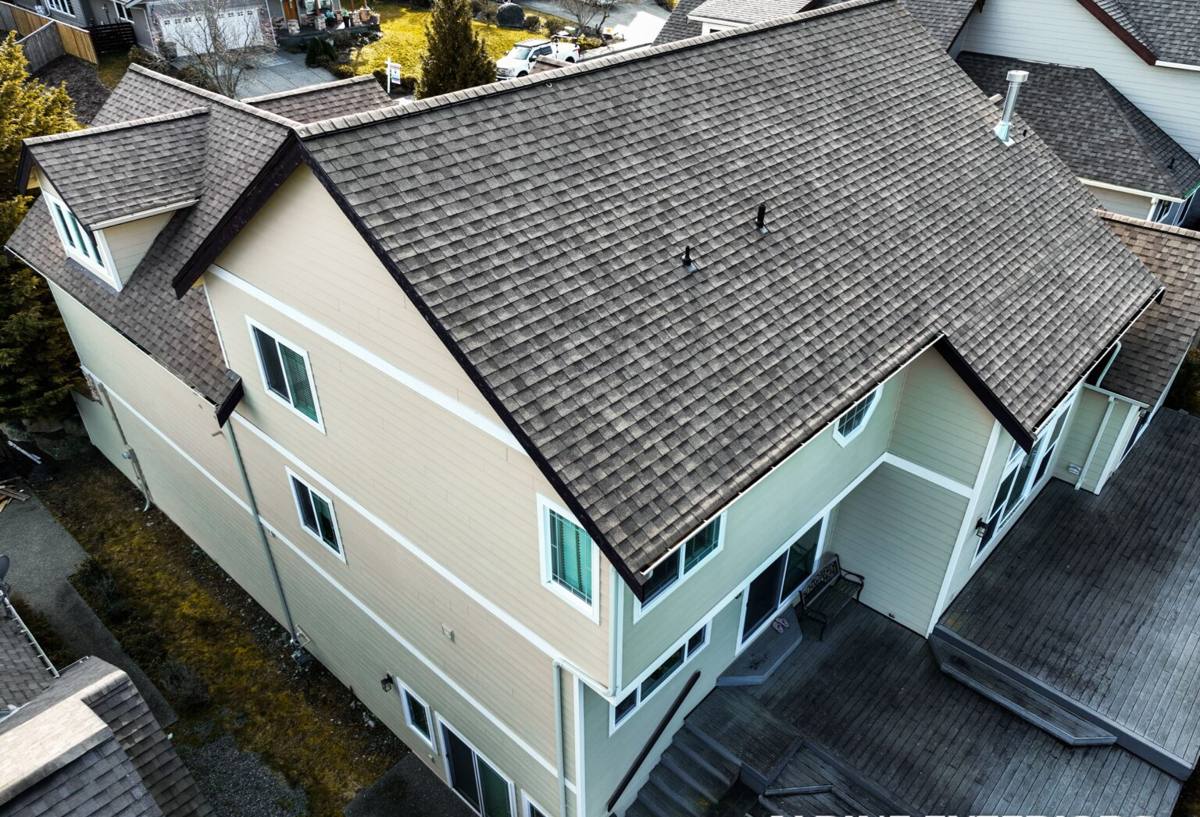
What Salt Air, Driving Rain, and Moss Season Do to a Deck
Salt Air
Airborne salt doesn't just sit on the surface — it works into any exposed metal fastener, screw head, or connector over time. On an inland deck, standard coated hardware can hold up for years. On Lummi Island, that same hardware can start showing corrosion much sooner, and once fasteners start failing, boards loosen and gaps open up that let in more moisture.
Driving Rain
Wind off the water pushes rain sideways, not straight down. That matters at every horizontal-to-vertical transition on a deck: where the ledger meets the house, where boards meet fascia, where posts meet footings. A flashing detail that's "good enough" for a calm inland yard can let water track behind it here, and once water gets behind trim or flashing, it stays wet far longer than it would on an exposed, sun-drying surface.
Moss Season
Whatcom County's wet season runs long, and on shaded or tree-covered Lummi Island lots, that means extended stretches where a deck surface simply doesn't dry out between rains. Moss and algae don't need much — just shade, moisture, and organic debris in the board grooves — and once established, they hold even more moisture against the board and make the surface slick.
What a Correctly Built Composite Deck Needs Out Here
- Capped composite boards — a polymer cap wrapped around the wood-composite core blocks moisture absorption far better than older uncapped composite blends, which can wick water and swell at cut ends over time.
- Corrosion-resistant fasteners — stainless steel or coated fasteners rated for coastal exposure, not standard interior-grade hardware.
- Correct board gapping — spacing that allows water to drain through rather than pool on the surface, which also reduces the standing moisture that feeds moss.
- Ledger and rim flashing — a continuous flashing detail at the house connection so wind-driven rain can't track behind the band board.
- Joist protection — tape or a moisture barrier over the framing lumber so the substructure isn't absorbing water every time it rains, even though the decking above is composite.
Getting the Substructure Right
Framing and Ledger Connection
A composite deck is only as good as what's underneath it. On Lummi Island we treat the ledger connection and flashing as one of the most important details on the job, since it's the single most common place a deck develops a hidden rot problem — the composite surface can look fine for years while the framing behind it deteriorates. We also use fasteners and structural hardware rated for the same salt exposure as anything visible on the surface.
Joist Spacing and Airflow
Composite boards generally need tighter joist spacing than wood to prevent flex, and we follow manufacturer spec rather than stretching spacing to save material. Just as important is airflow underneath the deck. Fully enclosed skirting with no ventilation traps moisture against the framing and creates the same shaded, damp conditions that grow moss on the surface above. Wherever the design allows it, we build in ventilation gaps so air can move underneath.
Comparing Decking Materials for a Coastal, High-Moisture Site
Homeowners often ask how composite really stacks up against wood options once you account for what this climate does to a deck year after year. Here's the honest comparison:
| Material | Salt air & driving rain | Moss/algae resistance | Typical maintenance |
|---|---|---|---|
| Capped composite | Strong — cap layer resists moisture absorption | Good, especially with proper gapping and airflow | Periodic rinse and light brushing |
| Uncapped/early-gen composite | Weaker — core can absorb water at cut ends and seams | Fair — more prone to surface staining over time | More frequent cleaning to prevent buildup |
| Pressure-treated wood | Moderate — needs regular sealing to resist swelling and checking | Fair — porous surface holds moisture | Annual sealing/staining recommended |
| Cedar | Moderate — naturally rot-resistant but still absorbs moisture | Fair to poor in shaded, wet spots | Regular sealing to maintain appearance |
Composite isn't automatically the right call for every project or budget, but for a shaded, salt-exposed Lummi Island lot, a properly capped composite board with the right fastener and framing spec generally holds up with the least ongoing work.
How We Approach a Composite Decking Project Here
- Site evaluation. We look at sun exposure, tree cover, wind direction, drainage patterns, and the condition of any existing structure before recommending a spec.
- Substructure inspection or repair. Any existing framing, ledger, or footings are checked and repaired or replaced as needed before new decking goes down.
- Flashing and ledger work. This is done first and inspected before anything else is built over it.
- Framing layout. Joist spacing and ventilation are set to match the board manufacturer's spec and the site's moisture exposure.
- Board installation. Boards go down with hidden fastener systems where the product allows it, keeping visible hardware to a minimum.
- Railing, fascia, and trim. Edge details are finished with the same corrosion-resistant hardware used throughout.
- Final walkthrough. We go over care and cleaning expectations specific to your lot's sun and shade pattern before we consider the job done.
Keeping a Composite Deck Clear of Moss and Salt Film
Composite is genuinely lower-maintenance than wood, but "lower-maintenance" doesn't mean "no maintenance" — especially in a climate with this much moss pressure and salt exposure. A simple seasonal routine keeps a well-built deck looking and performing the way it should:
- Rinse the deck surface a few times a year to clear salt film and pollen before it builds up in the board grooves.
- Use a soft-bristle brush (not a wire brush) on shaded areas where algae or light moss tends to start.
- Keep gutters and any nearby drainage clear so runoff isn't sheeting directly onto the deck surface.
- Trim back overhanging branches where possible to let more sun and airflow reach shaded sections.
- If pressure washing, keep the nozzle at a safe distance and a wide fan pattern — too much pressure can strip texture from the board face.
- Do a yearly check of visible fasteners and railing hardware for early signs of corrosion, especially after winter storm season.
Permits, Setbacks, and Working Near the Whatcom County Shoreline
Depending on a property's elevation and distance from the water, deck projects in this part of Whatcom County can fall under local permitting or shoreline setback requirements. This varies lot by lot, so we don't assume — checking what applies to your specific site is part of our process before we finalize a design or start work, not something we leave for you to sort out separately.
Why a Crew That Already Works Lummi Island Matters
Lummi Island is reached by ferry, which changes how a decking project has to be planned. Material take-offs need to be right the first time, since a missing box of fasteners or an extra board isn't a quick trip back to the shop — it's a ferry schedule to work around. Crews and deliveries have to be coordinated so the job keeps moving instead of losing a day waiting on a sailing.
Beyond logistics, working the island regularly means knowing how wind exposure and salt drift actually vary from lot to lot — a bluff-facing deck and a tree-sheltered one just down the road can need noticeably different flashing and airflow decisions, even though they're minutes apart. That's the kind of judgment that comes from doing the work here repeatedly, not from a one-off inland spec applied to a coastal site.
Birch Bay Roofing Co is based in Birch Bay and works throughout Whatcom County, including regular decking and exterior projects on Lummi Island. We plan around the ferry, not against it, so the project stays on schedule.
What Affects the Cost of a Lummi Island Composite Deck
Every project is different, but the main cost drivers we walk homeowners through are:
- Size and shape — square footage and the number of angles, steps, or transitions.
- Substructure condition — whether existing framing can be reused or needs replacement.
- Board selection — capped composite lines vary in price by warranty coverage, color retention, and board profile.
- Railing and trim choices — composite, cable, or metal railing systems price differently.
- Site access — ferry logistics and site accessibility can affect scheduling and delivery costs.
In broad terms, most composite deck projects in this area fall somewhere in the range of $40 to $70 per square foot installed, though the specifics of your site and material choices can move that up or down. We'll always walk through where your project lands and why before any work begins.
If you're planning a new deck or replacing an aging one on Lummi Island, we're happy to take a look and put together a straightforward, no-pressure estimate — just fill out the form below to get started.