 Birch Bay Roofing
 Roofing on Lummi Island Is Its Own Challenge
Lummi Island sits out in Whatcom County's marine air, reachable only by ferry, and that isolation shapes everything about how a roof ages there. Homes on the island take a steady dose of salt-laden wind off the water, long stretches of driving rain through fall and winter, and a moss season that can run most of the year on north-facing slopes and shaded rooflines. A roof that would hold up fine twenty miles inland can wear out early here if it wasn't built and installed with those conditions in mind.
Roof replacement in this setting isn't just about swapping old shingles for new ones. It's about choosing materials that tolerate salt exposure, detailing the roof so wind-driven rain can't find a way in, and setting the homeowner up to manage moss instead of fighting a losing battle against it every summer. This page covers what that actually looks like.
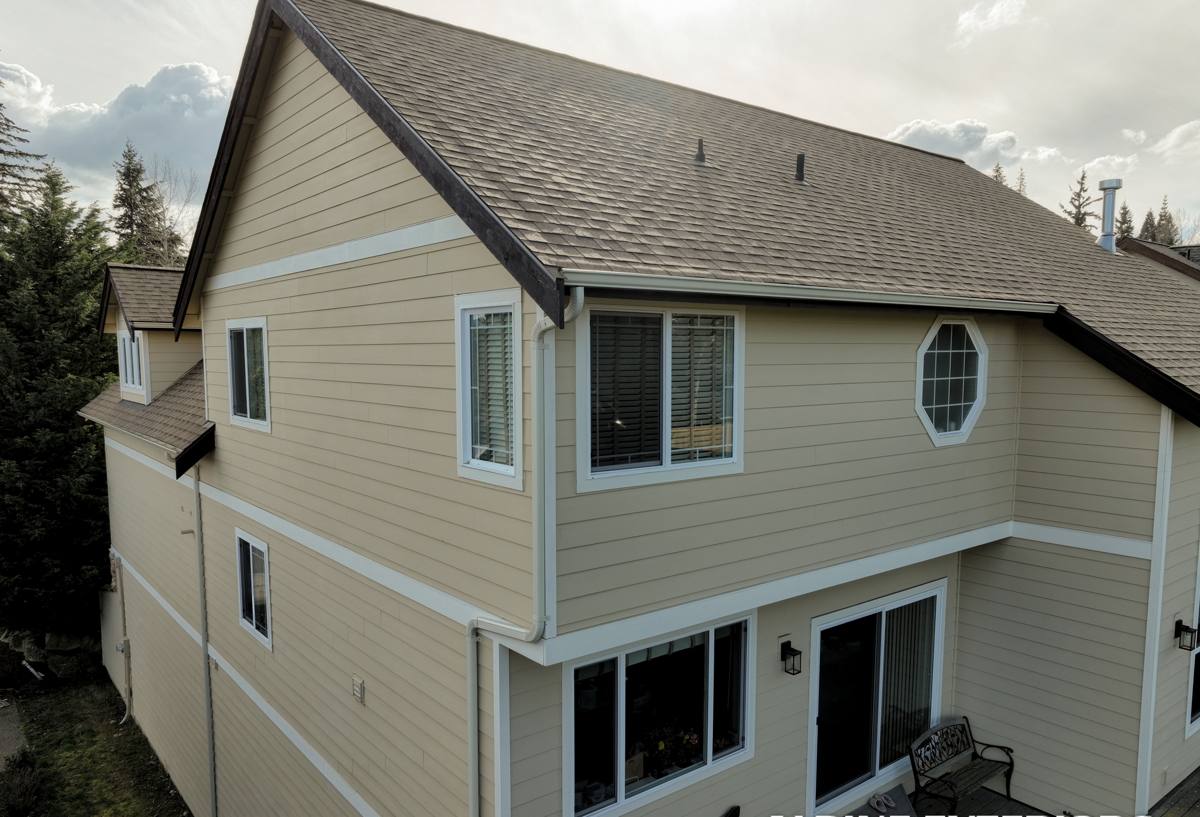
Why Lummi Island Homes Wear Roofs Differently
Salt Air and Corrosion
Airborne salt accelerates corrosion on exposed metal — flashing, fasteners, vent stacks, and gutter hardware all take the hit faster near the water than they would further inland. Standard galvanized fasteners can start showing rust streaks and weakening well before a shingle roof's warranty period is up. On an island roof, the metal components matter as much as the shingles themselves.
Driving Rain
Wind off the water doesn't just fall straight down — it pushes rain sideways and up under laps, edges, and flashing that would stay dry in a calmer climate. Valleys, eaves, and any roof-to-wall transition are the places that fail first when a roof wasn't detailed for wind-driven rain.
A Long Moss Season
Shade, moisture, and mild temperatures give moss a long runway on Whatcom County roofs, and Lummi Island's tree cover and humidity make it worse in spots that don't get much direct sun. Moss holds moisture against the roofing material, works its way under shingle tabs, and can lift edges enough to let water in — long before the shingles themselves are actually worn out.
Signs a Repair Won't Cut It Anymore
Not every roof problem on Lummi Island means a full replacement. But there's a point where patching stops being the honest answer. Signs it's time to talk replacement instead of another repair:
- Granule loss heavy enough that you can see bare asphalt in multiple spots, not just one worn patch
- Shingles that are curling, cupping, or cracking across large sections rather than isolated spots
- Soft or spongy decking felt underfoot in the attic, especially near valleys or eaves
- Moss growth thick enough that it's lifting shingle edges, not just discoloring the surface
- Flashing and fasteners showing rust or corrosion damage beyond a simple swap
- Recurring leaks in the same area after more than one repair attempt
- The roof is past its expected service life for its material and has multiple issues stacking up at once
What a Correct Replacement Involves Here
A roof replacement done right for this climate isn't just about the visible shingle layer. It's a system, and every layer has to be chosen and installed with salt air and wind-driven rain in mind.
Tear-Off and Deck Inspection
Full replacement starts with tearing off the old roofing down to the deck so we can actually see what's underneath. Any decking that's soft, delaminated, or water-damaged gets replaced before anything new goes down — covering over a compromised deck just hides the problem.
Underlayment and Water Protection
Given how much wind-driven rain this area sees, underlayment choice matters more here than in drier inland climates. Self-adhering ice-and-water membrane at eaves, valleys, and around penetrations gives the roof a second line of defense in the spots most likely to see water pushed sideways or backed up under normal shingle laps.
Flashing and Fasteners
Corrosion-resistant flashing and fasteners are non-negotiable on a roof this close to salt air. That means specifying materials rated for coastal exposure rather than standard-grade hardware, particularly around chimneys, skylights, and any roof-to-wall step flashing.
Ventilation
Proper intake and exhaust ventilation keeps moisture from building up in the attic, which matters both for the roof deck's longevity and for controlling condensation in a consistently damp climate. A roof can be installed perfectly and still fail early if the attic underneath it can't breathe.
Choosing a Roofing Material for a Marine, Moss-Prone Climate
There's no single "best" roofing material for every home — it depends on budget, roof pitch, and how much upkeep an owner wants to take on. Here's how the common options stack up for Lummi Island's conditions specifically:
| Material | Salt Air Durability | Moss Resistance | Maintenance |
|---|---|---|---|
| Algae-resistant asphalt shingles | Good with corrosion-resistant flashing/fasteners | Better than standard shingles; still needs periodic cleaning | Moderate — inspect and clean growth yearly |
| Standard asphalt shingles | Fair — depends on hardware quality | Lower — more prone to moss and algae staining | Higher — earlier moss buildup |
| Metal roofing (coated steel) | Excellent with proper coating and fasteners | Very good — moss struggles to grip a metal surface | Low — mainly fastener and seam checks |
| Cedar shake | Fair — needs regular treatment near salt air | Low without diligent upkeep | Highest — treatment and moss removal are ongoing work |
For most Lummi Island homes, algae-resistant asphalt shingles or a coated metal roof offer the best balance of upfront cost and long-term performance in this climate. Cedar can still be the right call for homeowners who want the look and are committed to the maintenance it demands — we'll walk through the trade-offs honestly rather than steering everyone toward one product.
What Drives the Cost of a Replacement
We don't post fixed pricing because every roof is different, but these are the main factors that move a project's cost up or down:
| Factor | Why It Matters |
|---|---|
| Roof size and pitch | Steeper roofs take longer and require more safety setup |
| Number of tear-off layers | Removing multiple old layers adds labor and disposal cost |
| Material choice | Asphalt, metal, and cedar carry different material and install costs |
| Deck condition | Rotted or soft decking found during tear-off adds repair work |
| Roof complexity | Valleys, dormers, skylights, and chimneys all add flashing detail |
| Access and logistics | Ferry scheduling and material staging on the island can affect timeline |
We walk every roof in person and give a written estimate based on what we actually find — not a phone-quoted number.
Living With Moss After the New Roof Goes On
A new roof lowers your moss problem, it doesn't eliminate it — especially on shaded slopes. A little ongoing attention keeps a new roof looking and performing the way it should for its full service life:
- Keep overhanging branches trimmed back so more sun and airflow reach the roof surface
- Clear gutters and valleys of needles and debris at least twice a year
- Have shaded, moss-prone sections rinsed or treated before growth gets thick enough to lift shingle edges
- Watch for zinc or copper strip wear if your roof has them installed, and know they can be added later if not
- Schedule a quick roof check after major storms to catch any lifted flashing or debris buildup early
Our Replacement Process
Every project follows the same basic sequence, adjusted for the specific roof:
- On-site inspection and honest assessment of whether repair or replacement is the right call
- Written estimate covering material options, scope, and timeline
- Material ordering and delivery scheduling, accounting for ferry logistics on Lummi Island
- Tear-off, deck inspection, and any necessary deck repair
- Underlayment, flashing, and new roofing installation to spec
- Final walkthrough and cleanup, including magnetic sweep for stray fasteners
Why a Crew That Already Works on Lummi Island Matters
Getting a crew and materials onto Lummi Island takes planning that mainland jobs don't require — everything has to move by ferry, and that means scheduling deliveries, tools, and labor around the boat rather than just showing up whenever. A contractor who's done island jobs before knows how to stage a project so a ferry delay doesn't turn into a stalled roof sitting open to the weather. That planning is part of the job, not an afterthought, and it's one of the clearest ways to tell a crew that actually knows the area from one that's guessing.
Beyond logistics, familiarity with Whatcom County's coastal conditions means knowing which details actually matter here — corrosion-resistant hardware, proper eave and valley protection, and ventilation that accounts for a consistently damp climate. Those aren't upsells; they're the difference between a roof that holds up on Lummi Island and one that needs attention again in a few years.
Get a Free, No-Pressure Estimate
If your roof is showing its age or you just want an honest read on where it stands, we're glad to take a look. Fill out the form below for a free estimate — no pressure, no hard sell, just a straight answer about what your roof needs.