 Birch Bay Roofing
 Lummi Island Decks Take a Different Kind of Beating
A deck on Lummi Island doesn't fail the way a deck does further inland. Between the salt-laden air coming off the water, rain that drives sideways instead of falling straight down, and a moss season that can stretch from October well into spring, the wood, metal, and fasteners holding your deck together are under near-constant stress. We've seen decks that looked fine from a distance turn out to have soft framing underneath, corroded hardware, or a ledger connection quietly failing where it meets the house. None of that is unusual out here — it's just what Whatcom County's marine climate does to an outdoor structure over time.
This page is about deck repair specifically for Lummi Island homes. Not a generic list of deck problems, but what actually shows up on decks in this environment, what a proper repair looks like, and how we handle the logistics of working on an island community without cutting corners on the job itself.
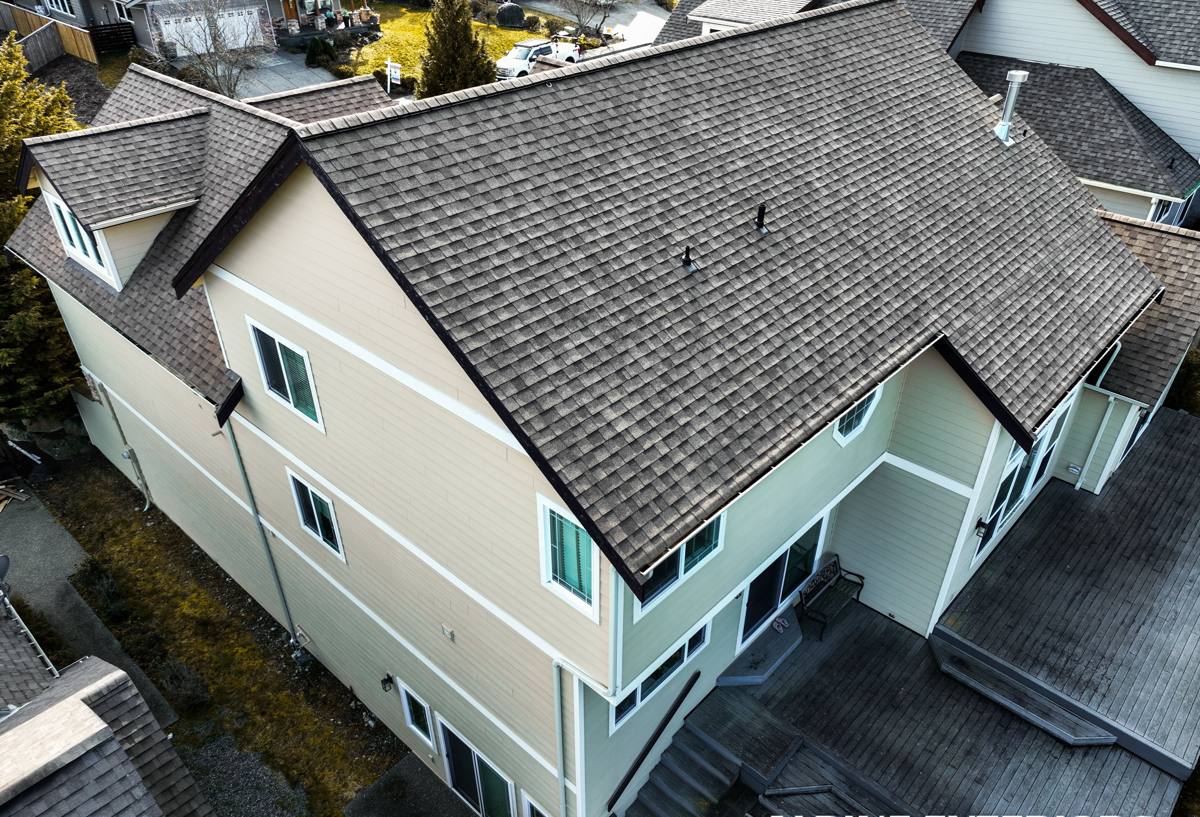
What Salt Air, Rain, and Moss Actually Do to a Deck
Salt Air and Fasteners
Airborne salt accelerates corrosion on anything metal — nails, screws, joist hangers, bolts, and railing hardware. Fasteners rated for a typical inland deck often aren't enough this close to the water. Once a fastener starts corroding, it loses grip strength long before it looks obviously bad, which is why hardware failure is one of the more common — and more hidden — reasons a deck starts to feel loose or springy.
Driving Rain and the Ledger Connection
Wind-driven rain doesn't just fall on a deck, it gets pushed into every gap, seam, and connection point. The ledger board — the piece that attaches your deck to the house — is the single most important structural connection on most decks, and it's also the spot most exposed to wind-blown moisture working its way behind boards and flashing over the years. When flashing is missing, undersized, or was never properly integrated with the house's water-resistive barrier, water gets trapped against the framing instead of shedding away from it.
Moss and Deck Surfaces
A long moss season means extended periods where a deck surface stays damp and shaded even when it isn't actively raining. Moss and algae hold moisture against wood and composite decking alike, which softens wood fibers over time and makes surfaces slick and unsafe underfoot. Left alone through multiple wet seasons, moss growth is less a cosmetic issue and more a steady contributor to decay in whatever it's sitting on.
Signs Your Deck Needs Attention
Most deck problems in this area develop slowly, which is exactly why they get missed. Here's what we tell Lummi Island homeowners to watch for:
- Soft, spongy, or bouncy spots when you walk across the deck
- Rust streaks running down from screws, nails, or brackets
- Gaps opening up where the deck meets the house siding or trim
- Railings or posts that wiggle more than they used to
- Persistent moss or dark staining that comes back within weeks of cleaning
- Boards that feel damp or cool days after the last rain
- Visible cracking, splintering, or checking along board edges
- Stairs that feel less solid than the rest of the deck
Any one of these on its own might be minor. Several together usually means the deck has been quietly absorbing moisture damage for a while.
Repair or Replace? What Actually Determines the Answer
Homeowners often assume any deck trouble means a full tear-out, but that's frequently not the case. The honest answer depends on where the damage is and how far it's spread. We inspect before we quote, and we'll tell you plainly if repair is the right call — or if it isn't.
| Factor | Favors Repair | Favors Replacement |
|---|---|---|
| Framing condition | Joists and beams are solid; damage is isolated | Widespread soft or rotted framing |
| Ledger connection | Flashing issue caught early, framing behind it is dry | Long-term water intrusion has compromised the rim joist |
| Decking surface | A few damaged boards among otherwise sound decking | Most boards are cracked, cupped, or rotting |
| Fasteners & hardware | Corrosion limited to a section that can be replaced | Corrosion is widespread throughout the structure |
| Age of the deck | Newer deck with a localized, fixable problem | Deck is near or past its expected service life |
| Code compliance | Structure meets current guardrail and attachment standards | Old construction doesn't meet current safety requirements |
General cost planning: straightforward repairs (fastener replacement, board swaps, railing tightening, localized flashing fixes) are typically a modest expense compared to full replacement. Ledger reconstruction or framing repair costs more because it involves opening up the deck's structure. Full replacement is the largest investment but resets the clock on materials, fasteners, and code compliance all at once. We'll walk you through where your deck falls on that spectrum before any work starts.
What a Correct Deck Repair Actually Involves
Start With the Structure, Not the Surface
A repair that only replaces visible boards without checking the framing underneath is a repair that hides a problem instead of fixing it. Any legitimate deck repair starts with pulling back enough decking to see the joists, ledger, and connection hardware directly — not guessing based on what's visible from above.
Flashing Done Right
If the ledger connection is part of the problem, the fix isn't just resealing what's there. It means installing proper flashing that integrates with the house's siding and water-resistive barrier so rain sheds away from the structure instead of running behind it. This is the step that gets skipped most often in cheap repairs, and it's the one that determines whether the fix lasts.
Fasteners and Hardware Matched to the Environment
Given the salt exposure here, we use fasteners and structural hardware rated for coastal and marine environments — not standard-grade materials that will start corroding again within a few seasons. This is a small cost difference on a repair and a significant difference in how long the repair holds up.
Decking Material Choices
When boards need to be replaced, we'll talk through the honest trade-offs between wood and composite decking for this climate. Wood is more affordable up front but needs regular sealing and moss treatment to hold up to the wet season. Composite costs more initially but handles moisture and moss growth with less ongoing maintenance — though it has its own installation requirements around spacing and ventilation that matter more in a damp climate, not less. Neither is automatically "better" — it depends on how much upkeep you want to take on.
How We Approach Deck Repair Projects on Lummi Island
Working on Lummi Island means factoring in the ferry as part of the job, not treating it as an afterthought. We plan material lists and tool needs ahead of time so a crew isn't making multiple back-and-forth trips mid-project, and we build ferry schedules into our project timelines when we quote the work. That planning is part of doing the job efficiently — it shouldn't cost you extra time or turn into a scheduling headache on your end.
Our process for a deck repair generally looks like this:
- On-site inspection of the deck surface, framing, ledger connection, and hardware
- A clear explanation of what's actually wrong and what caused it
- A written scope that separates repair items from anything that's genuinely a replacement issue
- Materials and fasteners selected for this environment, not generic stock
- Work scheduled with island logistics accounted for up front
- A final walkthrough so you know exactly what was done and why
Keeping Your Deck in Good Shape Between Repairs
A little regular maintenance goes a long way toward stretching the life of a deck in this climate. Homeowners who stay ahead of moss and moisture generally deal with far fewer structural surprises down the road.
- Sweep debris and standing moisture off the deck surface regularly, especially in shaded areas
- Treat moss growth as soon as it appears rather than waiting for it to spread
- Check railings and stair connections for looseness once or twice a year
- Look at the ledger area where the deck meets the house for staining or gaps
- Keep gutters and downspouts clear so runoff isn't draining directly onto the deck
- Reseal wood decking on a schedule appropriate to a wet coastal climate, not an inland one
- Trim back vegetation that's keeping sections of the deck shaded and damp
Why Hiring a Crew That Already Works on Lummi Island Matters
A contractor who only occasionally makes it out to the island is working without the context that comes from repeatedly seeing how homes here actually hold up over time. We're not guessing at how salt air, driving rain, and a long moss season affect deck framing and hardware — we've seen the pattern enough times to know what to check first and what corners never to cut. That familiarity also means fewer surprises on scheduling, since ferry logistics are already part of how we plan a project rather than something figured out after the fact.
If your deck has soft spots, corroding hardware, persistent moss, or just doesn't feel as solid as it used to, we're happy to take a look and give you a straight answer about what it needs. Reach out for a free, no-pressure estimate using the form below.