 Birch Bay Roofing
 Blaine's Coastal Climate Is a Tough Test for Siding
Blaine sits right on the water, tucked against Semiahmoo Bay and the Strait of Georgia, which means homes here take on a different kind of weather than siding a few miles inland. Salt-laden air moves through year-round, wind-driven rain comes in sideways off the water during winter storms, and the long, damp Whatcom County shoulder seasons keep exterior surfaces wet and shaded for weeks at a time. That combination is exactly what breaks down siding materials that aren't built for it — and it's why we treat a Blaine siding job differently than a job twenty minutes inland.
Salt air is corrosive to exposed metal fasteners and trim, and it accelerates the breakdown of paint films and caulk joints faster than most manufacturers' warranty testing assumes. Driving rain finds every gap in flashing, trim, and butt joints, pushing moisture behind the siding plane instead of just running down the face of it. And the region's long moss season — cool, wet, and shaded much of the year — means anything that holds moisture against a wall will grow moss, algae, or mildew, and stay damp longer between dry spells. Siding on a Blaine home isn't just decorative. It's the first and most heavily worked line of defense the house has.
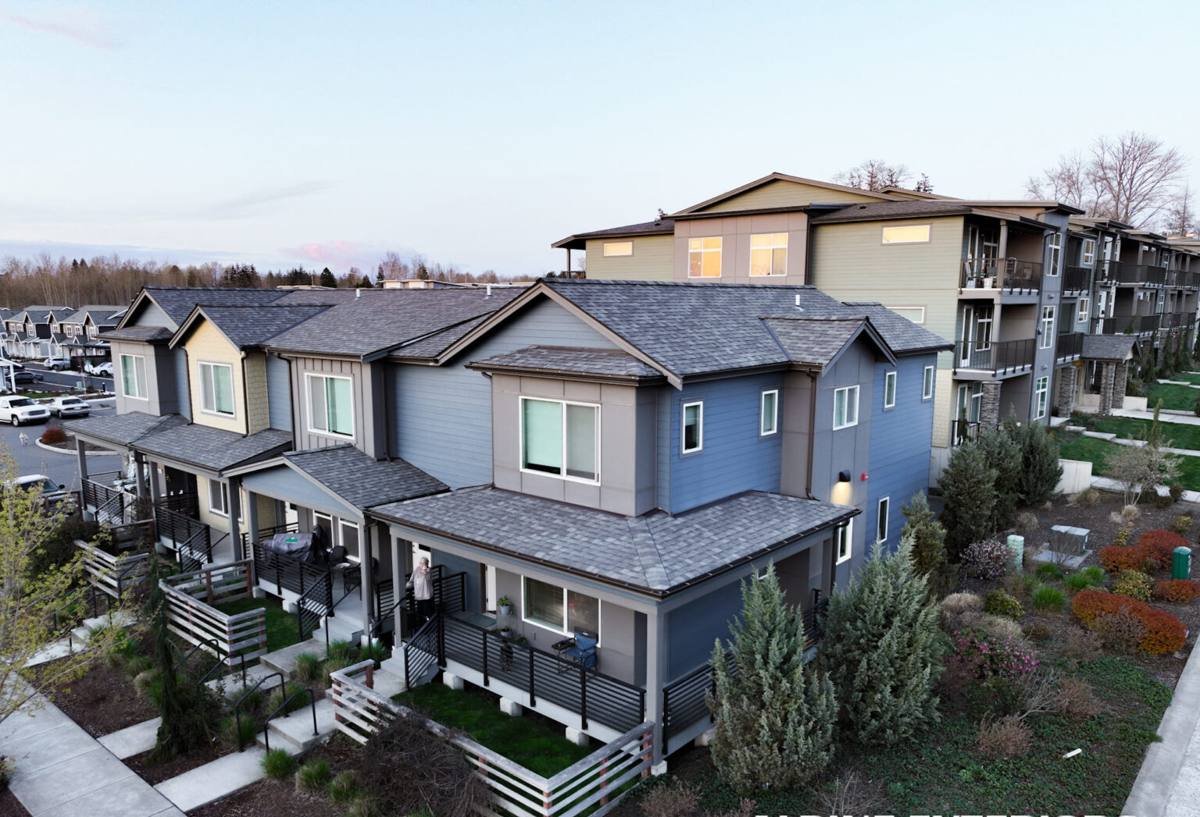
Why We Install James Hardie and Nothing Else
We are a Hardie-only siding contractor. We don't install vinyl, LP SmartSide, Cemplank, Allura, primed spruce, or cedar — not because those products have no place in the market, but because after years of working on homes exposed to this exact coastal environment, Hardie fiber cement is the material we're willing to warranty our workmanship on. It's non-combustible, dimensionally stable in freeze-thaw and wet-dry cycling, and it holds a factory-applied finish far longer than field-painted wood or bare vinyl in salt air.
For a home in Blaine, we typically spec Hardie's HZ5 climate-engineered product line, which is formulated for regions with higher moisture exposure and freeze-thaw activity — a good match for a bay-front or near-water property. Paired with a ColorPlus factory finish, the siding arrives with a baked-on, UV-cured coating that resists fading and chalking far longer than a site-applied paint job, and touch-up paint is color-matched rather than guessed at.
What Homeowners Get With Hardie in This Climate
- Non-combustible fiber cement core — doesn't feed a fire the way wood-based sidings can
- Engineered moisture and freeze-thaw resistance in the HZ5 formulation
- ColorPlus factory finish that resists the fading and chalking salt air accelerates on field-painted surfaces
- Dimensional stability — it doesn't swell, cup, or warp the way solid wood or engineered wood panels can when they take on water
- A transferable manufacturer warranty that follows the house, which matters to buyers when a coastal home eventually sells
What a Correct Installation Actually Involves
Hardie siding is only as good as the installation behind it. Most of the siding failures we get called out to inspect in this area aren't material failures — they're installation shortcuts that let water get behind the cladding, where a coastal climate then has months of damp weather to do damage before anyone notices.
The details that matter most on a Blaine home
A correct install starts with a proper water-resistive barrier and flashing plan behind the siding, not just around windows and doors but at every horizontal transition, deck ledger, and roof-to-wall intersection where wind-driven rain tends to find its way in. Starter strips need to be set correctly so the first course kicks out water rather than wicking it up into the wall assembly. Butt joints need to be flashed or sealed per Hardie's fastening and joint requirements — not simply caulked and hoped for. Fasteners need to be the corrosion-resistant type and driven to the correct depth, since over-driven or under-driven nails are one of the most common causes of premature siding failure in wet climates. And rainscreen or drainage gap detailing behind the panels gives any moisture that does get in a way to drain and dry out instead of sitting against the sheathing.
None of this is visible once the job is finished and painted. It's the part of the work that determines whether the siding is still performing well in fifteen years or starting to show problems in five.
How Our Process Works
We keep the process straightforward and don't push anyone toward a bigger scope than their home actually needs.
- On-site assessment. We walk the exterior, check the condition of the existing siding, trim, and flashing, and look specifically for moisture intrusion, soft sheathing, or areas where wind-driven rain has been getting in — common around window heads and deck ledgers on homes exposed to bay winds.
- Scope and product plan. We recommend the Hardie plank profile, exposure, and color line that fits the home and confirm whether HZ5 detailing is appropriate for the site's exposure.
- Written estimate. No pressure, no scare tactics — a clear breakdown of what's being replaced and why.
- Tear-off and prep. We remove the old siding, inspect and repair sheathing where needed, and install a correctly lapped water-resistive barrier and flashing system before a single piece of Hardie goes up.
- Installation to manufacturer spec. Fastening pattern, joint treatment, and clearances are done to Hardie's published requirements, not shortcuts.
- Final walkthrough. We go over the finished work with the homeowner and document the warranty registration.
Why a Crew That Already Works Blaine Matters
Siding crews that mostly work drier, inland areas don't always adjust their detailing for a site that gets more direct wind-driven rain and sustained salt exposure. A crew that regularly works Blaine and the greater Birch Bay area already knows to pay closer attention to flashing at wall penetrations, to use corrosion-resistant fasteners as standard rather than an upcharge, and to expect that a home facing open water needs tighter joint and gap detailing than one tucked behind trees a few miles inland.
There's also a practical side to this. Local permitting requirements, typical framing and sheathing conditions in older Whatcom County homes, and the realities of scheduling around this area's wet season are all things a crew learns by doing the work here repeatedly — not by reading a spec sheet once.
James Hardie vs. Other Siding Options for a Blaine Home
| Factor | James Hardie Fiber Cement | Vinyl | Wood / LP-Type Products |
|---|---|---|---|
| Salt air / coastal exposure | Engineered for moisture resistance; factory finish holds up well | Can become brittle and discolored over time in UV and salt exposure | Prone to moisture absorption, swelling, and rot without diligent maintenance |
| Wind-driven rain resistance | Dimensionally stable; performs well when flashed correctly | Panels can flex and let water track behind at seams | Vulnerable at joints and cut ends if not fully sealed and maintained |
| Moss / algae season | Resists moisture retention; factory finish sheds growth more easily | Can trap moisture behind panels in shaded, damp conditions | Organic material is more susceptible to moss and mildew growth |
| Fire resistance | Non-combustible core | Can soften or melt under high heat | Combustible |
| Finish longevity | ColorPlus factory finish, long fade resistance | Color is baked into the material but can chalk and fade | Requires repainting or restaining on a recurring cycle |
This isn't a knock on every alternative — vinyl and wood sidings both have a place, and there are homeowners who choose them for cost or aesthetic reasons. But for the specific combination of salt air, driving rain, and a long moss season that a Blaine property deals with, Hardie is the material we're comfortable standing behind with our own installation warranty.
Maintenance: What Ownership Actually Looks Like
Hardie siding is low-maintenance, not zero-maintenance. In this climate, a simple annual routine keeps it performing the way it's designed to:
- Rinse the exterior once or twice a year to clear salt residue and organic buildup, especially on north- and west-facing walls that stay shaded and damp longer
- Inspect caulking at trim, window, and door joints annually and re-seal any cracked or separated caulk before wet season
- Keep gutters and downspouts clear so water isn't overflowing onto siding below
- Trim back vegetation and clear debris that traps moisture against the wall
- Watch for any soft spots, staining, or paint failure at the base of walls near grade, a common spot for splash-back moisture in heavy rain
Questions to Ask Before Hiring a Siding Contractor in Blaine
- Do you carry manufacturer certification or documented training for the specific product you're installing?
- What's your flashing and water-resistive barrier detailing at windows, deck ledgers, and roof intersections?
- Are you using corrosion-resistant fasteners as standard, given the salt air exposure here?
- Is the manufacturer's product warranty transferable to a future homeowner?
- Can you walk me through why you recommend this specific product line and exposure for my home's orientation and site conditions?
A contractor who can answer those clearly, without hedging, is one who's actually done the work in this kind of climate before.
If your Blaine home's siding is showing its age, or you're planning ahead of a renovation, we're happy to walk the exterior with you and give a straight assessment — no pressure, no inflated scope. Reach out for a free estimate using the form below.