 Birch Bay Roofing
 Board & Batten Siding on the Blaine Coastline
Blaine sits right on the water, close enough to Semiahmoo Bay, Drayton Harbor, and Boundary Bay that salt-laden air is simply part of daily life. Board and batten siding has become a popular choice out here for good reason — the vertical lines and deep shadow gaps give a home that clean, coastal-farmhouse look that fits Whatcom County's waterfront character. But the style that looks right for Blaine only performs right if the materials and installation are matched to what this stretch of coastline actually throws at a house.
We install board and batten in one material: James Hardie fiber cement. This page walks through what board and batten siding needs to hold up near Blaine's water, what a correct installation actually involves, and why a crew that already works this specific area gets better long-term results than a one-off job.
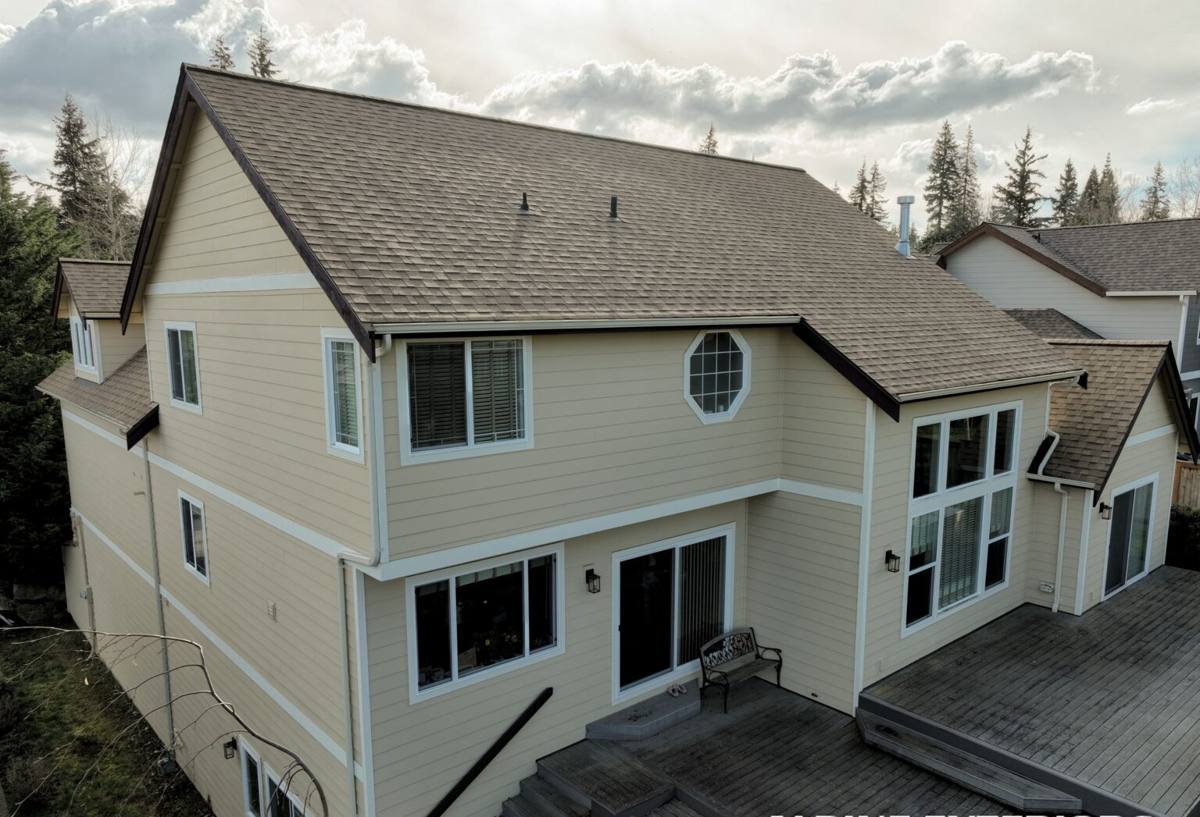
What Blaine's Climate Demands From This Style
Board and batten siding has more vertical seams and more exposed trim than standard lap siding, which means more places for water and salt to find a weak point if the system isn't detailed correctly. Three things in particular work against siding here:
- Salt air — moisture off the bay carries salt that accelerates corrosion on fasteners and trim, and speeds up failure in materials that aren't built to resist it.
- Driving rain — Pacific storms don't just fall straight down here; wind-driven rain gets pushed sideways and upward under battens and trim edges that aren't properly lapped or sealed.
- A long moss season — Whatcom County's damp, mild winters give moss and algae months to establish themselves on any siding surface that stays consistently wet or shaded, especially on north-facing walls and under eaves.
None of this means board and batten is a bad choice for a Blaine home. It means the material and the installation details have to account for these conditions from day one, not get patched later.
Why We Only Install James Hardie for This Style
Board and batten is often built from cedar, primed spruce, LP SmartSide, or vinyl panels made to mimic the look. Each of those has a real weakness in a marine climate like Blaine's: wood and engineered wood products absorb moisture at cut edges and battens, which is exactly where board and batten has the most seams; vinyl board and batten profiles can warp or fade under sun and salt exposure and don't hold paint if a color change is ever wanted.
James Hardie fiber cement doesn't share those weaknesses. It's cement, sand, and cellulose fiber — it doesn't rot, it isn't a food source for moss the way wood is, and it holds its shape and color in salt air far longer than wood-based alternatives. Hardie's HZ5 product line is specifically engineered for climates with high moisture exposure, which describes Blaine's waterfront conditions well. Combined with the factory-applied ColorPlus finish, which resists fading and chipping better than field-applied paint, it's the material we're comfortable standing behind on a coastal Whatcom County home.
The Board & Batten System, Specifically
For this style, we typically use HardiePanel vertical siding as the field panel with HardieTrim boards installed as the battens over the seams, or Hardie's Artisan V-groove panel system where a more refined, tighter-reveal look is wanted. Both are engineered as complete systems — panel, trim, and fastening spec designed to work together — rather than field-improvised combinations.
What a Correct Installation Actually Involves
Board and batten siding fails early almost exclusively because of installation shortcuts, not because the material itself was wrong. The panels and battens create a lot of vertical seams, and every one of them is a decision point: lapped correctly and sealed, or left as a future leak path.
A correct installation on a Blaine home includes:
- A properly lapped weather-resistive barrier behind the panels, with flashing integrated at every horizontal transition, window, and door head
- Rainscreen or furring strategy where wall conditions call for it, to let any incidental moisture drain and dry rather than sit against the panel
- Battens fastened through the panel into framing on the correct spacing, not just face-nailed into the panel itself
- Manufacturer-specified fastener type and spacing — stainless or hot-dip galvanized fasteners near the water, not standard-grade hardware that corrodes faster in salt air
- Correct panel gaps at butt joints and trim, sealed with a flexible, paintable sealant rated for the application — never caulked tight with no room to move
- Proper clearance at the base of the wall and at grade, so panels aren't wicking moisture from soil, mulch, or pooled water
- Factory-cut and factory-primed edges kept intact wherever possible, with field cuts sealed per Hardie's installation instructions
Skip any one of these steps and the visible siding can still look fine for a year or two while water is already getting behind it. That gap between "looks fine" and "is actually fine" is where a lot of siding problems on the water start.
Board & Batten Compared to Other Options for a Blaine Home
Homeowners comparing siding for a coastal Whatcom County property usually weigh board and batten against traditional lap siding or shingle-style siding, and weigh fiber cement against the wood, engineered-wood, and vinyl alternatives. Here's how the material choice specifically plays out in this climate:
| Material | Salt air resistance | Moss/algae resistance | Maintenance burden |
|---|---|---|---|
| James Hardie fiber cement | Strong — engineered HZ5 line for moisture-heavy climates | Good — dense surface, factory finish doesn't feed growth | Low — occasional wash, no repainting for years |
| Cedar / primed wood | Weak — absorbs moisture, especially at cut battens | Poor — organic material, prone to moss and rot | High — regular repainting, sealing, and repair |
| LP SmartSide | Moderate — engineered wood, still moisture-sensitive at edges | Moderate — better than raw wood, still organic-based | Moderate — coating maintenance over time |
| Vinyl board and batten profile | Weak — can warp or discolor under sun/salt cycling | Moderate — surface film can still host growth in damp shade | Low upfront, but not repaintable if it fades or cracks |
This is a general comparison, not a claim about any specific product failing — it's the trade-off pattern that led us to standardize on Hardie fiber cement for every siding job we take on, board and batten included.
Our Process on a Blaine Board & Batten Project
Every board and batten job we take on near Blaine follows the same sequence:
- On-site assessment — we look at wall orientation, existing moisture damage, roofline interaction, and how exposed the home is to wind off the water, since that shapes flashing and rainscreen decisions.
- Removal and inspection — old siding comes off and we check the sheathing underneath for rot or existing water intrusion before anything new goes up.
- Weather barrier and flashing — the water-resistive barrier and flashing details go in first and get inspected before panels are installed, since this layer is invisible once the siding is on.
- Panel and batten installation — HardiePanel and HardieTrim (or the Artisan system) go up to Hardie's fastening and clearance specifications, sized to the specific wall.
- Trim, sealant, and final detailing — joints are sealed correctly, transitions at windows and rooflines are finished, and the job is walked before we call it done.
Why a Crew That Already Works Blaine Matters
Board and batten siding is unforgiving of generic installation. A crew that hasn't worked on homes exposed to this specific mix of salt air, wind-driven rain, and long wet winters is more likely to treat flashing and fastener choices as afterthoughts rather than the load-bearing decisions they are here. We already know which wall orientations in this area take the worst weather, which fastener grade holds up near the water, and where moss tends to establish first on a north or shaded elevation — because we've seen it on other homes in Birch Bay and Blaine, not just read it in a spec sheet.
That local pattern recognition shows up in small decisions — a little extra rainscreen gap on a bay-facing wall, stainless fasteners where a standard grade would be tempting to use, batten spacing adjusted for a particular elevation — that add years to a siding job's life without changing how it looks.
Maintenance and What to Expect Over Time
A correctly installed Hardie board and batten system is low-maintenance, not zero-maintenance. In Blaine's climate, plan on:
- An occasional rinse to keep salt residue and organic buildup from accumulating, especially on shaded or bay-facing walls
- A visual check of sealant joints every year or two, since sealant is the one component that ages faster than the panels themselves
- Prompt attention to any gutter or roof drainage issue that could be sending extra water down a wall section
What you shouldn't need is repainting on any regular cycle — that's one of the practical advantages of ColorPlus-finished Hardie panels over wood or field-painted alternatives, and it matters more here than in a drier inland climate where repainting cycles are less punishing.
Get an Estimate for Your Blaine Home
If you're weighing board and batten siding for a home in Blaine or elsewhere in Birch Bay's stretch of Whatcom County, we're glad to come take a look, walk the exterior with you, and give you a straight assessment of what your walls need. There's no pressure and no cost to get an estimate — just use the form below to get started.