 Birch Bay Roofing
 Why Blaine's Coastal Climate Is Hard on Siding
Blaine sits right on the water at the top of Whatcom County, close enough to the Salish Sea that salt air is a daily fact of life for homes here, not an occasional nuisance. Combine that salt exposure with the wind-driven rain that comes off the water and the long, damp stretch of fall and winter that lets moss and algae take hold on anything shaded or north-facing, and you have one of the toughest siding environments in the Pacific Northwest. Most siding products aren't engineered with this specific combination in mind — they're built for a generic "rainy climate," not for salt-laden air working on fasteners and finishes year after year.
Homes closer to the shoreline in and around Blaine take the brunt of it. Salt spray accelerates corrosion on exposed metal, damp air keeps wood-based products from ever fully drying out between storms, and moss doesn't just look bad — it holds moisture against the siding surface and, over years, works its way into seams and laps that weren't sealed or flashed correctly the first time.
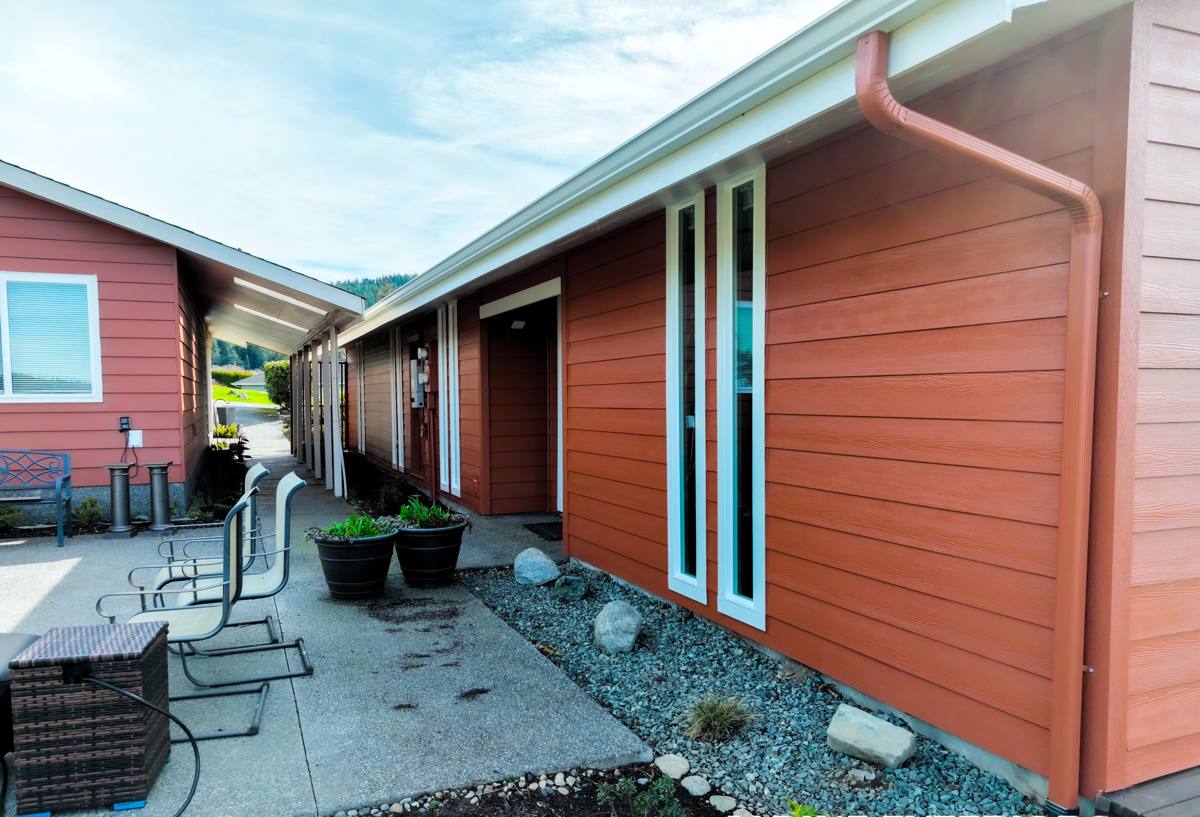
Signs Blaine Homes Need Siding Replacement, Not Just Repair
A lot of siding problems in this area get patched over and over instead of addressed properly. Here's what tells us a full replacement is the right call rather than another round of caulk and paint:
- Soft or spongy spots when you press on the siding, especially near the bottom courses and around window trim
- Paint that keeps failing in the same spots within a year or two of repainting
- Visible warping, cupping, or buckling panels, particularly on the north and west-facing walls that stay wet longest
- Persistent moss or dark streaking that comes back within months of cleaning
- Gaps opening up at seams, corners, or where siding meets trim, letting wind-driven rain track behind the surface
- Rising energy bills that point to compromised weather barrier performance behind the siding
If you're only seeing one or two of these on an otherwise sound wall, targeted repair may still make sense. Once several of these show up together, it usually means moisture has been getting behind the cladding for a while, and patching the visible symptom won't fix what's happening underneath.
What a Correct Siding Replacement Actually Involves
It Starts Underneath the Siding, Not With It
The siding itself is the least important part of getting this right. What matters more is what's underneath: house wrap or building paper installed and lapped correctly, flashing at every window, door, and horizontal transition, and proper venting so moisture that does get in can dry out instead of sitting against the wall sheathing. In a climate that sees as much driving rain as Blaine does, a weather barrier that isn't detailed correctly will eventually let water in no matter how good the siding on top of it looks.
Then the Details That Actually Fail First
Most siding failures on the coast don't start in the middle of a wall — they start at the joints: butt seams, corner boards, window and door trim, and the bottom edge near grade where splashback and standing moisture are worst. Correct installation means proper fastener placement and spacing, factory-primed or factory-finished cut edges sealed before they go up, and rain-screen gapping where the wall assembly calls for it so water has somewhere to go.
Why We Install Only James Hardie Fiber Cement Siding
We made a decision to standardize on James Hardie fiber cement and not offer vinyl, LP SmartSide, primed spruce, cedar, or other fiber cement brands. That's not a marketing angle — it's a maintenance and durability call based on what actually holds up in this exact climate.
What Salt Air and Moisture Do to the Alternatives
Vinyl siding can warp and become brittle with age, and its seams and channels give salt-laden moisture places to collect. Engineered wood products like LP SmartSide perform reasonably well when installation and maintenance stay perfect, but they're wood-based, and wood-based siding in a climate this wet has less margin for error — a missed caulk joint or a scratch in the coating is an entry point for rot. Unprimed or minimally primed wood siding, like cedar or spruce, needs an ongoing maintenance commitment (recoating, caulking, moss treatment) that most homeowners underestimate until they're several years in and behind on it.
What Hardie Gets Right for This Location
James Hardie fiber cement is non-combustible, doesn't rot, and is engineered specifically for climates like ours — the HZ5 product line is formulated for regions with freeze-thaw cycles and sustained moisture exposure, which describes a Whatcom County winter well. The ColorPlus factory finish is baked on under controlled conditions rather than field-applied, which means better adhesion and more consistent coverage than a coat of paint applied on-site in variable weather. It carries a strong transferable warranty backed by the manufacturer, not just the installer. None of this means Hardie is maintenance-free — it isn't — but the maintenance it needs is realistic, and the material itself doesn't punish a homeowner for being a season behind on upkeep the way wood-based products can.
Siding Material Comparison for This Climate
| Factor | Vinyl | Wood / Engineered Wood | James Hardie Fiber Cement |
|---|---|---|---|
| Moisture behavior | Can trap moisture at seams and channels | Absorbs moisture if coating fails; rot risk | Doesn't absorb or rot; engineered for wet climates |
| Salt air exposure | Can become brittle over time | Coating and fasteners degrade faster near salt spray | Holds up well; factory finish resists coastal wear |
| Fire resistance | Combustible | Combustible | Non-combustible |
| Maintenance | Low, but limited repair options when damaged | Regular recoating and caulking required | Occasional wash and caulk check; finish holds up longer |
| Warranty structure | Varies widely by manufacturer | Varies; often shorter on coatings | Strong transferable manufacturer warranty |
Our Process for Blaine Siding Replacement
Assessment
We start by looking at the whole wall assembly, not just the visible siding — checking for soft sheathing, existing moisture damage, and how the current weather barrier is (or isn't) detailed at windows and corners. This tells us whether it's a straightforward re-side or if there's sheathing repair to price in first.
Prep and Weather Barrier
Old siding comes off, damaged sheathing gets replaced, and a new weather-resistant barrier goes on with flashing detailed at every penetration and transition — the step that determines whether the new siding actually stays dry behind the surface for the next few decades.
Installation
Hardie panels, planks, or shingles go on to manufacturer spec: correct fastener type and spacing, proper clearances at grade and rooflines, and factory-finished cut edges sealed before installation. Trim, corners, and butt joints get the attention that actually determines how the wall performs in a storm, not just how it looks on install day.
Final Walkthrough
We walk the finished job with the homeowner, cover what maintenance to expect, and make sure everything's sealed and finished before we call it done.
Cost Factors to Expect
Every home is different, but the main variables that move the price on a Blaine siding replacement are:
- How much of the existing wall sheathing needs repair versus how much is sound
- Home size and wall complexity — dormers, bump-outs, and multiple stories add labor
- Which Hardie product line and profile you choose (lap siding, panel, or shingle-style)
- Trim and detail work at windows, corners, and transitions
- Access — homes close to the water or on steep lots can add setup time
We won't quote a number without seeing the home, but we'll walk you through where your money is going and why, so there aren't surprises once work starts.
Why a Crew That Already Works Blaine Matters
Siding that gets installed the same way regardless of location is siding that's guessing. A crew that already works in Blaine and the surrounding Birch Bay area knows which walls take the worst of the wind and salt spray, how moss behaves on shaded elevations here versus a drier part of the state, and where a generic install detail needs to be tightened up for this specific exposure. That local pattern recognition is the difference between a siding job that looks right on day one and one that's still performing correctly ten winters in.
Living With Hardie Siding After Installation
Fiber cement siding is low-maintenance, not no-maintenance. In Blaine's climate, that means an annual rinse to keep salt residue and moss spores from building up, a look at caulked joints every year or two, and prompt touch-up if a panel gets scratched down to bare substrate. None of this is heavy lifting compared to what wood or vinyl siding demands in the same conditions — it's the realistic upkeep that lets a correctly installed Hardie system reach its full lifespan.
If your Blaine home's siding is showing its age or you're planning ahead of a problem, we're happy to take a look and give you a straightforward, no-pressure estimate. Use the form below to get started.