 Birch Bay Roofing
 Windows in Blaine Take a Different Kind of Beating
Blaine sits right on the water at the northern edge of Whatcom County, and that location shapes everything about how windows age here. Salt-laden air off the coast works its way into weep holes, hardware, and metal components year-round. Wind-driven rain off the Strait doesn't just fall on glass — it gets pushed sideways into gaps around frames that would stay dry in a more sheltered inland town. And because this part of Washington sees long stretches of grey, damp weather, moss and algae get a foothold anywhere moisture lingers, including window sills, trim, and the siding around frames that never fully dry out between storms.
None of that means Blaine homes need exotic solutions. It means the details that get skipped on an easy inland job — flashing, sill pans, sealant choice, drainage — are the details that actually matter here. A window that's "close enough" in a dry climate can fail in five years on a coastal lot facing the water.
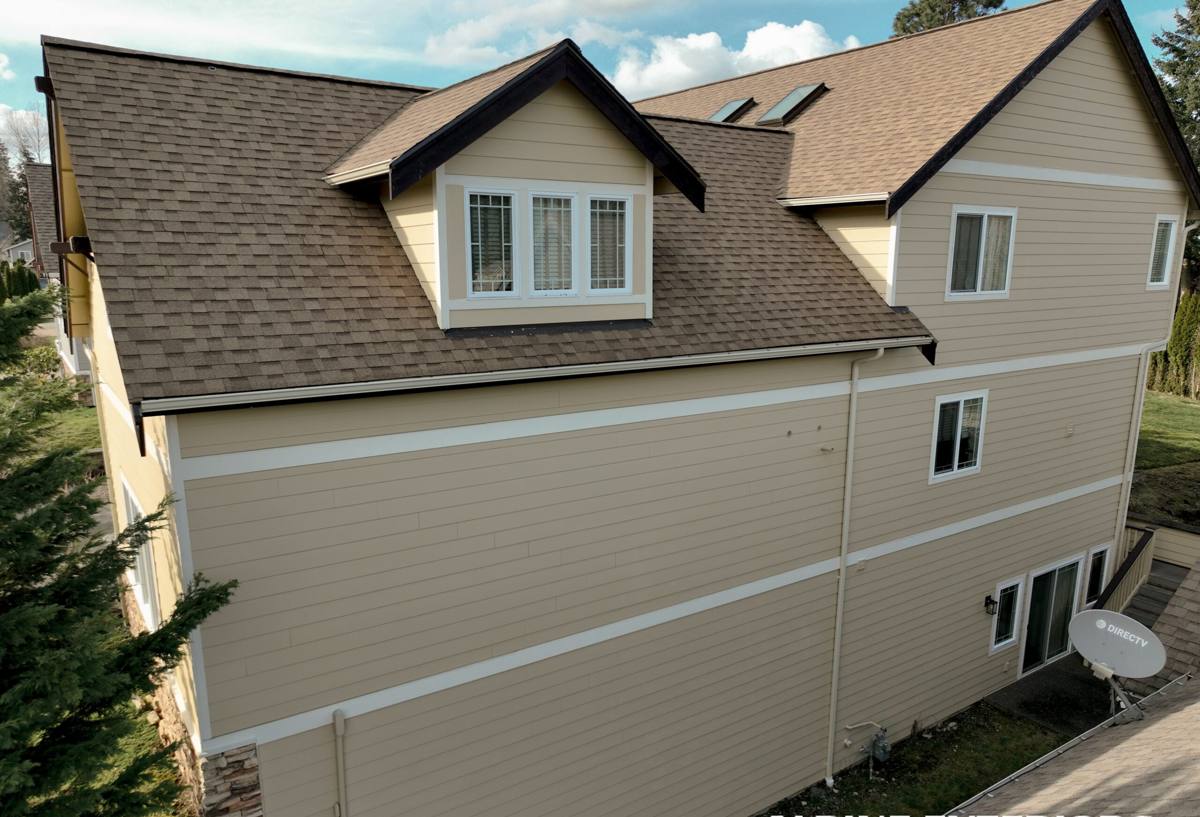
Signs a Blaine Home Needs Window Replacement, Not Just Repair
Not every problem window needs to come out. But in a marine climate, certain symptoms usually mean the frame or seal has already let moisture in, and patching won't hold for long.
- Fogging or a hazy film between panes of double-glazed glass — the seal has failed and can't be repaired
- Soft, spongy, or discolored wood at the sill or lower corners of the frame
- Persistent black or green staining on the sill, jamb, or the siding directly below the window
- Windows that are noticeably harder to open, close, or lock than they used to be
- A draft you can feel with your hand near the frame on a windy day
- Paint or finish that keeps failing at the same window no matter how often it's redone
- Condensation forming on the inside of the glass regularly, especially on north- or west-facing windows
If you're only seeing one of these on an otherwise sound window, a repair or re-caulk may buy you time. If you're seeing several, or the same symptoms keep returning after repair, replacement is usually the more honest answer — both for your comfort and for what's happening inside the wall.
Why Moisture Problems Show Up Late
Window failures in this climate are often hidden longer than roof leaks. Water that gets behind a poorly flashed window can travel down inside the wall cavity before it ever shows as a stain on your interior trim. By the time you see damage indoors, the sheathing and framing around the window opening have often been wet for a while. That's one reason we don't just look at the window itself during an inspection — we look at what's happening in the wall around it.
What a Correct Window Replacement Actually Involves
Swapping glass and a frame is the easy part. What separates a window that lasts from one that fails early is almost entirely in the steps most homeowners never see.
Removal and Opening Inspection
Once the old window is out, we check the rough opening — sheathing, framing, and any existing flashing — for rot or moisture damage before anything new goes in. Installing a new window over a compromised opening just seals the problem inside the wall.
Flashing and Drainage
This is the step that matters most on a coastal lot. Proper window installation uses a sill pan to catch and direct any water that gets past the exterior seal, plus flashing tape integrated with the house wrap so water sheds down and out, never behind the siding. On homes taking direct wind-driven rain, we pay close attention to the head flashing above the window and how it ties into the drainage plane above it.
Sealant and Insulation
Low-expansion foam or backer rod and sealant around the frame closes air gaps without bowing the frame out of square. We use exterior-grade sealants rated for the temperature swings and constant damp this area sees — cheaper caulks tend to lose adhesion and crack within a couple of seasons near the water.
Finish Work
Trim, casing, and paint or caulk lines get finished cleanly so there's no exposed gap for water or pests to find later. A rushed finish is often where the first leak starts.
Choosing Window Materials for a Salt-Air Climate
There's no single "best" window material — the right choice depends on your home's exposure, your budget, and how much upkeep you want to take on. Here's how the common options hold up specifically in a coastal Whatcom County setting.
| Frame Material | How It Handles Salt Air & Moisture | Maintenance | Typical Fit |
|---|---|---|---|
| Vinyl | Won't corrode or rot; performs well in salt air | Low — occasional cleaning | Most Blaine homes, best value |
| Fiberglass | Very stable in temperature swings and damp; excellent long-term durability | Low | Higher-exposure, full water-view lots |
| Aluminum | Conducts cold and can corrode over time near salt air unless well-coated | Moderate | Limited use; usually specific architectural needs |
| Wood / Wood-clad | Handsome, but exterior wood is vulnerable to constant damp and needs a sound exterior clad or finish to hold up here | Higher — finish upkeep | Homes prioritizing a traditional look, with realistic maintenance plans |
We're straightforward with clients about wood-frame windows on exposed coastal walls: they can look great, but the exterior finish needs real upkeep in this climate, and any lapse in that maintenance shows up faster here than it would twenty miles inland. If you want the wood look without that maintenance burden, a wood-interior window with a vinyl or fiberglass exterior cladding is worth discussing.
Glass and Energy Performance for This Climate
Whatcom County's marine climate means mild temperatures but a lot of moisture and grey days. That changes what "efficient" actually means here compared to a hot, dry climate.
- Double-pane, low-E glass is the practical baseline for most Blaine homes — it cuts heat loss and reduces condensation risk on interior glass.
- Triple-pane adds meaningful comfort on north- and west-facing walls that take the brunt of wind and cold, though it costs more and isn't always necessary on sheltered elevations.
- Argon or krypton gas fill between panes improves insulation value without changing the look of the window.
- Warm-edge spacers reduce the cold ring of condensation that tends to form at the edge of the glass during damp, cold snaps — a common complaint we hear from homeowners near the water.
If condensation on the inside of your glass has been a recurring issue, it's worth mentioning during your estimate — sometimes it's a ventilation issue inside the home, sometimes it's the window itself, and the fix is different depending on which it is.
Our Process, Start to Finish
- On-site assessment. We look at each window individually — exposure, current condition, and what's happening at the sill and frame — rather than quoting off a generic checklist.
- Honest recommendation. We'll tell you plainly which windows need replacement now, which can wait, and which just need a repair.
- Written estimate. Clear pricing by window, materials specified, and a realistic timeline before any work starts.
- Removal and opening check. Old windows come out carefully, and we inspect the rough opening before installing anything new.
- Correct installation. Sill pan, flashing, insulation, and sealant done to hold up against wind-driven rain, not just pass a quick visual check.
- Finish and cleanup. Trim, caulking, and a clean job site when we're done — no debris, no shortcuts left for you to find later.
Why Hiring Local Matters for This Job
Window replacement done wrong doesn't usually fail on day one — it fails two or three winters later, after the wall behind it has already taken on water. A crew that regularly works homes along this stretch of coastline knows what wind-driven rain actually does to a poorly flashed opening, because we've opened up enough walls to see it firsthand. That's different from following a generic install guide written for a drier part of the state.
Working locally also means we're familiar with the permitting and inspection expectations in Whatcom County, and we're not driving in from out of the area for a callback if something needs a second look after the job is done. For coastal homes specifically, we also factor in prevailing wind direction and sun exposure on each elevation when we talk through material and glass options — a window on the water-facing side of the house often has different needs than one on a sheltered wall of the same home.
What Window Replacement Typically Costs
Every home and window is different, so exact pricing comes from an on-site estimate — but these are the main factors that move the number up or down.
| Factor | How It Affects Cost |
|---|---|
| Frame material (vinyl vs. fiberglass vs. wood-clad) | Vinyl is typically the most budget-friendly; fiberglass and wood-clad cost more upfront |
| Glass package (double vs. triple-pane, coatings) | Triple-pane and specialty coatings add cost but improve comfort on exposed walls |
| Window size and style | Larger units, bays, and custom shapes cost more than standard single or double-hung sizes |
| Condition of the existing opening | Rot or moisture damage found during removal adds repair time and cost |
| Number of windows replaced at once | Doing multiple windows in one visit is usually more cost-efficient than one at a time |
| Exterior exposure | Water-facing or high-wind elevations may call for extra flashing detail, which adds labor |
We'd rather walk your home and give you real numbers than guess over the phone — every house on this coastline carries a different amount of wear, and a fair price starts with actually seeing the windows in question.
Ready to Talk About Your Windows?
If your windows are fogging, drafting, sticking, or showing staining at the sill, it's worth getting a straight opinion before another wet season sets in. We offer free, no-pressure estimates for Blaine homeowners — use the form below to get one scheduled.