 Birch Bay Roofing
 Building a Deck That Actually Holds Up in Blaine
Blaine sits right on the water at the top of Whatcom County, and that location shapes everything about how a deck should be built here. A deck design that works fine forty miles inland can start failing in Blaine within a few seasons because it wasn't built with salt air, sideways rain, and a long, damp moss season in mind. Building a deck for this stretch of coastline isn't about using fancier materials across the board — it's about getting the details right in the specific places where this climate actually causes damage: fasteners, flashing, drainage, and the wood or composite surface itself.
This page covers what a Blaine deck project actually needs, what separates a deck that lasts from one that doesn't, and how we approach the build from first look to final walkthrough.
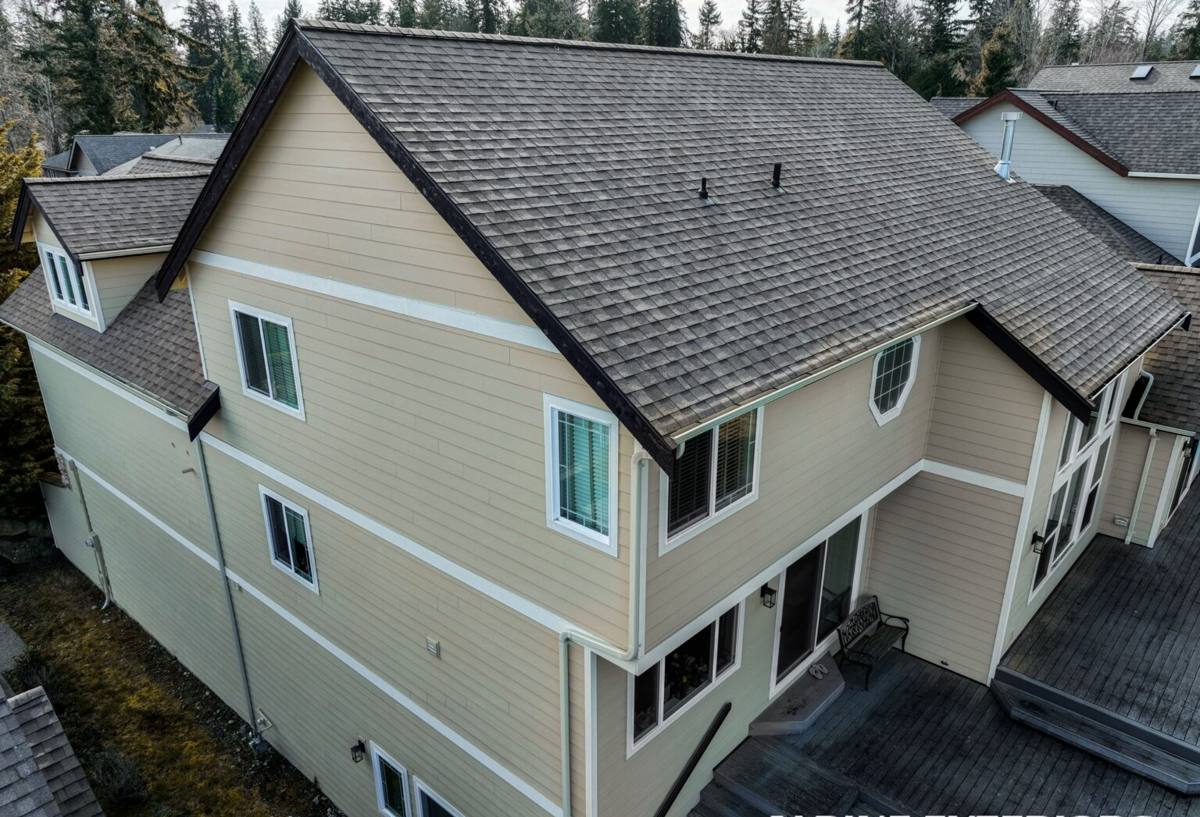
What Blaine's Marine Climate Does to a Deck
Homes near the Strait of Georgia and Semiahmoo Bay deal with a combination of conditions that inland Whatcom County homes mostly avoid. None of it is dramatic on its own, but stacked together over years, it's the reason we see decks in this area fail early when they were built with standard, non-coastal practices.
Salt Air and Corrosion
Airborne salt doesn't just affect homes that sit directly on the waterfront — it travels well inland on the wind, especially through Blaine. Ordinary galvanized fasteners, brackets, and joist hangers corrode faster in this environment than the same hardware would in a drier, inland location. Once a fastener starts rusting, it stains the surrounding wood or decking, weakens its grip, and can eventually let a board or a structural connection work loose. This is the single most common cause of premature deck failure we see in coastal Whatcom County — not the decking material, but the hardware holding it together.
Driving Rain and Moisture Intrusion
Blaine's winter storms don't just bring rain straight down — wind off the water drives it sideways, into places a deck built for calmer weather wouldn't need to defend against. That means ledger board connections, stair stringers, and any spot where the deck meets the house siding need real flashing detail, not just a bead of caulk. Water that gets behind a ledger board or pools against a house wall is one of the more expensive problems a homeowner can inherit, because the damage is often hidden until siding or framing behind it has already started to rot.
Moss, Algae, and Long Wet Seasons
Whatcom County's wet season runs long, and shaded or north-facing decks in Blaine can stay damp for weeks at a stretch. That's ideal growing conditions for moss and algae, which don't just look bad — they hold moisture against the deck surface and make boards slick and dangerous underfoot, especially on stairs. Deck boards with tight grain, poor drainage gaps, or the wrong finish trap this moisture instead of shedding it, which accelerates both the slip hazard and the underlying decay.
Choosing Decking Material for This Climate
There's no single "best" decking material for every Blaine home — it depends on budget, how much upkeep you want to do, and how exposed the deck is to weather. Here's how the common options actually perform in this specific environment.
| Material | How It Handles Salt Air & Moisture | Moss/Algae Resistance | Maintenance |
|---|---|---|---|
| Cedar | Naturally rot-resistant, but still needs sealing to control moisture cycling | Moderate — needs periodic cleaning | Annual cleaning, resealing every 2-3 years |
| Pressure-treated pine | Good structural performance with correct coastal-grade fasteners | Moderate — porous surface holds grime | Regular cleaning, stain/seal every 2-3 years |
| Capped composite | Excellent — doesn't absorb moisture or corrode | Good — smooth cap sheds surface growth more easily | Periodic washing, no staining/sealing |
| PVC decking | Excellent — fully synthetic, unaffected by salt exposure | Good, though still needs washing in shaded spots | Periodic washing, no staining/sealing |
We'll walk you through this trade-off honestly rather than pushing whatever has the best margin. A well-built cedar or pressure-treated deck with correct coastal fasteners and a real maintenance routine will serve a Blaine home well for decades. Composite and PVC cost more up front but trade ongoing upkeep for consistency — a fair choice for homeowners who'd rather not stain a deck every couple of years, especially on shaded, moss-prone sites.
What a Correctly Built Deck Requires
The visible decking boards get most of the attention, but the parts that determine whether a deck lasts are mostly things you don't see once the project is done.
Footings Sized for Local Soil and Frost Depth
Footings need to be sized and set to the depth required for this part of Whatcom County, on soil that can hold moisture through the wet months. Undersized or shallow footings are a common shortcut on older or budget decks, and they show up later as a deck that shifts, settles unevenly, or develops a spring in the frame.
Ledger Board Flashing
Where the deck attaches to the house, proper flashing — installed in the right order relative to the house's water-resistive barrier and siding — keeps driving rain from working its way behind the ledger. This is the detail we mentioned above as the source of the most expensive hidden damage, and it's worth getting right the first time rather than discovering a problem years later.
Coastal-Grade Fasteners and Hardware
Given how fast standard galvanized hardware corrodes in salt air, we build Blaine decks with fasteners and structural connectors rated for coastal or marine exposure. It costs more than standard hardware, but it's a small fraction of the total project cost relative to what it prevents — namely, hardware failure that compromises the whole structure.
Drainage and Board Spacing
Deck boards need consistent gapping so water can shed through rather than pool on the surface, and the framing beneath needs a clear path for that water to drain away from the house rather than collecting under the deck. This one detail does more for long-term moss and algae control than any cleaning product will.
Guardrails and Stairs Built to Code
Railing height, baluster spacing, and stair geometry all need to meet Washington's adopted building code requirements — not just for the inspection, but because these are the parts of a deck most directly tied to someone's safety.
Permits and Building Code in Whatcom County
Most new decks and many deck replacements in Whatcom County require a building permit, particularly once the deck is a certain height off grade or attached to the house structure. Permit requirements and inspection steps can vary depending on the specifics of the project and the jurisdiction handling it, so we confirm what applies to your property before work starts rather than assuming. Skipping a required permit can create real problems later — at resale, at insurance claim time, or if the work needs to be reinspected for an unrelated project down the road.
Our Deck Building Process
- On-site assessment. We look at the site's exposure — sun, shade, wind direction, proximity to water — along with the existing structure if we're replacing a deck, and talk through what you actually want to use the space for.
- Design and material selection. We go over material options honestly, including the maintenance trade-offs above, and settle on a layout, size, and railing style that fits the house and the budget.
- Permitting. We handle the permit application and coordinate any required inspections so you're not the one chasing paperwork.
- Footings and framing. Footings are set to proper depth, and the frame is built with coastal-grade fasteners and hardware throughout.
- Ledger flashing and waterproofing. Where the deck meets the house, flashing is installed correctly before any decking goes down.
- Decking, railings, and stairs. Boards are laid with proper spacing for drainage, and railings and stairs are built to code.
- Final walkthrough. We go over the finished deck together, along with a straightforward maintenance rundown so you know what to expect over the coming years.
Keeping a Blaine Deck Healthy: Maintenance Checklist
A well-built deck in this climate still needs some regular attention. This is what we recommend to homeowners in Blaine and along the rest of the coastline we work:
- Sweep debris and standing water off the deck surface regularly, especially in fall and winter
- Wash down shaded or north-facing sections at least once a year to control moss and algae before it takes hold
- Check fastener heads and hardware annually for early rust staining, especially on older decks with standard hardware
- Reseal or restain wood decking on the schedule appropriate to the product — don't wait until it's visibly gray and dry
- Keep gutters and downspouts near the deck clear so roof runoff isn't adding extra moisture load to the deck area
- Confirm drainage gaps between boards haven't filled in with debris, dirt, or moss over time
What Affects the Cost of a New Deck
Every deck project is different, but these are the main factors that move the price up or down for a Blaine build:
| Factor | Why It Matters |
|---|---|
| Decking material | Pressure-treated pine costs less up front than cedar, composite, or PVC, which cost more but need less ongoing upkeep |
| Deck height and footing requirements | Taller decks and certain soil conditions require deeper or additional footings, which adds labor and material |
| Railing style | Standard wood or metal balusters cost less than cable railing or glass panel systems |
| Site access and exposure | Waterfront or exposed sites may call for additional flashing, fastener upgrades, or structural bracing |
| Attached vs. freestanding | Attached decks require ledger flashing work at the house; freestanding decks avoid that step but need their own full footing system |
| Stairs and landings | Multi-level decks or decks with stairs down to grade add framing, railing, and code requirements |
We'll go through these factors specifically for your property during the estimate so you understand where the cost is actually going, rather than getting a number with no explanation behind it.
Why a Crew That Already Works in Blaine Matters
A lot of what separates a deck that lasts in this climate from one that doesn't comes down to details that aren't obvious unless you're used to building here regularly — how much flashing coverage a ledger board actually needs given the direction storms typically come from, which spots on a property stay damp long enough to grow moss even in a well-drained design, and what hardware genuinely holds up to years of salt air rather than just passing inspection on day one. A crew that works Blaine and the surrounding Whatcom County coastline routinely has already seen what fails here and builds to avoid it from the start, instead of learning the hard way on your project.
We're also familiar with the local permitting process, which keeps your project moving instead of stalled on paperwork or an avoidable inspection delay.
If you're planning a new deck or need to replace one that's showing its age, we're glad to take a look and talk through honest options for your property. There's a free, no-pressure estimate form below — reach out and we'll go from there.