 Birch Bay Roofing
 Siding That Has to Work Year-Round in Whatcom County
Homes in and around Sumas deal with a specific combination of weather that wears siding down faster than most homeowners expect. Whatcom County sits in a stretch of the Pacific Northwest where salt-laden air moves in off the Sound, driving rain comes in sideways for weeks at a stretch during fall and winter, and a long, damp moss season sets in on anything that stays shaded or slow to dry. Individually, none of these are dramatic. Together, over years, they're exactly the conditions that expose weak siding materials and poor installation work.
This page is about one thing: installing James Hardie fiber cement siding correctly on Sumas homes, and why that combination of product and process matters more here than it would in a drier, milder climate.
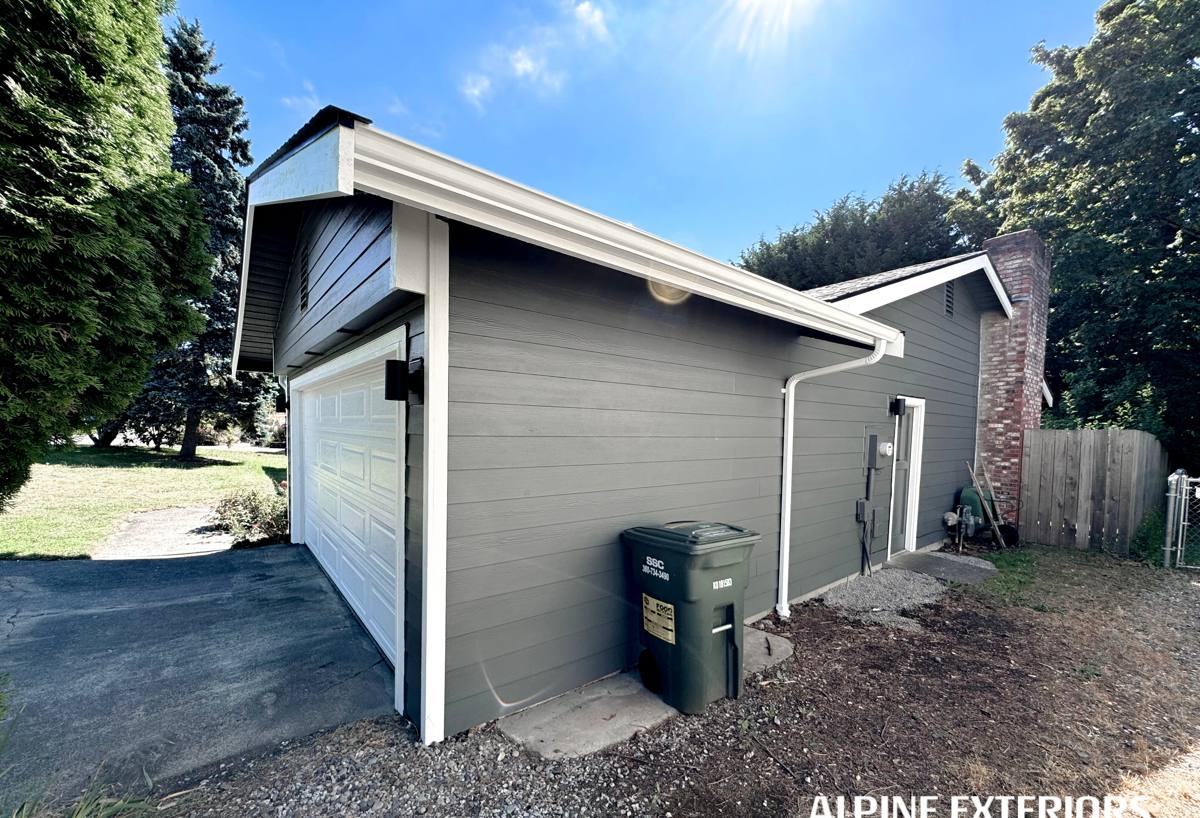
What Local Homes Actually Need From Their Siding
Before talking about products, it helps to be specific about what siding in this region is actually up against:
- Persistent moisture exposure — long stretches of rain mean siding rarely gets a full dry-out cycle in the cooler months.
- Moss and algae growth — shaded walls, north-facing elevations, and areas near trees stay damp longer, giving moss a foothold on porous or textured surfaces.
- Salt-influenced air — moisture carrying trace salt accelerates corrosion on fasteners, trim, and any exposed metal components if they aren't rated and installed correctly.
- Wide seasonal swings — wet winters and drier summers mean siding materials expand and contract; anything prone to warping, swelling, or delaminating will show it within a few seasons.
- Wind-driven rain — storms off the water push moisture up and under lap seams, which is where flashing and installation detail matter as much as the siding material itself.
Any siding product can look fine on install day. The real test is how it performs after five, ten, and twenty years of this cycle repeating.
Why We Install James Hardie — and Only James Hardie
We standardized on James Hardie fiber cement for every siding job we do, including here in Sumas. That's a deliberate decision, not a default. Fiber cement is a mix of cellulose fiber, sand, and Portland cement, engineered to be non-combustible and dimensionally stable — it doesn't swell, rot, or delaminate the way wood-based products can when they take on repeated moisture.
James Hardie also builds region-specific product lines through its HardieZone system. For the Pacific Northwest, that means HZ5-engineered formulations designed around wetter, more moisture-heavy climates rather than a one-size-fits-all national product. On top of that, ColorPlus Technology bakes the finish onto the board in a factory setting under controlled conditions — a more consistent, UV- and moisture-resistant finish than field-applied paint, which matters when a wall is going to sit under Whatcom County rain for months at a time.
We don't install LP SmartSide, vinyl, Cemplank, Allura, primed spruce, or cedar. Each of those has legitimate uses and each has a real fan base — but they each come with a maintenance burden, moisture vulnerability, or long-term performance question that we're not willing to put our name behind in this climate. We'd rather install one product well than offer five and hope the client picked the right one.
What a Correct Fiber Cement Installation Actually Involves
Fiber cement siding is only as good as the installation behind it. A rushed or by-the-numbers install will fail early regardless of the product — this is where most siding problems in wet climates actually originate.
Prep Work
Before any siding goes up, the wall needs a proper weather-resistive barrier, correctly lapped and taped at seams, with attention to every penetration — outlets, vents, hose bibs, light fixtures. Any rot or soft sheathing found underneath gets addressed before new siding covers it up, not after.
Flashing and Clearances
This is the detail that separates siding that lasts thirty years from siding that fails in ten. Every window, door, and roofline intersection needs flashing that directs water out and away from the wall assembly, not just relying on caulk to keep water out. Siding also needs proper clearance from grade, roofing, decks, and other horizontal surfaces so water has somewhere to go instead of wicking up into the board.
Fastening
James Hardie specifies fastener type, spacing, and placement for a reason — improper fastening is one of the most common causes of early siding failure, including blow-offs in wind events and cracking at fastener points. We follow manufacturer fastening schedules, not shortcuts.
Joints and Caulking
Butt joints, corners, and trim transitions get treated as moisture-entry points, not afterthoughts. Correct caulking product, correct joint treatment, and correct sequencing keep water from tracking behind the siding plane.
Field Cutting and Finishing
Fiber cement dust requires proper cutting methods and site containment. Cut edges get sealed per manufacturer spec so the factory finish's protection isn't compromised at every seam.
Our Process on a Sumas Job
- On-site assessment — we walk the exterior, check current siding and sheathing condition, note problem elevations (shaded, moss-prone, storm-facing), and confirm scope.
- Written estimate — clear pricing and product selection, no vague allowances.
- Prep and protection — landscaping, walkways, and adjacent surfaces protected before work starts.
- Tear-off and sheathing check — old siding removed, sheathing inspected and repaired as needed before anything new goes on.
- Barrier and flashing installation — weather-resistive barrier and flashing details done to spec, not eyeballed.
- Hardie siding installation — installed per manufacturer fastening schedule and clearance requirements.
- Final inspection and cleanup — walk-through with the homeowner, site cleaned, debris hauled.
James Hardie Product Lines We Work With
Hardie's lineup covers different looks and applications, and part of our job is helping homeowners pick the right one for their home rather than pushing whatever's easiest to install.
| Product | Look | Best Use |
|---|---|---|
| HardiePlank Lap Siding | Traditional horizontal lap | Most common choice; classic and modern homes alike |
| HardieShingle | Staggered or straight-edge shingle look | Accent areas, gables, cottage-style homes |
| HardiePanel | Vertical panel | Modern facades, accent walls, mixed-material designs |
| HardieTrim | Smooth or textured trim boards | Corners, window and door surrounds, fascia |
All of these are available in a range of ColorPlus factory finishes, which matters for long-term appearance in a climate where field-painted surfaces tend to show wear and require repainting sooner.
How Fiber Cement Compares to the Alternatives
We get asked why we don't offer other siding materials as options. Here's the honest comparison, based on how each performs specifically in a wet, moss-prone, salt-influenced climate like Whatcom County's — not a general-purpose ranking.
| Material | Moisture Behavior Here | Long-Term Maintenance |
|---|---|---|
| James Hardie fiber cement | Dimensionally stable; HZ5 formulation built for wet climates | Occasional wash; factory finish holds color long-term |
| Vinyl siding | Doesn't rot, but can warp/buckle with heat and doesn't manage moisture behind it as a rigid assembly | Low, but fading and brittleness over time; harder to repair invisibly |
| LP SmartSide (engineered wood) | Wood-based; more sensitive to sustained moisture exposure at cut edges and joints | Requires diligent caulk/paint maintenance to keep moisture out |
| Cedar / primed spruce | Natural wood; absorbs moisture, prone to moss growth on shaded faces | Regular refinishing, moss treatment, and vigilance against rot |
Vinyl and engineered wood aren't bad products — they're just not what we choose to stand behind when a home is going to face this much sustained moisture and moss pressure year after year.
Cost Factors to Expect
Every Sumas home is different, but the same handful of factors drive most of the cost variation we see on fiber cement jobs:
| Factor | Why It Matters |
|---|---|
| Home size and elevation count | More wall area and more corners/transitions means more material and labor |
| Sheathing condition underneath old siding | Rot repair adds cost but is essential — never skip it to save money |
| Product line selection | Lap, shingle, and panel products differ in material cost and install time |
| Trim and detail complexity | Homes with lots of window/door surrounds or architectural detail take longer |
| Accessibility | Multi-story sections, tight lot lines, or steep grading affect labor time |
What to Check Before Hiring Anyone for This Work
Because installation quality matters as much as the product itself, we'd tell any Sumas homeowner to check these things before signing with any siding contractor — us included:
- Are they James Hardie certified or specifically experienced with fiber cement, not just "siding in general"?
- Will they inspect and repair sheathing before covering it, or just install over whatever's there?
- Do they follow manufacturer fastening schedules and clearance specs, or work off habit?
- Is flashing detail explained clearly, especially around windows, doors, and rooflines?
- Do they carry proper licensing and insurance for exterior work in Washington?
- Is the estimate written and specific, or vague about product line and scope?
Why a Crew That Already Works Sumas Matters
Siding work in this part of Whatcom County isn't generic exterior work — it's shaped by the same recurring conditions on every job: wet, moss-prone shaded walls, wind-driven rain exposure on certain elevations, and salt-influenced air that's harder on fasteners and finishes than a dry inland climate would be. A crew that's already installed Hardie siding on homes facing these same conditions knows which elevations need extra flashing attention, which details tend to fail first if rushed, and how to sequence a job around the region's wet-season windows. That's experience you don't get from a crew that installs siding everywhere and treats every region the same.
Get a Free, No-Pressure Estimate
If your Sumas home's siding is showing moss, cracking, warping, or just isn't holding up to the weather anymore, we're happy to take a look and walk you through what James Hardie fiber cement siding would involve for your home — no pressure, no obligation. Use the form below to request a free estimate.