 Birch Bay Roofing
 Deck Replacement Built for Sumas, Not a Generic Climate
Sumas sits in a different pocket of Whatcom County than our coastal jobs along Birch Bay. It's farther inland, closer to the foothills, and it catches its own weather pattern — including the cold outflow winds that funnel down out of the Fraser Valley through the Sumas Gap in winter. Combine that with the same wet, low-sun Pacific Northwest stretch that soaks every deck in this county for months at a time, and you get a structure that has to handle driving rain, standing moisture, occasional hard freezes, and a long moss season all in the same year. A deck built to a one-size-fits-all spec doesn't hold up well here. One built for this specific mix of exposure does.
This page is about one job in one area: replacing an aging or failing deck for a Sumas homeowner. Not a repair, not a resurfacing — a full replacement done to hold up against what this part of the county actually throws at it.
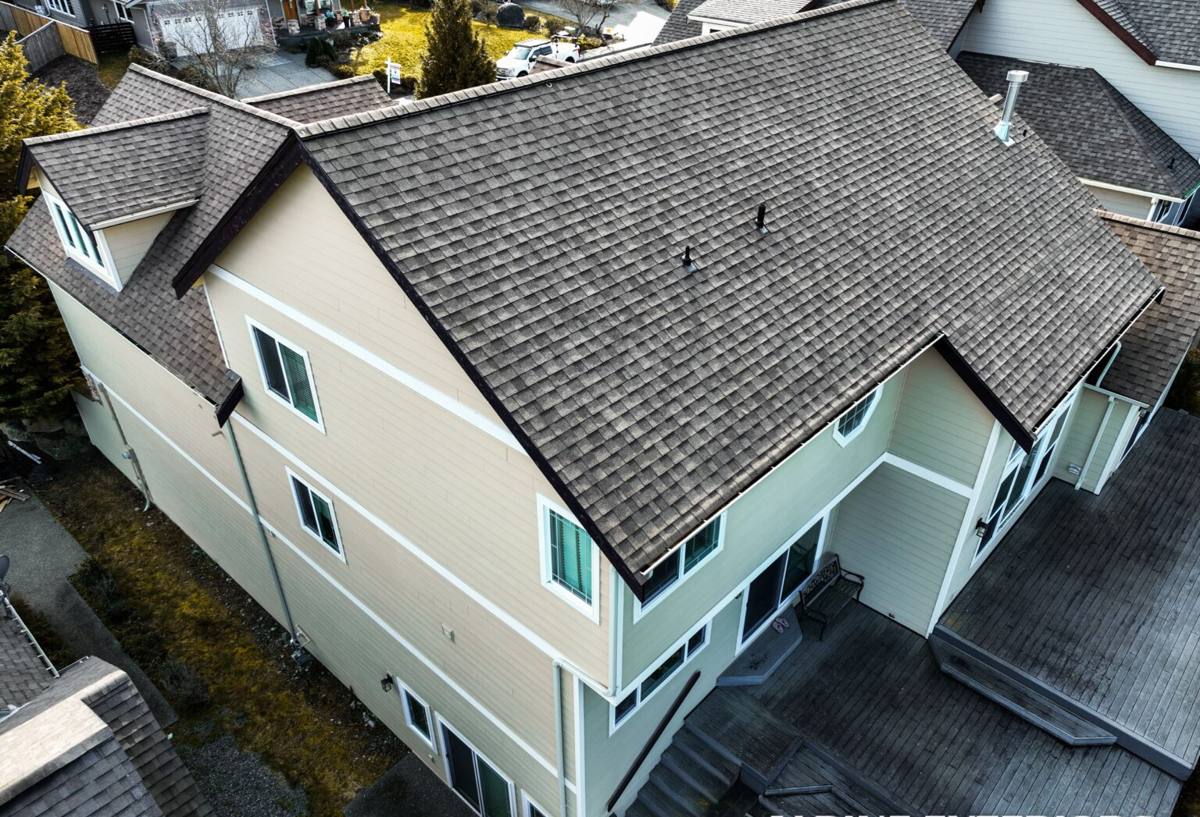
What Local Conditions Demand From a Replacement Deck
Moisture at the Ledger Board
The single most common failure point on any Pacific Northwest deck isn't the decking boards — it's the ledger board, the framing member that attaches the deck to the house. If that connection isn't flashed correctly, water works its way behind it season after season, and you end up with hidden rot in the rim joist or even the house framing before anything looks wrong on the surface. A replacement is the right time to fix this properly, because it means opening that connection up and doing it right instead of patching around an old mistake.
Moss and Horizontal Surfaces
Any flat or gently sloped wood surface in Whatcom County grows moss and algae if it doesn't drain and dry between rain events. A deck is nothing but horizontal surfaces stacked on top of a structure that traps moisture underneath. Board spacing, deck slope, and airflow below the frame all affect how fast moss takes hold and how slick the surface gets in wet weather — which matters for safety, not just appearance.
Fastener and Hardware Corrosion
Standard hardware corrodes faster in this region's humidity than people expect, and corroding fasteners are a quiet structural problem — you don't usually see it until a board lifts or a connection fails. Joist hangers, structural screws, and ledger bolts all need to be rated for the pressure-treated lumber they're driven into, since modern treated wood is more corrosive to bare or under-rated metal than older stock was.
Signs a Deck Needs Replacement, Not Repair
Not every tired-looking deck needs to come out. But there's a point where patching individual boards is just delaying a bigger problem. Here's what tells us a full replacement makes more sense than another round of repairs:
- Soft, spongy, or spring-back framing when you walk across the deck, especially near the house
- Visible rot, staining, or gaps at the ledger board where the deck meets the siding
- Posts or footings that have shifted, settled unevenly, or show cracking at the base
- Railings that flex or wiggle under hand pressure — a guardrail should not move
- Rust streaks running down from fasteners or hardware onto the decking or siding below
- Persistent moss or dark staining that comes back within weeks of cleaning
- A deck built without visible flashing at the house connection, regardless of its age
- Stair stringers that show splitting or separation from the treads
Decking Material Options for This Climate
There's no single "right" material for every homeowner — it depends on budget, how much maintenance you want to take on, and how the deck will be used. What matters is understanding the real trade-offs before you decide.
| Material | Moisture Behavior | Maintenance | Trade-Offs |
|---|---|---|---|
| Pressure-treated lumber | Resists rot when properly sealed and maintained | Needs cleaning and sealing every 1-2 years | Lowest upfront cost; ongoing upkeep required to prevent splitting and graying |
| Cedar | Naturally moisture-resistant, but surface still needs protection | Regular sealing or staining to hold color and prevent checking | Attractive natural look; softer wood, more sensitive to installation quality |
| Capped composite (e.g. Trex, TimberTech) | Shell resists moisture absorption at the board face | Occasional washing; no sealing or staining | Higher upfront cost; still needs proper drainage and airflow underneath |
| Uncapped composite | More prone to surface moisture absorption over time | Low, but can stain or mildew faster than capped versions | Mid-range cost; we're selective about where we recommend it in wet climates |
Whatever material a homeowner chooses, the material is only half the equation. A composite deck built over an under-vented, poorly sloped frame will still trap moisture and grow mildew — the framing and drainage decisions underneath matter as much as what's on top.
What a Correct Deck Replacement Actually Involves
A deck replacement is a structural project, not a cosmetic one. Doing it right means addressing the parts that don't show once the new decking is down:
Tear-Out and Structural Inspection
We remove the old decking, railings, and as much of the frame as needed to inspect the ledger connection, posts, and footings. This is where hidden rot or undersized framing from the original build usually shows up, and it's the reason a replacement is worth doing over a resurfacing when the underlying structure is questionable.
Footings and Framing
Footings need to sit below the local frost depth and bear on solid, undisturbed soil — something that matters more in the inland pockets of the county that see harder freezes than the immediate coastline. Framing gets sized to the actual load and span, not just matched to whatever was there before.
Ledger Flashing
Proper flashing at the ledger board — including the house's weather-resistive barrier tying in correctly above it — is non-negotiable on every replacement we build. This is the detail that determines whether the deck rots the house wall behind it over the next ten years.
Drainage and Airflow Below
Grading, gaps, and airflow underneath the deck all affect how fast the frame dries out after rain. We build in drainage rather than leaving water to pool against posts and joists.
Railings and Stairs
Guardrails and stair railings get built to current structural standards — solid post-to-frame connections, proper baluster spacing, and rise-and-run consistency on the stairs. These aren't areas to cut corners; they're the parts of a deck most directly tied to someone's safety.
Permits and Code Considerations
Deck replacements in Whatcom County typically require a permit once you're replacing structural elements like framing, footings, or railings — not just swapping decking boards on an otherwise sound structure. Requirements can include setback distances from property lines, guardrail height, baluster spacing, and stair geometry. We handle the permit process as part of the job rather than leaving homeowners to sort it out, and we build to current code rather than just matching what was legal when the original deck went up years or decades ago.
Our Deck Replacement Process
- On-site assessment: We look at the existing deck, the ledger connection, framing condition, and drainage before quoting anything.
- Written estimate: A clear scope of work and price, including material options, so there are no surprises once work starts.
- Permitting: We pull the necessary permits and schedule any required inspections.
- Tear-out: Old decking, railings, and any compromised framing come out, with the site kept as clean and safe as possible throughout.
- Rebuild: New footings, framing, ledger flashing, decking, and railings go in to current structural standards.
- Final walkthrough: We go over the finished deck with the homeowner before calling the job done.
Cost Factors on a Sumas Deck Replacement
We don't quote prices sight unseen, because deck cost depends heavily on size, height off the ground, material choice, and how much of the existing structure has to come out. What we can lay out honestly are the factors that move the number:
| Factor | Why It Affects Cost |
|---|---|
| Deck size and shape | More square footage and more corners or angles mean more material and labor |
| Height above grade | Taller decks need deeper footings, more bracing, and often guardrails on stairs |
| Decking material | Composite runs higher upfront than pressure-treated lumber but costs less to maintain over time |
| Ledger and framing condition | Hidden rot found during tear-out can add framing repair to the original scope |
| Railings and stairs | Custom railing styles and multi-level stairs add labor beyond a simple platform deck |
| Site access | Decks over difficult grades or with limited equipment access take more time to build |
Why Hire a Crew That Already Works in Sumas
A deck built by someone unfamiliar with this part of Whatcom County tends to make the same mistakes: sealed lumber instead of properly flashed and vented framing, hardware that isn't rated for the moisture load, or a slope and drainage plan copied from a drier climate. A crew that already works this area knows which details actually matter here — the ledger flashing, the fastener spec, the footing depth, the airflow underneath — because we've seen what happens when those get skipped on other jobs in this county. That's the difference between a deck that looks good for one summer and one that's still solid a decade in.
If your deck is showing its age or you're planning a replacement before it becomes a safety issue, we're happy to take a look and give you a straight, no-pressure estimate. Use the form below to get started.