 Birch Bay Roofing
 Metal Roofing Built for Sumas's Valley Climate
Sumas sits at the far northeastern edge of Whatcom County, in the Nooksack River valley near the Canadian border, with Sumas Mountain rising just to the south. It's a different setting than the towns closer to Bellingham Bay — less direct salt exposure, more valley floor and farmland — but the roof over a Sumas home still takes a long, wet Pacific Northwest year on the chin. Driving rain, valley humidity that lingers after a storm, and a moss season that can run most months on shaded slopes all wear on a roof steadily, year after year. Metal roofing is one of the few systems that genuinely shrugs off that combination instead of slowly losing ground to it, which is why we get asked about it often in this area.
Birch Bay Roofing Co installs metal roofing across Whatcom County, including Sumas, and this page is specifically about that: what a correct metal roof looks like for a home in this valley, what the climate demands of it, and how we approach the job from first look to finished roof.
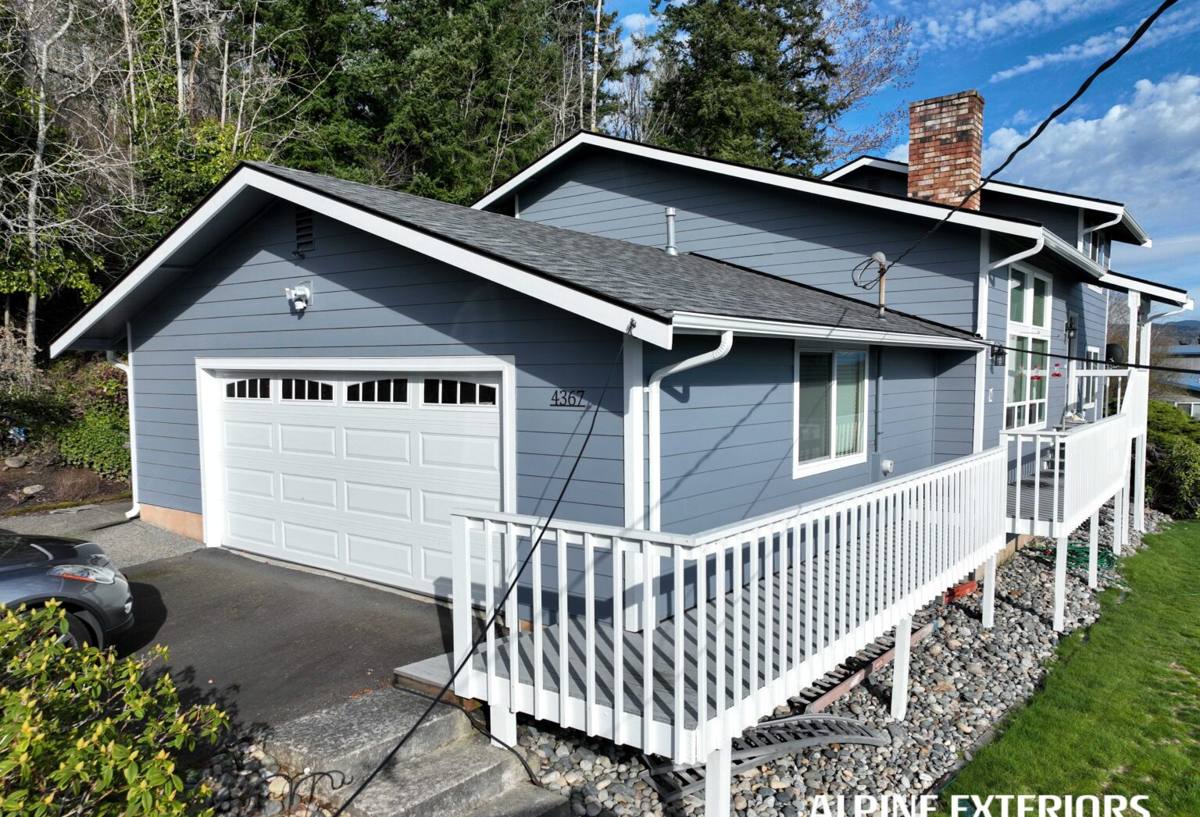
What Sumas's Climate Actually Does to a Roof
Valley Humidity and Slow-Drying Air
Sumas sits low in the Nooksack River valley, and valley floors hold moisture and fog longer than higher or more open ground. A roof surface that stays damp longer after a storm gives moss and mildew more time to establish, especially on north-facing slopes and anywhere shaded by trees. Materials that shed water quickly and dry fast have a real advantage here over materials that hold moisture against the surface.
Wind Funneling Down from the North
Sumas sits near the mouth of the corridor that channels air down from the Fraser Valley in British Columbia, and this area can see stronger, colder wind during winter cold snaps than towns farther south in the county. Wind puts direct load on roof edges, ridge caps, and panel seams, and it's also what drives rain sideways into valleys and penetrations instead of letting it run straight off.
Long Moss Season
Mild temperatures and consistent moisture add up to a moss and algae season that runs a large part of the year across Whatcom County, Sumas included. Any roofing surface that's porous, or that holds a film of moisture against it, becomes a growth surface over time. A smooth, non-porous surface simply doesn't give moss the foothold it needs.
Wind-Driven Rain at Seams and Penetrations
Rain here rarely falls straight down. It gets pushed sideways into valleys, around vent pipes and chimneys, and under poorly sealed transitions. That's a heavier, more directional moisture load than a simple annual rainfall number suggests, and it's exactly where a roof with weak flashing or the wrong fastening approach starts to leak first.
Why Metal Roofing Specifically Performs Well Here
Metal isn't the right material for every home or every budget, but for this specific mix of conditions, it has real, practical advantages over other roofing systems:
- A smooth, non-porous surface that doesn't give moss and algae the texture they need to take hold
- Water sheds off fast instead of sitting on the surface, which matters in a valley that stays damp longer than higher ground
- Interlocking or concealed-fastener panel systems that resist wind uplift better than many other roofing types
- Factory-applied coatings engineered to resist fading and corrosion over decades, not just a few seasons
- A realistic service life that's typically two to three times longer than an asphalt shingle roof, which matters if you plan to stay in the home long-term
The trade-off is upfront cost and a different look than a traditional shingle roof. For a lot of Sumas homeowners weighing decades of valley weather against a roof they won't have to think about again for a very long time, that trade-off makes sense. For others, a well-installed shingle roof is still a reasonable choice — we'll give you the honest comparison rather than push one option because it's what we happen to be talking about today.
Metal Roofing Options: What We Actually Recommend
"Metal roofing" covers more than one product, and the differences matter for a valley climate like this one.
| System | Moisture & Wind Behavior | Typical Maintenance | Realistic Lifespan Here |
|---|---|---|---|
| Standing seam (concealed fastener) | Excellent; raised seams and hidden fasteners shed wind-driven rain and allow panels to expand and contract without stressing the fastening points | Low; periodic visual checks of seams and flashing | 40-60 years |
| Exposed-fastener metal panel | Good, but fastener gaskets wear over time and need periodic tightening or replacement | Moderate; fastener inspection every several years | 25-40 years, largely dependent on fastener maintenance |
| Steel or aluminum shingle/tile profile | Good moisture shedding with a more traditional shingle appearance | Low to moderate | 30-50 years |
For most homes in Sumas, we lean toward standing seam because the concealed fastening system holds up better against the wind this area sees in winter, and because it needs the least ongoing attention over its life. Exposed-fastener systems cost less upfront and have their place on outbuildings, shops, and some budgets, but they carry a real maintenance commitment that standing seam doesn't.
Panel Material and Coating
Galvalume steel and aluminum are the two panel materials we work with most. Galvalume offers strong corrosion resistance at a lower cost and is a solid choice for most homes in this area given the moderate, not extreme, salt exposure Sumas sees compared to coastal Whatcom County towns. Aluminum costs more but won't rust even if a coating is eventually scratched through, which some homeowners prefer for long-term peace of mind. On top of either material, a quality PVDF (Kynar-type) factory finish resists fading and chalking far longer than a lower-grade paint system, which matters over a 40-plus-year service life.
What a Correct Metal Roof Installation Involves
Most metal roof problems we get called out to repair don't come from the panels themselves — they come from installation shortcuts underneath and around them. On every metal roofing job, that means:
- A high-temperature-rated synthetic or ice-and-water underlayment suited to metal, not a generic felt product
- Concealed clip systems on standing seam that let panels expand and contract with temperature changes without oil-canning or pulling loose
- Correctly lapped and sealed flashing at every valley, chimney, vent pipe, and roof-to-wall transition
- Fasteners and trim rated for corrosion resistance, matched to the panel material to avoid galvanic reaction between dissimilar metals
- Attic and roof deck ventilation that lets moisture escape rather than getting trapped under the panels
- Panel layout and seam placement planned around the roof's actual valleys and penetrations, not just run in the most convenient direction
None of these steps add much to a job relative to the panels themselves, but skipping them is exactly what turns a fifty-year roof into one with leaks in year ten.
Cost Factors for a Sumas Metal Roof
| Factor | What Drives It | Climate-Specific Consideration |
|---|---|---|
| Panel system | Standing seam vs. exposed-fastener vs. shingle profile | Standing seam costs more upfront but needs the least maintenance against this area's winter wind |
| Panel material | Galvalume steel vs. aluminum | Aluminum costs more but adds a margin of corrosion resistance worth weighing for homes closer to open water |
| Roof complexity | Number of valleys, penetrations, and roof planes | Every valley and penetration is a place wind-driven rain can find a way in if flashing isn't done right |
| Tear-off vs. overlay | Condition of the existing roof deck | A deck that's stayed damp under old roofing may need repair before new metal goes down |
Exact numbers depend on the specific roof, which is why we walk the property before giving a real number rather than quoting off a generic price list.
Is Your Sumas Roof a Candidate for Metal — or Does It Need Attention First?
- Persistent moss growth on a shingle roof that returns quickly after cleaning
- An aging asphalt roof nearing the end of its service life that you'd rather replace once, correctly, than twice
- Visible granule loss, curling, or missing shingles after wind events
- Interior water staining near roof-to-wall transitions or around chimneys
- A roof deck with soft spots or sagging that needs repair before any new roofing goes on
- A homeowner planning to stay long-term who wants to stop thinking about the roof for decades, not years
If any of these sound familiar, it's worth a professional look before deciding whether metal, another material, or a repair is the right next step.
Our Process, Start to Finish
We keep the process straightforward and explain each step as we go:
- A roof inspection to assess the existing deck, flashing, and any moisture damage before recommending anything
- An honest conversation about panel system, material, and coating options based on your budget and how long you plan to stay in the home
- A clear decision on tear-off versus overlay, with deck repair called out up front if the inspection turns up damage
- Installation with the underlayment, flashing, and ventilation details built in as standard, not offered as an upgrade
- A final walkthrough so you understand what was done and what, if anything, to keep an eye on
Why a Crew That Already Works Sumas Matters
A crew that works roofs across Whatcom County day to day, from the coastal towns near Bellingham Bay out to valley communities like Sumas, sees how wind, valley humidity, and moss actually behave on real roofs over years, not just how a panel system performs on a spec sheet. That experience shows up in practical decisions on install day: how much attention a given valley needs, which flashing details matter most against wind funneling down from the north, and how to plan seam layout around a roof's actual weak points instead of a generic template. Sumas's inland, valley setting isn't identical to a waterfront lot closer to the Sound, and a crew that already knows the difference doesn't need to learn it on your roof.
If you're weighing a metal roof for your Sumas home, or you're not sure yet whether metal, a repair, or a different material makes the most sense, we're glad to take a look and walk you through it honestly. Reach out using the form below to schedule a free, no-pressure estimate.