 Birch Bay Roofing
 Asphalt Shingles in Sumas: Built for This Specific Climate
Sumas sits inside the stretch of Whatcom County that gets the full mix of what Pacific Northwest weather can throw at a roof: salt-laden air moving in off Birch Bay and the Strait, long stretches of driving rain that comes in sideways as much as straight down, and a moss season that can run eight months or more under the right shade and moisture conditions. Asphalt shingles remain one of the most practical roofing choices for homes here, but only when the shingle line, the underlayment system, and the installation details are matched to this specific combination of conditions. A shingle roof built the same way you'd build one in a dry inland climate will not hold up the same way here.
This page is about that one job, done right, for homes in the Sumas area of the Birch Bay service region. It's not a general overview of asphalt roofing everywhere — it's what actually matters for a roof that has to survive our salt air, our rain, and our moss on a year-in, year-out basis.
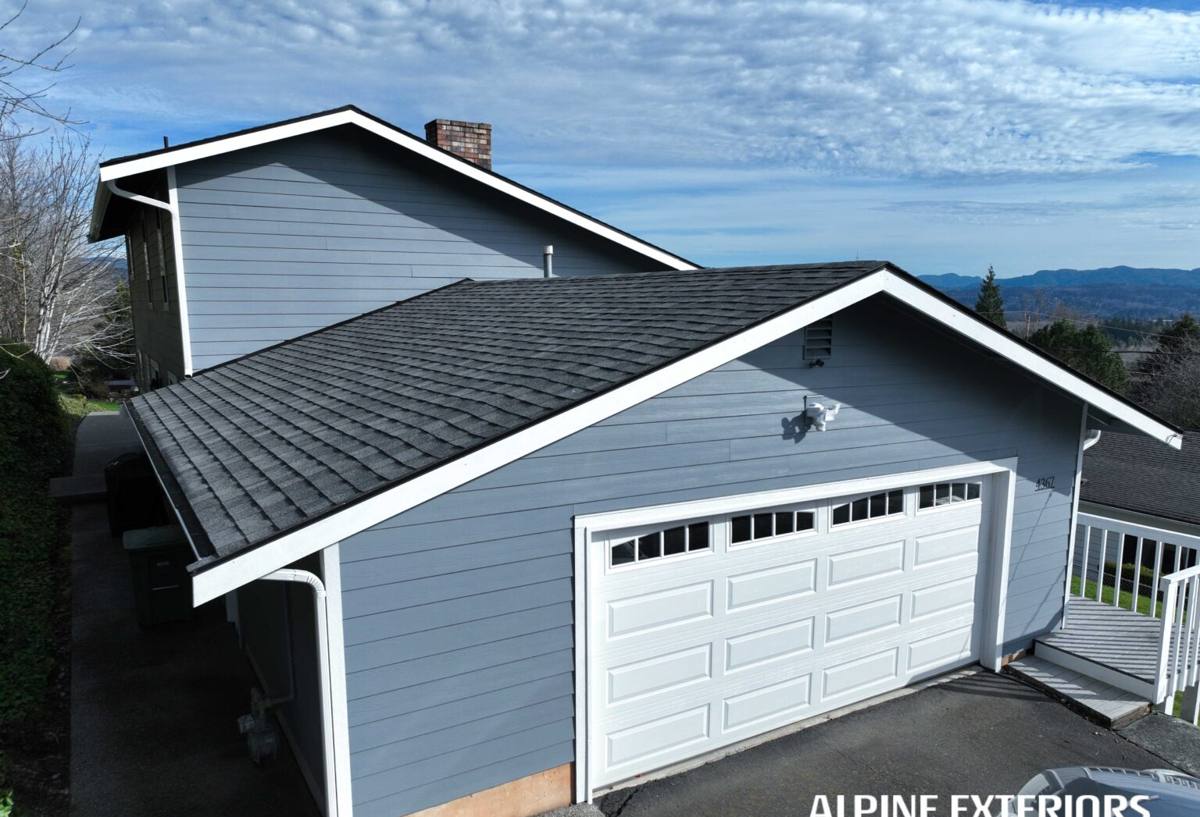
What Whatcom County Weather Does to a Shingle Roof
Salt Air and Corrosion
Proximity to Birch Bay and the surrounding saltwater exposure means airborne salt settles on every exterior surface, including the roof. Salt accelerates corrosion on exposed metal — nail heads, flashing, and any fasteners that aren't properly protected. Over years, this is one of the more common ways a shingle roof fails early: not the shingles themselves, but the metal components holding water out at the edges, valleys, and penetrations.
Driving Rain
Wind-driven rain doesn't just fall onto a roof, it gets pushed sideways and can work its way under shingle edges, around chimneys and vent pipes, and into any gap in the flashing. A roof that's watertight in a light, straight-down rain can still leak in a wind-driven storm if the underlayment and flashing details weren't built for that scenario. This is one of the most common causes of "mystery leaks" homeowners in this area deal with — water entering from a direction the original installer didn't plan for.
Moss, Algae, and Shade
Long wet seasons combined with tree cover common to this part of Whatcom County create ideal conditions for moss and algae growth on north-facing slopes and shaded sections of roof. Left unchecked, moss holds moisture directly against the shingle surface, lifts shingle edges as it grows, and shortens the life of the roofing system well before it would otherwise wear out. Algae staining is mostly cosmetic, but moss is a structural nuisance if it's ignored for years.
Choosing the Right Shingle for This Climate
Not every asphalt shingle product is a good match for a coastal, moss-prone, high-wind-rain climate. The differences that matter most here are wind rating, algae resistance, and how the shingle sheds water at low slopes and valleys.
| Shingle Type | Typical Wind Rating | Algae/Moss Resistance | Best Fit For This Area |
|---|---|---|---|
| 3-tab (standard) | Lower end of the range | Limited unless specified | Budget-driven projects; less ideal on exposed or shaded roofs |
| Architectural/laminate | Higher, varies by line | Often available with algae-resistant granules | Most homes in the Sumas/Birch Bay area — better durability and appearance |
| Impact-resistant laminate | High | Available with algae-resistant granules | Homes wanting extra durability against wind-driven debris |
For most homes in this area, we recommend a laminate (architectural) shingle with algae-resistant granules as the baseline, not an upgrade. The added material thickness handles wind-driven rain better, and the algae resistance directly addresses the moss and staining problem this climate causes. We'll walk through the specific product lines and warranty terms available at the time of your estimate rather than quoting numbers that go stale.
What a Correct Installation Actually Involves
The shingle itself is only part of the system. Most roof failures we see in this climate trace back to what's underneath the shingles, not the shingles themselves. A correct installation for a Sumas-area home includes:
- Ice and water shield at eaves, valleys, and around every penetration — the areas most exposed to wind-driven rain and ponding
- Synthetic underlayment across the full deck as a secondary water barrier
- Corrosion-resistant flashing and fasteners rated for coastal/salt-air exposure, not standard-grade materials
- Proper nailing pattern matched to the shingle manufacturer's wind-rating requirements — under-nailing is a common cause of blow-offs in storms
- Drip edge at all eaves and rakes to direct water away from the fascia and deck edge
- Sealed and properly lapped flashing around chimneys, skylights, and vent penetrations, where the majority of leaks actually originate
- Balanced attic ventilation so heat and moisture don't build up under the deck
Skipping any one of these doesn't necessarily cause an immediate problem — it causes a problem three, five, or eight years down the road, which is exactly why it matters to get it right the first time rather than relying on repairs later.
Ventilation and Moisture Control
Why Balanced Airflow Matters Here
A roof deck that can't breathe traps moisture underneath the shingles, which shortens shingle life from below even if the top surface looks fine. In a climate with as much sustained damp weather as Whatcom County has, balanced intake (usually at the soffit) and exhaust (usually at the ridge) ventilation isn't optional — it's part of what keeps the deck dry and the shingles adhered properly through repeated wet-dry cycles.
The Moss Connection
Poor ventilation also contributes indirectly to moss growth by keeping the roof surface cooler and damper for longer after rain. Fixing ventilation doesn't eliminate moss on a shaded north slope, but it removes one of the contributing factors and helps the roof dry out faster between storms.
Our Process, Start to Finish
We keep the process straightforward and give you clear information at each step rather than surprises once the tear-off has started:
- On-site inspection — we look at the current roof, the deck condition where accessible, ventilation, and any moss, staining, or flashing issues specific to your property
- Written estimate — a clear scope of work and shingle/material options, no pressure to decide on the spot
- Tear-off and deck check — old roofing removed, deck inspected for soft spots or rot before anything new goes down
- Underlayment and flashing installation — the part of the job that determines how the roof performs in driving rain
- Shingle installation — installed to the manufacturer's nailing and exposure specifications for the wind rating you're paying for
- Cleanup and walkthrough — site cleaned, magnetic sweep for stray fasteners, and a walkthrough so you know what was done and why
Maintaining a Shingle Roof in a Moss-Prone Climate
A well-installed shingle roof in this area still needs periodic attention — the climate doesn't let any roof be fully maintenance-free. A few habits go a long way toward getting the full service life out of the system:
- Have moss physically removed rather than left to grow — gentle removal methods only, never aggressive scraping that damages granules
- Avoid pressure washing shingles; the force can strip granules and shorten shingle life
- Keep gutters and downspouts clear so water isn't backing up at the eaves during heavy rain
- Keep overhanging branches trimmed back to reduce shade and debris buildup on north-facing slopes
- Have flashing and sealant points checked periodically, especially around chimneys and vent penetrations
- Address any granule loss, lifted shingles, or staining early rather than waiting for a visible leak
Zinc or copper control strips near the ridge are a reasonable long-term option for slowing future moss and algae regrowth on shaded slopes, and we can discuss whether that fits your roof during an estimate.
What Affects the Cost of a Shingle Roof in This Area
| Cost Factor | Why It Matters Here |
|---|---|
| Roof pitch and complexity | Steeper or more cut-up roofs take longer to work safely and use more flashing detail |
| Deck condition | Rot or soft decking found during tear-off adds repair work before shingles can go down |
| Shingle line selected | Standard 3-tab vs. algae-resistant laminate vs. impact-resistant products vary in material cost |
| Ventilation upgrades needed | Adding or correcting intake/exhaust venting affects labor and materials |
| Flashing and penetration count | More chimneys, skylights, and vents mean more detail work and material |
| Access and site conditions | Tree cover, tight lot lines, and roof height affect setup and staging time |
Because these factors vary so much house to house, we don't publish blanket pricing — an accurate number comes from actually looking at your roof.
Why It Matters to Hire a Crew That Already Works in Sumas
A crew that regularly works roofs in the Sumas and greater Birch Bay area already understands how salt air, wind-driven rain, and moss growth behave on roofs in this specific part of Whatcom County — not just in general Pacific Northwest terms. That means fewer surprises during the estimate, material choices that reflect what actually holds up locally rather than what's easiest to sell, and installation details built around the weather patterns your roof will actually face rather than a generic specification sheet. Local experience also means faster response if a storm causes damage and you need someone who already knows the area and isn't starting from scratch.
If you're planning a new roof, dealing with moss or staining, or just want an honest look at what condition your current shingle roof is in, we're glad to come take a look. Reach out for a free, no-pressure estimate using the form below.