 Birch Bay Roofing
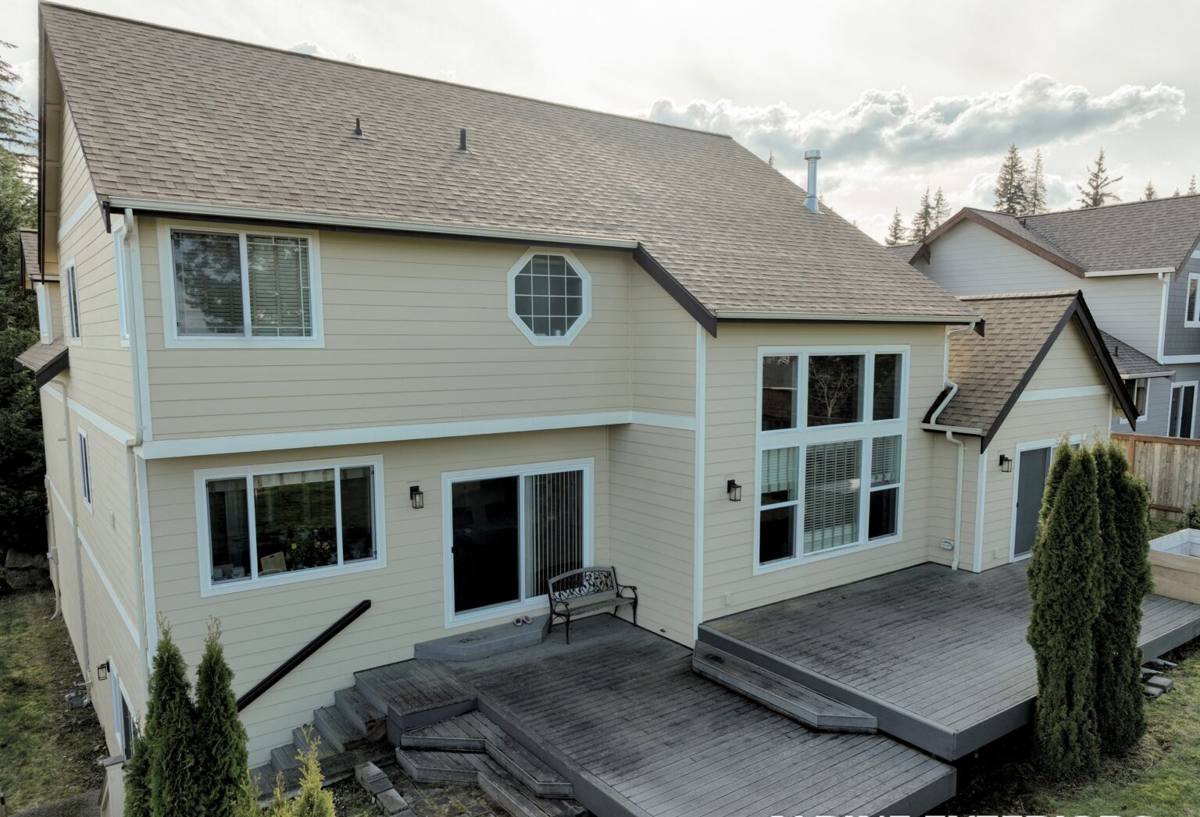
 Composite Decking in Sumas: Built for a Wet, Salt-Touched Corner of Whatcom County
A deck in Sumas sits outside year-round, low to the ground, mostly horizontal, and directly in the path of whatever the weather is doing that week. That's a harder job than a wall or a roof plane has to do. Water doesn't run off a deck surface the way it sheds off a pitched roof, and a horizontal board holds moisture, debris, and shade far longer than a vertical wall does. In this part of Whatcom County, where salt-tinged air off the Sound mixes with driving rain and a moss season that can stretch through most of the year, that difference matters a lot more than most homeowners expect until they're standing on a deck that's gone soft or slick two or three years after it was built.
We build and replace decks for homes in and around Sumas, and composite decking is what we recommend for the vast majority of them — not because it's the trendy option, but because of how it actually performs against this specific climate over ten, twenty, and thirty years, not just how it looks the day it's installed.
What This Climate Actually Does to a Deck
Driving Rain and Standing Moisture
Rain in this region rarely falls straight down. Wind pushes it sideways and underneath railings and overhangs, so a deck gets wetted from more angles than a simple rainfall total suggests. Add in gaps between boards that trap needles, leaves, and dirt, and you get spots on the deck surface that stay damp for days after everything else has dried — exactly where rot, mildew, and slick buildup start first.
Salt-Tinged Air and Hardware
Homes closer to the water around Birch Bay and the surrounding shoreline catch salt-laden air directly; homes further inland like Sumas still get a share of it during storm systems moving through the region, just at a lower dose. Either way, that airborne salt speeds up corrosion on anything metal — screws, joist hangers, railing brackets, post bases. A deck can look fine on the surface while the fasteners holding it together are quietly rusting away underneath.
A Long Moss Season
Mild temperatures, tree cover, and near-constant moisture add up to a moss and algae season across Whatcom County that runs most of the year, not just a few wet winter months. A horizontal deck surface, especially in shaded corners or under overhangs, is one of the first places it shows up. Once moss gets a foothold on a deck board, it holds even more moisture against the surface and turns slick underfoot — a real slip hazard, not just a cosmetic issue.
Why Composite Decking Fits Sumas Better Than Wood
Wood decking isn't a bad product — cedar and pressure-treated lumber have been used successfully for decades, and plenty of homeowners are happy with them. But wood is an organic material, and organic material in a climate this wet and mossy needs consistent upkeep to hold up. Composite decking, built from wood fiber and recycled plastic (or in capped versions, a plastic shell over a composite core), doesn't need that same maintenance rhythm to keep performing.
| Factor | Wood Decking | Composite Decking |
|---|---|---|
| Moisture absorption | Absorbs water; needs regular sealing to resist it | Resists moisture absorption without sealing, especially capped boards |
| Moss and algae growth | Porous surface gives growth something to hold onto | Less hospitable to growth, though surface buildup can still occur if not cleaned |
| Maintenance | Sealing or staining every one to two years to prevent graying, splitting, and rot | Periodic washing; no sealing, staining, or sanding required |
| Splintering and warping | Can splinter, cup, or warp as it dries and wets repeatedly | Dimensionally stable; doesn't splinter |
| Upfront material cost | Generally lower | Generally higher |
| Cost over 15-20 years | Often higher once sealing labor and board replacement are added up | Typically lower ongoing cost with a longer service life |
Composite isn't automatically a good deck, though. The material only performs as well as the framing underneath it and the way it's installed — a composite deck built on undersized joists or fastened wrong will still fail, just in different ways than wood does.
What a Correct Composite Deck Build Involves
Framing and Joist Spacing
Most composite manufacturers require tighter joist spacing than traditional wood decking calls for, because composite boards flex differently under load and temperature swings than solid lumber does. Building to the manufacturer's actual spec, not just standard framing habits, is what keeps a composite deck from developing a bounce or a sag over time.
Ground Clearance and Airflow
A deck built low to wet ground without enough airflow underneath traps moisture against the framing even if the visible boards on top are composite. In a climate that stays damp as long as this one does, that trapped moisture is what rots joists and beams from below while the deck surface still looks fine. Proper clearance and, where the site requires it, ventilation gaps or drainage grading underneath the structure matter as much as the decking material choice.
Fastening and Board Gapping
Hidden fastener systems keep the deck surface clean and free of exposed screw heads that can loosen, corrode, and leave staining streaks over time. Board gapping has to account for how composite expands and contracts with temperature — too tight and boards can buckle in summer heat; too loose and debris collects in the gaps, holding moisture and feeding the moss problem described above.
Ledger Board Flashing
Where the deck attaches to the house is one of the most common failure points on decks in this climate, and it has nothing to do with the decking material. A ledger board without proper flashing lets water track behind it and into the house's wall framing, sometimes for years before it shows up as visible damage. We flash every ledger connection as a full weatherproofing detail, not an afterthought bolted on once the framing's up.
Capped vs. Uncapped Composite: What We Look At
Composite boards generally fall into two categories. Uncapped composite has the wood-plastic blend exposed on all sides, which costs less but is more susceptible to moisture absorption and staining over time. Capped composite has a plastic outer shell fused around the core, giving it stronger resistance to moisture, staining, and fading, with a tradeoff of higher upfront cost. In a climate with this much sustained rain and moss exposure, we generally steer homeowners toward capped composite for anything at or near ground level or in heavily shaded spots, and we'll walk through the real cost difference against your specific deck rather than pushing the more expensive option by default.
Our Process, Start to Finish
- On-site walk to assess the ground, existing structure (if replacing a deck), ledger connection point, and drainage before any numbers get discussed
- A written scope covering framing, decking material, railing, and any structural repairs the site needs — no vague allowances
- Permitting where required, since deck height, guardrails, and footing depth are all inspected items in most Whatcom County jurisdictions
- Demolition of the old deck (if applicable) and inspection of the ledger connection and any framing it's attached to
- Framing built to the composite manufacturer's joist-spacing spec, with ledger flashing and ground clearance addressed before a single deck board goes down
- Decking, railing, and hardware installation using corrosion-resistant fasteners suited to this climate
- Final walkthrough so you know what maintenance (if any) the specific product you chose actually needs
Maintenance Checklist for a Sumas Composite Deck
Composite decking is low-maintenance, not no-maintenance. A little seasonal attention keeps it performing the way it's supposed to in a climate this wet:
- Sweep debris out of board gaps regularly — trapped leaves and needles hold moisture against the boards and feed moss growth
- Wash the deck surface once or twice a year with a soft-bristle brush and mild soap; avoid pressure-washing composite at close range, which can damage the surface texture
- Check railing posts and stair connections annually for looseness, since hardware corrosion happens gradually and isn't always visible from the top side
- Clear moss or algae as soon as it appears rather than waiting for it to spread — it's far easier to remove early than after it's established
- Confirm gutters and downspouts near the deck aren't dumping extra water directly onto or under the structure
- Inspect underneath the deck once a year if access allows, checking the ledger connection and framing for staining or soft spots
Cost Factors for a Composite Deck Project
| Factor | What It Affects |
|---|---|
| Deck size and shape | More square footage and complex angles or cutouts increase material and labor |
| Height above grade | Taller decks need more substantial framing, footings, and guardrail work, which adds cost |
| Capped vs. uncapped composite | Capped boards cost more upfront but need less long-term upkeep in a wet, mossy climate |
| Railing material and style | Composite, aluminum, and cable railing all price differently and hold up differently to moisture and salt-tinged air |
| Site access and existing structure removal | Tight lot access or a full teardown of an old deck adds labor time |
We don't quote decks off a generic price-per-square-foot number, because two decks the same size can cost very differently depending on height, access, and what condition the existing structure is in. A walk-through gets you a real number, not a guess.
Why a Local Crew That Already Works Sumas Matters
A crew that builds decks across this part of Whatcom County regularly sees how driving rain, salt-tinged air, and a long moss season actually behave on real structures over time — not just how a product performs on a spec sheet. That experience shapes decisions that don't show up on a materials list: how much ground clearance a specific site actually needs, which fastener grade is worth the extra cost given how much airborne salt a location catches, and which shaded corners of a deck are going to need extra attention to drainage and gapping. A contractor who only occasionally works this area is more likely to build to a generic standard that doesn't quite account for what this specific corner of the county throws at a structure year-round.
Get a Free, No-Pressure Estimate
If you're planning a new composite deck, replacing an aging wood deck, or just want an honest read on whether your current deck's framing is still sound, we're glad to take a look. Reach out using the form below to schedule a free, no-pressure estimate for your Sumas-area home.