 Birch Bay Roofing
 Why Siding Repair Looks Different for Sumas Homes
Homes in the Sumas area of Whatcom County deal with a specific combination of weather stress that doesn't let up for long. Damp, salt-tinged air moves through the region for much of the year, driving rain finds its way into every gap and seam a builder left unsealed, and a long moss season means anything that traps moisture against a wall stays wet far longer than it would in a drier climate. None of that is dramatic on its own. It's the cumulative effect that causes trouble — siding that looked fine for a decade can fail quickly once water finds a way behind it.
That's the piece a lot of homeowners miss: siding repair isn't really about patching what's visibly damaged. It's about figuring out how water got in, stopping it from happening again, and only then addressing the cosmetic damage. A repair that skips the first two steps is a repair that fails again within a year or two.
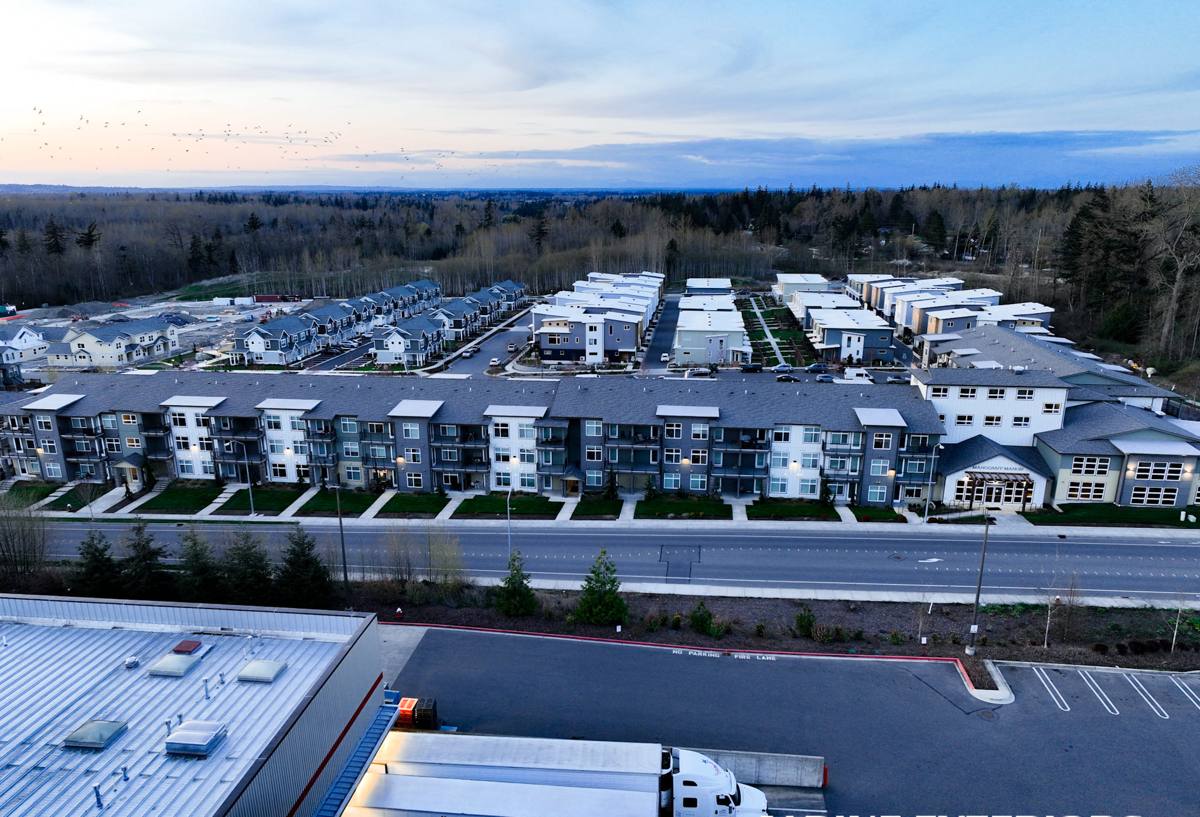
What Whatcom County Weather Actually Does to Siding
Moisture Intrusion
Driving rain doesn't just fall straight down — wind pushes it sideways into seams, around trim, and up under lap joints. Over time this works caulk loose, opens hairline gaps at butt joints, and lets water behind the siding where it can soak sheathing and framing. By the time a stain shows up on the interior wall, the damage has usually been building for a while.
Moss and Organic Growth
A long moss season means north-facing walls, shaded areas under eaves, and anywhere siding stays damp longer are prone to moss and algae growth. Beyond the appearance issue, moss holds moisture directly against the siding surface, which accelerates rot in wood-based products and can degrade paint and caulk faster than a dry climate would.
Salt-Influenced Air
Salt-tinged coastal air accelerates corrosion of fasteners, flashing, and any exposed metal trim. When nails or screws holding siding in place start to corrode, they lose their grip strength — which is often the real reason a siding panel comes loose, even though the panel itself looks intact.
Freeze-Thaw and Temperature Swings
Whatcom County gets enough cold snaps that any water already trapped behind siding can freeze, expand, and widen existing cracks or gaps. This is a slow, cumulative process — a small gap this year can be a much bigger one in two or three winters.
Signs a Sumas-Area Home Needs Siding Repair
- Visible cracking, warping, or buckling in one or more sections of siding
- Soft or spongy spots when you press on the siding, especially near the bottom edge or around windows
- Paint that's peeling, bubbling, or failing faster than the rest of the house
- Persistent moss or dark streaking that comes back shortly after cleaning
- Gaps opening up at seams, corners, or where siding meets trim and window frames
- Rust staining running down from nail heads or metal flashing
- Higher heating or cooling bills with no other obvious cause — often a sign of moisture-compromised insulation behind the wall
- Musty odor or visible staining on an interior wall that backs up to exterior siding
What a Correct Siding Repair Actually Involves
A repair done right isn't just swapping a damaged board for a new one. It typically involves:
Diagnosing the Water Path
Before any siding comes off, a competent crew traces how water is getting in — a failed seal, a flashing gap, a caulk joint that's given out, or a spot where the original installation didn't leave proper clearance. Replacing the visible damage without fixing the entry point just delays the next repair.
Checking What's Behind the Siding
Once siding is pulled back, the sheathing and weather-resistant barrier underneath need to be inspected. If there's rot or persistent moisture damage in the sheathing itself, that has to be addressed before new siding goes back on — otherwise you're covering a problem, not solving it.
Matching Material and Profile
Patch repairs need to match the existing siding's profile, reveal, and finish closely enough that the repair doesn't stand out and, more importantly, so the water-shedding overlap between courses still works correctly. This is harder than it sounds when the original siding is an older or discontinued product.
Proper Flashing and Sealant Detail
Correct flashing at windows, doors, and horizontal transitions is what actually keeps water out — caulk is a backup, not the primary defense. A repair that relies on caulk alone to seal a gap is a repair that will need to be redone.
Fastening for the Conditions
Given the corrosion risk from salt-influenced air, fastener choice matters. Using corrosion-resistant fasteners rated for the exposure the wall actually gets — not just whatever's on hand — is part of doing the job so it lasts.
How Different Siding Materials Hold Up in This Climate
| Material | Moisture Behavior | Moss/Algae Resistance | Typical Repair Difficulty |
|---|---|---|---|
| Vinyl | Doesn't rot, but seams and panel edges can let water behind it; traps moisture against sheathing | Moderate — grows on surface, harder to keep clean long-term | Easy to patch, but color-matching aged panels is difficult |
| Cedar | Absorbs moisture readily; prone to rot and cupping without diligent maintenance | Low — organic surface, needs regular treatment | Labor-intensive; refinishing and sealing required regularly |
| Primed spruce/engineered wood | Vulnerable at cut edges and seams if factory coating isn't maintained | Moderate to low | Repairs must fully reseal exposed edges or failure recurs |
| James Hardie fiber cement | Non-combustible, dimensionally stable, engineered for wet-climate performance | High — factory finish resists organic growth better than painted wood | Straightforward when installed to spec; profiles are widely available for matching |
Our Siding Repair Process
- On-site inspection. We look at the damaged area and the surrounding wall system, not just the spot that's visibly failing.
- Moisture and structural check. We confirm whether sheathing or framing behind the siding has been compromised.
- Honest scope recommendation. We tell you plainly whether this is a spot repair, a section replacement, or something bigger — and why.
- Repair with matched material and correct flashing detail. We don't shortcut the water-management details to save time.
- Final walkthrough. We explain what we found, what we fixed, and what to watch going forward.
Repair vs. Replace: How We Decide
| Factor | Favors Repair | Favors Replacement |
|---|---|---|
| Extent of damage | Isolated to one or two sections | Recurring failures across multiple walls |
| Sheathing condition | Dry, sound wood underneath | Rot or moisture damage found behind siding |
| Material availability | Matching material/profile still obtainable | Discontinued product, poor color/profile match |
| Age of existing siding | Siding is relatively young, otherwise sound | Siding is near or past its expected service life |
| Root cause | Isolated installation flaw, correctable | Systemic issue — original material or install method unsuited to this climate |
We won't recommend a full replacement when a targeted repair will genuinely hold up — but we also won't patch something we know is going to fail again in a season or two just to make a smaller sale.
Why We Recommend James Hardie for Repairs and Patch Work
When a repair calls for replacing a section of siding rather than just resealing a joint, the material choice matters as much as the workmanship. We install James Hardie fiber cement siding exclusively — we don't install vinyl, LP SmartSide, Cemplank, Allura, primed spruce, or cedar. That's a deliberate standard, not a limitation of what we're capable of installing.
Fiber cement is engineered for exactly the conditions this region deals with: it's non-combustible, dimensionally stable through wet-dry cycles, and Hardie's ColorPlus factory finish holds up to sun and moisture exposure better than field-applied paint on wood-based products. Hardie's HZ5 product line is specifically engineered for climates with significant moisture exposure, which makes it a strong fit for repair and replacement work in this part of Whatcom County. It also carries a strong transferable warranty when installed to manufacturer spec — something worth asking about no matter who you hire.
When we do a section repair on a home currently sided in another material, we'll walk you through the tradeoffs honestly: matching into the existing material sometimes makes sense for a small patch, but if a wall is failing repeatedly, transitioning that section — or eventually the whole exterior — to fiber cement is usually the more durable long-term fix.
Why Hiring a Crew That Already Works in Sumas Matters
Siding repair isn't a one-size-fits-all trade. A crew that regularly works Whatcom County homes has already seen how driving rain, salt-influenced air, and a long moss season interact with the specific siding materials and construction styles common in this area. That familiarity shows up in small but important ways — knowing which flashing details tend to fail first, which wall orientations need extra attention, and which repairs are quick fixes versus early warning signs of a bigger problem.
It also matters for scheduling and follow-through. A local crew can respond faster if a repair needs a follow-up visit, and has a reputation in the area worth protecting — which tends to translate into more careful, less rushed work.
What to Expect: Timeline and Cost Factors
Every repair is different, but a few factors consistently drive both cost and timeline:
- Size of the damaged area and how much siding needs to come off to access it
- Whether sheathing or framing repair is needed underneath
- Availability of matching material, profile, and color
- Access — height, roofline complexity, and obstructions around the repair area
- Weather windows, since siding repair generally needs a dry stretch to do correctly
We'll give you a clear, itemized estimate before any work starts, and we'll flag it upfront if we find something during the inspection that changes the scope — no surprise add-ons after the fact.
If you're seeing cracked, loose, or moss-covered siding on a Sumas-area home, we're glad to take a look and give you a straightforward, no-pressure assessment of what's actually going on and what it will take to fix it. Use the form below to request a free estimate.