 Birch Bay Roofing
 Window Replacement Built for Sumas Weather, Not Just Sumas Homes
Sumas homeowners deal with a specific mix of conditions: long stretches of wind-driven rain, a marine-influenced climate that keeps humidity high for much of the year, and a moss season that seems to start earlier and end later every year. None of that is unique to any one house — it's regional, part of living in Whatcom County — but it matters enormously when it comes time to replace windows. A window that performs fine in a dry inland climate can fail here in a handful of years if it's not installed with local conditions in mind.
Window replacement isn't just picking a product out of a catalog. It's flashing details, drainage planes, sealant choices, and installation sequencing that either work with the weather or fight it. We've built our process around what actually holds up in this part of the county, and that's the difference between a window job that looks good at closeout and one that still performs a decade later.
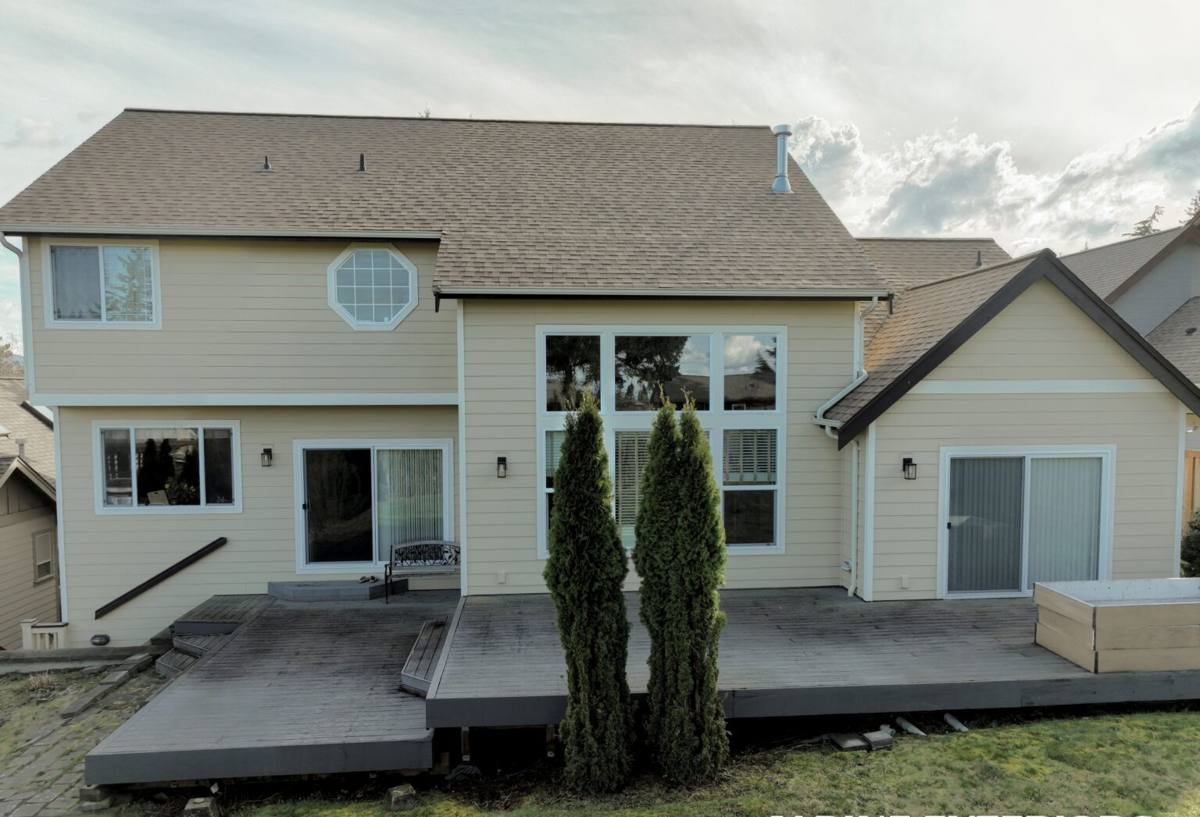
Signs Your Sumas Home Needs New Windows
Most homeowners don't wake up one day and decide to replace windows out of nowhere — there are usually warning signs that build up over a season or two. Here's what we look for, and what you should watch for too:
- Fogging or a permanent haze between the panes of double-pane windows — the seal has failed and the insulating gas is gone.
- Soft or spongy trim and sills around the window frame, which usually means water has been getting behind the exterior finish.
- Visible moss or dark streaking on the wood or trim above and around the window, a sign of moisture sitting where it shouldn't.
- Windows that are hard to open, close, or lock — frames can swell, warp, or shift out of square as moisture cycles through them.
- Noticeable drafts or cold spots near the window even when it's fully closed and latched.
- Condensation forming on the inside of the glass regularly, which points to poor insulation performance, not just humidity in the house.
Any one of these on its own might not mean an immediate replacement. But a couple of them together, especially on older single-pane or early-generation vinyl windows, usually means the window is past the point where repair makes sense.
What a Correct Window Replacement Job Actually Involves
It Starts with the Opening, Not the Window
The window unit itself is only part of the job. What happens at the rough opening — the framing, the sheathing, the existing flashing — determines whether the new window will actually stay dry. Before a new unit ever goes in, we check the opening for rot, soft wood, or signs of past water intrusion. Installing a brand-new window into a compromised opening just hides a problem instead of fixing it.
Flashing and Drainage Come Before Aesthetics
In a climate with as much driving rain as Whatcom County gets, flashing sequencing is the single biggest factor in whether a window replacement lasts. Water needs a clear path down and out, never trapped behind the siding or sitting on the sill. That means installing sill pans, properly lapping the weather-resistive barrier over the flashing (never under it), and using flashing tape or membrane at the head, jambs, and sill in the correct order. Skipping or rushing this step is the most common reason window replacements fail early — and it's invisible once the trim goes back on, which is exactly why it matters who's doing the work.
Sealant Is a Backup, Not the Primary Defense
Caulk and sealant have their place, but they're a secondary line of defense, not the main water management strategy. A window installation that relies on sealant alone to keep water out is one bad caulk joint away from a moisture problem. We treat sealant as the last step that backs up correct flashing and drainage, not a substitute for it.
Window Materials and Styles That Hold Up Here
There's no single "best" window material — it depends on your home's style, your budget, and how much upkeep you want to take on. Here's how the common options compare for a Sumas home dealing with sustained moisture and a long moss season:
| Material | Moisture Performance | Maintenance | Typical Lifespan |
|---|---|---|---|
| Vinyl | Good — won't rot, low water absorption | Low — occasional cleaning | 20–30 years |
| Fiberglass | Very good — dimensionally stable in wet/dry cycles | Low | 30–40 years |
| Wood (clad exterior) | Good if the cladding is intact; vulnerable where finish fails | Moderate to high — finish upkeep matters | 20–40 years, finish-dependent |
| Aluminum | Fair — prone to condensation without a thermal break | Low | 20–30 years |
For most Sumas homes, we steer people toward vinyl or fiberglass for straightforward performance and low upkeep in a wet climate. Wood-clad windows can look excellent and we'll install them when that's the right call for the home, but we're upfront that the wood is only as good as the finish protecting it — once that finish fails at a joint or corner, moisture gets in and the maintenance burden goes up. That's not a knock on wood windows; it's just an honest trade-off worth knowing before you commit to the upkeep.
Our Process, Start to Finish
- On-site assessment. We look at the existing windows, the openings, and the surrounding siding and trim — not just measure for a quote.
- Straightforward estimate. You get a written scope covering the window product, flashing and installation method, and any trim or repair work the opening needs.
- Opening prep. Old windows come out, the opening gets inspected and repaired as needed, and any compromised sheathing or framing is addressed before anything new goes in.
- Correct flashing and installation. Sill pan, weather barrier integration, and window setting done in the right order, every time.
- Trim, sealant, and finish work. Interior and exterior trim reinstalled or replaced, sealant applied as the backup layer it's meant to be.
- Final walkthrough. We check operation, sightlines, and seal on every window before we call the job done.
What Affects the Cost of a Window Replacement
Every home is different, so we don't quote off a generic price list — but these are the main factors that move the number up or down:
| Factor | Why It Matters |
|---|---|
| Window count and size | More openings and larger units mean more material and labor |
| Material choice | Vinyl, fiberglass, and wood-clad have different unit costs |
| Opening condition | Rotted framing or sheathing adds repair work before the window goes in |
| Access and story height | Second-story or hard-to-reach windows take more time and equipment |
| Trim and finish scope | Matching existing trim profiles or repainting adds labor |
We'll walk through all of this on-site so the estimate reflects your actual home, not a rough average. If there's a range instead of a firm number for any part of the scope, we'll tell you why and what would move it in either direction.
Why Hire a Crew That Already Works in Sumas and Whatcom County
A window replacement crew that mostly works in a drier climate can still install a technically fine window — but they may not think twice about flashing sequencing that assumes occasional rain, not the sustained, wind-driven rain typical of this part of Washington. Crews who work Whatcom County regularly have seen what actually fails here: the moss buildup on north-facing trim, the moisture that sits on flat sills longer than it should, the way older homes' openings have settled over the decades. That local pattern recognition shows up in the small decisions — where to put an extra piece of flashing tape, whether an opening needs more repair before a window goes in, how a sill should be sloped for real-world drainage in this climate.
It also matters for warranty and follow-up. If something needs a look two years down the road, you want a crew that's still working in the area and stands behind the installation, not just the manufacturer's product warranty.
Keeping Your New Windows Performing Long-Term
A correct installation is the foundation, but a bit of homeowner upkeep extends the life of any window in this climate. A simple annual checklist:
- Clear debris and moss from window sills, tracks, and surrounding trim before wet weather sets in each fall.
- Check exterior caulk lines for cracking or gaps and have them touched up before they let water in.
- Operate every window at least once each season so hardware doesn't seize up from disuse.
- Look for early moss or algae growth on trim and siding near windows — catching it early is far easier than dealing with rot later.
- Wipe down interior sills after heavy rain if you notice any condensation, and note whether it's a one-time or recurring issue.
None of this replaces a correct installation, but it's a small time investment that keeps a well-installed window performing the way it should for its full lifespan.
Ready for an Honest Look at Your Windows?
If your Sumas home has windows showing any of the signs above, or you're just tired of dealing with drafts and condensation every winter, we're glad to come take a look. We'll give you a straightforward assessment of what's going on, what it would take to fix it, and a written estimate with no pressure to commit on the spot. Use the form below to get started.