 Birch Bay Roofing
 Siding Built for the Sumas Side of Birch Bay
Homes in and around Sumas sit close enough to Birch Bay and the Strait of Georgia that salt air is a daily fact of life, not an occasional nuisance. Add Whatcom County's long wet season, driving rain off the water, and months of shade-driven moss growth on north-facing walls, and you have a climate that is genuinely hard on exterior siding. We install James Hardie fiber cement siding exclusively, and this page walks through what that looks like for a Sumas-area home specifically: what the climate demands, what a correct installation actually involves, and why local experience matters as much as the material itself.
This is not a general siding overview. It is written for homeowners in this specific pocket of Whatcom County who are trying to figure out what their walls need and what a job done right looks like before they get quotes.
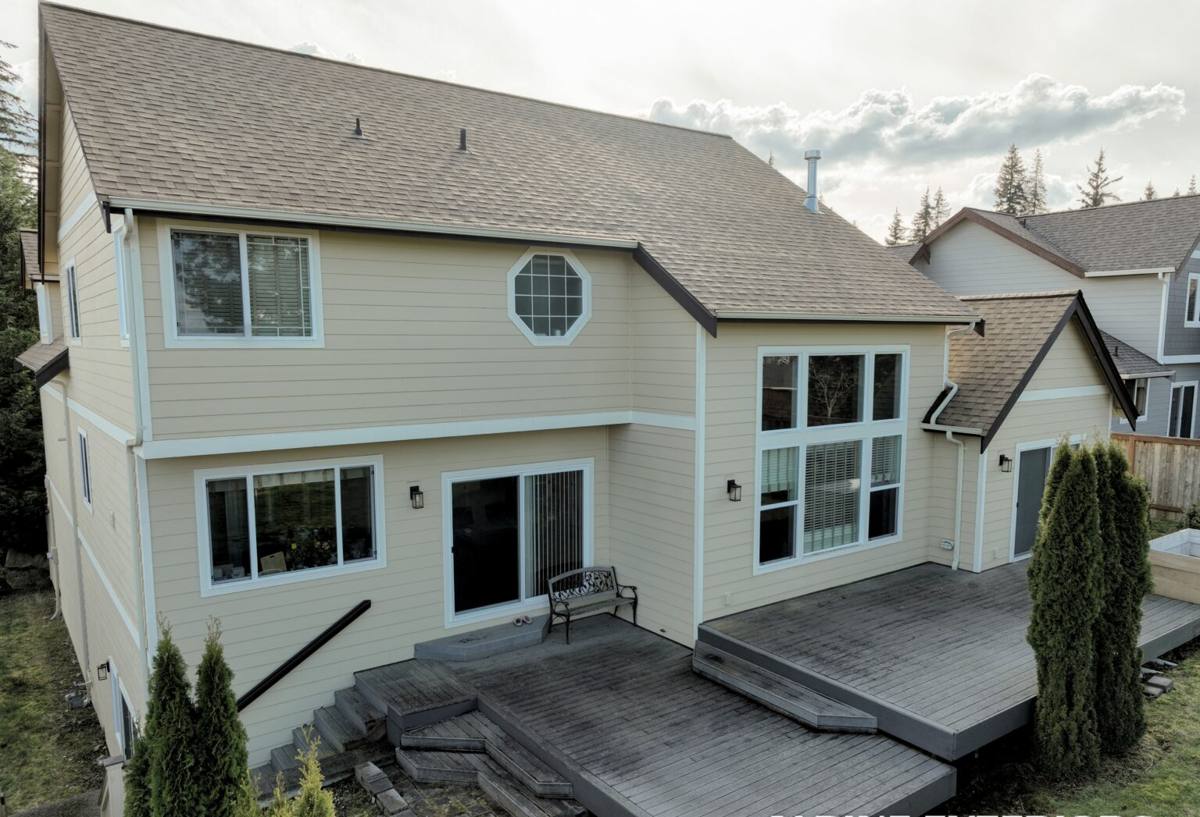
What Sumas-Area Homes Are Actually Fighting
Salt Air and Metal Fatigue
Proximity to Birch Bay means airborne salt reaches siding, fasteners, and trim on a regular basis, especially on walls facing the water or exposed to prevailing wind. Salt accelerates corrosion on anything metal — nail heads, flashing, trim fasteners — long before most homeowners notice a problem on the siding face itself. Materials and fastener choices that work fine twenty miles inland don't always hold up the same way this close to the coast.
Driving Rain and Wall Assembly Moisture
Rain in this part of Whatcom County rarely falls straight down. Wind off the bay pushes it sideways into wall assemblies, which puts real stress on siding laps, butt joints, and anywhere two pieces of siding meet trim or a window. A siding product that looks fine dry can behave very differently under sustained wind-driven rain, and the assembly behind it — housewrap, flashing, drainage gap — matters as much as the siding itself.
Moss Season
Shaded walls, especially north and east exposures under mature trees, stay damp for extended stretches of the year. That's exactly the environment moss and algae need to take hold. Siding that absorbs moisture or has a porous factory finish gives moss more to grip onto and holds the dampness longer once it does.
Why We Only Install James Hardie Here
We made the decision to install James Hardie fiber cement siding exclusively, and we don't install vinyl, LP SmartSide, or wood products like cedar or primed spruce. That's a deliberate standard, not a sales position, and it matters more in a climate like this one than it does somewhere dry and mild.
- Non-combustible fiber cement — doesn't feed a fire the way wood-based products can, and doesn't soften or warp under repeated wet-dry cycling the way some engineered wood products do over time.
- ColorPlus factory finish — a baked-on finish applied under controlled conditions, which holds up better against salt exposure and UV than field-applied paint, and resists the kind of moisture uptake that lets moss establish itself.
- HZ5 product engineering — Hardie's HZ5 line is formulated for harsher, wetter climate zones like the Pacific Northwest coast, which is a meaningfully different product than what gets installed in dry inland regions.
- Dimensional stability — fiber cement doesn't swell and shrink with moisture the way wood-based sidings do, which keeps joints tighter over the long haul and reduces the gaps where wind-driven rain finds its way in.
- Transferable warranty — a real, honored warranty backing the material, which matters more in a climate that stresses siding harder than average.
We're not going to tell you other products are junk — plenty of them perform fine in the right setting. But we've seen enough coastal Whatcom County installations over the years to know which material gives a homeowner here the least maintenance and the longest service life, and that's the one we put our name behind.
What a Correct Installation Involves
Fiber cement siding is only as good as the installation behind it. This is where most of the real-world failures we get called out to inspect actually originate — not from the material, but from shortcuts in the assembly underneath it.
The Water Management Layer
Before a single piece of siding goes up, the wall needs a proper weather-resistive barrier, correctly lapped and sealed at every penetration — window and door openings, hose bibs, vents, electrical fixtures. In a driving-rain climate, this layer is doing more work than the siding itself in a lot of storms.
The Drainage Gap
James Hardie's own installation instructions call for a rainscreen or drainage gap in climates like ours, allowing incidental moisture that gets behind the siding to drain and the wall assembly to dry. Skipping this is one of the most common corner-cutting moves we see on older installations, and it's a big part of why some homes develop hidden moisture problems years down the line even with good siding on the outside.
Fastener Selection and Placement
Given the salt exposure this close to Birch Bay, fastener material and placement aren't a minor detail. Hardie specifies fastener type, length, and placement (field vs. edge nailing, blind vs. face nailing depending on the product) precisely because getting this wrong causes cracking, popped fasteners, and premature corrosion — all of which show up faster in salt air than they would inland.
Flashing and Trim Details
Every window head, sill, and butt joint is a potential entry point for wind-driven rain. Correct kick-out flashing at roof-wall intersections, properly lapped window flashing, and sealed (not just caulked-over) trim joints are what actually keep water out of the wall — the siding face is the last line of defense, not the first.
Clearances
Proper clearance from grade, roof lines, decks, and patios keeps splash-back moisture and standing water away from the bottom edge of the siding, which is consistently the first place we see damage on installations that skipped this detail.
Our Process on a Sumas-Area Home
- On-site assessment — we look at wall orientation relative to prevailing wind and sun, existing moss or algae staining, current siding and trim condition, and any signs of past moisture intrusion.
- Tear-off and sheathing check — removing old siding lets us actually inspect the sheathing and framing underneath before anything new goes up, rather than covering up a problem.
- Water-resistive barrier and drainage gap installation — done to spec for this climate, not a generic inland installation.
- Flashing at every penetration — windows, doors, vents, and roof intersections, using materials suited to sustained wet exposure.
- Hardie siding and trim installation — fastened per manufacturer specification for the specific HZ product and exposure.
- Final detailing — caulking only where appropriate, touch-up of any cut edges with Hardie-approved products, and a walkthrough of the finished work.
Why a Crew That Already Works Sumas Matters
A contractor who works this stretch of Whatcom County regularly already knows which walls on a Sumas-area home take the worst of the weather, where moss tends to establish first, and how far wind-driven rain typically pushes water sideways in a coastal storm. That's not something you learn from a manufacturer's install manual alone — it comes from having done the work here repeatedly and having gone back to see how earlier installations held up over time. It also means a crew that's already familiar with the permitting and inspection expectations in the county, so there are fewer surprises mid-project.
Cost Factors to Understand Before You Get Quotes
Every home is different, but the line items that actually move the price on a Sumas-area James Hardie project tend to be the same ones each time.
| Factor | Why It Matters Here |
|---|---|
| Existing siding removal and disposal | Tear-off scope and any hidden sheathing repair needed once old siding comes off |
| Sheathing or framing repair | Coastal moisture exposure sometimes means hidden rot is found once walls are opened up |
| Siding profile and HZ product line | Lap width, panel vs. lap siding, and shake-style accents all price differently |
| ColorPlus color and trim package | Factory-finished color options and matching trim add cost but remove the need for field painting |
| Drainage gap and flashing detailing | Proper water management for wind-driven rain adds labor but is not optional in this climate |
| Wall complexity | Dormers, multiple stories, and extensive trim detail all add installation time |
Signs Your Current Siding Is Already Struggling
- Persistent moss or algae staining that returns shortly after cleaning
- Soft spots, bubbling, or visible warping, especially on wood-based siding
- Rust streaking below fasteners or trim
- Gaps opening up at butt joints or corner trim
- Peeling or chalking paint that wasn't there a few years ago
- Any soft or spongy feel to sheathing near window or door trim
What to Expect After Installation
James Hardie siding installed to spec in this climate should need very little from you — periodic rinsing to keep salt film and light moss buildup from accumulating, and an annual look at caulking and trim joints. It won't need repainting the way wood siding does, since the ColorPlus finish is baked on and warrantied against fading and chipping under normal conditions. That lower maintenance burden is a big part of why we think it's the right long-term call for homes in this area.
If you're weighing a siding project on a Sumas-area home and want a straight answer about what your walls actually need, we're happy to take a look and put together a free, no-pressure estimate — no obligation either way.