 Birch Bay Roofing
 Roofing in Sumas Sits in a Different Microclimate Than the Whatcom County Coast
Most people picture Whatcom County roofing problems as a coastal story — salt air off the water, driving rain, and the moss that comes with it. That's true along Birch Bay and the shoreline towns, but Sumas sits well inland, tucked into the Nooksack Valley near the Canadian border, and the roofing problems there have their own character. Homes here deal with less direct salt exposure but more persistent valley damp: low fog that settles in the bottomland, shaded lots ringed by conifers, and the kind of still, humid air that keeps a roof wet for days after a storm has already moved on. Add in a long moss season and the occasional hard cold snap that the coast rarely sees, and you get a roof that ages differently than one twenty miles away in Blaine or Birch Bay.
That difference matters when it comes to repair. A patch job that would hold up fine on a wind-exposed coastal roof can fail faster on a shaded, slow-drying Sumas roof if it doesn't account for how long that section stays wet. We treat Sumas repairs as their own thing, not a copy-paste of coastal work.
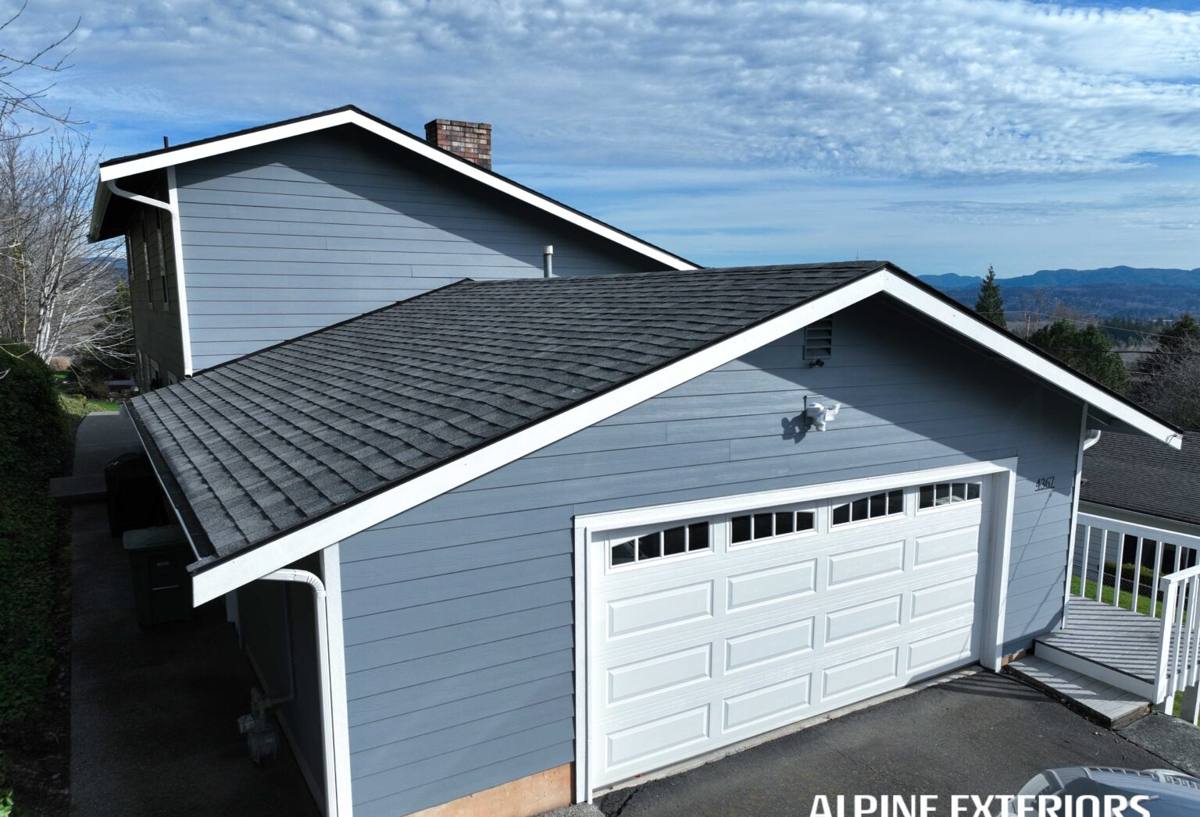
What Actually Goes Wrong on Sumas Roofs
Moss and Organic Growth
Tree cover and valley humidity are a good combination for moss, and moss is more than cosmetic. Once it colonizes a shaded slope or a north-facing section, it holds moisture against the roofing material around the clock. On composition shingles that means accelerated granule loss and curling at the edges. On cedar or wood-based roofing it means the material stays damp long enough to start breaking down from underneath. Left alone through a full moss season, what starts as a maintenance issue turns into a repair issue.
Flashing and Valley Leaks
Roof valleys, chimney flashing, and skylight curbs are where most Sumas leaks actually start — not in the open field of the roof, but at the transitions. Driving rain finds any gap in flashing and, combined with the valley's tendency to hold moisture longer, a small flashing failure that might dry out quickly elsewhere can sit wet for days here and work its way into the decking.
Ice and Cold-Snap Damage
Sumas gets colder snaps than the coast during winter arctic outflow events. A few hard freezes each winter are enough to stress roofing material that's already been softened by months of dampness, and ice can back up at eaves or in valleys where snowmelt refreezes overnight. It's not the relentless ice-dam country you'd find further inland or at elevation, but it's a real factor we plan for.
Ventilation and Condensation
Persistent humidity means attic ventilation matters more here, not less. A roof that's adequately vented sheds interior moisture before it condenses on the underside of the decking. One that isn't can develop rot and mold from the inside out — a problem that looks like a leak but actually starts with airflow, not water intrusion from above.
What a Correct Roof Repair Involves
Real Diagnosis, Not Guesswork
Water travels. A stain on a ceiling in one room can trace back to a flashing gap several feet away, especially on a roof that's been holding moisture in a valley or under moss for a while. A correct repair starts on the roof itself — checking flashing, seams, penetrations, and the condition of the decking underneath — not just patching the spot that's visibly failing.
Matching Materials
Shingles fade and weather differently depending on sun exposure and shade, and a Sumas roof's shaded sections age differently than its open ones. We try to match not just the product line but the section's actual wear pattern, so a repair blends in rather than standing out as an obvious patch — and so the new material weathers at a similar rate to what's around it.
Proper Flashing and Sealing
Given how much of the trouble here starts at transitions, flashing work gets extra attention. That means replacing compromised step flashing and counterflashing rather than just running sealant over the top of it. Sealant is a short-term fix on its own; it breaks down faster in a damp, shaded microclimate than most homeowners expect.
Checking What Caused the Failure
A repair that doesn't address the underlying cause — poor ventilation, a moss buildup that was never cleared, a flashing detail that was wrong from the original install — tends to fail again in the same spot. Part of doing the job right is fixing that root cause, not just the symptom.
Repair or Replace? Key Factors We Weigh
Not every roof problem in Sumas needs a full replacement, and we don't default to recommending one. Here's generally how we think through it:
| Factor | Leans Toward Repair | Leans Toward Replacement |
|---|---|---|
| Roof age | Under roughly two-thirds of expected material lifespan | At or past expected lifespan for the material |
| Extent of damage | Isolated to one section, flashing, or penetration | Spread across multiple slopes or recurring in several spots |
| Decking condition | Solid, no soft spots or rot found | Soft, delaminated, or rotted decking discovered underneath |
| Moss/algae history | Recent growth, caught early | Long-term untreated growth with granule loss or material breakdown |
| Cost relative to full re-roof | Repair cost is a small fraction of replacement | Repair cost approaches a significant share of replacement |
A straightforward flashing or valley repair is often a modest cost. Repairs that involve replacing sections of decking or a broader area of shingles run higher — we'll always walk you through the actual scope before starting, not after.
Our Roof Repair Process
- Inspection of the affected area and the surrounding roof, including attic access where possible to check for ventilation or moisture issues.
- A written explanation of what's actually failing and why, including photos of the problem area.
- A clear scope and estimate before any work starts — no surprise add-ons mid-job.
- Repair work: removing and replacing compromised flashing, decking, or roofing material as needed, matched to the surrounding roof.
- A final check of the repaired area and adjacent sections that might be next in line for attention.
Materials We Use and Why
For most Sumas repair work we use composition (asphalt) shingles and standard roofing underlayment systems, matched as closely as possible to the existing roof. In valley and eave areas that see the most sustained moisture, we favor a self-adhering ice-and-water membrane underneath the visible roofing — it seals around fastener penetrations and holds up better under standing moisture than felt underlayment alone.
We're generally cautious about wood shake and shingle roofing in this kind of shaded, humid setting. It can look great, but it demands more upkeep — cleaning, treatment, and closer monitoring for moisture retention — than most homeowners want to sign up for, and the maintenance burden only grows in a long moss season. That's a trade-off we'll walk through honestly rather than push a product because it looks nicer going in.
Timing a Repair Around Whatcom County's Wet Season
Late Spring Through Early Fall
This is the ideal window for repair work in Sumas. Drier conditions mean materials install and seal properly, and it gives everything a chance to cure before the next round of driving rain arrives.
Fall and Winter
Repairs don't stop when the weather turns — a leak doesn't wait for good weather to keep causing damage — but we plan winter repair work around dry weather windows and use materials suited to installing in cooler, damp conditions. If a repair genuinely can't wait, we'll say so and get it addressed regardless of season; if it can hold with a temporary measure until a drier stretch, we'll tell you that too.
Signs You Need to Call for a Roof Repair
- Visible moss buildup on shaded slopes, especially near valleys or the roof edge
- Granules collecting in gutters or downspouts
- Water stains on interior ceilings or upper walls, especially after a heavy rain
- Daylight visible through the attic roof deck
- Curling, cracked, or missing shingles, particularly around chimneys or skylights
- A musty smell in the attic, which often points to trapped moisture before a leak ever shows indoors
- Sagging or soft-feeling areas on the roof surface
Why Hiring a Crew That Already Works in Sumas Matters
A roof repair done by someone unfamiliar with the local climate pattern can look fine on the day it's finished and still fail within a season, because it wasn't built to handle how long this area's roofs stay wet, how shade affects material aging here, or where moss actually takes hold on a valley-bottom lot. We work across Whatcom County, from the coast at Birch Bay to inland communities like Sumas, and we bring that broader picture of how the county's microclimates differ into every repair — not a one-size-fits-all approach lifted from coastal work. That also means we're familiar with local permitting expectations and won't be guessing at code requirements on the fly.
If you're dealing with a leak, moss buildup, or damage you're not sure how serious it is, we're happy to take a look. There's no pressure and no obligation — just a straightforward assessment and, if repair is the right call, a clear estimate for the work. The form below is the easiest way to get started.