 Birch Bay Roofing
 Building a Deck That Actually Holds Up in Point Whitehorn
Point Whitehorn sits right on the water, and that changes what a deck has to survive. A deck built to a generic inland spec — the kind you'd get from a crew that mostly frames decks forty miles from salt water — will show its age here in a fraction of the time. Fastener heads bleed rust, joist hangers pit and weaken, and the walking surface grows a slick coat of moss before the wood itself is anywhere near worn out. None of that is inevitable. It's a function of material choice, hardware selection, and detailing done with this specific stretch of Whatcom County coastline in mind.
This page covers what deck building for a Point Whitehorn property actually requires — the climate factors at play, what a correctly built deck involves from footings to fasteners, how our process runs, and why it matters that the crew doing the work already builds decks in this exact environment.
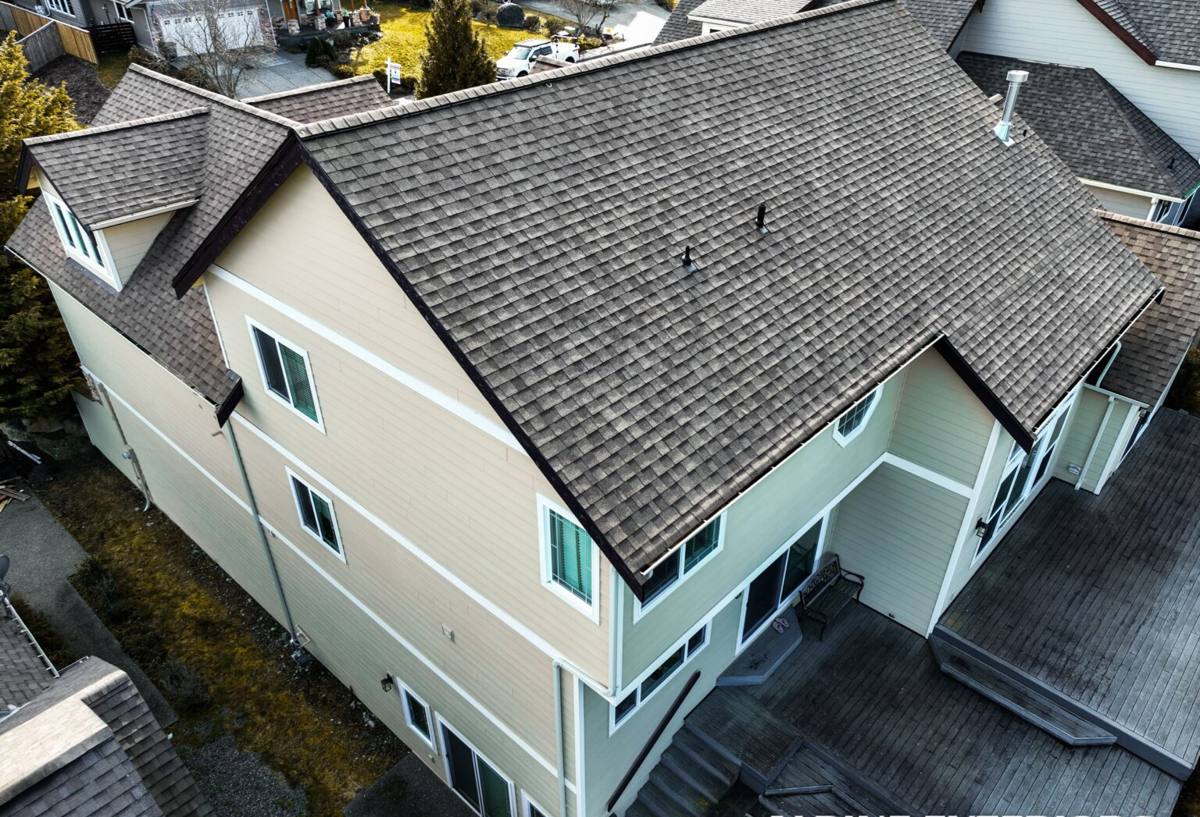
What Point Whitehorn's Coastal Exposure Does to a Deck
Salt Air and Metal Corrosion
Being close to the water means airborne salt is a constant, low-level presence — not just during storms, but on ordinary breezy days. Salt accelerates corrosion in any exposed steel or aluminum, and a deck has a lot of metal in it: joist hangers, structural screws, post bases, ledger bolts, railing hardware. Standard zinc-coated fasteners that are perfectly fine on an inland deck can start showing rust streaks within a couple of seasons out here. Once corrosion starts on a structural connector, it's not just cosmetic — it's a slow reduction in the hardware's holding strength, and it's happening in places you can't see once the decking is down.
Driving Rain and Water Intrusion
Birch Bay and the surrounding Whatcom County coastline get their share of wind-driven rain, and a deck attached to a house is one of the more common points where that water finds its way into the structure. Rain that's being pushed sideways doesn't behave like rain falling straight down — it gets up under trim, behind ledger boards, and into any gap that a fair-weather installation might get away with ignoring. The ledger connection, where the deck attaches to the house, is the single most important place to get flashing right, because a failure there sends water directly into the house's rim joist and wall framing, not just into the deck itself.
Moss, Algae, and Slip Risk
This part of Washington has a long, damp season where surfaces that don't get much direct sun stay wet for extended stretches. On a deck, that means moss and algae growth on the boards themselves, plus green buildup on the undersides of rails and any shaded framing members. Beyond the maintenance annoyance, a mossy deck surface gets genuinely slippery — which matters for stairs and any walkway leading to the water side of a property. Board spacing, surface texture, and how much shade a deck sits in all affect how fast this becomes a problem.
What a Correctly Built Deck Involves
Footings and Framing
Everything above ground depends on what's below it. Footings need to be sized and set to local frost depth and soil conditions, and on sites near the water, we pay close attention to drainage around the footings themselves — standing water against a post base accelerates the same corrosion problem described above. Framing lumber should be rated for ground contact where it's close to grade, joist spacing should account for the decking material you're planning to use (composite and PVC boards often want tighter spacing than solid wood), and every structural connection should be engineered hardware, not just nails.
Ledger Board and Flashing
The ledger is the board that ties the deck to the house, and it's the place a marine-climate deck most often fails if it's done wrong. Correct practice is a continuous metal flashing that directs water up and away from the ledger-to-wall joint, with the house's weather-resistant barrier lapped over the top of the flashing — not tucked behind it. Skipping or shortcutting this step is invisible on installation day and becomes a rot problem three to five years later, usually discovered only when the decking gets pulled up or the siding starts to show damage.
Fasteners and Hardware
Given the salt air, we treat fastener and connector selection as a real decision, not an afterthought. Stainless steel or heavy-duty coated fasteners rated for coastal and treated-lumber contact cost more up front than standard deck screws, but they're the difference between hardware that's still solid at year fifteen and hardware that's staining the decking with rust by year three. The same logic applies to joist hangers, post bases, and railing brackets — every piece of exposed metal on the deck is a candidate for accelerated corrosion if it's the wrong grade.
Railings and Stairs
Railing systems near the water take direct salt exposure and often more wind load than an inland deck sees. Post attachment needs to be solid enough to meet code for lateral load, and any metal cable, glass, or aluminum railing components should be spec'd for coastal use rather than a standard residential grade. Stair treads deserve the same slip-resistance thinking as the main deck surface, since stairs are where a slick, mossy board is most likely to cause a fall.
Decking Material Comparison
Material choice is one of the biggest decisions on a Point Whitehorn deck project, and it's worth weighing honestly rather than defaulting to whatever's cheapest at the yard.
| Material | Moss/Algae Resistance | Salt Air Behavior | Maintenance |
|---|---|---|---|
| Pressure-treated lumber | Grows moss readily in shaded, damp spots | Holds up fine structurally; fasteners are the weak point | Needs periodic cleaning and re-sealing |
| Cedar | Naturally more rot-resistant, but still grows surface moss | Handles salt air well; no corrosion concern in the wood itself | Needs regular oiling/staining to hold color and grain |
| Composite decking | Won't rot, but can still get slick with algae film | Excellent — no rust, no salt absorption | Occasional wash-down; no sealing or staining |
| PVC/capped decking | Similar to composite; smooth cap sheds surface growth easiest | Excellent — fully synthetic, no corrosion or rot risk | Lowest ongoing maintenance of the group |
There's no single right answer for every homeowner — budget, appearance preference, and how much upkeep you want to do all factor in. What matters is choosing with the local climate in mind rather than by price alone, and we'll walk through the real trade-offs for your specific site and sun/shade exposure during the estimate.
Our Process
- Site walk and design conversation. We look at sun exposure, wind direction, drainage, and how close the deck sits to the water, since all of that affects material and detailing choices.
- Permitting. Deck projects in unincorporated Whatcom County typically require a building permit depending on size and height — we handle the application and inspection scheduling as part of the job.
- Footings and framing. Footings are set to proper depth, framing goes up with coastal-grade hardware, and the ledger flashing is installed before any decking touches the frame.
- Decking, railings, and stairs. Installed with fastener spacing and hardware matched to the material and to the site's exposure level.
- Final walkthrough. We go over care and maintenance specific to the material you chose, so you know what to expect in year one versus year ten.
Timing Around the Weather
Whatcom County's coastal weather doesn't just affect the finished deck — it affects how the job gets built. Concrete footings, flashing installation, and any glue-up or finish work all need a reasonable dry window to cure and set properly. A crew unfamiliar with this stretch of coastline can end up chasing weather windows reactively; a crew that works Point Whitehorn regularly plans the schedule around it from the start, sequencing the work so the moisture-sensitive steps land during the driest stretch available.
Maintaining a Point Whitehorn Deck
Whatever material you choose, a little seasonal attention goes a long way in this climate. A basic yearly routine:
- Sweep debris out of board gaps before it traps moisture and feeds moss growth
- Wash the deck surface at least once a year with a deck-safe cleaner to break up algae film, more often on shaded sections
- Check fastener heads and visible hardware for early rust staining and address it before it spreads
- Inspect the ledger flashing area and any spot where the deck meets the house siding for signs of water staining
- For wood decks, re-seal or re-stain on the schedule the product calls for — don't wait until the finish has fully failed
- Keep gutters and downspouts near the deck clear so roof runoff isn't dumping extra water onto or under the structure
Why a Crew That Already Works Point Whitehorn Matters
A lot of what separates a deck that lasts from one that needs early repairs isn't visible on installation day — it's in the hardware grade, the flashing detail, and the material choices that account for salt air and standing moisture. A crew that regularly builds and repairs decks in Point Whitehorn and the wider Birch Bay area has already seen where generic specs fall short here, because they've been called back to fix decks built to inland standards. That experience shows up in small decisions throughout the job: which fastener to spec, how tight to run board gaps, where to add extra flashing attention, and how to sequence the work around the weather.
It also means a straightforward relationship if something ever needs attention down the road — a local crew that's still working in the neighborhood is a lot easier to reach than an out-of-area contractor.
Get a Free Estimate
If you're planning a new deck or replacing one that hasn't held up to the Point Whitehorn climate, we're happy to take a look and walk through material and design options with you. The estimate is free, there's no pressure, and you'll get a straight answer about what your site actually needs — just fill out the form below to get started.