 Birch Bay Roofing
 Roofing in Point Whitehorn Is Its Own Challenge
Point Whitehorn sits close enough to the water that its roofs live a different life than a roof ten miles inland. Salt-laden air moves through constantly, wind-driven rain finds every gap in flashing and fastener, and the tree cover that makes the area beautiful also means shade, damp debris, and a moss season that runs longer here than it does in drier parts of Whatcom County. None of that means a roof in this area is doomed to fail early. It means the repair work has to account for conditions that a generic patch job ignores.
When we go out on a repair call in Point Whitehorn, we're not guessing at what the climate has done to the roof. We've worked enough roofs in this stretch of Birch Bay to know where the damage tends to start, what it looks like before it becomes a leak, and what actually holds up once we've fixed it. This page covers what that repair work involves, what a correct job looks like, and how to think about repair versus replacement for a coastal Whatcom County home.
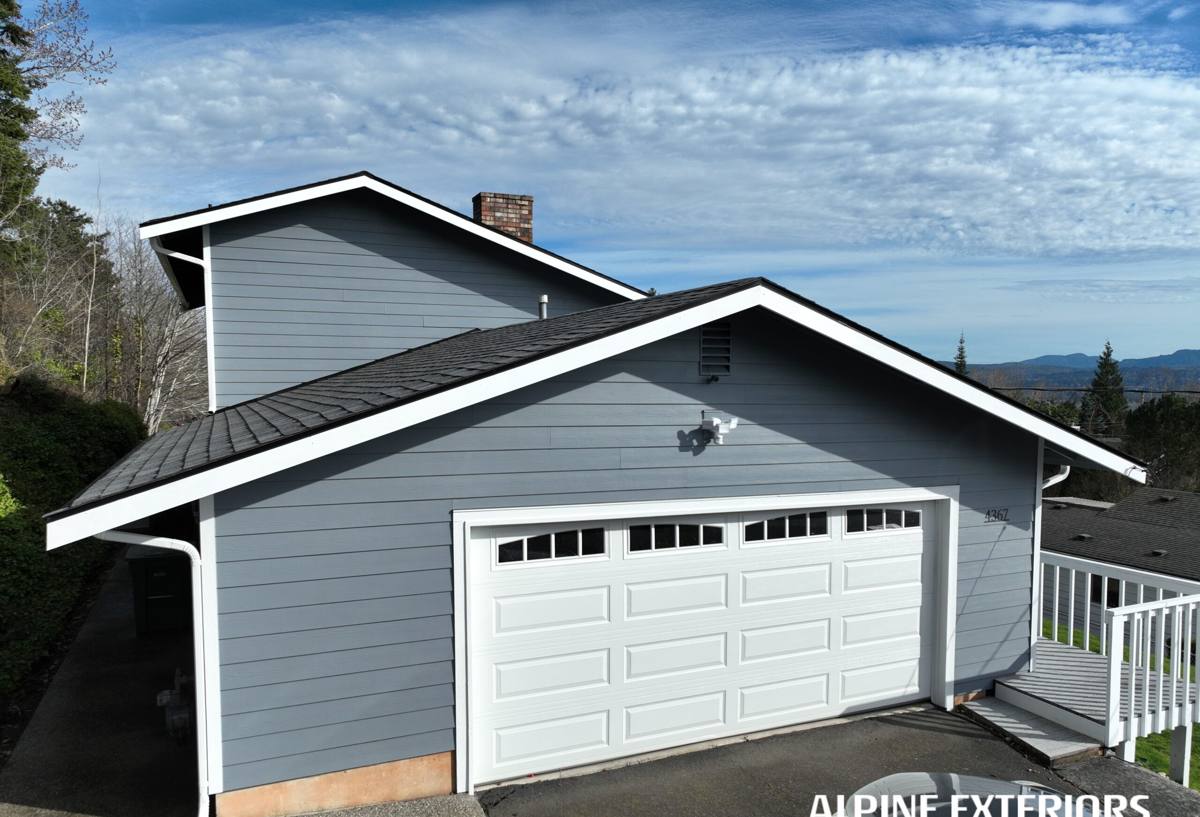
What Salt Air, Rain, and Moss Actually Do to a Roof
Salt Air
Airborne salt is corrosive to exposed metal — nail heads, flashing seams, gutter fasteners, and any exposed screws on roof-mounted equipment. Corrosion starts small: a rust bloom around a nail head, a pinhole in a flashing seam. Left alone, it opens a path for water long before the surrounding shingles look worn.
Driving Rain
Rain that falls straight down is rarely the problem. Rain that's pushed sideways by wind off the water finds its way under shingle tabs, behind poorly lapped flashing, and into any seam that was installed to shed water from above but not from the side. Roofs here need flashing and underlayment details built for wind-driven moisture, not just standard vertical drainage.
Moss and Organic Growth
Shade from surrounding trees plus a long damp season gives moss and algae more time to establish than they'd get in a sunnier, drier location. Moss holds moisture against the roofing surface, works its way under shingle edges as it grows, and can lift tabs enough to let water in even when the shingle itself is still structurally sound. It's one of the most common repair triggers we see in this neighborhood, and one of the most preventable.
Signs Your Roof Needs Repair Now
Most roof failures don't start as a hole — they start as small, fixable damage that gets ignored. Here's what we tell Point Whitehorn homeowners to watch for between inspections:
- Moss buildup along the north-facing slope or in valleys, especially anywhere shaded by trees
- Granules collecting in gutters or at downspout outlets
- Shingle tabs that look lifted, curled, or cracked at the edges
- Rust streaking below any metal flashing, vent boot, or exposed fastener
- Soft or discolored ceiling spots, especially near chimneys, skylights, or where two roof planes meet
- Daylight visible through the roof deck from inside the attic
- Gutters pulling away from the fascia or sagging under debris weight
- A musty smell in the attic that wasn't there before
Any one of these on its own doesn't necessarily mean a major problem. Several together, or any sign paired with an active leak, means it's worth a look before the next round of driving rain.
Common Point Whitehorn Repair Types
Most of the repair calls we run in this area fall into a handful of categories. What differs is the cause, and getting the cause right is what determines whether the fix lasts.
| Repair Type | Typical Local Cause | What a Correct Fix Involves |
|---|---|---|
| Flashing repair or replacement | Salt corrosion, wind lift, poor original lapping | Remove and replace the flashing section, re-lap correctly with the underlayment, reseal with appropriate materials |
| Moss and organic growth removal | Shade, sustained moisture, long moss season | Careful low-pressure removal, treatment to slow regrowth, inspection underneath for lifted or damaged shingles |
| Shingle or tab replacement | Wind-driven rain, UV and moisture cycling, granule loss | Match existing material where possible, replace underlayment beneath the damaged section, reseal tabs |
| Vent boot and penetration repair | Rubber boot cracking from age and weather cycling | Replace the boot or collar, check flashing integration, confirm the seal from all sides |
| Fastener and metal corrosion repair | Salt air exposure over time | Replace corroded fasteners with corrosion-resistant hardware, address any deck damage underneath |
| Gutter and drainage repair | Debris buildup, fascia pull-away, moss shedding into channels | Reattach or reinforce hangers, clear and correct pitch, confirm downspout flow |
How We Approach a Repair
1. Inspection Before Anything Else
We start on the roof, not with an estimate written from the ground. That means checking the affected area, the attic side where accessible, and any related flashing or penetrations nearby — a leak rarely stays contained to the exact spot where it shows up inside.
2. Finding the Actual Source
Water travels. A stain in one room can trace back to a flashing failure several feet away, or moss holding moisture against a shingle edge uphill from where the leak appears indoors. We trace the path before we touch anything, so the repair addresses the cause rather than the symptom.
3. An Honest Scope
We tell you what actually needs to happen — a targeted repair, a larger section replacement, or in some cases a conversation about whether repair still makes sense versus planning for replacement. We're not incentivized to oversell a repair into a bigger job than the roof needs.
4. The Repair Itself
Materials matched to the existing roof where possible, flashing details built for wind-driven rain, corrosion-resistant fasteners given the salt air exposure, and proper underlayment integration — not just a surface patch over a deeper problem.
5. A Straight Answer on What to Watch
Before we leave, you'll know what we did, why, and what (if anything) to keep an eye on going forward — including whether moss is likely to return in that area and what that means for maintenance timing.
Repair or Replace? How to Think About It
Not every roof problem in Point Whitehorn calls for a full replacement, and not every roof is a good candidate for another round of patches. The honest answer depends on a few factors.
| Factor | Leans Toward Repair | Leans Toward Replacement |
|---|---|---|
| Age of roofing material | Well within expected service life | At or past typical lifespan for the material |
| Extent of damage | Localized — one section, flashing, or penetration | Widespread granule loss, multiple failing sections |
| Underlying deck condition | Solid, no rot or soft spots found | Soft decking or rot found in more than one area |
| Repair history | First or infrequent issue in this area | Same area has needed repeated repairs |
| Moss and moisture pattern | Manageable with cleaning and minor fixes | Chronic moisture damage under multiple sections |
We'll walk you through where your roof falls on that spectrum honestly, including the trade-offs either way — there's no reason to replace a roof that has years of life left in it, and no reason to keep patching one that's past the point where repairs make financial sense.
Materials and Fasteners for Coastal Conditions
What goes into a repair matters as much as the workmanship. In a salt-air environment, we favor corrosion-resistant fasteners and flashing over standard galvanized hardware, since standard materials corrode faster this close to the water. We also pay close attention to underlayment coverage and lap direction on any repaired section, since a repair that looks right on the surface but doesn't account for wind-driven rain will fail again in the next storm. We're not chasing the cheapest fix — we're building the repair to hold up to the specific conditions this stretch of Birch Bay sees every winter.
Preventing the Next Repair Call
A well-executed repair buys you time, but a bit of maintenance in between visits stretches that time further. Keep gutters and downspouts clear so water isn't backing up under shingle edges. Trim back branches that keep a section of roof shaded and damp longer than the rest. Have moss addressed early, before it has time to lift shingle tabs or hold moisture against the surface through the wet season. And after any significant windstorm, a quick visual check — or a call to us — for lifted shingles or loosened flashing costs far less than waiting for a leak to show up indoors.
Why Local Experience in Point Whitehorn Matters
A roofing crew that mostly works inland jobs isn't necessarily thinking about salt corrosion on fasteners or wind-driven rain patterns when they price and execute a repair. We work this part of Whatcom County regularly, which means we already know what tends to fail first on a Point Whitehorn roof, what materials hold up here, and what a repair actually needs to include to last through the next moss season and the next winter storm cycle — not just look finished on the day we leave.
If you're dealing with a leak, storm damage, or a roof that just needs an honest look before winter, we're happy to come out, inspect it, and give you a straightforward assessment — no pressure, no inflated scope. Reach out for a free estimate using the form below.