 Birch Bay Roofing
 Windows in Point Whitehorn Work Harder Than Most
Point Whitehorn sits close enough to the water that its homes take on a different kind of weather than houses a few miles inland. Salt-laden air off the Strait, wind that drives rain sideways into west- and north-facing walls, and a wet season that stretches long into spring all put extra load on window assemblies. Frames, seals, and flashing details that would hold up fine in a sheltered Whatcom County neighborhood can start failing years earlier out here if they weren't installed with that exposure in mind.
This isn't about scare tactics — plenty of older windows in the area are still doing their job. But when a window replacement is done without accounting for salt air and driving rain, the failure usually shows up as a slow, hidden problem: moisture behind the trim, corrosion on hardware, or a frame that swells and sticks. Getting the job right the first time matters more here than it does in a lot of places.
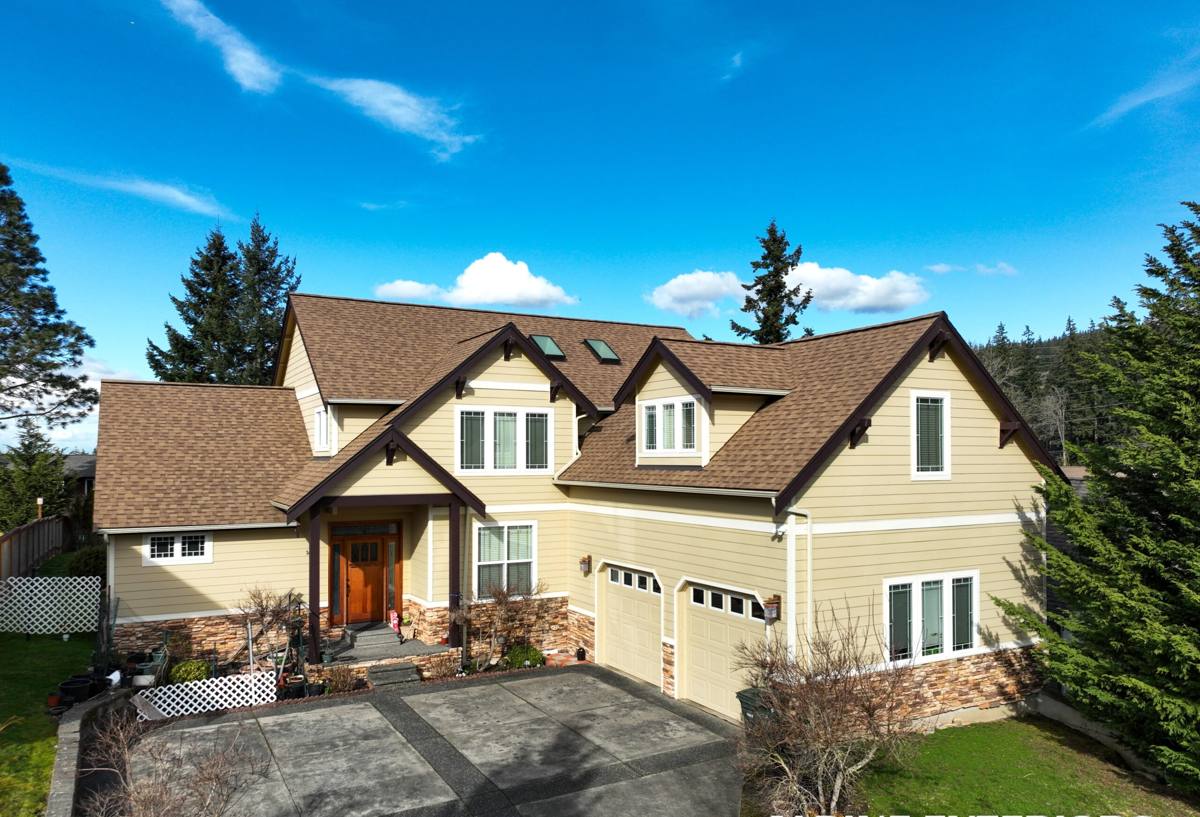
How Local Conditions Show Up in Aging Windows
If you're trying to decide whether it's time to replace windows on a Point Whitehorn home, look for these signs. None of them are unique to this area, but they tend to show up sooner here because of the combined effect of salt, wind, and rain.
- Fogging or moisture between panes on double-glazed units, meaning the seal has failed
- Sashes that are hard to open or close, often from swollen wood or a warped vinyl frame
- Visible corrosion or chalky white residue on aluminum or steel hardware
- Soft or discolored trim and sill areas, a sign water is getting behind the exterior finish
- Drafts you can feel on a windy day even with the window latched
- Paint or caulk that's cracking and peeling faster than it should on south- or west-facing walls
- Visible moss or algae buildup on sills and lower trim that stays damp for weeks at a time
Any one of these on its own might just need a repair. Several together, especially on the weather-exposed sides of the house, usually mean the window and its surrounding flashing have reached the end of their useful life.
What a Correct Window Replacement Actually Involves
Flashing and Water Management Come First
The window unit itself is only part of the job. In a driving-rain environment like Point Whitehorn, the flashing and water-management details around the opening matter as much as the window's quality rating. That means a proper sloped sill pan to direct any water that does get past the frame back outside, correctly lapped house wrap and flashing tape so water sheds downward and never behind the barrier, and sealant placed only where it should be — not as a substitute for physical flashing. A window installed with caulk as the primary defense against wind-driven rain will eventually leak. It's a matter of when, not if.
Frame Material Trade-Offs Near the Water
Material choice matters more here than in a sheltered inland yard. The table below covers the honest trade-offs we walk homeowners through.
| Frame Material | Behavior in Salt Air / Driving Rain | Maintenance Burden |
|---|---|---|
| Vinyl | Doesn't corrode; performs well if welded corners and reinforced sashes are used on larger units | Low — occasional cleaning, no repainting |
| Fiberglass | Very stable in temperature swings and moisture, holds paint well, resists warping | Low to moderate — best long-term option for exposed elevations |
| Wood (unclad) | Handsome but needs a sound exterior finish to keep water out; vulnerable on exposed walls | High — regular painting/sealing required |
| Wood-clad (aluminum or vinyl exterior) | Good option where wood interior look is wanted with a weather-resistant exterior shell, if cladding seams are detailed correctly | Moderate — clad exterior is low-maintenance, interior wood still needs occasional attention |
| Aluminum (uncoated or poorly finished) | Prone to corrosion and pitting in salt air over time; we don't recommend it for direct water exposure without a quality factory finish | Moderate to high depending on coating quality |
There's no single "best" material for every home — it depends on the elevation being exposed, the home's existing trim style, and the owner's tolerance for maintenance. We'll walk through the honest pros and cons for your specific walls rather than push one product line.
Glass and Weatherstripping for Wind-Driven Rain
Standard glazing packages are fine for sheltered sides of a house, but on walls that take direct wind and rain, we look at higher-performance weatherstripping and a sash design that resists air infiltration under gusty conditions, not just still-air lab conditions. Double- or triple-pane glass with a good low-E coating also helps cut down on condensation, which is a common complaint in coastal Whatcom County homes during the cold, damp months.
Our Process for a Point Whitehorn Job
1. On-Site Assessment
We look at each opening individually — orientation, existing flashing condition, sill and trim condition, and any signs of past water intrusion. Windows on the same house often need different treatment depending on which way they face.
2. Removal and Prep
Old units come out carefully so we can inspect the rough opening, sheathing, and framing underneath. This is where hidden moisture damage from years of driving rain sometimes turns up, and it's better to find and address it now than to seal it behind a new window.
3. Flashing, Installation, and Sealing
Sill pan flashing, house wrap integration, and window installation happen in the correct sequence — water management first, sealant second, never the reverse. Fasteners and hardware are chosen with salt-air corrosion resistance in mind.
4. Interior and Exterior Finish, Walkthrough
Trim is reinstalled or replaced, caulking lines are finished cleanly, and we walk the job with the homeowner, operating each window and pointing out anything worth knowing about care going forward.
What Drives Cost
We won't quote a number without seeing the home, but these are the main factors that move the price up or down on a Point Whitehorn window replacement.
| Factor | Effect on Cost |
|---|---|
| Number and size of openings | Larger and more windows increase labor and material cost proportionally |
| Frame material selected | Vinyl is typically the most budget-friendly; fiberglass and wood-clad options cost more upfront |
| Condition of existing flashing and framing | Hidden water damage found during removal adds repair work before installation can proceed |
| Wall exposure | Weather-exposed elevations often warrant upgraded flashing details, which adds labor time |
| Access and site conditions | Upper-story or hard-to-reach windows add setup and labor time |
| Trim and interior finish work | Matching existing trim profiles or painting adds cost beyond the window unit itself |
Living With Moss Season and Salt Air After Installation
A correct install significantly reduces future problems, but it doesn't eliminate the need for basic upkeep. Whatcom County's long wet season means moss and algae growth on sills and nearby trim is common, especially on shaded, north-facing walls. Rinsing sills and tracks periodically during moss season, keeping weep holes clear of debris, and doing a quick visual check of caulk lines once a year will go a long way toward protecting the investment. Salt air can also dull hardware finishes over time, so a light rinse after storm events helps keep vinyl and glass looking clean and keeps corrosion-prone hardware working smoothly.
Why Hiring a Crew That Already Works This Area Matters
Point Whitehorn's exposure isn't identical to Blaine, Ferndale, or the more sheltered parts of Birch Bay itself — even a few hundred yards of distance from open water changes how much wind-driven rain a wall actually sees. A crew that has installed windows across this specific stretch of coastline knows which elevations tend to take the worst of it, which older flashing details commonly fail, and which frame and glazing choices actually hold up here rather than just on paper. That local pattern recognition is hard to substitute for, no matter how good a contractor's general workmanship is.
We're a Birch Bay-based crew, and Point Whitehorn is part of our regular service area — not a stretch job we take occasionally. That means we're familiar with the area's building stock, common past workmanship shortcuts, and the kind of weather exposure your specific street likely sees.
Questions Worth Asking Before You Sign a Contract
- Does the quote include sill pan flashing and proper house wrap integration, or just the window unit and caulk?
- What frame material is being proposed, and why is it a good fit for this specific wall's exposure?
- Will the crew inspect the rough opening for hidden water damage before installing, and what happens if they find some?
- What's the warranty on both the window unit and the installation labor, and who do you call if something leaks?
- Has this crew worked in Point Whitehorn or a similarly exposed part of Whatcom County before?
If a contractor can't give a straight answer to these, that's worth noting before you commit.
If your windows in Point Whitehorn are showing their age, or you're planning ahead of the next stretch of storm season, we're happy to take a look and give you a straightforward, no-pressure estimate. Use the form below to get in touch.