 Birch Bay Roofing
 Why Point Whitehorn Decks Wear Out Faster Than People Expect
Homes in Point Whitehorn sit close enough to the water that salt-laden air is a daily fact of life, not an occasional nuisance. That air settles into every exposed surface of a deck — fasteners, flashing, the end grain of boards, the metal brackets holding everything together — and it accelerates corrosion in ways that inland decks never have to deal with. Add in Whatcom County's long stretch of driving rain and the moss season that follows it, and you have a structure that's under near-constant moisture pressure for much of the year.
Most deck failures we see out here aren't dramatic. They're slow: a ledger board that's been quietly absorbing water behind poorly flashed siding, joist hangers rusting from the inside out, or a substructure that looks fine on top but has gone soft underneath where nobody checks. By the time a deck feels spongy or a board cracks under normal weight, the damage usually goes deeper than the board itself.
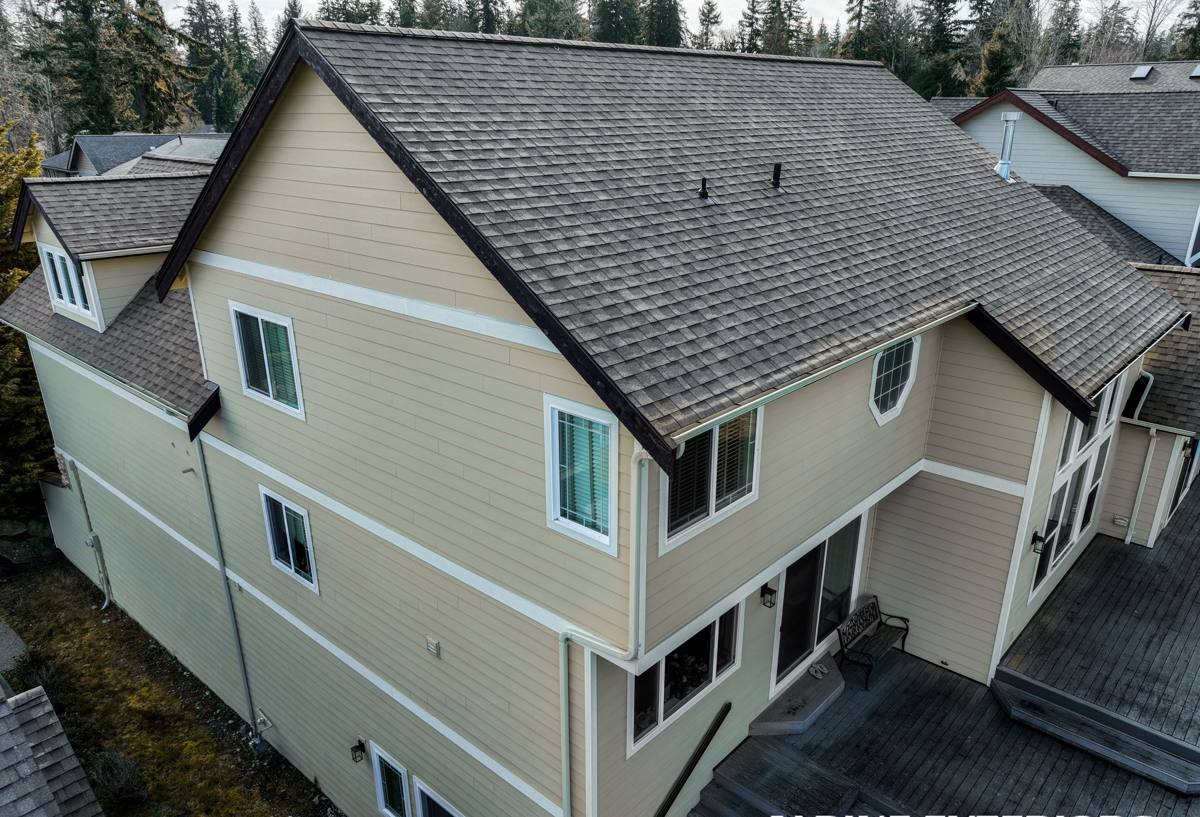
Signs a Point Whitehorn Deck Needs Replacement, Not Repair
Not every aging deck needs to be torn out. But there's a point where patching individual boards stops making sense — either because the framing underneath is compromised, or because the cost of ongoing repairs starts to rival a full rebuild. Here's what tells us a deck has crossed that line:
- Soft, spongy, or bouncy spots underfoot, especially near the house or stair landing
- Visible rot or dark staining at the ledger board where the deck meets the house
- Rust streaking from fasteners, joist hangers, or post bases
- Persistent moss or algae growth that regrows within weeks of cleaning
- Posts that wobble at the base, or footings that have shifted or heaved
- Multiple boards cupping, splitting, or popping nails across the deck rather than in one isolated area
If what you're seeing is limited to a handful of boards and the frame underneath is sound, repair is often the right call and we'll say so. Replacement makes sense once the structure itself — not just the surface — is in question.
What a Correct Deck Replacement Actually Involves
A deck replacement isn't just pulling up old boards and screwing down new ones. Done right, it's a rebuild of everything that keeps water out of the structure, with the visible decking as the last step, not the main event.
Ledger and Flashing
The connection between the deck and the house is the single most important detail on the whole project, and it's the one most likely to have failed on an older Point Whitehorn deck. Proper flashing — installed so water sheds away from the house rather than behind the siding — is non-negotiable. This is also where we most often find hidden rot once the old decking comes off.
Framing and Fasteners
Joists, beams, and posts need to be sized correctly for the span and load, not just matched to whatever was there before. In a marine climate, fastener choice matters as much as the lumber itself — stainless steel or high-corrosion-resistant coated hardware holds up where standard galvanized fittings will eventually rust and weaken.
Footings and Posts
If footings are undersized, poured too shallow, or have shifted with ground movement over the years, this is the point to correct it — not something to work around. A deck is only as stable as what's buried underneath it.
Decking Surface
The visible boards are what everyone notices, but they're the last thing installed and the easiest part to get right once the structure underneath is solid.
Choosing a Decking Material for a Salt-Air Climate
There's no single "best" decking material — there's a best material for how you use the deck, your maintenance appetite, and your budget. Here's how the common options actually perform in a Birch Bay and Point Whitehorn environment:
| Material | Salt Air / Moisture Behavior | Maintenance | Typical Lifespan Here |
|---|---|---|---|
| Pressure-treated wood | Prone to graying, splintering, and moss growth without upkeep | Annual cleaning and periodic sealing | 10–15 years |
| Cedar | Naturally rot-resistant but softens faster in constant damp shade | Regular sealing to hold color and resist moisture | 12–20 years |
| Composite decking | Handles moisture well; some early-generation boards were prone to moss/mildew in shaded, damp spots | Occasional washing, no sealing needed | 20–30 years |
| PVC / capped composite | Best moisture and salt-air resistance of the group; fully sealed surface | Low — occasional rinse | 25+ years |
We don't push one product on every homeowner. A shaded, moisture-heavy lot near the water often steers people toward composite or PVC simply because the maintenance burden of real wood in that setting is significant. But a sunnier, more exposed lot can do well with cedar or treated wood if the owner is willing to keep up with sealing. We'll walk your specific site with you before recommending anything.
Our Deck Replacement Process
- On-site evaluation — We inspect the existing deck, ledger connection, framing, and footings to determine what's actually driving the failure, not just what's visible from the top.
- Scope and material discussion — We walk through material options, structural needs, and any code or permit requirements specific to your property, so there are no surprises once work starts.
- Demolition — Old decking, framing, and hardware are removed, with the ledger and house connection inspected closely once it's exposed.
- Structural rebuild — New framing, corrosion-resistant fasteners, and properly detailed flashing go in before a single deck board is placed.
- Decking installation — Boards, rail systems, and stairs are installed to your chosen material's specifications.
- Final walkthrough — We go over the finished deck with you, including any maintenance guidance specific to the material you chose.
Permits and Whatcom County Requirements
Deck replacements in unincorporated Whatcom County — which covers Point Whitehorn — often require a building permit depending on the deck's height, size, and whether it's structurally attached to the house. Requirements can also shift based on setbacks and site conditions unique to shoreline-adjacent properties. Rather than guess, we confirm what applies to your specific property before work begins and handle the permitting conversation as part of the project, so you're not left navigating county requirements on your own.
What Drives the Cost of a Deck Replacement
| Factor | Why It Matters |
|---|---|
| Deck size and shape | Square footage and the number of angles, levels, or stairs all add labor |
| Decking material | Composite and PVC cost more upfront than wood but reduce long-term maintenance |
| Framing and footing condition | Undersized or damaged substructure adds rebuild scope beyond the surface |
| Railing style | Cable, glass, and metal rail systems cost more than standard wood rail |
| Site access | Sloped, waterfront, or tight-access lots can add time and equipment needs |
| Permitting | Attached, elevated, or larger decks typically require permit fees and inspection |
Because every property and material choice is different, we give firm numbers after walking your specific deck rather than quoting broad averages that don't hold up once we see the site.
Why a Crew That Already Works Point Whitehorn Matters
A deck built to a generic spec sheet doesn't account for what this specific stretch of Whatcom County coastline does to a structure over time. Knowing which connections tend to fail first in salt air, which fastener grades are worth the extra cost here, and how much shade and moss pressure a given lot actually gets changes how a deck should be built — not just what it's built from. A crew that's replaced decks throughout Birch Bay and the surrounding shoreline communities has already seen how different materials and details hold up locally, rather than learning it on your project.
There's also a practical side to hiring local: shorter response times if something needs a follow-up look, familiarity with Whatcom County permitting, and accountability to a reputation built in the community you live in — not a crew passing through from out of the area.
Keeping a New Deck in Good Shape
Whatever material you choose, a few habits go a long way in this climate:
- Sweep debris off the surface regularly — trapped leaves and needles hold moisture against the boards
- Rinse or wash the deck at least once or twice a year to interrupt moss and algae growth
- Check railings and stair connections annually for looseness or corrosion
- Keep gutters and downspouts near the deck clear so runoff isn't draining directly onto it
- Reseal wood decking on the schedule appropriate to the product — don't wait until it visibly grays
- Have the substructure glanced at every few years, even if the surface looks fine
If your deck is showing its age or you're just not sure whether it needs repair or full replacement, we're happy to take a look and give you a straight answer. Use the form below to request a free, no-pressure estimate — there's no obligation, and we'll tell you honestly what your deck actually needs.