 Birch Bay Roofing
 Living With Coastal Weather in Point Whitehorn
Point Whitehorn sits right up against the water in Whatcom County, which means homes here take a different kind of beating than houses a few miles inland. Salt-laden air off the Strait of Georgia works on metal hardware and fasteners year-round. Wind-driven rain doesn't just fall straight down here — it comes in sideways during winter storms and finds every weak seam around a window opening. And the long stretch of wet, low-light months every fall through spring keeps siding, trim, and window sills damp long enough for moss and mildew to take hold. None of this is dramatic on its own, but stacked together over years, it's exactly the kind of exposure that shortens the life of a poorly installed window and barely touches a properly installed one.
This page is about one job, done right, in one place: window installation for homes in and around Point Whitehorn. Not a general overview of windows everywhere — what actually matters for a house sitting in this specific climate.
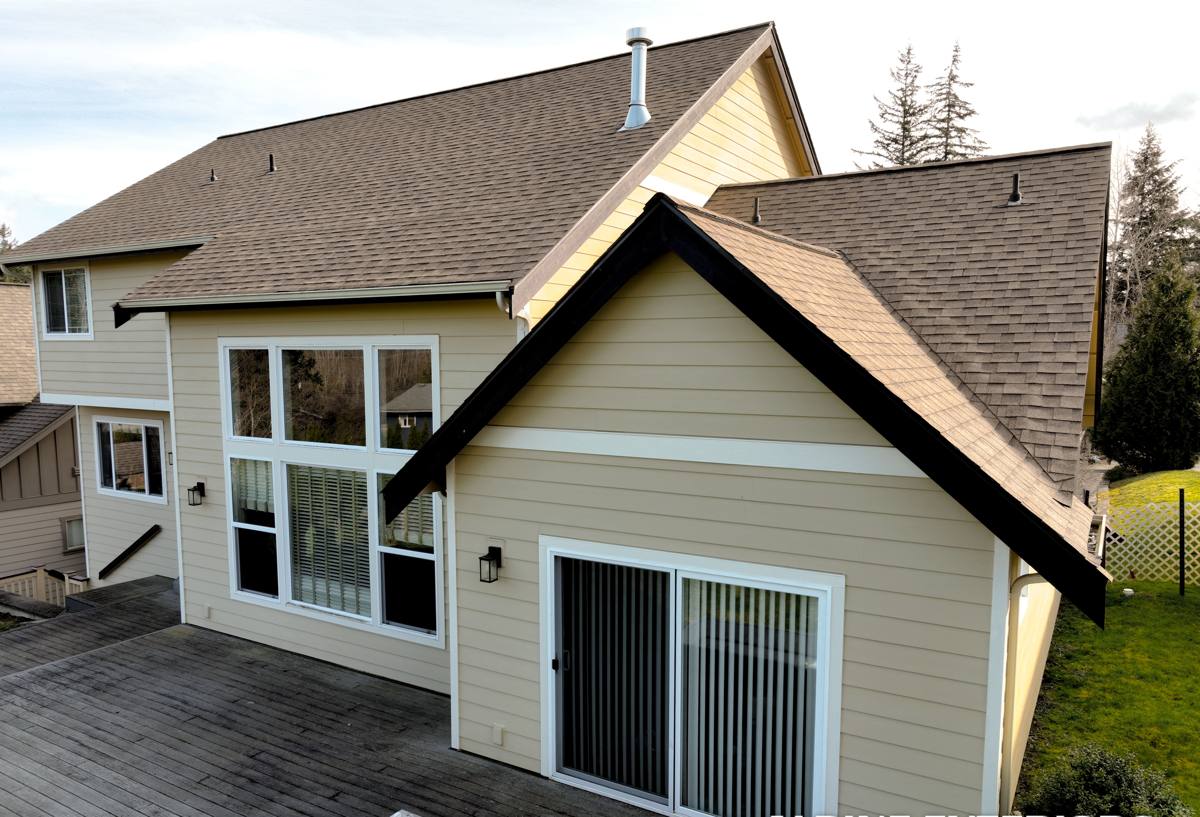
What Point Whitehorn Homes Need From Their Windows
Salt Air and Corrosion
Proximity to salt water accelerates corrosion on exposed metal — hinges, locks, screws, and older aluminum frames all wear faster here than they would twenty miles inland. This doesn't mean every metal component is a problem; it means the hardware and fasteners chosen for a coastal install need to be suited for that exposure, and cheap or mismatched hardware is one of the first things to fail.
Driving Rain and Wind Exposure
A window doesn't leak because water touches it — it leaks because water finds a path in through a gap, a bad seal, or flashing that was skipped or installed backwards. Wind-driven rain pushes water sideways and even upward under trim, so an installation that would hold up fine in a sheltered inland yard can fail within a season on an exposed coastal lot. The install method has to account for wind pressure, not just rainfall.
Moss Season and Moisture Cycling
Whatcom County's long wet season means window sills, trim, and the siding around openings stay damp for extended stretches. That constant wet-dry cycling is what lets moss and mildew gain a foothold on wood trim and sills, and it's also what turns a small, hidden gap in flashing into rotted sheathing a few years down the road. The goal of a good installation isn't to make the window waterproof — it's to make sure any water that does reach the opening has somewhere to go, rather than somewhere to sit.
What a Correct Window Installation Actually Involves
Removing the Old Window Without Hidden Damage
The first real test of a window job happens before the new window ever shows up — when the old one comes out. That's the point where we can actually see the condition of the framing, sheathing, and any existing flashing. On a coastal home, it's common to find some degree of moisture staining or soft wood around older openings, especially on walls that face the prevailing wind and rain. Finding that early and repairing it properly is part of doing the job right, not an upsell.
Flashing and Water Management
Flashing is the unglamorous part of window installation that determines whether the job lasts. It's the layered system of water-resistive barrier, sill pan, and window flashing tape that directs any water that gets past the window itself back out and away from the wall assembly, instead of letting it pool at the sill or run down inside the wall cavity. On a house exposed to driving rain the way Point Whitehorn homes are, this step isn't optional or interchangeable — it has to be sequenced correctly, shingle-style, so every layer overlaps the one below it.
Sealing, Insulating, and Finishing
Once the window is set, plumb, level, and square, the gap between the window frame and the rough opening gets insulated and air-sealed — not just caulked shut on the outside. Exterior sealant is the last line of defense, not the only one. A window that relies entirely on a bead of caulk to stay dry is a window that's going to leak eventually, especially once that caulk ages and starts to crack in a few years of coastal sun and salt exposure.
Choosing the Right Window for a Coastal Whatcom County Home
There's no single "best" window material for every home — it depends on budget, the home's style, and how much maintenance the owner wants to take on. Here's how the common framing options generally compare for a coastal setting like Point Whitehorn:
| Frame Material | Coastal Durability | Maintenance | Typical Cost Tier |
|---|---|---|---|
| Vinyl | Good — won't rust or corrode; UV-stable options hold up well | Low — occasional cleaning | Lower to mid |
| Fiberglass | Very good — dimensionally stable, resists moisture and salt exposure well | Low | Mid to higher |
| Wood (clad exterior) | Depends heavily on cladding quality and installation; interior wood needs protection from moisture | Higher — periodic finish and seal maintenance | Higher |
| Aluminum | Prone to corrosion and condensation in salt air unless specifically treated for coastal use | Moderate to high | Varies |
We'll talk through these trade-offs honestly during an estimate rather than pushing one product line. What matters more than the brand name on the window is whether the installation around it is done correctly — a mid-tier window installed right will outperform a premium window installed carelessly.
Our Point Whitehorn Window Installation Process
- On-site assessment. We look at each opening, the home's exposure to wind and rain, and the condition of the existing framing and siding.
- Measuring and ordering. Openings are measured precisely so windows fit correctly the first time, with material and style discussed based on your home and budget.
- Careful removal. Old windows are removed with attention to the surrounding framing, checking for any hidden moisture damage before it's covered back up.
- Repair as needed. Any soft or damaged sheathing found during removal gets addressed before the new window goes in — not patched over.
- Flashing and installation. Sill pan, water-resistive barrier, and flashing are installed in the correct sequence, then the window is set plumb, level, and square.
- Insulation, sealing, and finish work. Gaps are properly insulated and sealed, and exterior trim is finished to match the home.
- Final walkthrough. We check operation, sealing, and cleanup with you before considering the job done.
Signs Your Windows Are Losing the Battle With the Climate
A lot of window problems in this area show up gradually. Worth checking for:
- Soft, discolored, or peeling wood trim or sill around the window frame
- Persistent condensation between the glass panes, which usually means a failed seal
- Drafts or noticeable temperature difference near the window on a windy day
- Difficulty opening, closing, or locking the window smoothly
- Visible gaps, cracked caulking, or daylight around the frame edges
- Moss or dark staining building up on the sill or surrounding trim
- Rising heating bills without another clear explanation
One or two of these on their own aren't necessarily urgent. Several at once, or any sign of soft wood, is worth having looked at before it spreads into the wall framing.
What Affects the Cost of Window Installation Here
| Factor | Why It Matters |
|---|---|
| Number of windows | Per-window cost typically drops with larger jobs due to shared setup and labor |
| Full-frame vs. insert replacement | Full-frame replaces down to the rough opening and framing; inserts fit into the existing frame and cost less but depend on that frame being sound |
| Framing material and glass package | Vinyl, fiberglass, and wood-clad options span a wide price range, as do glass upgrades |
| Condition of existing framing | Hidden rot or moisture damage found during removal adds repair scope |
| Trim and siding work | Matching or repairing exterior trim and siding around the new opening |
| Access and story height | Second-story or hard-to-access windows take more time and equipment |
We'll give you a real, itemized number after seeing the actual openings — not a rough guess based on square footage alone.
Why a Local Point Whitehorn Crew Matters
Window installation isn't identical everywhere in Whatcom County. A crew that regularly works this stretch of coastline already knows which walls tend to take the brunt of the wind, how quickly moss builds up on north-facing trim here, and what level of flashing detail actually holds up against driving coastal rain versus what merely passes on paper. That local pattern recognition is hard to get from a crew that mostly works inland or is passing through the area for a single job. It also means faster response if something needs a follow-up look after a hard storm, and a crew that's still around — and still local — years after the install.
Keeping New Windows Performing in This Climate
A correctly installed window still benefits from a little upkeep in a salt-air, high-moss environment. Rinsing accumulated salt residue off frames and hardware periodically helps slow corrosion on metal components. Keeping sills and tracks clear of moss, leaves, and debris prevents moisture from sitting against the frame. Checking exterior caulking once a year and touching it up before it fully cracks catches small gaps before they become active leaks. None of this is heavy maintenance — it's the kind of occasional attention that lets a well-installed window go the distance in this climate instead of just the average one.
If your windows in Point Whitehorn are showing their age, letting in drafts, or you're planning ahead for a remodel, we're happy to take a look and talk through honest options — no pressure, no upsell script. Reach out using the form below for a free estimate.