 Birch Bay Roofing
 Siding Repair for Point Whitehorn Homes
Point Whitehorn sits along the shoreline stretch of Birch Bay, out where the bluffs and marine shoreline take the full brunt of whatever comes off the water. Homes here deal with a rougher combination of weather than most inland Whatcom County properties: salt-laden air moving off the Strait, driving rain that gets pushed sideways into wall assemblies rather than falling straight down, and a moss and mildew season that can run for most of the year on shaded or north-facing walls. That combination is hard on siding, and it's exactly the kind of exposure where a small, ignored problem turns into a much bigger repair within a season or two.
We repair siding for homes throughout the Point Whitehorn area, and we install and repair with James Hardie fiber cement exclusively. This page is specifically about siding repair in this shoreline setting — what typically goes wrong out here, what a correct repair actually involves, and how we decide between patching a section and recommending something more.
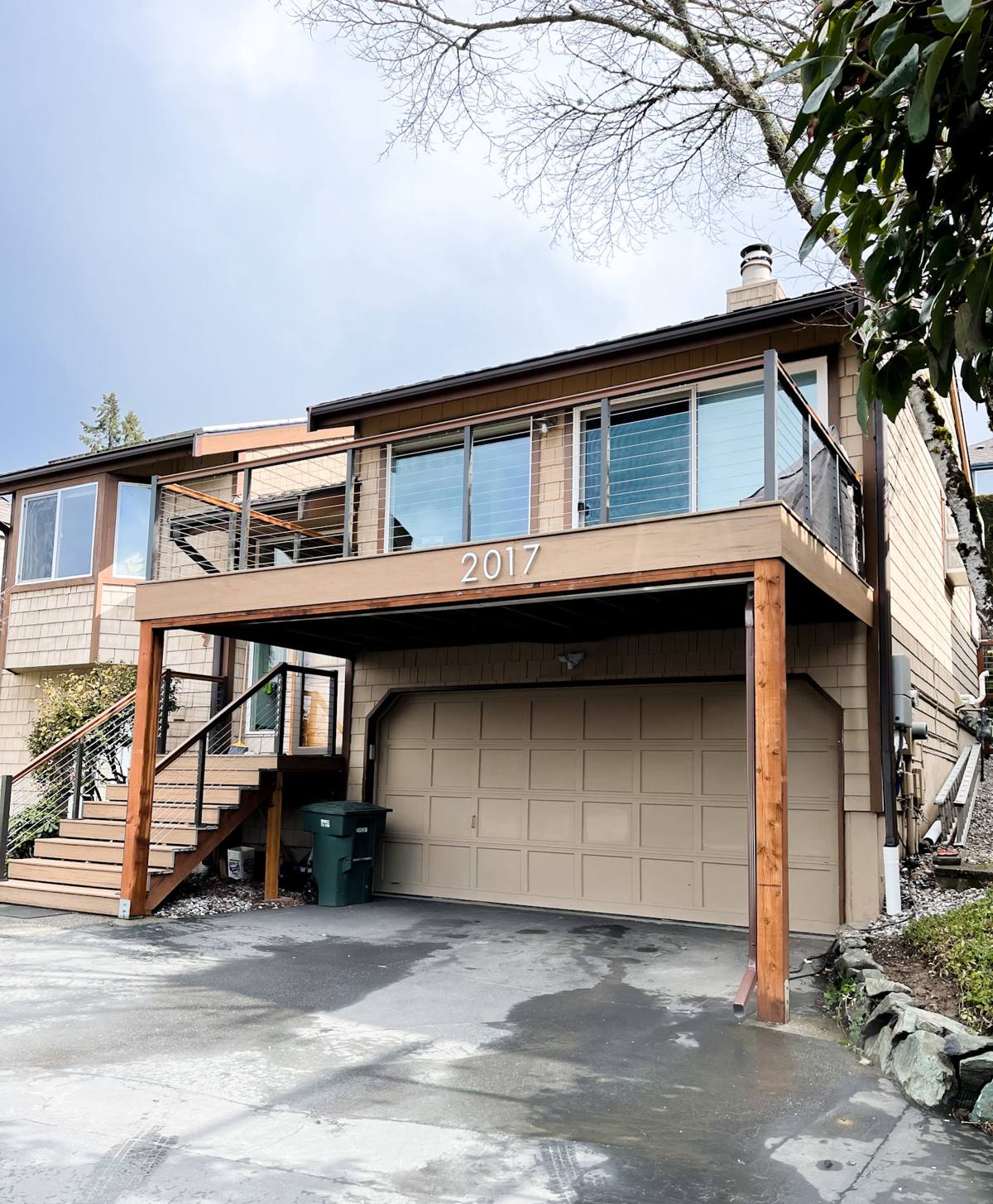
What This Climate Does to Siding Out Here
Salt Air and Bluff-Top Exposure
Being close to the water means more direct salt exposure than a property set back a few miles inland. Salt accelerates corrosion of fasteners, flashing, and any exposed metal trim, and it can break down a weak or worn finish faster than a drier climate would. On a repair, that means we're not just patching visible siding damage — we're checking the fastener and flashing hardware underneath it, because corroded hardware is often the real reason a section failed in the first place.
Driving Rain and Wind-Driven Water Intrusion
Shoreline exposure means more wind, and wind-driven rain doesn't behave like a normal rainstorm. It gets forced sideways into seams, corners, and anywhere flashing is doing less than it should. That's a different kind of moisture load than a simple annual rainfall total suggests, and it's why siding failures on a Point Whitehorn home often show up first at joints, trim intersections, and window and door surrounds rather than in the middle of a flat wall section.
A Long Moss and Mildew Season
Mild temperatures, persistent shoreline moisture, and shaded wall areas add up to a moss and mildew season that can stretch across most of the year on north-facing and tree-shaded walls. It starts as staining or green growth on the surface, but sustained organic growth holds moisture directly against the siding and substrate underneath, which is exactly the condition that leads to hidden rot behind an otherwise normal-looking wall.
Signs Your Siding Needs Repair
Most siding repair calls we get in this area start with something a homeowner noticed during a walk around the house, not a full-blown emergency. Catching these early is what keeps a repair a repair instead of turning it into a full re-side.
- Soft or spongy spots when you press on a section of siding, especially near the bottom courses or around window sills
- Visible cracking, chipping, or a section that's come loose at a seam or corner
- Persistent moss or dark staining on shaded or north-facing walls that keeps coming back after cleaning
- Paint or finish that's peeling, chalking, or bubbling in one localized area rather than evenly across the whole house
- Water staining on interior walls or ceilings near an exterior wall, particularly after a windy storm
- Gaps opening up at trim boards, window casing, or corner joints
- Fasteners that are visibly rusted, backed out, or staining the siding around them
What a Correct Siding Repair Actually Involves
Diagnosing the Real Problem Before Patching
Visible siding damage is often a symptom, not the cause. A cracked board near a window might trace back to a flashing detail that's letting water track behind the wall, and simply swapping the cracked board without fixing the flashing means the same failure shows up again in a year or two. Before we replace anything, we look at what's actually driving the damage — grade clearance, flashing condition, house wrap integrity, and how water is moving around that section of wall — so the repair addresses the cause and not just what's visible from the driveway.
Matching Material and Finish
Because we work exclusively in James Hardie fiber cement, a repair on an existing Hardie-sided home is straightforward to match — same product line, same profile, and a ColorPlus finish that's designed to match consistently across replacement boards. If a home has an older or different siding product, we'll be upfront about what a true match looks like versus what will always read as a visible patch, and we'll walk through the honest options rather than pretending a mismatched repair will disappear.
Flashing and Water Management During Repair
Any time siding comes off, it's an opportunity to check and correct the flashing and drainage details behind it — something that's easy to skip on a quick patch job but matters enormously in a wind-driven rain climate like this one. We reseal and re-lap flashing as needed, confirm proper drainage behind the repaired section, and make sure the new material ties into the existing wall assembly the way it's supposed to, not just cosmetically over the top of it.
Repair vs. Replacement: How We Make the Call
| Situation | Typical Approach | Why |
|---|---|---|
| Isolated impact damage, one or two boards cracked | Targeted repair, matched to existing siding | Localized damage with sound siding elsewhere doesn't justify a full tear-off |
| Failed flashing at a single window or corner | Repair the affected section, correct the flashing detail | The problem is a detail failure, not a material-wide issue |
| Isolated moss or staining on one wall | Cleaning plus inspection; repair only if substrate is affected | Surface growth alone doesn't always mean structural damage underneath |
| Soft spots or rot found in multiple areas | Broader repair or partial re-side of affected walls | Recurring failure across several areas usually points to a systemic moisture problem |
| Aging non-Hardie siding nearing end of service life | Full replacement discussion | Patching an older product that's failing broadly usually just delays a bigger job while hidden damage spreads |
We'll always tell you honestly which category a given situation falls into. A lot of Point Whitehorn homes genuinely just need a targeted repair, and there's no reason to sell someone a full re-side when a section repair, done correctly, solves the actual problem.
Why We Only Repair and Install With James Hardie Fiber Cement
We used to work with a wider range of siding products. We narrowed to one system after seeing, repeatedly, which materials held up to this kind of shoreline exposure and which ones turned into recurring repair calls. On a property this close to the water, that difference matters more than it does a few miles inland.
- Non-combustible core: Fiber cement doesn't feed a fire the way wood-based siding products can.
- Factory-applied ColorPlus finish: The color is baked on under controlled factory conditions rather than brushed on in the field, which holds up far longer against fading, chalking, and salt exposure than site-applied paint.
- Climate-engineered HZ product lines: Hardie's HZ5 formulation is built for regions with sustained moisture exposure, which fits a shoreline property like this well.
- Dimensional stability: Fiber cement doesn't swell, cup, or warp the way engineered wood siding can after repeated wet-season cycles, which means repairs stay isolated instead of spreading.
- Strong transferable warranty: Hardie backs its products with a solid warranty structure when installation follows spec, which also matters when a future repair is being matched into existing siding.
We don't install or repair with LP SmartSide, vinyl siding, Cemplank, Allura, primed spruce, or cedar. Each has a place in the broader market, and there are homeowners elsewhere who are satisfied with them. But we made a professional decision to stand fully behind one system rather than offer materials that, in our experience, shift more long-term maintenance risk onto the homeowner — especially on a shoreline exposure that doesn't forgive shortcuts.
Our Siding Repair Process in Point Whitehorn
We start with an on-site inspection of the damaged area and the surrounding wall, checking for how far water may have already tracked behind the visible damage. From there we give a clear, written explanation of what we found and what it will take to fix it properly — whether that's a straightforward section repair or something broader. We handle flashing, drainage, and fastener corrosion resistance as standard parts of any repair in this climate, not as optional add-ons, because those are exactly the details that determine whether a repair holds for years or fails again in the next storm season.
Why Hiring a Crew That Already Works Point Whitehorn Matters
A contractor who works this stretch of shoreline regularly already knows how salt air, wind-driven rain, and prolonged shade behave differently here than they do even a short drive inland. That familiarity shows up in the small decisions during a repair — which fastener grade to use, how much extra flashing attention a given corner needs, whether a wall's history of moss growth points to a deeper moisture issue. Those are the kinds of judgment calls that come from having actually worked on homes in this exact setting, not from a general siding background applied to an unfamiliar climate.
A Simple Checklist Before Hiring for Siding Repair
- Ask whether they're diagnosing the underlying cause of the damage or just patching what's visible
- Confirm current Washington contractor licensing and active insurance
- Ask how they'll match material, profile, and finish to your existing siding
- Ask specifically about their experience with shoreline or waterfront exposure, not just general siding work
- Get a written scope of work before anything is signed, including what happens if hidden damage is found once siding comes off
Cost Factors for Siding Repair Near the Water
| Factor | What It Affects | Why It Matters Here |
|---|---|---|
| Extent of hidden moisture damage | Whether the job stays a surface repair or grows once opened up | Shoreline wind-driven rain often pushes damage further behind the wall than it appears from outside |
| Material match availability | How seamlessly new sections blend with existing siding | Matching profile and finish matters more visually on a smaller repair than a full re-side |
| Flashing and drainage correction | Labor scope beyond the visible board replacement | Fixing the water intrusion source, not just the symptom, is what makes a repair actually last |
| Fastener and hardware condition | Whether hardware needs replacing along with siding | Salt air accelerates corrosion on fasteners and metal trim faster than inland exposure |
| Access and site conditions | Labor time and staging needs | Bluff-top and shoreline lots can have more limited or uneven access than a standard in-town lot |
If you're seeing damage, staining, or soft spots on your Point Whitehorn home's siding, we're glad to take a look and give you an honest read on what it actually needs. Reach out using the form below for a free, no-pressure estimate.