 Birch Bay Roofing
 Roof Replacement for Point Whitehorn Homes
Point Whitehorn sits close enough to the water that its homes take a different kind of weathering than roofs even a few miles inland in Whatcom County. Salt-laden air off the Strait of Georgia, wind-driven rain that finds every gap in flashing, and a moss season that can run most of the year all shorten the working life of a roof here. When a roof in this area needs replacing, it's rarely one single failure — it's usually the cumulative effect of that coastal exposure finally catching up with materials that were never quite matched to it in the first place.
This page covers what roof replacement actually involves for a Point Whitehorn property: what the climate demands, how to tell a roof is genuinely due, what a correctly done tear-off and install looks like, and how our process works from first look to final walkthrough.
What Point Whitehorn's Climate Does to a Roof
Three things drive roof wear in this part of Whatcom County, and Point Whitehorn gets a concentrated dose of all three.
Salt Air
Airborne salt corrodes exposed metal faster than it would inland — nails, flashing, vent stacks, gutter hardware. Uncoated or lower-grade fasteners can start rusting years before they would at a site further from the water. This is a bigger factor in material and fastener selection here than it is for most of the rest of the county.
Driving Rain
Storms coming off the water don't just fall straight down — they drive sideways under wind gusts, which pushes water into laps, seams, and flashing details that would stay dry in a calmer rain. A roof here has to shed water that's actively being pushed uphill and sideways, not just downhill.
Moss and Sustained Moisture
Combine the Pacific Northwest's long wet season with tree cover common around Birch Bay, and you get moss that can establish itself on a roof in a single season if the surface holds moisture. Moss isn't just cosmetic — it lifts shingle edges, holds water against the roof deck, and accelerates granule loss on asphalt shingles.
Signs Your Roof Is Due for Replacement
Not every roof problem means a full replacement — plenty of issues are legitimate repairs. But there's a point where patching stops making financial sense and a full replacement is the honest recommendation. Look for:
- Shingles that are cupping, curling, or losing granules in patches rather than evenly across the roof
- Moss buildup that returns within a season or two of cleaning, especially on north-facing slopes
- Soft spots or noticeable sagging when walked on or viewed from the ground
- Daylight visible through the roof deck from the attic, or damp insulation after a storm
- Flashing around chimneys, skylights, or valleys that's rusted, lifted, or was clearly patched with sealant rather than properly reworked
- A roof approaching or past the manufacturer's rated lifespan for its material, especially if it was never upgraded for coastal exposure
- Granules collecting in gutters in noticeable quantities, a sign the shingle surface is breaking down
If you're seeing two or more of these, it's worth having someone look at the whole system rather than chasing individual repairs.
Choosing Materials for a Coastal Whatcom County Roof
Material choice matters more here than in a drier, inland climate. The table below is a general comparison — actual performance depends on installation quality and maintenance, not just the product.
| Material | How It Handles Salt Air | How It Handles Driving Rain | Moss Resistance |
|---|---|---|---|
| Standard asphalt shingle | Fair — depends on fastener grade | Good with proper underlayment | Low unless treated (algae-resistant granules help) |
| Architectural/laminate shingle | Fair to good | Good — thicker profile sheds wind-driven rain better | Moderate, better with AR granules |
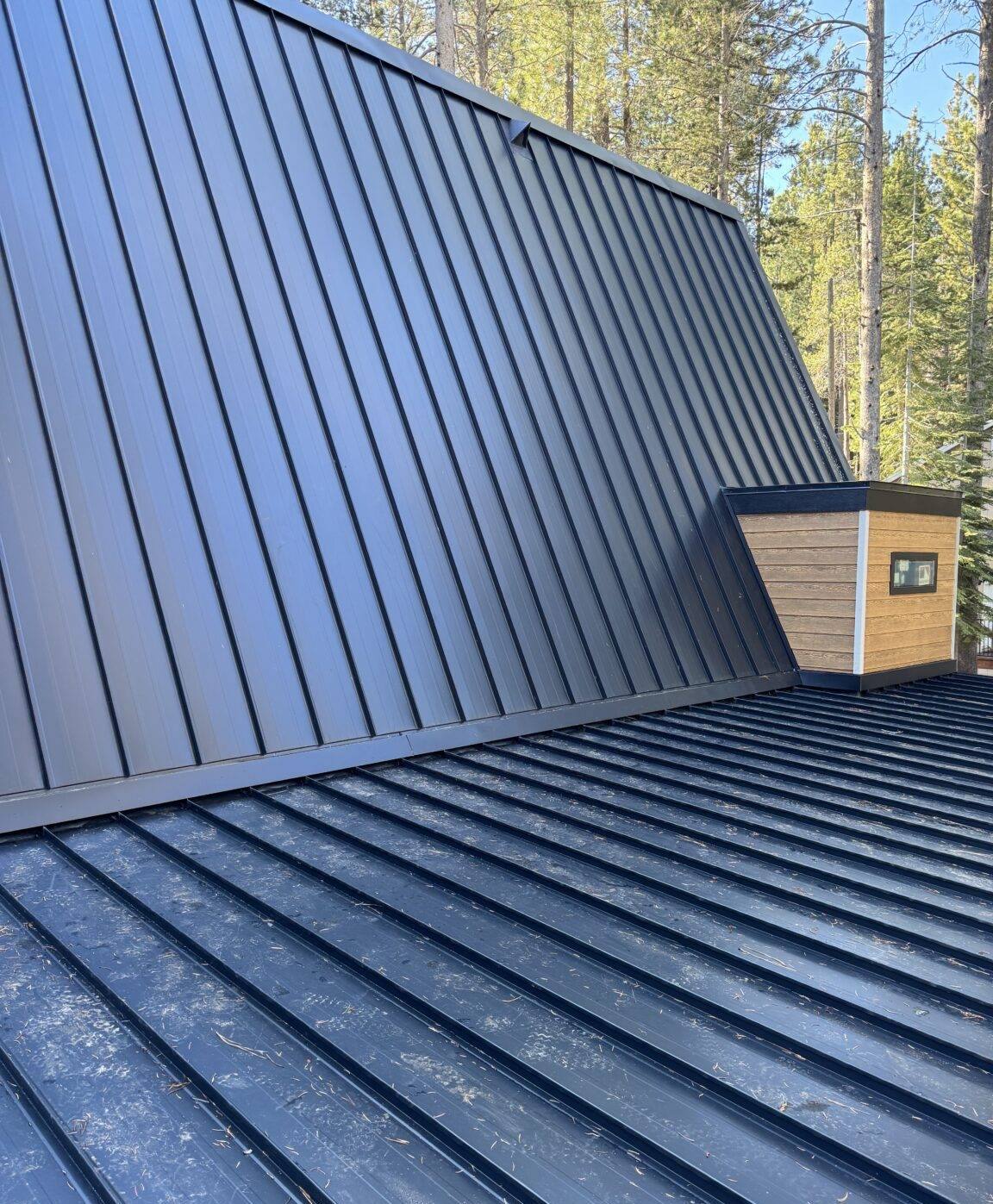
| Standing seam metal | Good with coated/marine-grade fasteners | Very good — fewer seams for water to enter | High — smooth surface resists moss establishment |
| Cedar shake | Requires diligent maintenance near salt air | Good when properly installed and ventilated | Low without regular treatment |
We don't push one material as universally "best" — we walk through the trade-offs (upfront cost, maintenance burden, appearance, warranty terms) against your specific roof and exposure, and let you make the call with full information.
What a Correct Roof Replacement Actually Involves
A roof replacement is more than swapping old shingles for new ones. Done right, it addresses everything underneath the visible surface, which is exactly what determines how the roof handles this climate over the next 20-plus years.
Full Tear-Off
We remove the existing roofing down to the deck rather than layering over it. This lets us actually see the condition of the decking and catch rot, soft spots, or prior water damage that would otherwise get sealed in under the new roof.
Deck Repair
Any damaged or delaminated decking gets replaced before anything new goes down. Installing new roofing over a compromised deck is one of the most common causes of early failure, and it's not something that shows up in a quick visual estimate — it only shows up once the old roof is off.
Underlayment and Ice/Water Protection
Given how much wind-driven rain this area sees, we pay particular attention to underlayment coverage at eaves, valleys, and any low-slope transitions — the spots where water is most likely to get pushed backward under standard shingle coverage.
Flashing
Flashing around chimneys, skylights, walls, and valleys is where most roof leaks actually originate, not in the field of the roof itself. We install new flashing rather than reusing old pieces, and we use corrosion-resistant materials given the salt exposure in this area.
Ventilation
Proper intake and exhaust ventilation keeps moisture from building up in the attic, which matters for both the roof deck's longevity and moss prevention from the underside. A roof that's shedding water well on the outside but trapping moisture inside will still fail early.
Our Process, Start to Finish
- On-site assessment — we inspect the roof, attic, and any problem areas you've noticed, and give you a straight answer on whether repair or replacement makes sense.
- Written estimate — a clear scope of work and price, with material options laid out so you're not guessing at trade-offs.
- Scheduling around weather — we plan tear-off around forecasted dry windows where possible, since an open roof deck and Whatcom County rain don't mix.
- Tear-off and deck inspection — old roofing removed, deck condition assessed and repaired as needed.
- Installation — underlayment, flashing, ventilation, and the finish material installed to manufacturer spec and matched to this site's exposure.
- Cleanup and walkthrough — job site and yard cleared of debris and old material, magnet-swept for nails, and a final walkthrough so you know exactly what was done.
Cost Factors
Every roof is different, so we don't quote prices without seeing the actual job — but these are the main factors that move the number up or down:
| Factor | Why It Matters |
|---|---|
| Roof size and complexity | More valleys, dormers, and roof planes mean more flashing detail and labor |
| Deck condition | Rotted or soft decking found during tear-off adds repair cost not visible in an initial estimate |
| Material choice | Standing seam metal and cedar shake cost more upfront than asphalt shingle; each has different long-term maintenance costs |
| Access | Steep pitches or limited equipment access can add labor time |
| Tear-off layers | Removing multiple existing layers of roofing takes longer than a single-layer tear-off |
Why a Crew That Already Works Point Whitehorn Matters
A roofer who's worked this specific stretch of Birch Bay coastline already knows which fastener grades hold up to the salt air here, which slopes tend to hold moss longest, and where wind-driven rain typically finds its way into a poorly detailed roof. That's not something you get from a general roofing background — it comes from having actually replaced and repaired roofs in this exact microclimate. It also means we're not guessing at weather windows or scrambling to source materials suited to coastal exposure after the fact; that planning happens before the job starts.
After Your New Roof Goes On
A new roof still needs some upkeep in this climate, especially in the first few years. Keep gutters clear so water isn't backing up under the eaves, have moss growth addressed before it establishes rather than after, and have flashing points checked periodically, particularly after major storms. A roof installed correctly for Point Whitehorn's conditions will need far less intervention than one that wasn't — but "none at all" isn't realistic anywhere on this coastline.
If your roof is showing wear, or you just want an honest opinion on whether it's a repair or a replacement situation, we're happy to take a look. The estimate is free, there's no pressure, and you'll get a straight answer either way — just fill out the form below to get started.