 Birch Bay Roofing
 Roofing Cottonwood Beach: A Different Set of Conditions
Cottonwood Beach sits right up against the water in Birch Bay, and that proximity changes what a roof has to deal with year-round. Homes here aren't just fighting normal Pacific Northwest rain — they're absorbing salt-laden air off the bay, near-constant onshore wind, and long stretches of damp, shaded conditions that keep roof surfaces wet far longer than homes even a mile or two inland. Add in Whatcom County's extended moss season, which can run from fall through late spring, and you have a roofing environment that punishes shortcuts. A new roof installed here needs to be built for these specific conditions, not just installed to a generic code minimum.
We've worked on enough homes along this stretch of Birch Bay to know which failure points show up first: fastener corrosion from salt exposure, moss intrusion at shaded north-facing slopes, and wind-driven rain finding its way under improperly sealed edges and valleys. None of that is exotic — it's predictable, and a correctly installed roof accounts for it from day one.
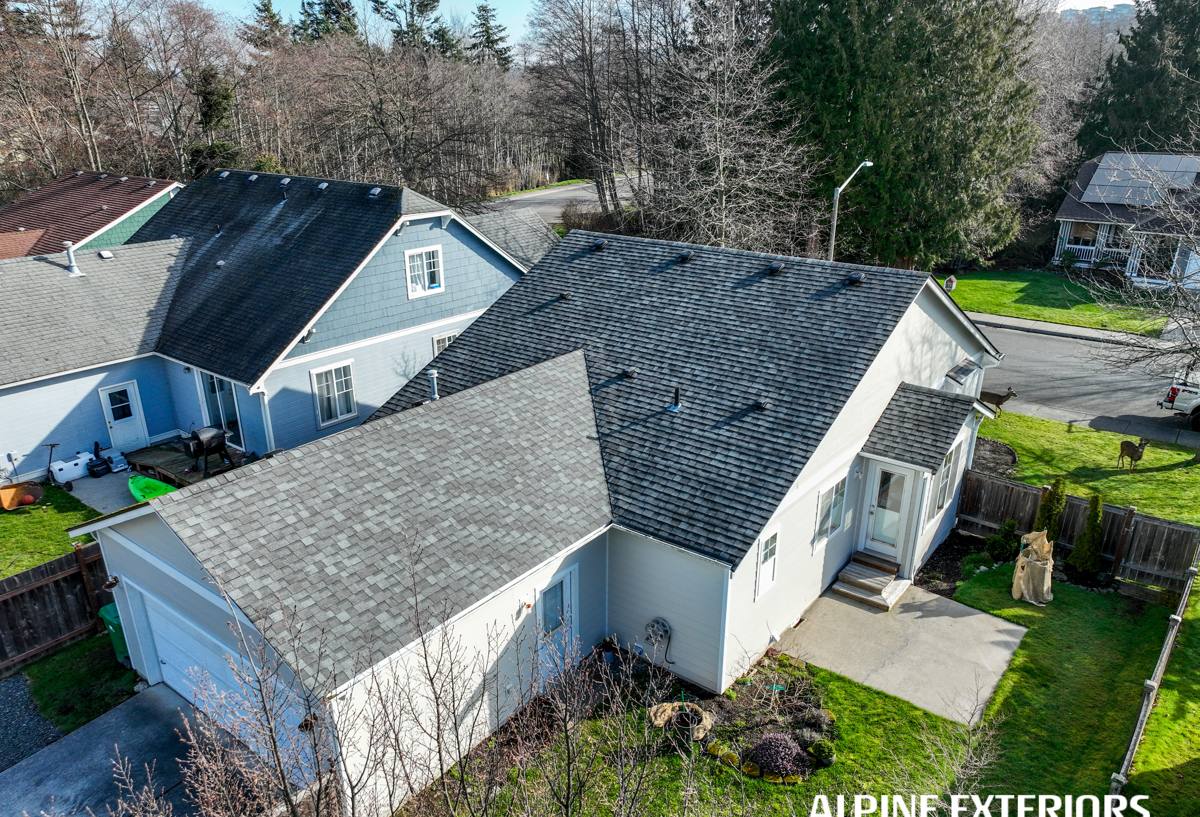
What Salt Air and Moss Actually Do to a Roof
Salt Air and Metal Components
Airborne salt accelerates corrosion on any exposed metal — nails, flashing, vents, and fasteners. Standard galvanized fasteners can start showing rust streaking and weakening years before they would inland. Over time, corroded fasteners lose holding power, which matters a great deal in a wind-exposed spot like Cottonwood Beach.
Moss and Prolonged Moisture
Moss doesn't just look bad — it holds moisture directly against the roofing surface, works its way under shingle edges, and lifts tabs as it grows. On shaded, north-facing roof planes near mature trees, moss can establish within a couple of seasons on a roof that isn't detailed to resist it. Left unaddressed, it shortens the effective life of the roofing material regardless of how good the shingle itself is.
Driving Rain and Wind
Storms coming off the water tend to drive rain sideways rather than straight down, which stresses laps, valleys, and any penetration point — vents, skylights, chimneys. A roof that would perform fine in a calmer inland setting can leak at Cottonwood Beach if those details aren't tightened up.
What a Correct New Roof Installation Involves Here
A proper installation for this location isn't just "shingles on plywood." It's a system, and every layer matters:
- Full tear-off to bare decking so we can inspect and repair any rot or soft sheathing before covering it up
- Ice-and-water shield at eaves, valleys, and around every penetration — not just the code-minimum areas
- Corrosion-resistant fasteners rated for coastal exposure rather than standard galvanized nails
- Balanced attic ventilation (intake and exhaust) to keep the underside of the deck dry and reduce condensation-driven moss growth from beneath
- Properly lapped synthetic underlayment across the full roof, sized to shed wind-driven rain rather than just standing water
- Metal flashing detailed and sealed at every wall, chimney, and valley intersection
- Ridge and hip caps set to shed water in the prevailing wind direction off the bay
Skipping any one of these doesn't usually cause an immediate problem — it shows up two, five, or ten years later as a leak, premature moss colonization, or fastener failure. That's the trap with roofing: bad work and good work often look identical on installation day.
Our Process for a Cottonwood Beach Roof Replacement
1. On-Site Assessment
We start with a walk of the roof and attic, not just a look from the ground. We check decking condition, existing ventilation, moss and moisture patterns, and any trouble spots from past leaks. This is also where we look at how the home sits relative to wind exposure and shade, since that affects material and detailing recommendations.
2. Material and Scope Discussion
We walk through material options suited to the site — not a one-size-fits-all pitch — along with a clear, written scope of what's included: tear-off, decking repair allowance, underlayment type, flashing work, and ventilation changes if needed.
3. Tear-Off and Deck Inspection
We remove the old roofing down to the deck so nothing is installed over hidden rot, old moss growth, or compromised sheathing. Any deck repairs are flagged and addressed before the new system goes down.
4. Underlayment, Flashing, and Ventilation
This is where the roof's real durability is decided. We install ice-and-water shield in vulnerable zones, run underlayment correctly lapped for wind-driven rain, and set flashing and ventilation components before a single shingle or panel goes on.
5. Roofing Material Installation
Material goes down per manufacturer specification, with attention to nailing pattern and exposure — both of which affect wind performance and warranty validity.
6. Final Walkthrough and Cleanup
We inspect the finished roof, walk the property for debris and stray fasteners (a magnetic sweep is standard practice), and go over any workmanship warranty and maintenance recommendations specific to a salt-air, high-moss site.
Choosing a Roofing Material for This Climate
There's no single "best" roofing material for every home — the right choice depends on budget, roof pitch, architectural style, and how much long-term maintenance the homeowner wants to take on. Here's how common options stack up specifically against salt air and moss exposure:
| Material | Moss/Algae Resistance | Salt Air Durability | Typical Maintenance |
|---|---|---|---|
| Standard asphalt shingles | Moderate — improves with algae-resistant granules | Good, with corrosion-resistant fasteners | Periodic moss removal recommended |
| Algae-resistant architectural shingles | Better — copper or zinc granule blends inhibit growth | Good | Lower than standard shingles |
| Standing seam metal | High — smooth surface sheds moisture, little for moss to grip | Very good with coastal-rated coatings and fasteners | Low, occasional fastener/coating check |
| Cedar shake | Lower — organic material, prone to moss without diligent upkeep | Requires more frequent treatment near salt air | High — regular cleaning and treatment needed |
We'll be direct about trade-offs rather than steering everyone toward the most expensive option. Cedar shake, for example, can look great on the right home, but in a shaded, damp, salt-air spot like Cottonwood Beach it demands a maintenance commitment a lot of homeowners underestimate. That's a fair trade-off to walk through before you commit, not a knock on the material itself.
What Drives Cost on a New Roof Here
Every roof is priced based on its own specifics, so we won't quote numbers without seeing the job — but these are the factors that most commonly move the price up or down on a Cottonwood Beach home:
| Factor | Why It Matters | Relative Cost Impact |
|---|---|---|
| Roof size and number of planes | More area and more valleys/hips mean more material and labor | High |
| Deck condition underneath old roofing | Rot or soft sheathing found during tear-off requires repair before install | Variable |
| Material choice | Asphalt, metal, and cedar carry different material and labor costs | High |
| Roof pitch and access | Steep or hard-to-access roofs take longer and require more safety setup | Moderate |
| Ventilation upgrades | Adding proper intake/exhaust ventilation where none existed | Moderate |
| Extent of flashing and penetrations | Chimneys, skylights, and multiple valleys each add detail work | Moderate |
Most homeowners find it worth spending a little more upfront on corrosion-resistant fasteners, proper underlayment, and algae-resistant shingles than to save on the front end and face moss remediation or premature fastener failure a few years in — especially this close to the water.
Timeline and What to Expect During the Project
A straightforward asphalt shingle replacement on an average-sized Cottonwood Beach home typically takes one to a few days of active roofing work, weather permitting — Whatcom County's wet season can extend timelines if rain delays are needed to keep the deck dry during tear-off. Metal roofing or homes with complex rooflines take longer. We schedule around forecasted weather rather than pushing through a rain window, since installing underlayment or roofing material on a wet deck undermines the whole point of doing the job right.
During the project, expect noise, some vibration in the house during tear-off, and a work crew on-site for the full workday. We keep the property swept and organized daily rather than leaving debris to accumulate.
Why Local Experience in Cottonwood Beach Matters
A roofer who mostly works inland jobs may not think twice about fastener corrosion resistance or moss-prone shaded valleys — because those issues don't show up as often away from the water. Working regularly in Birch Bay and along Cottonwood Beach means we've seen how roofs here actually age, not just how they're supposed to perform on paper. That shapes real decisions: which flashing details hold up to driving rain off the bay, which ventilation setups actually keep moss from creeping in from the north side, and which fastener specs are worth the extra step.
It also means we're familiar with the practical realities of the neighborhood — narrower access on some lots, proximity to neighboring homes, and the wind exposure that comes with being close to open water. None of that requires guesswork when it's already familiar ground.
Caring for a New Roof in a Salt-Air, High-Moss Environment
A well-installed roof still benefits from basic upkeep, especially in this climate. We recommend homeowners keep an eye on the following:
- Have gutters cleared at least twice a year so water isn't backing up under shingle edges
- Trim back overhanging branches to reduce shade and debris buildup on north-facing slopes
- Schedule a moss check each fall before the wet season sets in, and again in spring
- Avoid pressure washing the roof surface directly — it can strip granules and shorten shingle life
- Have a professional inspect flashing and fasteners every few years given the accelerated corrosion risk near the water
- Address any small leak or staining promptly rather than waiting, since trapped moisture under roofing spreads quietly
None of this is complicated, but it's easy to let slide — and in a spot like Cottonwood Beach, neglect compounds faster than it would somewhere drier and further from the water.
Ready When You Are
If your roof in Cottonwood Beach is showing moss buildup, granule loss, or age-related wear, it's worth getting an honest, no-pressure look before it turns into a bigger repair. Use the form below to request a free estimate — we'll walk the roof, talk through what your home actually needs given its exposure and condition, and give you a straightforward assessment with no obligation attached.