 Birch Bay Roofing
 Roof Repair for Cottonwood Beach's Shoreline Climate
Cottonwood Beach sits right along the water in the Birch Bay area of Whatcom County, and that location shapes everything about how a roof ages here. Homes a few miles inland deal with normal Pacific Northwest weather. Homes on this stretch of shoreline deal with that same weather plus salt-laden air, wind-driven rain coming straight off the water, and a moss season that runs longer than most homeowners expect. A roof repair here isn't just patching a leak — it's understanding why that leak started in the first place, given what this specific stretch of coastline throws at a roof year-round.
We work on roofs in Cottonwood Beach regularly, and the failure patterns we see are consistent enough that we can usually tell, before we even climb up, roughly what we're going to find based on the roof's age, slope, and how much shade and water exposure it gets.
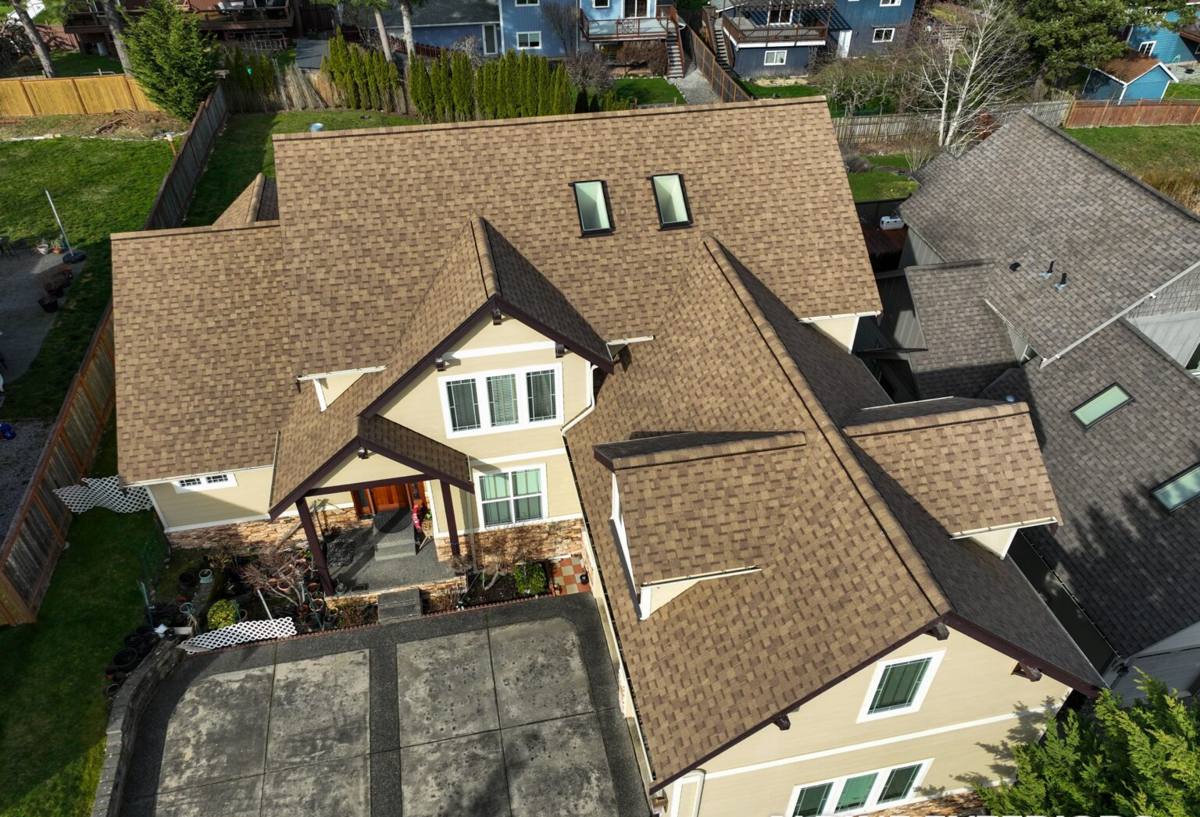
Signs a Cottonwood Beach Roof Needs Repair
Most roof repairs get called in after a stain shows up on a ceiling, but by that point water has usually been getting in for a while. Catching problems earlier keeps a repair small instead of letting it turn into a decking replacement. Watch for:
- Granules collecting in gutters or at the base of downspouts — a sign the shingle surface is wearing thin
- Shingle edges that curl, lift, or look cupped, especially on slopes that face the water or catch the most wind
- Dark streaking or thick moss growth along shaded edges, valleys, and north-facing sections
- Rust staining around flashing, vent boots, or exposed fasteners
- Soft or spongy spots when the roof is walked, which usually means the decking underneath has taken on moisture
- Daylight visible through the roof deck from inside the attic, or damp insulation after a storm
Any one of these on its own doesn't necessarily mean a full replacement is coming. It usually means it's time for a closer look before the next round of driving rain finds the weak spot.
What Salt Air and Wind-Driven Rain Do to a Roof
Metal Fasteners, Flashing, and Vents
Salt in the air speeds up corrosion on anything metal — nail heads, flashing seams, vent stacks, and gutter hardware. Once a fastener starts to rust, it loses its grip and its seal at the same time, which is exactly the combination that lets water start working its way underneath shingles. On a shoreline roof, flashing and fasteners are usually the first components to fail, well before the shingles themselves are worn out.
Wind-Driven Rain at Roof Transitions
Ordinary rain falls straight down and mostly runs off. Wind-driven rain off the water comes in at an angle and gets pushed sideways and even upward under shingle tabs, at chimney and skylight flashing, and along roof-to-wall transitions. Underlayment and flashing that would hold up fine a few miles inland can get overwhelmed here if it wasn't installed with that sideways water path in mind. This is one of the main reasons leaks on Cottonwood Beach roofs often show up at valleys, wall intersections, and penetrations rather than in the open field of the roof.
Moss, Algae, and Whatcom County's Long Wet Season
Whatcom County's damp season stretches for a good part of the year, and shaded, low-slope, or north-facing sections of roof rarely get a chance to fully dry out in between rain events. That's exactly the environment moss needs. Algae streaking is mostly cosmetic, but moss is a different problem — it roots into the shingle mat, holds water against the surface long after the rest of the roof has dried, and physically lifts shingle edges as it grows. Once shingles are lifted even slightly, wind-driven rain has an easier path underneath.
The wrong fix here is often worse than the moss itself. Pressure washing strips granules and shortens the life of the shingles it's meant to protect. A correct approach removes moss gently, treats the surface to slow regrowth, and addresses whatever is keeping that section of roof shaded and slow to dry — sometimes a repair issue, sometimes a maintenance issue, and worth telling apart before spending money.
What a Correct Roof Repair Involves
Diagnosis Before Patching
Water doesn't always leak in where it shows up on the ceiling — it can travel along the decking or rafters before it finds a gap to drip through. A repair that just seals the spot where the stain appeared often misses the actual entry point, which means the leak comes back after the next storm. A proper repair starts by tracing the path back to where water is actually getting in, not just where it became visible.
Matching Materials and Reinstalling Flashing Properly
Once the source is found, the fix has to go back together correctly — flashing integrated under the underlayment layers, not just caulked over the top of old flashing. Caulk is a short-term patch, not a repair; it fails in a season or two, especially in a climate with this much rain and temperature swing. Shingles should be matched as closely as possible in type and color, and any decking found to be soft or rotted needs to be replaced rather than shingled back over.
Cleanup That Prevents a Repeat Visit
A repair isn't finished until moss and debris around the repaired area are cleared, so the fix doesn't just get undermined again by the same growth that likely contributed to the original problem.
Our Cottonwood Beach Repair Process
Inspection and Estimate
We start with a full inspection of the affected area and the roof around it, not just the spot where the leak or damage was reported. Because a lot of what causes repairs on this stretch of coastline is related — salt corrosion, wind exposure, shade and moss — a problem in one spot is often a signal to check nearby areas too. We put the findings and a written estimate in front of the homeowner before any work starts.
The Repair Itself
Repair work is scheduled around the weather when possible, since wet decking can't be properly sealed. We remove and replace only what needs it, reinstall flashing and underlayment to actually shed water the way it was designed to, and match shingles as closely as we can source them.
Follow-Up
After a major windstorm or an unusually wet stretch, it's worth a quick check on any roof we've repaired here, and we're happy to take a look if something seems off. Coastal exposure means conditions can undo a marginal repair faster than they would inland, so we'd rather catch a problem early than have it turn into a bigger one.
What Affects Roof Repair Cost
Every repair is different, but the price is generally driven by the same handful of factors. This isn't a quote — it's meant to help a homeowner understand what we're actually pricing when we walk a roof.
| Factor | Why It Matters |
|---|---|
| Extent of the damage | A single lifted shingle or flashing seam is a small job; damage that's spread across a slope or into the decking costs more to put right |
| Decking condition underneath | Rot found once the roof is opened up adds material and labor that couldn't be priced from the ground |
| Roof pitch and access | Steeper roofs and harder-to-reach sections take longer and need more safety setup |
| Flashing complexity | Valleys, chimneys, and skylights take more time to flash correctly than open shingle field |
| Material matching | Sourcing a close match to existing shingles can affect both cost and timeline |
Most single-area repairs run from a few hundred dollars to a little over a thousand, depending on scope. Anything involving significant decking replacement or multiple flashing points will run higher — we'll always explain why before doing the work, not after.
Why a Crew That Already Works Cottonwood Beach Matters
A roofer who mostly works inland isn't wrong about roofing in general, but they may not have a feel for how fast salt air corrodes fasteners on this particular shoreline, or which lots hold shade long enough to grow moss even on a fairly steep pitch. We've seen how roofs in this specific stretch of Birch Bay tend to fail — which slopes take the worst of the wind-driven rain, which flashing details hold up and which don't, how long a given repair actually lasts once it's back exposed to the weather. That local pattern recognition is what keeps a repair from being a guess.
It also means we're not learning the neighborhood on someone's dime. We know what "normal wear" looks like here versus what's actually a problem, which keeps homeowners from paying to fix things that don't need fixing — and from underestimating something that does.
Simple Roof Care Between Visits
A little regular attention goes a long way toward stretching the life of a roof in this climate. Between professional inspections, it helps to:
- Keep gutters and downspouts clear so water isn't backing up under the roof edge
- Trim back branches that shade the roof, since more sun exposure means less moss
- Check for granules building up in gutters after heavy rain, an early wear signal
- Have the roof looked at after any unusually strong windstorm, even if nothing looks obviously wrong
- Avoid pressure washing moss or debris off yourself — it removes protective granules along with the moss
None of this replaces a professional inspection, but it can catch small issues before they turn into repair calls.
If you're noticing moss buildup, a stain on a ceiling, or just want a second set of eyes on a roof that's been through a few storm seasons, we're happy to take a look. Estimates are free and there's no pressure to move forward — just an honest read on what your roof actually needs.