 Birch Bay Roofing
 Building Decks That Hold Up on Cottonwood Beach
Cottonwood Beach sits close enough to the water that everything exposed to the outdoors feels it, and a deck takes more of that punishment than almost any other part of the house. It's flat, it's horizontal, and it collects moisture, salt residue, and shade all at the same time. We've built, repaired, and rebuilt decks throughout this stretch of Birch Bay, and the same pattern shows up again and again: a deck built the way it would be built ten miles inland doesn't last the same number of years out here. The fasteners corrode faster, the framing stays damp longer, and the boards grow moss and algae well before a homeowner expects to be scrubbing anything.
This page is specifically about deck building for Cottonwood Beach — what the local conditions demand, what a correct build looks like from the ground up, and how our process works from the first estimate to the final walkthrough.
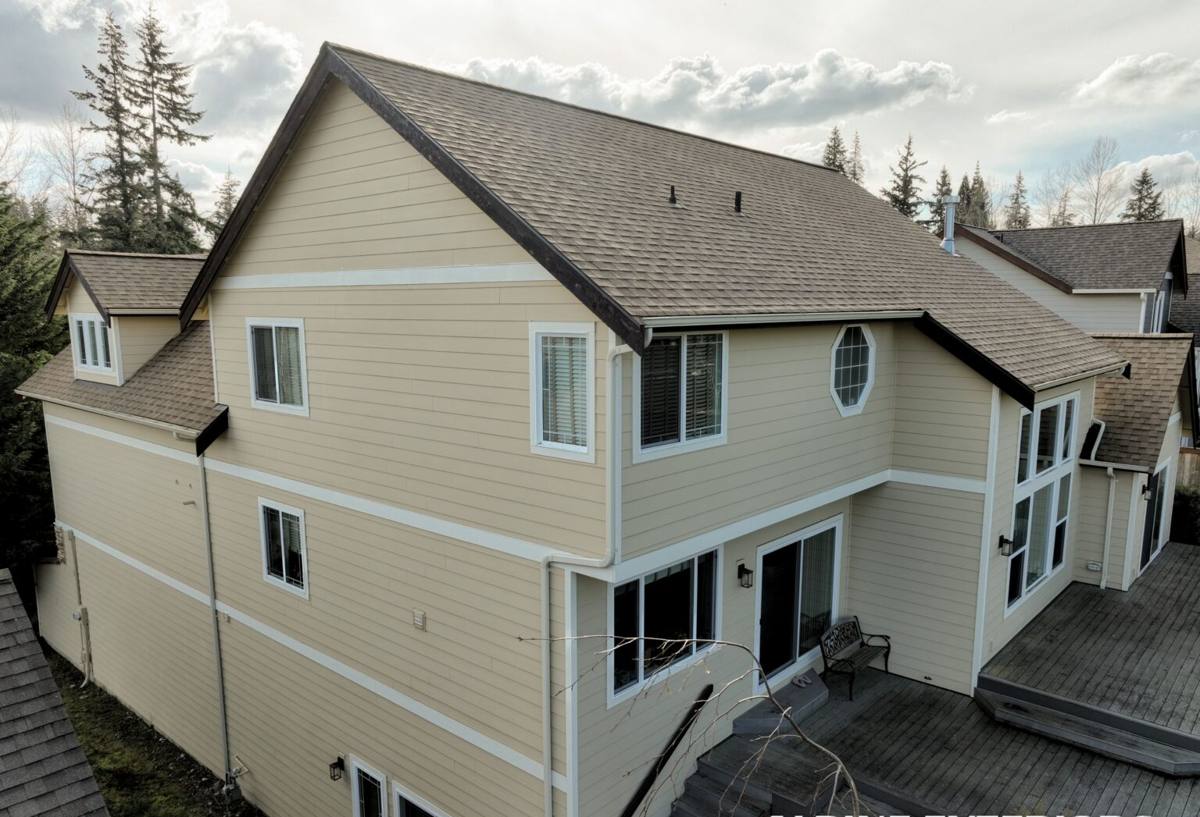
What Coastal Conditions Do to a Deck
Salt Air and Hardware
Marine air carries salt further inland than most people assume, and it settles on any exposed metal. Standard zinc-coated screws and joist hangers that would last for decades in a dry inland yard can start showing rust streaks within a season or two near the water. Once corrosion starts on a fastener buried in a joist connection, it's invisible until the connection fails — which is exactly why the hardware spec matters more here than almost anywhere else in Whatcom County.
Driving Rain and Water Intrusion
Birch Bay gets its share of wind-driven rain that hits siding and ledger boards at an angle instead of falling straight down. A ledger board — the piece that bolts the deck to the house — is the single most common failure point on decks we're called to inspect, because water finds its way behind poorly flashed ledgers and rots the rim joist or sheathing behind it for years before anyone notices from the outside.
A Long Moss and Algae Season
Shaded, damp decking stays wet longer here than it does in drier parts of the state, and that means a longer window every year for moss, algae, and mildew to establish themselves on the surface. Beyond looking bad, a mossy deck surface gets genuinely slick, and moss holds moisture against the board itself, accelerating rot in wood decking and staining even some composite products if it's never cleaned off.
Choosing the Right Decking Material for This Lot
There's no single "best" decking material — there's a best material for a specific budget, maintenance appetite, and exposure. On a lot with heavier salt and moisture exposure, some trade-offs matter more than they would further inland.
| Material | Coastal Performance | Maintenance | Typical Lifespan Here |
|---|---|---|---|
| Pressure-treated wood | Good if fasteners and flashing are corrosion-rated; framing lumber of choice | Annual cleaning and periodic sealing/staining | 15-20 years with upkeep |
| Cedar | Naturally rot-resistant but softer surface; can gray or streak faster in salt air | Regular sealing to hold color and resist moisture | 15-20 years with upkeep |
| Composite decking | Very stable in wet, salty conditions; won't rot or splinter | Periodic washing to prevent surface mildew/algae buildup | 25-30+ years |
| PVC decking | Fully synthetic, no wood fiber to hold moisture; best moisture resistance of the group | Occasional washing | 25-30+ years |
Wood costs less up front and remains the right call for framing regardless of what decking surface goes on top of it. Composite and PVC cost more initially but reduce the sanding, staining, and board-replacement cycle that salt-air properties otherwise face every few years. We'll walk through the honest cost-versus-upkeep math for your specific project rather than pushing one material as a default.
The Structural Details We Don't Skip
A deck's surface material gets all the attention, but the framing and connections underneath are what actually determine whether it survives coastal exposure. On every Cottonwood Beach project, we treat the following as non-negotiable:
- Stainless or coated structural fasteners rated for the specific decking and framing material, not generic hardware-store screws
- Ledger flashing that properly sheds water away from the house rim joist, installed before the ledger is ever bolted on
- Joist hangers and structural connectors matched to the fastener type to avoid galvanic corrosion between dissimilar metals
- Footings set below frost depth and sized to the actual load and soil conditions on the lot, not a one-size guess
- Proper board spacing and airflow underneath the deck so wood can dry out between rain events instead of staying saturated
- Post bases that keep wood off the ground or off standing water, rather than posts buried directly in soil
Skipping any one of these doesn't show up as a problem on day one. It shows up three, five, or ten years later as a soft spot near the ledger, a wobbling post, or hardware bleeding rust through the decking above it — all of which cost far more to fix than to build correctly the first time.
Our Deck Building Process
- On-site assessment. We look at sun and shade exposure, drainage, wind direction relative to the water, and how the existing structure (if any) has held up so far.
- Design and material walkthrough. We talk through decking material, layout, railing style, and any features like built-in seating or stairs, along with a clear estimate.
- Permitting. We handle the permit application and any required inspections so you're not navigating the county process on your own.
- Demolition or removal of the old deck, when applicable, with attention to what condition the framing and ledger connection were actually in — that inspection often changes the scope in useful ways.
- Framing and structural work using corrosion-rated hardware and properly flashed ledger connections, inspected before decking goes down.
- Decking, railing, and finish work, installed to the spacing and fastening pattern the manufacturer specifies for the material chosen.
- Final walkthrough where we go over the finished deck with you, including basic maintenance expectations for the first year.
Permits and Building Near the Water in Whatcom County
Deck construction in Whatcom County generally requires a building permit once you're past small, low, freestanding structures, and properties near the shoreline can carry additional review depending on setback and shoreline management rules. The specifics depend on your parcel, so we don't guess at them — we pull the actual requirements for your address and build the permit application around them rather than assuming what applied to a different lot down the road applies to yours. If you're unsure whether your existing deck was ever permitted, that's worth checking before a rebuild, since it can affect what's allowed going forward.
Keeping a New Deck Ahead of the Moss and Rain
A well-built deck still needs seasonal attention in this climate — the build just determines how much attention it needs and how forgiving it is when maintenance slips for a season.
- Sweep debris and standing leaves off the surface regularly, especially in fall, so moisture and organic matter don't sit against the boards
- Rinse or lightly scrub the surface once or twice a year to stay ahead of moss and algae before it establishes
- Check the ledger flashing and any visible fasteners annually for early rust staining or gaps
- Reseal or restain wood decking on the schedule the product calls for — usually every one to three years depending on sun exposure
- Keep gutters and downspouts near the deck clear so runoff isn't dumping extra water onto or under the structure
Why Hire a Crew That Already Works Cottonwood Beach
A contractor who mostly builds decks inland can still do competent framing, but they're often making assumptions about hardware, flashing, and material behavior that don't hold up in a marine climate. We've seen the specific ways decks fail on this stretch of Birch Bay — the ledger connections that were flashed for a drier climate, the fasteners that looked fine going in but rusted through in a few years, the shaded north-facing sections that grow moss twice as fast as the rest of the deck. Building with that context from the start means fewer surprises and a deck that's actually sized to the environment it's sitting in, not a generic spec sheet.
If you're planning a new deck, replacing one that's showing its age, or just want an honest read on whether an existing structure is sound, we're glad to take a look. Reach out for a free, no-pressure estimate using the form below.